Technology

NYTimes to Bundle 1 Million+ Google Cardboards for VR Photojournalism

The rise of virtual reality photojournalism will get a huge boost this weekend thanks to the New York Times. The newspaper's Sunday bundle for print subscribers will include a free Google Cardboard viewer for experiencing immersive photo and video content. Over 1 million units will be shipping with the paper, and another 300,000 will be sent to digital subscribers as well.

A Wedding Photographer on a Self-Balancing Scooter

Self-balancing scooters have become all the rage over the past couple of years, and you can now buy a small handle-less Segway-esque device for yourself for around $300 to $400. In addition to gliding around and attracting curious looks on the street, you can also use the "hoverboards" to shoot stable photos and videos.

This $5,900 Workstation Lets You Post-Process Your Photos Lying Down

Sitting for long periods of time has been shown to be bad for your health, leading more and more people to adopt other positions for working at a computer. If you've always dreamed of being able to stand, sit, and lie down at the same workstation while post-processing mountains of photos, the new $5,900 Altwork Station is for you.

‘Prix’ is the First Short Film That Shows the Power of a QuantumFilm Sensor

Back in 2010, we reported that a California-based startup called InVisage was working on a new image sensor technology called QuantumFilm, which uses "quantum dots" to make sensors that are several times more sensitive to light than traditional sensors.

Now, 5 years later, the first short film shot with the technology has been released. You can see what the sensor can do in the 7.5-minute short above, titled "Prix."
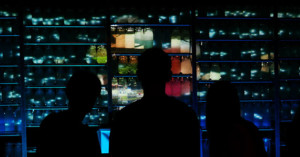
Sony Shows Off a New Ultra-Sensitive CMOS Sensor Called ‘STARVIS’

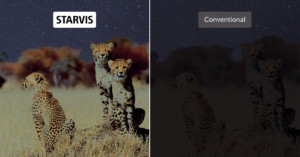
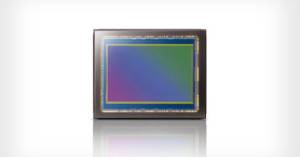
Sony just launched a new image sensor called the STARVIS that excels in capturing images in low-light environments. Designed for industrial applications -- surveillance cameras, for example -- the new backside-illuminated CMOS sensor boasts extremely high sensitivity that can capture usable images at night.

HyperCam is a Low-Cost Hyperspectral Camera That Captures What We Can’t See

Hyperspectral cameras can see things in the world that the human eyes can't by capturing information from across the electromagnetic spectrum beyond visible light. This type of technology has all kinds of interesting applications -- researchers are using the cameras to uncover secrets in old documents and paintings, for example.

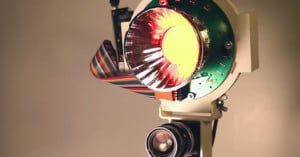
The HyperCam is a new hyperspectral camera that aims to make the technology cheap enough to be casually used by the masses.

What Canon’s Prototype ISO 300,000 Sensor Can See in Near Darkness

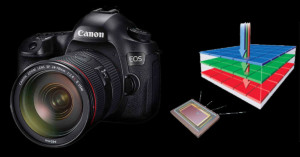
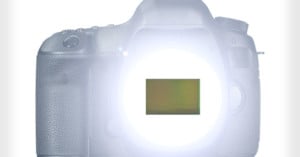
At Canon EXPO Paris 2015 this past week, Canon was showing off the capabilities of a prototype ultra-high sensitivity 35mm full-frame CMOS sensor. The 3.5-minute video above shows what the camera can see when taken into the "Blue Milky Way" of Waitomo glowworm caves in New Zealand, which make for dazzling long-exposure photos.

Researchers Create Software for Designing Pro Drone Shots in a Virtual World

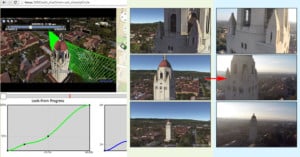
As camera drones become increasingly popular as a relatively cheap and easy way to capture aerial photos and videos, there are more and more stories in the news of drone accidents being caused by poor piloting. For those who wish to capture pro-quality shots without having to worry about piloting drones themselves, a group of researchers at Stanford want to help: they've create a computer tool that lets you create a shot virtually and then have a camera drone automatically turn it into real footage.

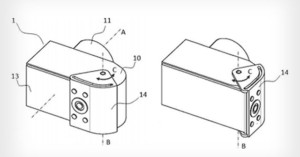
Canon Patents a Loupe Viewfinder That Flips Over the LCD Screen

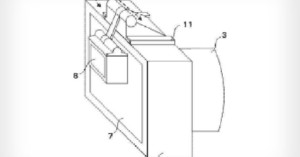
LCD screens on the backs of cameras have higher and higher resolutions these days, and since the size isn't usually increasing, we're seeing more pixel density. It appears that Canon has been thinking about creative uses of these high-res displays: a recently published patent shows a Canon digital camera with a loupe-style viewfinder that swings down onto the LCD to use a portion of the large display as the smaller electronic viewfinder.

DRM Could Be Added to the JPEG Image Format

Heads up: digital rights management (DRM) could be coming to the JPEG image format. That's right... the same kind of controversial technology that's currently being used to protect movie, music, and book copyrights could one day be used to restrict the usage of images, and that proposal has people up in arms.

CMOS Inventor Working on Gigapixel Sensor That Can Detect Single Photons

Hold onto your seats: there may soon be game-changing breakthroughs in image sensors that could take low-light photography to whole new levels. The inventor of the CMOS sensor is working on building a new type of image sensor that packs a billion pixels onto a chip no larger than the sensors used today. What's more, each of those pixels are designed to detect single photons.

A Demo of How Future Cameras May Be Able to Auto-Tag Your Photos

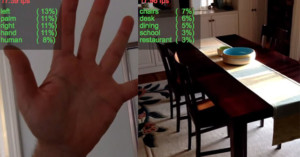
With over a trillion photos created every year now, one feature that could help people make sense of their massive photo collections could be object recognition and automatic tagging. If your camera and photo management software can figure out what's in your shots, it'll make searching through old photos much more easy and intuitive.

Companies and researchers are working hard on pushing this field forward. Photo sharing services are already adding auto-tagging to their systems -- Flickr and Google had to work out some early "racist" bugs -- and now we're getting a glimpse of what the technology could look like live, in cameras.

Sneak Peek: Adobe ‘Monument Mode’ Wipes Tourists from a Scene in Real Time

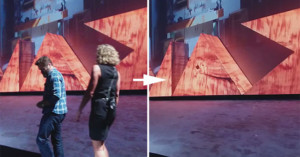
At the Adobe MAX conference last night, Adobe shared some sneak peeks at innovative technologies currently being brewed by company scientists in their lab. The recent Dehaze feature in Lightroom was teased at the same conference last year.

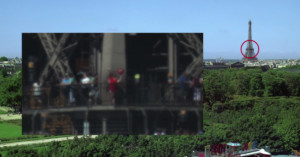
This time around, one of the photo technologies that was unveiled is a camera feature called Monument Mode. Switch it on, and your camera will be able to shoot photos that are free of tourists and other distracting elements.

FLIF is a New Free Lossless Image Format That Raises the Compression Bar

Every so often, a new image format comes to town and attempts to overthrow the established order of how images (and photos) are saved and shared. In 2010, Google announced a new format called WebP, which promised to speed up the Web by shrinking file sizes without hurting quality. Last year, well-known programmer Fabrice Bellard unveiled a format of his own called BPG that claimed to pack the same quality of JPEGs at just half the size.

Now there's a new contender that raises the bar (and shrinks file size) even more. It's called FLIF, which stands for Free Lossless Image Format.

TinyMOS Aims to Be the GoPro of Astrophotography

The Tiny1 is a new camera that's being developed by a three-person startup called TinyMOS over in Singapore. The tiny aluminum-bodied camera aims to do for astrophotography what the GoPro did for action video, bringing space imaging to the masses.

Here’s How Flickr’s Image Compression Has Changed Since Early 2014

Back in June, we reported that some Flickr users had taken to the service's forums to complain about increasing compression hurting the image quality of their photos. We did some tests of our own and found that there was indeed significant file size and image quality differences -- at least compared to photos uploaded back in 2012.

Well, Flickr heard the grumbling of photographers and made adjustments to its image compression. Backend engineer Archie Russell has also published an article on the company's code blog that explains the whole story.

Facebook Introduces 360-Degree Interactive Videos

Earlier this year, YouTube opened up its service to 360-degree interactive videos that you can "look around" in while watching, whether by swiping with your finger or by swinging your phone around in space. This week, Facebook also joined in on the fun by announcing that virtual reality videos are now supported in News Feeds.

solidLUUV: The World’s First All-In-One Stabilizer For Smaller Cameras

One of the modern day cruces of video filming is smooth stabilization. While many of us carry around smartphones with exceptional video capabilities, everyday moments seems to remain plagued by shaky footage. Now, a new German-based company has hit Kickstarter with the solidLUUV: the world’s first all-in-one stabilizer for smartphones, action cams, and compact cameras.

Facebook May Soon Assign Your Camera a Unique Fingerprint For Identification

A new patent filed by Facebook suggests that the social networking giant is working on giving user cameras a unique digital fingerprint. Looking for ways to identify fraudulent accounts and evermore establish what connections you may have with others, the new technology means that your future photographs will be tracked at levels previously unimaginable. For photographers, however, it may be an excellent way to prove that you truly own an image.

This is a Prototype of an Electronically-Controlled ND Filter Lens Adapter

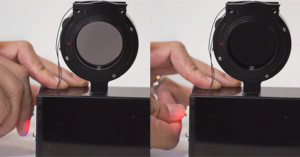
At the IBC 2015 trade show in Amsterdam, which just wrapped up a couple of days ago, the camera gear company Genus was showing off a prototype of a groundbreaking new product: an electronically controlled neutral density (ND) filter adapter. It was a Canon EF to Sony E lens adapter that had a dial that lets you adjust the level of ND filtration electronically.

Dan Chung of News Shooter filmed the short video above in which Genus shows off the prototype. Chung calls it "one of the most impressive things we saw at IBC this year," and "the holy grail of DSLR filmmaking."

Flickr is Working on Virtual Reality Photo Experiences

Virtual reality is one of the trending technologies that tech companies are pouring vast amounts of time and research into, and one company that wants in is Flickr. The photo sharing company is working on a virtual reality photo viewing experience that may be integrated into its service in the future.

This is ISO 4,560,000 with Canon’s Crazy New Camera

var Eviry=Eviry||{};Eviry.Player||(Eviry.Player={});Eviry.Player.embedkey="EK1qpvBBXasGtQnqLZbfgh_U9WeDwCRgtKePN7EqD9EWZ118eALNeWFzGGaMs61paz15tYgEu4Oz-ZEZWiDeAa02kbytdW5Bc3C"; Eviry.Player.width = "640";Eviry.Player.height = "360";

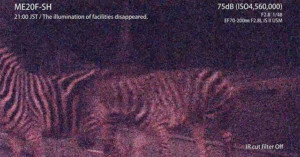
Back in July, Canon announced an ultra-high-sensitivity camera that has a ridiculously high max ISO of over 4,000,000. If you've been wondering what the camera can capture, check out the eye-opening sample video above that Canon just released.

SteadXP on Kickstarter: An External Motion Recorder for Video Stabilization

SteadXP, which we first wrote about in September 2014, is a small box that is promising to stabilize some of your most problematic videos. By using an external system that tracks where in space the camera is currently positioned at any given time, stabilization software can do a more efficient job at making your video nice and smooth. No bulky steadycam or gimbal is needed for this lightweight solution.

Nostalgia and the Collapse of Imagination

“Regardless of what it signifies, any photographic image also connotes memory and nostalgia, nostalgia for modernity and the twentieth century, the era of the pre-digital, pre-post-modern.” --Lev Manovich

There will always be a need to connect to the past. Contemporary culture actively and unconsciously cycles through past follies and reflects upon progress. It is no surprise then, that we see popular culture re-presenting past generations. Perhaps more so than any other period in our recent past, today’s pop-cultural climate is mimicking that of the 1970s.

Apple Unveils a Giant iPad Pro and Apple Pencil Stylus

If you're interested in the idea of doing detailed photo editing on an iPad, Apple made a big announcement on that front today. The company just unveiled the new iPad Pro, a gigantic new 12.9-inch iPad that arrives on the scene with a new stylus called the Apple Pencil. Together, the combo could become a powerful new way for photographers to retouch shots.

This Concept Camera Won’t Let You Shoot Unoriginal Photographs

Say hello to "Camera Restricta," a new concept camera by designer (and photographer) Philipp Schmitt. It's described as a "disobedient tool for taking unique photographs." In short, the camera searches the Web for other photos that have been captured from the same place and if too many photos are found, the camera will prevent you from taking another unoriginal photo.

Land Rover Uses Cameras to Make Trailers Disappear in a Rear View ‘Mirror’

British car manufacturer Land Rover has introduced an interesting new technology that uses multiple cameras to make trailers “disappear” from an LCD rearview mirror while you're driving. By combining video feeds from both the existing rear view and side view cameras with a digital wireless camera mounted on the back of the trailer, the system creates the impressive illusion of transparency.

Canon: We’re Building a 120-Megapixel DSLR

Yesterday, Canon made a splash by announcing the development of a new 250-megapixel CMOS sensor -- the highest resolution for a sensor smaller than 35mm. That sensor is geared towards industrial applications (e.g. surveillance), but if you're dying to get your hands on a monster-resolution Canon DSLR, the company has some good news for you too.

Canon just announced that they're currently developing a DSLR camera that packs a 120-megapixel CMOS sensor.

GoPro’s 16-Camera 360° Rig is Called the Odyssey and Will Cost $15,000

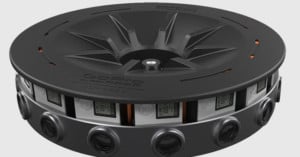
Back in May, Google announced "JUMP", a new technology standard aimed at creating fully immersive content for virtual reality. At the time, Google showed off a demo camera rig that utilized over 16 separate GoPros. The folks over at GoPro have finally decided to release a production version of the apparatus that'll be available for purchase. Called the Odyssey panoramic capture rig, it features 16 synchronized GoPro HERO4 Black cameras recording 8K video at 30fps.

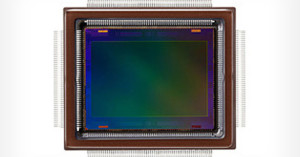
Canon Unveils a Monster 250-Megapixel Sensor

Canon today announced that it has created a monster of a CMOS sensor with the world's highest pixel count (for its size). The DSLR-format sensor manages to capture gigantic 250-megapixel photos with each exposure.

Adobe is Working on Automatic Distraction Removal Technology

Adobe's Content Aware Fill makes it easy to remove distracting elements in photos using Photoshop, but soon you may not have to. Computer vision scientists at Adobe and Princeton are working on a new technology called "distraction prediction" that can automatically find and remove distracting elements from photos.

This Precision Drone Navigation System is Great for Light Painting Photos

PRENAV is a company aimed at developing extremely sophisticated automation systems for small aerial drones. Recently, the company announced that they had acquired $1.2 million to help make their drone technology smarter. So, what better to do with a bit of the seed money than fly drones around, create precise light patterns for light painting, and photograph them?

ReelSteady Aims to Take Video Stabilization Software to the Next Level

For the past few years, video effects specialist Robert McIntosh and another buddy of his have been working on creating a better way for consumers to stabilize video footage. What they've developed is a proprietary video stabilization program called ReelSteady. The first consumer version of the software just launched today.