Nostalgia and the Collapse of Imagination
“Regardless of what it signifies, any photographic image also connotes memory and nostalgia, nostalgia for modernity and the twentieth century, the era of the pre-digital, pre-post-modern.” --Lev Manovich …

“Regardless of what it signifies, any photographic image also connotes memory and nostalgia, nostalgia for modernity and the twentieth century, the era of the pre-digital, pre-post-modern.” --Lev Manovich …
Photography is powerful because we can place ourselves into the perspective of those we see in an image. Whether it’s street photography, photojournalism or portraiture, we use photography to understand ourselves in relation to people around us.
“we still look relentlessly to technology for solutions to the very problems technology seems to cause [...]” – David Foster Wallace …
“The avant-garde of 1967 repeats the deeds and gestures of those in 1917. We are experiencing the end of the idea of modern art.” - Octavio Paz (1981), Nobel Laureate …
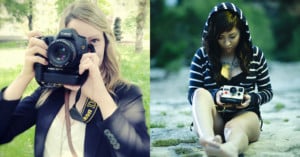
Over a half a billion Apple iOS and Android systems have been sold, which means that there are now an unprecedented number of cameras in the world. This monumental increase in smartphone cameras has allowed for the dramatic increase of photos uploaded to social media sites.
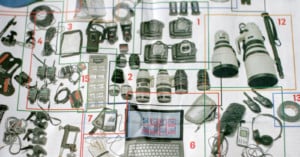
Data is embedded in our environment, in our behavior, and in our genes. Over the past two years, the world has generated 90% of all the data we have today. The information has always been there, but now we can extract and collect massive amounts of it.
As a photographer, you will sooner or later bump into the phrase "the decisive moment". The decisive moment is a concept made popular by the street photographer, photojournalist, and Magnum co-founder Henri Cartier-Bresson. The decisive moment refers to capturing an event that is ephemeral and spontaneous, where the image represents the essence of the event itself.
People will do just about anything to alleviate their anxiety. During the last year of writing my doctoral thesis, the worry about being able to finish grew increasingly heavy. The relentless grind of research, constantly being told that your work is inadequate, and believing that 80-hour workweeks are average has its tolls on all students. Once you reach the edge of this process and are pulverized into oblivion, you get a nice, shiny PhD.
Photo manipulation is nearly as old, if not as old, as photography itself. It has been used in state propaganda, to unify nations, for aesthetic and creative expression, to generate fear, and the list goes on and on.
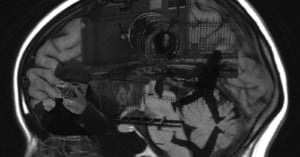
There has been a good deal written about the similarities of the camera to the eye as well as the computer to human memory. What I would like to do is clarify the uniqueness of the human brain from camera technology and at the same time show the similarities between brain function, photography and cognition.