Technology

This Demo Shows the Power of Having Dual Cameras on Smartphones

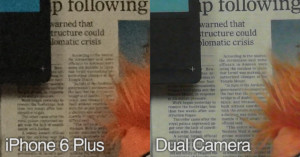
One of the exciting new trends in smartphone photography is the emergence of the dual camera. LG just launched it in the new G5, and Apple will reportedly include it in the upcoming iPhone 7.

If you want to see what the dual camera hype is all about, check out the 2-minute video above by CNET. It's a dual camera demo being given by a company called Corephotonics at the Mobile World Congress 2016 over in Barcelona.

This ‘4D’ Portrait Was Captured with a Crazy Rig of 53 GoPro Cameras

Using a single, ordinary still camera, you can shoot a traditional 2D static portrait of a person. With an array of multiple still cameras, you can stitch together a 3D portrait. To add yet another dimension, you can use video cameras instead of still cameras.

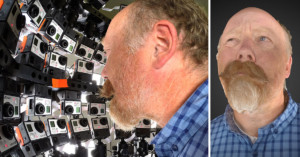
That's what Tim Macmillan, the founder of a company called Timeslice Films, did. Using a crazy camera array of 53 GoPro cameras, Macmillan created a moving 4D portrait of his own head.

This Glass Disc Can Store 360 TB of Your Photos for 13.8 Billion Years

If you back up your photos on optical disks or storage drives, there's a good chance your data won't last as long as you do due to things known as "disc rot" and "data rot". But what if you want to ensure that your precious photos live longer than you? Good news: a new "eternal" storage technology may be on the horizon.

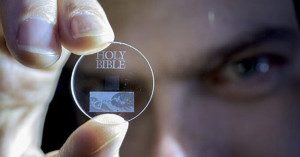
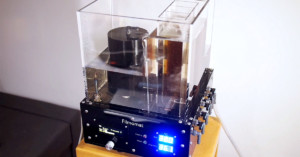
Scientists have created nanostructured glass discs that can storage digital data for billions of years.

Foldio360: A Smart Turntable for Making 360º Photos

Back in 2014, the foldable pop-up lightbox called the Foldio2 got over $500,000 of funding through Kickstarter to make product photos easier to shoot.

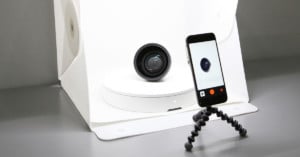
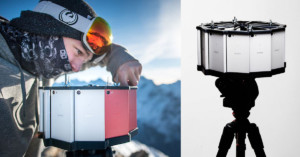
Now the company behind that lightbox, ORANGEMUNKIE, is back with a new product: the Foldio360. It's a smart turntable that's designed to bring 360-degree photography to the masses.

This is What a Virtual Reality Photo Exhibition is Like

Don't have the time or money to visit a photo exhibition you're interested in? In the future, paying a visit will be as simple as strapping a virtual reality headset to your head.

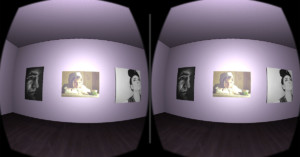
At EyeEm's Photo Hack Day 4 in Berlin recently, one of the apps developed was called Rooms. It's a virtual reality Android app that lets you enjoy photos in a virtual photo exhibition, and the app gives us a taste of what may soon be commonplace in the world of art.

Why DxOMark Doesn’t Test Fujifilm Cameras

If you reference camera sensor ratings published by DxOMark, you may have noticed that the France-based company doesn't test Fujifilm cameras. It's surprising, given that Fujifilm sensors have been praised by many reviewers in recent years.

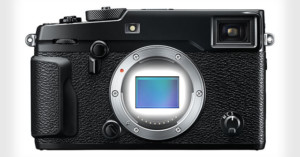
No, DxOMark doesn't have anything against Fujifilm, and no, it's not something fishy going on behind the scenes. The reason is simple: DxOMark isn't currently able to properly test X-Trans sensors.

Shooting 360° Video in 48K Using 12 Sony Xperia Z5 Smartphones

Sony has created what it believes is the world's first 48K 360-degree video. The company created a special 3D-printed camera rig that uses 12 Xperia Z5 smartphones arranged in a circle. By shooting 4K with each phone and then stitching together the resulting footage, Sony was able to create 48K video that you can explore interactively.

Google Uses Tiny Camera Cars to Shoot Tiny Street View of Tiny World

Google's Street View cameras have gone to the ends of the Earth, from under the sea to desolate deserts, in order to document the world in photos. The project is grand, but its latest effort is on a much smaller scale -- literally.

The company just announced Street View for the famous Miniatur Wunderland in Hamburg, Germany, the world's largest model railway. To shoot the images, Google mounted tiny cameras to tiny vehicles (they also had a tiny Street View car look-alike drive around).

This ‘Web-Slinging’ Drone Catcher is Like the Spider-Man of the Skies

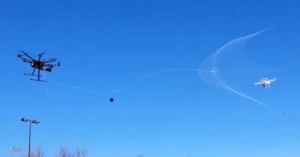
Another day, another innovative solution for catching, disabling, or destroying rogue drones. If your camera drone isn't taken down by a radio wave rifle or a drone with a giant net in the future, you now have another countermeasure to be aware of: a "Spider-Man" drone that shoots out a web-like net to neutralize other drones.

Forget Camera Drones… This Drone is Big Enough for You and Your Camera

Camera drones have exploded onto the scene in the past few years, and they're being used by photographers around the world as a cheap and easy way to obtain aerial photos and videos. But what if you want both the convenience of a drone and the joy of being able to see and shoot things from the air with your own eyes and camera?

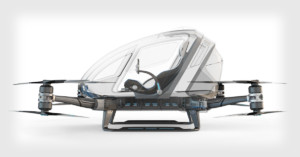
That's where something like the Ehang 184 comes in: it's a new giant drone that may one day fly both you and your camera.

New Injket Printing Can Hide a Photo Within a Photo

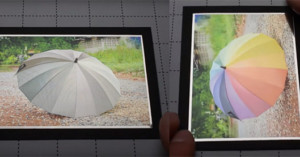
Lenticular prints use an array of lenses to cause an image to change before your eyes as you view them from different angles. Scientists have now figured out how to do a "changing photo" trick without lenses using an inkjet printer and metallic sheets.

This is How Canon Flips the Mirror in Its New DSLRs

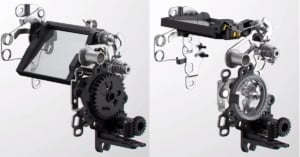
If you shoot with a DSLR, you might take for granted that the mirror inside your camera swings out of the way to allow light to hit the sensor. There's actually quite a bit of precise engineering behind those seemingly simple flips.

With its new Canon 5DS and 5DS R, Canon introduced a new mechanical mirror mechanism that's designed to reduce mirror flip vibrations. The 43-second video above shows how the system works.

SP-445: A New Small and Simple Developing Tank for 4×5 Large Format Film

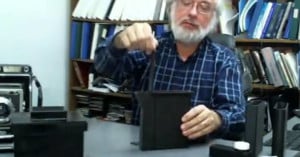
Long-time film photographer Timothy Gilbert was frustrated with existing options for processing 4x5 large format sheet film at home, so, as an engineer, he decided to create an easy-to-use and affordable system himself.

After several prototypes and extensive testing, what he came up with is the SP-445 processing system, an extremely compact and simple tank that requires minimal chemicals and effort.

How Memorable Are TIME’s Top 10 Photos of 2015… to a Computer?

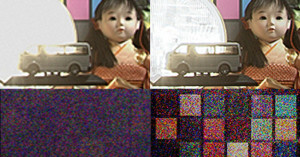
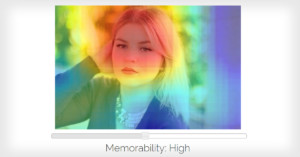
The braniacs at MIT have created an algorithm to determine the “memorability” of a photograph. The deep learning-based technology “learned” what makes a photo memorable by evaluating the rankings from 5,000 human volunteers, and even indicates which portions of an image it considers to be memorable with a heatmap depiction. The algorithm is allegedly as good as a human in determining what makes a memorable photograph.

But ranking a photo based purely on aesthetics isn’t necessarily how humans associate photographs. Context matters. Where was I? What was I doing? What is this photo representative of? I decided to test the algorithm against TIME magazine’s top 10 photos of 2015.

This Algorithm Can Tell How Memorable a Photo Is

Some photographs have the power to burn themselves into our memories for a long time, while others are easily forgettable after they're seen. Scientists are MIT have been researching the science behind memorable images, and now they've created a web app called LaMem that can analyze any photo and assign it a memorability score.

These Light Painting Photographs Were Made Using an Automated Drone

German drone manufacturer Ascending Technologies is celebrating Christmas season this year by doing some light painting photography. Each of the photos they've made was painted by an automated drone that was programmed to follow waypoints in the sky.

The company believes this is the first drone light painting project of this kind.

DNG: The Pros, Cons, and Myths of the Adobe Raw File Format

Is it wise to convert your raw files to the Adobe DNG format? If you are using Lightroom or Photoshop with Camera Raw, you have the option to convert your master files to DNG. In this article I want to focus on the benefits of converting, the reasons why converting to DNG may not always be ideal or necessary, as well as tackle some of the misinformation about DNG.

The $40,000 ‘Bug’ Camera Drone Being Tested by the US Military

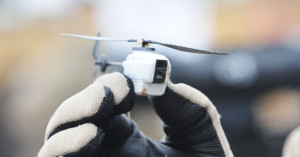
The PD-100 Black Hornet 2 is a high-tech camera drone that's currently being tested by the US military. Unlike consumer drones used by photographers, such as the DJI Phantom or Inspire, the PD-100 is designed to be extremely stealthy: it fits in the palm of your hand, and weighs just 18 grams -- about the same as 3 to 4 sheets of ordinary printer paper.

Oh, and they cost $40,000 each.

This is What a Color Night Vision Camera Can See in Near Darkness

Canon will start shipping its $30,000 ISO 4.46 million camera this month for people who need to shoot in pitch black environments. A similar technology that's making a splash these days is "color night vision."

A Las Vegas-based company called SPI has a color night vision sensor called the X27. The 1.5-minute video above shows what the 10-megapixel sensor can capture in extremely dark places.

Lumu Power Turns the iPhone Into a Light, Flash, and Color Temperature Meter

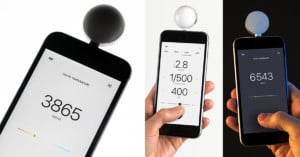
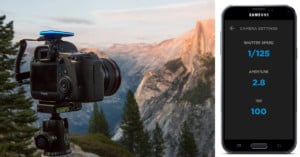
Back in 2013, Slovenia-based Lumu Labs raised over $244,000 on Kickstarter to launch the Lumu (currently available for $150), a headphone jack attachment that turns the iPhone into an accurate light meter for photographers. Now the company is back again with the Lumu Power, a next-gen attachment that doesn't just meter light -- it can measure and calculate flash and color temperature as well.
The World’s Brightest Flashlight Can Light the World with 90000 Lumens

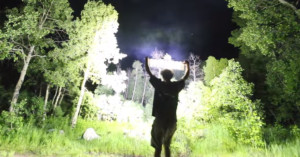
Need a light to illuminate clouds or a mountainside? Check out the world's most powerful flashlight, created by Daniel Riley of Stratus Productions. By stringing together a series of powerful 100W LEDs, Riley created an ultra-powerful 1000W light that puts out a whopping 90000 lumens.

Riley introduces his crazy light in the 5.5-minute video above.

Here’s a Look at Panasonic’s New ‘Post Focus’ Feature in Action

Back in July, Panasonic announced an upcoming feature called "Post Focus" that allows photographers to select their focal point after photos are shot. Instead of using light field technology like Lytro or an array of cameras like Light, Panasonic's feature uses rapid-fire focus bracketing.

Panasonic has begun publishing videos around the world that show how the new feature works.

LifePrint Prints Augmented Reality Photos That Come to Life in Your Hands

LifePrint is a new portable photo printer that aims to change the way photos are experienced. Instead of printing static photos that capture a single moment in time, LifePrint uses augmented reality to let you embed a video inside a printed photograph. The video can be watched by pointing a smartphone camera at the print.

The Unsettling Future of Facial Recognition

The first time I witnessed a camera detect a face to aid the autofocus system, I was amazed. In part because the technology seemed magical and the highlighted rectangle tracking faces seemed like science fiction, and in part because I seem to possess a talent for taking out-of-focus photos.

3RDi is a Camera for the Middle of Your Forehead

Think the Google Glass camera glasses are funny looking? Check out the 3RDi. Pronounced "third eye," it's a new camera that lets you capture your life while you're enjoying the moment by placing a camera smack dab in the center of your forehead, making you look like a camera cyclops.