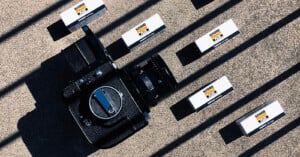
Ilford Pan F+ Is a Beautifully Sharp, Dramatic, and Fine-Grained Film
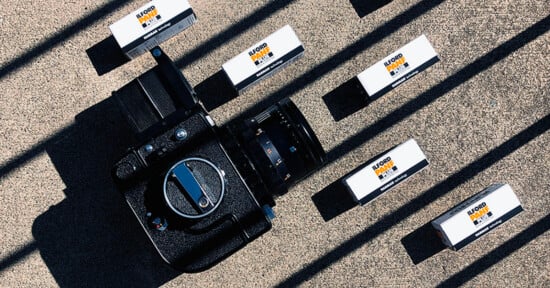
There is a certain clique of photographic films, let’s call it the “Sub-100 Club.” This is a group of films who flaunt ultra low ISO ratings below 100.
There is a certain clique of photographic films, let’s call it the “Sub-100 Club.” This is a group of films who flaunt ultra low ISO ratings below 100.
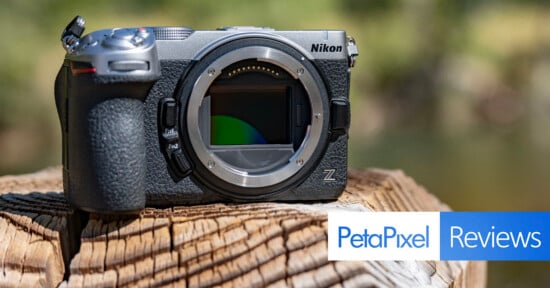
Upon its release in 2025, the Nikon Z5 II ($1,849) immediately became one of PetaPixel’s go-to recommendations for an entry-level full-frame camera. It is surprisingly full-featured and capable, which led to a price increase over the original Z5. Now we have the Z5 IIC ($1,399), a more affordable, smaller version of the Z5 II with nice looks but a glaring omission: no electronic viewfinder.
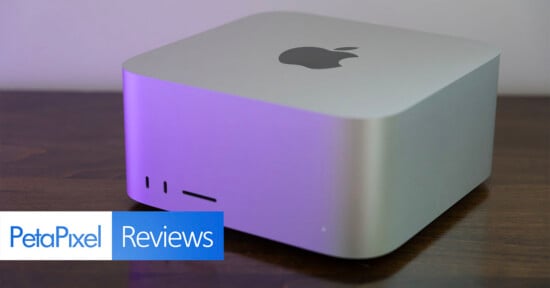
I've been a big fan of the Mac Studio ever since Apple released the first one. It has a great design and form factor and delivers enough power for pros and then some. With the Mac Pro gone, the Mac Studio carries a heavy burden. The new Mac Studio with M5 Max is more than up to the task.
The novelty of the M4-generation Mac mini's redesign has worn off. But on the plus side, there's something else all-new to enjoy, the first Mac with M6 is here.
Welcome back to Film Friday. We’re featuring one of our heavy hitters this week with Kodak’s Ektar 100. Alongside the Portra films, Ektar is one of the most popular films on the market and definitely one of the most used color films out there. The film is well-known for its fine grain, vivid color saturation and poppy contrast.
I have to admit, during Apple's iPhone 18 Pro keynote, I felt underwhelmed. Aperture? Texture? That's it? I am used to getting incremental updates on smartphones annually, but this felt especially so. But after taking around 1,000 photos and hours of video with it, I am surprised to say that I was wrong.
The Canon EOS R8 Mark II has arrived, and it looks a lot different than its predecessor. Despite its bold new angular design, though, the R8 II has the same vibes as the original R8, and that's a very good thing.
The Sony FE 600mm f/6.3 G Master OSS gives Sony photographers exceptional image quality and serious reach in an impressively compact, lightweight package.
The FE 400mm f/4.5 G Master OSS is Sony's long-awaited answer to the über-popular Nikon Nikkor Z 400mm f/4.5 VR S lightweight telephoto lens. Alongside the new FE 600mm f/6.3 GM OSS, the 400mm f/4.5 is also Sony's first alternative to the Sigma 500mm f/5.6 DG DN Sports. Is the 400mm f/4.5 a strong answer to the competition?
I put the Poco F9 Ultra through its paces as a photographer, testing its 200-megapixel main camera, 5x periscope telephoto, and ultra-wide camera in real-world shooting.
Xtra’s Muse 2 Pro isn’t currently available in the U.S., but I have one. Here’s how I got it and my first impressions.
More and more, I find myself prioritizing convenience in a lens rather than ideal optical performance. Having a lens that is compact and versatile with a focal range that covers more of an ultra-wide field of view, means that I don't have to bring a second lens with me.
Google uses the word “Pixel” for its smartphone lineup, but what was once a camera-centric drive to stand out from the pack has become more of a stay-at-home, iterative lateral crawl. Granted, foldable phones aren’t mobile camera trend-setters, but their price tags suggest mid-range or mediocre shouldn’t be on the menu.
The idea behind the original Olympus PEN camera was deeply poignant. Like an actual pen, the PEN camera should be something you can take anywhere. It offers utility, for example, to sign a check or write in a tip on a receipt. But it is also a creative tool for sketching, writing a poem, or whatever inspires you along the way. The humble pen also has a third layer: it need not always be humble. It can instead be a stylish piece of functional jewelry, showing a touch of class peeking out of a …
It has been lean times for fisheye fans invested in the Sony E-Mount. While we’ve seen some affordable third-party options, the last full-frame fisheye with a Sony badge on it was a 16mm for the A-Mount (that was 20 years ago!). Now, Sony is doing its best to rectify the situation with its $1,600 FE 8-14mm f/3.5 G, a fisheye zoom lens which features many of its latest technologies.
Sigma has never made an 85mm f/1.2 lens -- until now. Maybe this lens is late to the party, but the company might have saved the best for last. The new 85mm f1.2 will be available in Sony E-mount and Leica L-mount where previously the only lenses available were manual-focus. This gives Sigma a unique opportunity to make a big splash and, in that metaphor, this lens is a cannonball.
Welcome to another Film Friday spotlight! This time we’re turning our attention to a film that is simultaneously quite popular but still somehow underappreciated: Kodak Gold 200.
I have to admit that I don't have a ton of faith in Fujifilm when it comes to wildlife and sports photography. I don't feel like the autofocus performance of the cameras is quite up to par with the competition when it comes to more demanding situations. However, I do think that the glass lineup is excellent, and it just got even better.
More and more, DxO’s PhotoLab stands out as a worthy alternative because you don’t have to pay for it every month. You pay once and can hang on to that version for as long as you like, though upgrades to new versions come with a fee -- usually about half the price. Version 10 isn’t as big a step forward as past ones but it patches some holes left behind by the others.
Out of nowhere, a package arrived for me from an anonymous source and what was contained inside intrigued me instantly: A Konica IIA in almost perfect condition. It was a gift from a viewer hoping that I’ll give it a try.
Welcome to another Film Friday review, where we like to dig into a particular film emulsion, lay out a bit of its history, share our personal experiences with it and provide some inspiration for why you should try it out. This episode features Rollei Retro 400S, the high speed member of the Rollei Retro family that also includes 80S and Superpan 200.
A few months ago, GoPro launched an entirely new line of cameras, targeted more at professional videographers than the more consumer-focused Hero series has traditionally been. At that time, we were promised a Micro Four Thirds mount camera in the future, and that future is now. After spending some time shooting with a wide array of lenses, I have some thoughts on the utility of this $700 camera and whether it will be the massive success GoPro desperately needs.
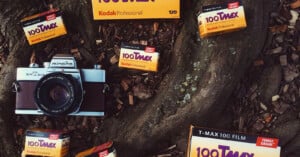
This week we are taking a look at Kodak TMax 100 black and white film (also now known as Kodak Ektapan 100). TMax 100 is part of a family of films that includes both TMax 400 and TMax P3200 films.
Gone are the days of major technological and hardware upgrades from model to model, at least when it comes to the digital camera industry. Smartphones are no exception, and it seems that any annual changes we do see tend to be relatively minor now.
The Honor Robot Phone is no longer a concept -- it’s a finished product now available in China. The first smartphone with a built-in motorized gimbal in its rear camera module is an engineering win for Honor, not least of which because it actually works. After spending hands-on time with the device, it’s clear enough this isn’t just another gimmicky half-baked experiment.
By now, you're used to seeing nearly every YouTube video shot with a little clip-on wireless microphones. They're small, discreet, and they go anywhere, but there's a real case to be made for the onboard camera shotgun mic, too.
Several months ago I was in Alaska shooting a documentary (which will be released one day, I swear!) on the Fujifilm Eterna 55 camera, and finding suitable lenses was one of my biggest struggles.
For this Film Friday review, we are featuring one of the sneakiest best and least expensive color films available to 35mm photographers: Kodak Ultramax 400.
Over the course of two days, I had a few hours with the new Google Pixel 11 Pro, and I've narrowed it down to the four features aimed at photographers and videographers that I think deserve the most attention.
I have a real dislike for most of what I call e-waste cameras on the market, which are those that are capturing the world through the lens of a literal dashcam. They tend to be cheaply built, take poor photos, and are littered with many frustrating compromises. I am instantly skeptical anytime a new cheap $45 point-and-shoot comes across my radar.
Toward the end of the summer of 2024, Lomography struck again, bringing a new (sort of) addition to its Lomochrome line of experimental films. The company introduced Lomochrome Color ‘92 Sun-Kissed, a color negative film meant for experimentation and indulging in nostalgia.
I've been reviewing HDDs and SSDs for the better part of a decade, and there has been one constant throughout all of it: the price-to-speed ratio is pretty much always top of mind. But with the ballooning costs of memory making personal storage absurdly expensive, the value-add found in the Atom EX80 has me rethinking this paradigm, at least a little.
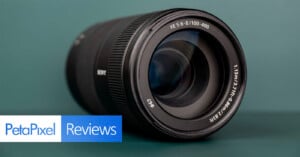
Many of Sony's recent lens efforts have focused on high-end, professional-grade optics, including G and G Master lenses. The company is revisiting the consumer end of its lineup, delivering a new telephoto zoom lens for the masses: the FE 100-400mm f/5.6-8 OSS. It's aggressively priced and versatile, but is it any good?
When I first did my hands-on with the Huawei Pura 90s Pro Max, I figured there was still room to push things further, and I was right to think so. But the interesting part is that it sometimes feels like the phone’s camera system has tricks up its sleeve that aren’t always apparent from the outset.
In just an eight-month period, no fewer than three new medium format panoramic film cameras hit the market. I've used them and am ready to render my verdicts on each, but there can be no doubt: we are living in a panoramic renaissance.
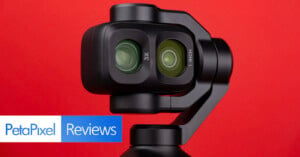
Few cameras have had the impact of the DJI Osmo Pocket 3, an incredibly popular handheld gimbal camera that was beloved by travelers, creators, and adventurers alike. The Pocket 4 was a pretty standard update, which is quite capable but didn’t set the world on fire like the Pocket 3. It seems DJI was holding back with the Pocket 4, because only a few months later and after one of the weirdest, most prolonged rollouts in camera history, we have the Pocket 4P.
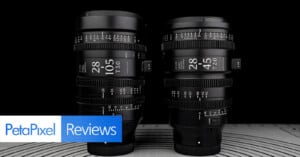
Whenever a new autofocus-equipped cinema lens is announced, I always have mixed feelings. While I often find autofocus extremely useful, the manual focus experience inevitably suffers compared to a mechanically coupled manual focus lens. When they were first teased, I was told that this would not be a problem with the new Sigma Cine Zoom with AF lens series. Now I have reviewable copies of the 28-45mm T2 and 28-105mm T3 and get to answer the very important question: Has Sigma really managed to …
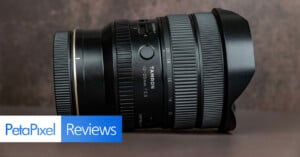
Tamron is turning another page in its lens design and has chosen an impressively fast and wide 12-20mm f/2.8 to lead the way. Is this just window dressing, or has Tamron also upped its image quality game?
Huawei is back -- sort of. The brand that once looked like a serious disrupter in multiple markets only seven years ago is launching its photography-focused flagship phone for global users. The Huawei Pura 90s Pro Max nomenclature is an obvious reference (at least to me) to competitors but the imaging focus is what the Pura models are about.
Nearly nine years after Sony unveiled the Cyber-shot RX10 IV bridge camera, the company is back with its long-awaited successor, the RX10 V. Much has changed in the photography space since 2017, but unfortunately, I cannot say the same about the RX10 V.
This time around, my review process went a little differently. Instead of doing a full deep-dive into one lens, I decided to compare two brand new ones against each other.
High-end mirrorless cameras are pretty much the opposite of what photographers associate with Leica. But can the new 44-megapixel SL3-P change opinions? Leica certainly hopes so.
GoPro needs a win right now. Competition from DJI and Insta360 has never been stronger, its profits are down, and it has not released a flagship Hero Black camera in nearly two years. The GoPro Mission 1 Pro ($699) is its best chance to turn things around.
Often, videographers and video editors are forced to use two separate headphones: one for production and one for personal use. Fender's new Mix headphones are somewhat unique in that they seem designed to adapt to whatever you might need in a given moment with minimal complexity to get there.
Few cameras can claim to have the impact of the DJI Osmo Pocket 3, which delivered a compact, affordable gimbal camera that proved enormously popular. So popular, in fact, that DJI’s closest rival Insta360 has decided to get in on the compact gimbal cam action with the new Insta360 Luna Ultra.
Not everyone needs or wants a foldable phone but if it’s thin and light enough to feel more like a standard smartphone, then is it worth taking the plunge? In many ways, this forms the basis of Honor’s pitch for its foldable lineup, the latest being the Magic V6. Rather than reinvent the category, it simply aims to build off the solid foundation it comes from.
I like rangefinders. When I got back into photography, it was through the experience I had with the Fujifilm X100VI. While not a true rangefinder, it scratched that itch. Later that year, at the urging of Chris Niccolls, I picked up a Voigtlander Bessa R2a, and my fate was sealed.
PetaPixel is expanding its coverage into headphones, but specifically their use through the lens of how a videographer would use them. In the field, at their desk, and while traveling, every videographer and editor has them, and the standard by which they all should be judged is the Sony MDR-7506.
Oyen Digital recently announced the U35 Bolt+ USB4 (80Gbps) portable SSD that makes some pretty lofty promises. Designed for speed and built to withstand the elements, Oyen says it delivers up to 6,000 MB/s transfer speeds. That would be the fastest PetaPixel has ever seen.
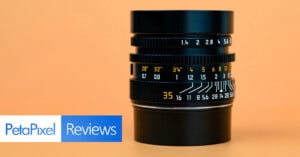
Amongst the plethora of different versions of the Leica M 35mm f/1.4 Summilux lenses, the “11873” model has garnered special attention. This double-aspherical design is famous for its lens character and classic glow at wider apertures. Of course, lens aficionados have driven the price of this original lens to astronomical values, which is where Light Lens Lab has stepped in.