
Huawei’s Honor 7i Has a Flippin’ 13MP Camera
Huawei today unveiled a new smartphone called the Honor 7i. One of its main advertised features is a 13-megapixel rear camera that can flip up and point forward as well.
Huawei today unveiled a new smartphone called the Honor 7i. One of its main advertised features is a 13-megapixel rear camera that can flip up and point forward as well.

One camera that has generated a great deal of interest in recent days is the Sony a7R II, which packs the world's first BSI full-frame sensor, ISO 102400, and 4K video into a flagship mirrorless body.
The folks over at iFixit have just published a teardown of the a7r II, giving us a glimpse into the guts of the highly-anticipated camera body.
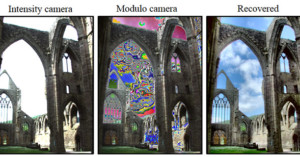
MIT scientists have designed a new camera that will never overexpose a photograph, no matter what the lighting situation is. Called a "modulo camera," it captures a high dynamic range photo with every exposure.
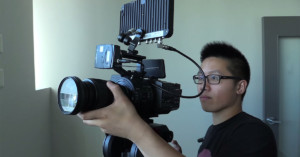
Linus of LinusTechTips just published the 9-minute video above that explores whether shooting video at 4K resolution is worth it. Using both a Panasonic GH4 and a Sony FS700, Linus and his team take to discovering the links between video resolution, video bitrate, and downsampling.

Many photographers unfortunately know the horror of editing a photograph and accidentally saving over the original copy all too well. While Lightroom implements a non-destructive system for saving files, Photoshop can be a bit more dangerous, and accidents do occur. Today, we will show you how to set up a safe workspace area on your Mac that will back up photographs as you edit them.

At the 2015 Flash Memory Summit in California this past week, Samsung unveiled the largest capacity hard drive in the world. It's a 2.5-inch solid state drive (SSD) that can hold 16 terabytes of data (15.36TB, to be exact).
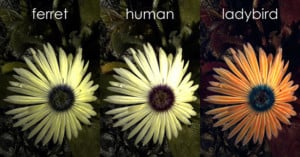
If you’ve ever dreamed of seeing the world through the eyes of a wild animal or insect, then you happen to be in luck. A team led by scientist Jolyon Troscianko at the University of Exeter in the UK has developed an application that processes RAW image data and then converts it into a result that showcases the way various animals might view their surroundings. Best of all, the software is open source and you can download it today.

Friends often ask for copies of photos you took of them at gatherings, and Apple wants to make it less of a hassle to send those images. The company has developed a new photo sharing system that uses face recognition to automatically figure out who's in your shots and have the photos sent to them.

Before you head out for your next vacation, you may want to consider what your photos on Flickr reveal about your travel plans. A new study published in the Royal Society Open Science journal used machine learning algorithms to model the mobility of individuals.
By analyzing the embedded timestamp and geographic information within photographs, the researchers were able to accurately predict where a person is most likely currently located and where they may be headed in the future.

Here's a fascinating (but very heady) video by Computerphile, which recently sat down with image analyst Dr. Mike Pound of the University of Nottingham to talk about the subject of digital image steganography.
Steganography is the practice of hiding one piece of content inside another. In this case, Pound talks about the idea of being able to kind all kinds of content inside digital photograph files.

Photographer Anton Orlov has created what he believes is the world's first camera that's both completely transparent and fully functional. It's called CLERA, short for Clear Camera, and is a camera that you can also look into while a projected photo is being exposed.

Have you ever wished for a video camera that could somehow sift through all your footage and tease out only the most memorable portions? If so, then the new Graava camera is designed just for you. Using a variety of sensors, Graava is automatically able to detect what it believes are “the best or most exciting moments." The result: three hours of boring video quickly becomes five minutes of (possibly) fascinating content.
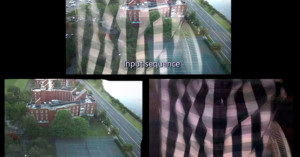
Researchers at Google and MIT have figured out a way to automatically remove reflections and obstructions from photographs, and their latest demo of the technology is amazing.
Check out the 6.5-minute video above for an explanation of the algorithm and some examples of what it can do.
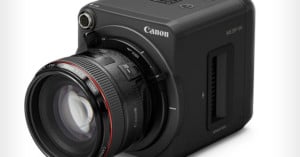
Whoa. Canon dropped a bombshell this morning by announcing the new Canon ME20F-SH, a multi-purpose camera that has a maximum ISO of over 4,000,000. That's right: this camera can basically see in the dark.

Nokia has announced that they will be releasing ‘OZO’, the first commercially available virtual reality camera, later this year. The company says the device has been “designed and built for professional content creators, and [is] the first in a planned portfolio of digital media solutions.” The unit features eight synchronized global shutter sensors, eight integrated microphones for spatial audio, and a design reminiscent of the Star Wars training remote.
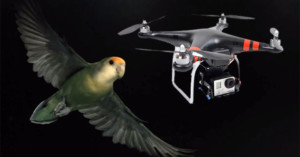
The way lovebirds turn their heads while flying could help engineers build better camera drones that can capture scenes with less blur, even during high-speed maneuvers. That's what scientists are saying after studying the flight of lovebirds with a high-speed camera.
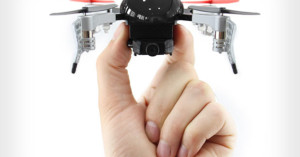
The prospect of cheaply and easily capturing photos and footage from the skies is one of the many aspects that makes camera drones so alluring. With Extreme Flier’s successful funding of the Micro Drone 3 on Indiegogo, it looks like technology that was once exclusive to those with deep pockets will soon be available for less than $200. Featuring computer assisted flying, still photos, live-streaming HD video, and a modular design, the Micro Drone 3 might truly be a drone for everyone to enjoy.
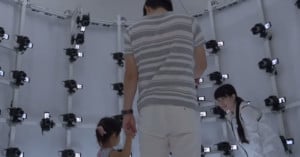
Panasonic has built a new 3D photo booth over in Japan that uses 120 Lumix GH4 cameras arranged around a circular room. The GH4 has a price tag of $1,500, so this new photo booth has a retail cost of $180,000 for just the cameras alone.

In our world of digital photography and high speed Internet, photojournalists can quickly and easily send large numbers of high-res photos to the other side of the globe. Things weren't always so convenient.
The video above shows what a photo transmitter looked like back in the 1970s. What you see is a United Press International UPI Model 16-S, which scanned photos and then transmitted them using a telephone line.

Forever 21 has unveiled what it calls the F21 Thread Screen. It's a 2,000-pound contraption that can display any Instagram photo using 6,400 mechanical spools of thread.
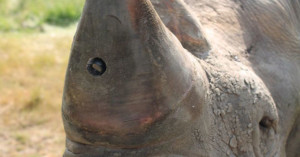
A team of British conservationists have created a new system for stopping the killing of rhinos at the hands of poachers. The idea involves giving rhinos GPS tags, heart rate monitors, and camera implants in their horns.
A few days ago, we shared a report on how Panasonic was developing focus-after-you-shoot technology. The company made an official announcement on it today, but it turns out it's not the light field competitor to Lytro that we had thought.
Panasonic's new "Post Focus" technology actually uses a burst of photos at 4K resolution and 30fps to create a stack of images with focus set at difference distances for each shot. It's like focus bracketing on steroids.
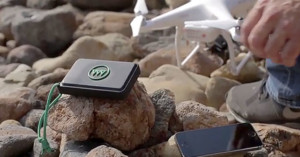
If you've been looking for a way to download, organize, edit, and share your photos and videos on the go without having to use a laptop, GNARBOX is a new product you should look into. It's a new mobile solution that aims to replace your bulky laptop by putting everything you need inside a small, durable device and a smartphone app.

Lytro’s research into the world of light field technology has produced two consumer devices. Their first camera was released in 2012 and introduced photographers to the concept of being able to refocus images after they had been taken. Then in 2014, Lytro released their flagship: the ILLUM. Armed with an integrated 30-250mm f/2.0 lens, a 40 megaray sensor, and upgraded software, Lytro was ready to show the world that their technology wasn’t just a gimmick.

Heads up: if you have a photography website powered by Adobe Flash, you should make plans now to switch to something other than Flash. Flash-based photo sites have long been the source of frustration due to usability issues (and auto-playing music), but now major Internet forces are rallying to kill off the technology.

More and more still photography cameras are getting advanced video features, so it only makes sense that cinema cameras are moving more into the world of still photos as well. Last week, RED launched a new version 6.0 firmware for its cameras, which brings a number of powerful new features for shooting photographs alongside video.

Lytro may have launched the world's first consumer light field camera back in 2011 and a more powerful followup, the Illum (pictured above), last year, but it may not be alone in rushing for future milestones in light field photography.
Case in point: Panasonic is said to be working on the world's first light field camera that uses interchangeable lenses.

Fan’s of Microsoft’s Photosynth technology may be a bit disappointed to learn that the company is retiring their mobile applications for iOS and Windows Phone. Microsoft won’t be ditching their entire Photosynth efforts. However, they note that they will be instead focusing on the more immersive solutions introduced in the Photosynth technical preview. Those who have already downloaded the applications can continue to utilize them, but they are now officially unsupported.

The "bullet time" effect popularized by the 1999 film The Matrix is generally done by arranging a large number of still cameras on a circular track, so most of the rigs out there cost quite a bit of money to put together. A Columbia University researcher named Yan Wang is trying to make bullet-time imaging more accessible. With his CamSwarm technology, all you need is a group of friends who have smartphones or tablets.
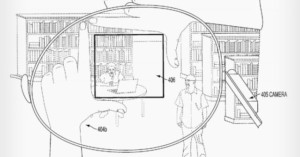
With Google's first prototype version of its Glass head-mounted computer, users can take pictures by pressing a button on the side or by “OK Glass, take a picture.” In the future, composing a specific photo with Google Glass may be as easy as framing the shot with your fingers.

A group of Google researchers have created a new system called DeepStereo that can predict views of scenery it has never seen before. The technology allows a collection of images to be turned into a three-dimensional walkthrough using sophisticated algorithms to fill in areas that were absent from the photographs -- interpolating missing frames for a smooth experience.
The 2-minute video above shows some examples of what the system can create using Street View-style still photos.
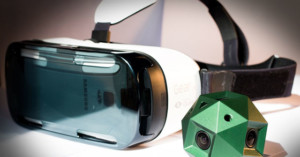
With every report of virtual reality news, we seem to step closer and closer to a world such as the one depicted in Ernest Cline’s Science Fiction novel, Ready Player One. Today is no exception as we report on the new Sphericam 2: a 4K 360-degree video camera for transporting minds through the power of audio and video. The product, launched by Jeffery Martin, is on Kickstarter looking to meet its $150,000 goal, and it is almost there thanks to 130 generous backers thus far.
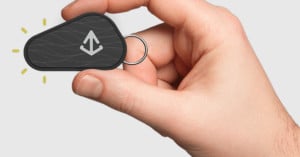
I just installed an ANKR in my camera bag. Over the past 10 years I’ve had this reoccurring dream about my camera gear and my backpack being stolen. I’ve actually had two cameras stolen over the years, unfortunately.
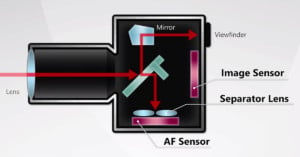
Traditional SLR cameras do phase detection autofocus by directing light onto AF sensors in the camera’s mirror box. Some …
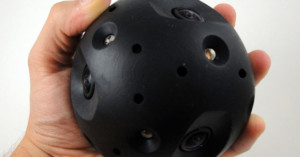
A camera startup called Bounce Imaging has just launched the Explorer, a tactical 360° camera that looks like a black softball with lenses scattered across the surface. The device is designed to help law enforcement scope out risky environments before entering them, capturing a spherical panorama to reveal hidden dangers.

Flickr sparked some controversy back in May after it was discovered that the service's new autotagging feature was prone to mislabeling black people as "apes." It looks like Google Photos developers didn't learn from Flickr's embarrassing misstep: a Google developer is apologizing after it was found that Google's Photos app misidentifies photos of black people as "gorillas."

Getty Images has been known for its premium stock photography and video catalog. Now, with the birth of a major medium on the horizon, the company is looking to get into the virtual reality space. A new application, 360-Degree View by Getty, will give users a chance to experience their favorite moments as if they were there. Best of all, the application is available now on the Oculus Store.

A new website, IsItNude.com, has set out on a mission to help identify whether or not photographs contain nudity. California-based algorithm company, Algorithmia, designed the custom code for a client, but you can use the above link to test it out for yourself. If interested, you can even pay to use the system within your own application or website.

FLIR is a company that has a goal of bringing thermal imaging technology to the masses. Last year, they released the FLIR ONE: a $350 case accessory for the iPhone 5/5s that allowed you to capture thermal photographs and videos. Today, they have introduced the second generation of the FLIR ONE, which boasts a much higher resolution, cheaper price tag, and universal design for both iOS and Android devices.
Many digital cameras these days give you the option of selecting between the camera’s ‘native’ ISO range and a special ‘extended’ (or expanded) ISO range. If you are just starting out in photography, you may be confused about what each labeling means and whether or not there is a technical difference or if it just a bit of marketing. Today we'll be taking a look at the differences between native ISO and extended ISO ranges.

What will we do with all the data we accumulate from photos? On a daily basis, Internet juggernauts like Google, Yahoo, Facebook or Microsoft use highly sophisticated deep learning engines to better understand the content of billions of images uploaded, liked and shared. For now, it is to better serve advertising, but what else can be done?

The shutter fires and your camera’s digital image sensor is hit by photon particles, creating a two-dimensional photograph; this process is one that photographers are familiar with in their day to day work. However, when Lytro introduced the first commercially available light field camera, the game was changed with a sensor that could capture more than before - aperture and focus became adjustable in post-production, and an interactive perspective became possible.
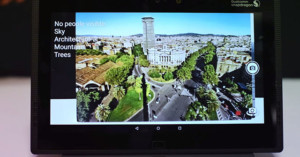
One of the emerging trends in the world of photography is the idea of automated recognition and tagging of things found in photographs. Flickr can now suggest autotags for your photos, and Google's new Photos service lets you search through your unlabeled photos using advanced image recognition.
The same technologies are coming for real-time camera features as well. Qualcomm is working on a system called SceneDetect that lets cameras recognize what they're looking at in real time.

Samsung wants to help make roads safer by incorporating some camera technology into semi-trailer trucks. By adding a front camera and a giant rear "live view" display to the trucks, Samsung's 'Safety Truck' project makes it easier for drivers to see "through" the trucks and know when it's safe to pass.

DxO Labs, the French software company known for photo software and gear tests, made a huge announcement today by unveiling a camera of its own. Called the DxO ONE, it's a pocket-sized 20.2 megapixel camera that aims to combine DSLR-quality with the convenience of smartphone photography.
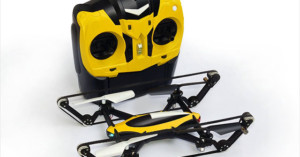
If quadcopters haven’t yet caught your interest then maybe the B-Unstoppable hybrid drone will be the first. A Kickstarter project created by a company named ‘B’ aims to introduce the first commercially available hybrid tank-quadcopter to market. With the flip of a switch, your drone can transform from a dirt-barreling tank into a sky-flying aircraft while capturing footage the entire time via an optional 720p HD camera.
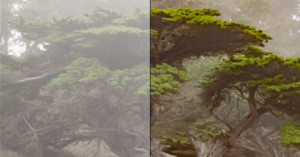
That Dehaze feature that Adobe teased last month is now official for Photoshop's Adobe Camera RAW and Lightroom in a major new Creative Cloud update. The feature helps eliminate fog and haze from photos to create "startlingly clear images."
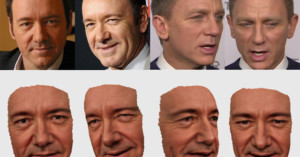
Celebrities now have another reason to shy away from paparazzi photographers. Scientists have created a new technique for creating controllable digital versions of celebrities using only a set of paparazzi photos to reconstruct faces and create convincing expressions.
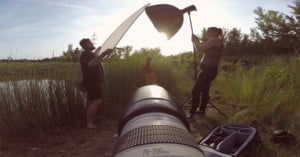
Austrian portrait photographer Gerd Tschebular recently did an outdoor fashion shoot and filmed the whole thing from his camera's perspective. The 2-minute video above offers a behind-the-scenes look at how the different shots were lit and put together.

If you use the Camera app on an Android phone, you may soon be getting a fancy new feature called Smart Burst, which will let you capture a rapid-fire sequence of frames and then have the best one selected for you as the keeper.