Space

Photography and astronomy offer humanity a fascinating view into the universe.

The Time Between: A Look Through the Eyes of an Astrophotographer

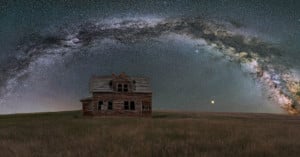
It is the hottest time of the day during the hottest month of the year in Montana, but two hundred feet above me a pair of nighthawks sense a change. They dive and twist with a grace somewhere between fighter pilot and falling leaf, air buzzing through their wingtips, raspy calls beckoning night, commanding the sun to set. The single, sand-rock knob that I sit on here in the prairie while I watch their aerial display will hold the heat I feel through my jeans well into darkness.
7 Pro Tips for Crushing Your Night Photography

People ask me all the time how I get my night shots with the stars, so I made a video on the subject. Here are my 7 tips for crushing night photography.

Why and How to Use a Star Tracker for Photos of the Night Sky

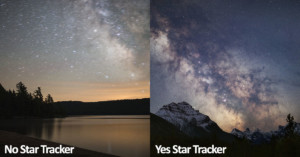
Astrophotography is generally a race against time to capture as much subtle starlight we can before the stars create trails in our images. The movement of the Earth puts a natural limit on how much sharp, subtle detail we can reveal. We have to use super fast, wide angle lenses and high ISO values to see all the awesome detail. Fortunately, a tool exists to circumvent this barrier to reveal more of the hidden magic we have in our night sky.
How I Got Better at Photography

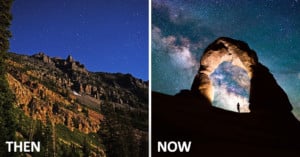
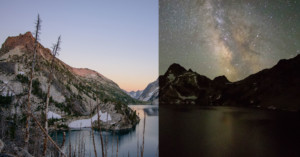
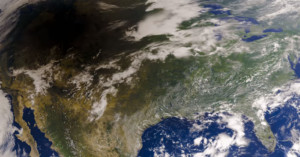
Two years ago, I splurged some money and bought a camera because I'd always wanted to try to take pictures of the stars. The left photo above was the only decent picture out of 700 taken on my first clueless attempt. The right photo was taken about 2 weeks ago. Don't let your dreams be dreams.

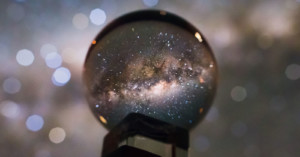
This is the Milky Way Photographed in a Crystal Ball

Photographer and astronomer Juan Carlos Munoz was browsing a flea market in Santiago, Chile, a few days ago when he stumbled across some crystal balls. He bought one for a few dollars and then decided to use it for astrophotography. This "cosmic marble" photo of the Milky Way in a crystal ball is what resulted.

Sony’s ‘Star Eater’ Problem Has Been Defeated in the a7 III

Over the last year or so, firmware updates from Sony introduced a much-publicized penchant for Sony Alphas to “eat” stars even in RAW files, apparently due to an internal noise reduction or anti-aliasing routine users could not turn off. Stars were smoothed away along with the noise in exposures longer than 3.2 seconds in some Sony cameras (and longer than 30 seconds in others). I feel that in the a7 III, the Star Eater has now been largely vanquished.

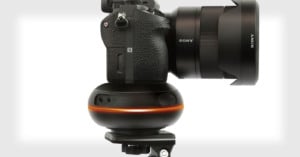
How I Built a Star Tracker for DSLRs

My name is Gerald Gattringer, and I'm a photographer based in Austria. I recently built myself a custom star tracker for DSLRs, and it works pretty well! In this article, I'll share how I did it.

Zooming Into NASA’s Hubble Photos to See the Lagoon Nebula Up Close

NASA's Hubble Space Telescope was deployed on April 25, 1990, so this week marked the 28th anniversary of the telescope providing humankind with breathtaking photos of deep space. To celebrate, NASA released this 30-second video that zooms into the Milky Way's central bulge to a new photo just released of the Lagoon Nebula over 4,000 light years away.

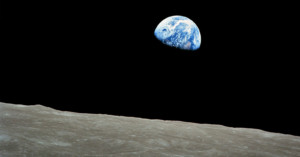
Who Shot the Iconic Apollo 8 Earthrise Photo?

Apollo 8 was the first manned mission to leave Earth's orbit, orbit the Moon, and return to Earth. Since it wasn't a moon landing, though, it tends to not be as celebrated as other manned moon missions. But the photo known as Earthrise was captured during this mission on December 24th, 1968, becoming an iconic piece of history. This 6-minute video from Vintage Space explores the question of who the person behind the camera was.

Star Lens Shootout: Sigma 14mm vs. Rokinon 14mm

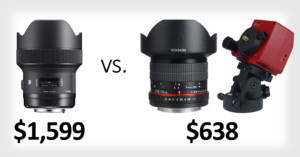
Here's a 10-minute video from Nature TTL that looks at the best lens for star photography. Comparing the Sigma 14mm f/1.8 lens with the Rokinon 14mm f/2.4 and f/2.8 lenses, photographer Matthew Saville says that each has its place in the astrophotography world.

Sony a7R III: The Star Eater is No More

Sony's latest mirrorless cameras have incredible specs and glowing reviews, but astrophotographers have been complaining about a "star eater" issue in which stars are mistaken for noise and removed from long exposure photos. There's some good news, though: it looks like the new Sony a7R III doesn't have the "star eater" problem.

I Photographed the ISS Crossing the Full Moon at 17,500mph

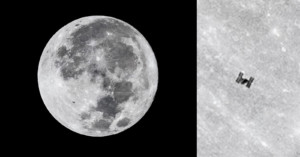
This image was taken on November 4th, 2017 at 4:19 am in Titusville, Florida. It shows the International Space Station (with a crew of six currently onboard) transiting the full “Beaver Moon.” As the ISS orbits Earth at 17,500mph, or roughly five miles per second, the transit lasted just 0.90 seconds.

Rosetta Sent a Surprise Close-Up Photo of the Comet it Crashed On

On September 30th, 2016, the European Space Agency ended the Rosetta space probe's mission by crashing it onto the comet that it had been orbiting for two years. It's been over a year now, but scientists just discovered that Rosetta had sent a surprise final close-up photo of the comet's surface just before impact.

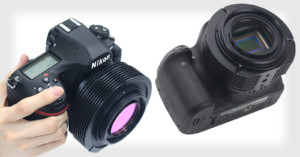
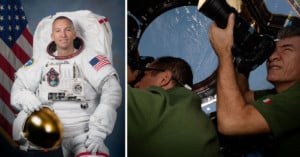
The Nikon Cameras Used by NASA

I recently attended Nikon's first-ever Fan Meeting event in Japan and one of the interesting things I was able to see and learn there was Nikon's history of equipment being used by NASA in space.

Camera on Balloon Captures the Total Solar Eclipse from Near Space

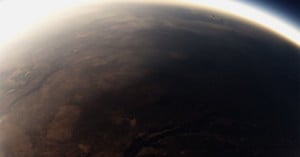
Self-proclaimed "armchair aeroscience geek" Liem Bahneman managed to capture the Great American Eclipse from an unusual and amazing perspective: he loaded cameras onto a high-altitude and shot what the total solar eclipse looks like from the edge of space. The 9-minute video above is what one camera recorded over Central Oregon.

NASA Just Ordered 53 Nikon D5 DSLRs

NASA just placed a hefty order for 53 unmodified Nikon D5 DSLRs. The cameras currently cost about $6,500 each, so if NASA paid full retail price for each camera, they just spent at least $344,500 on this purchase.

The First Permanent Photo Exhibition in Space

Dr. Hersh Chadha is a photographer whose work is literally out of this world. Thanks to a collaboration with printing house Duggal Visual Solutions, Chadha's work is now whizzing around the Earth on the International Space Station in a permanent photography exhibition.