Squeeze Extra Prints Out of Your Inkjet Photo Printer Using a Hair Dryer
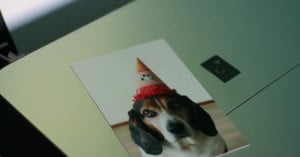
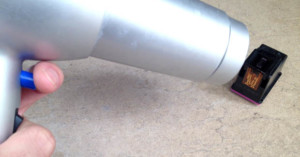
Here's a clever trick for if you ever need to print out a photo but find your inkjet cartridges low (or dried out): bust out your hair dryer.
Here's a clever trick for if you ever need to print out a photo but find your inkjet cartridges low (or dried out): bust out your hair dryer.
Just in case this question ever comes up while you're playing the world's hardest game of photography trivia, what you see above is the first photograph ever snapped in Finland. Mats Söderlund of The Crop Factor writes, …
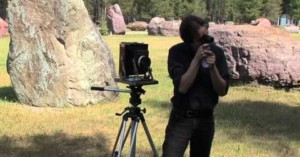
Since 2005, photographer and photography lecturer Robert Burley has been documenting the demise of film photography through film photographs. He has traveled around the world with his 4x5 field camera in tow, capturing the demolition of buildings, the equipment that once powered a giant industry, and the desolation of factories that were once teeming with workers.
Want to know how astronauts photograph in space? Just ask Donald Pettit, NASA astronaut and “amateur” photographer. Donald Pettit has called the International Space Station home for over 370 days, and in that time he’s captured some of the most mind-blowing photos of space – and Earth – we’ve ever seen.
"Say cheese." It's an expression that has become so much a part of our culture that everyone understands it to simply mean, "Smile," rather than a command to actually utter the word "cheese." For many people, smiling and posing for casual snapshots go hand-in-hand, but why do people smile for pictures, and when did this practice begin? After all, if you browse portrait photos created in the early days of photography -- or even half a century ago -- you'll find the subjects wearing stoic, …
Ever wonder what the average age of professional photographers is?
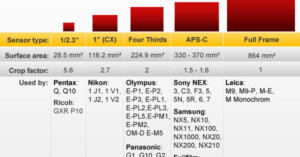
Mirrorless cameras feature sensors larger than compact cameras and bodies smaller than DSLRs, but how do their sensor sizes compare with one another? To give you a better idea of how formats such as Nikon CX and Olympus/Panasonic Four Thirds stack up against each other, Digital Camera Database created this helpful graphic showing the relative sizes of each format.
Yesterday we reported that Nikon Photo Contest is no longer accepting film photos starting this year. Turns out it's not the only prestigious photo contest with rules that are causing some discussion.
Want to see how studio lighting equipment is made? David Selby of Lighting Rumors was recently invited to tour the Shenzhen factory of a Chinese lighting company called NiceFoto, which sells gear both under its own brand name and to various international distributors under different marques. He snapped a number of photographs showing various workspaces where equipment is assembled.
Astronomers at the European Southern Observatory's Paranal Observatory in Chile have released a breathtaking new photograph showing the central area of our Milky Way galaxy. The photograph shows a whopping 84 million stars in an image measuring 108500x81500, which contains nearly 9 billion pixels.
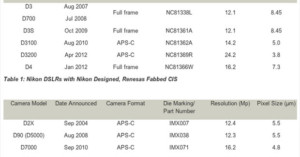
Electronics reverse-engineering company Chipworks has published an article that discusses and reviews Nikon's use of Sony CMOS sensors in certain DSLRs: …
Editor's note: "Tenzing Norgay" is the penname used by the author of this article. He is not related to the famous mountaineer.
Here's an old-ish video that's been making the rounds again lately (viral videos are like viruses -- they don't go away very easily). Titled "Camera shutter speed synchronized with helicopter blade frequency," it shows what can happen when your camera is synchronized with the RPM of a helicopter's rotor blades. The resulting footage makes the helicopter look as though it's just floating in the air!
Unless you only shoot in monochrome, color likely plays a huge part in the experience of viewing your photographs. You may be aware of how you use them, but do you know how the colors in your images affect the people that look at them? PBS Off Book put out this fascinating video today that explores just how powerful colors are.
Canon released a new firmware update for the 1D X this morning that gives the DSLR cross-type autofocus when using certain telephoto and extender combos that have a max aperture of f/8. The announcement page includes a list of lens/extender combinations that are now compatible.
My overview of American government goes generally like this: (1) Something happens. (2) The government passes some laws in response to it, adds on a few pork projects, and raises taxes to pay for the laws and the pork. (3) The laws (or pork) cause an entirely new problem. (4) Repeat.
Ever wonder how Google manages to capture street-level photographs of entire cities for its Street View? It's done using a giant fleet of camera-equipped cars. Google employee Masrur Odinaev recently shared this photograph -- taken by a Street View car -- showing one of Google's Street View car parking lots. We see a large fleet of Subaru Imprezas that have panoramic cameras mounted to the tops.
We've featured a couple of projects involving cameras strapped to birds recently (see here and here), but photographing with birds is anything but a new idea. It was actually invented a little over a century ago, in 1907, by a German photography pioneer named Julius Neubronner.
In the market for a new photo printer and not sure what to buy? Here's a tip: shelling out a little more dough on the printer itself could potentially lead to massive savings over time.
This is probably a "duh" fact for many of you, but one that some of you have perhaps never heard or realized before: Did you know that the flashes in the Canon Speedlite lineup are named after their maximum guide numbers? To figure out the power of your Speedlite, just take the model name and hack off the zero at the end to get the GN (e.g. 430EX has GN 43, 580EX has GN 58).
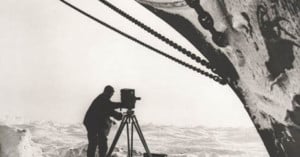
If you ever need some encouragement for sticking with photography when times get tough, you should read about the adventures of Frank Hurley. Born in Australia in 1885, he took up photography as a young man and eventually became skilled enough to be selected as the official photographer for multiple expeditions to Antarctica and for the Australian military in both world wars. Among his many photographic escapades, one stands out from among the rest: being stranded in the Antarctic for nearly …
You don't get to 200,000 followers without earning a few perks. A couple of months ago, we reported that a number of Instagram power users had been flown out to the US Open in New York as part of various companies' marketing campaigns. Free trips and freebies like that one are becoming more and more common for Instagrammers with large followings.
Want to see what it's like to photograph wild gorillas up close and personal? Check out the clip above from the 1974 documentary Gorilla by Dieter Plage. It shows Belgian photographer and conservationist Adrien Deschryver in heart of Kahuzi-Biega National Park in Zaire, snapping pictures of gorillas from a short distance away.
Want to see what it looks like for a photo to go viral on Facebook? Check out these visualizations by San Francisco-based studio Stamen Design, which took three of the most shared images on the social networking service -- Marvin the Martian (visualized above), Famous Failures, and Ab Fab London, all shared by George Takei -- and created a visualization using the data from the hundreds of thousands of shares.
As President Obama's four-year term in office comes to an end, TIME magazine caught up with his official photographer Pete Souza for thoughts on his career so far. It's a pretty fascinating read: …
YouTube user uyt384 does tests on old camera lenses, but not in the way you'd expect. Instead of testing the build or image quality, he uses a Geiger counter to see how much radiation is being emitted by each one.
Have you ever wondered why computers always indicate that your hard drive or memory card has a smaller storage capacity than what's advertised on the box (and the card itself)? No, it's not because you got a defective card, it's not because your card came preloaded with a bunch of unwanted files (your hard drives, maybe), and it's not because the manufacturers are cheating you by skimping out on the storage space (well, not directly, at least). The reason has to do with math and marketing.
Here's a thought-provoking video making the rounds online -- one that you might want to watch if you love photography and have been thinking hard about your career path. It's based on a lecture given decades ago by philosopher Alan Watts, who poses the question, "What would you like to do if money were no object?"
Here's an interesting piece of photo trivia for today: did you know that Apple's similarities with Kodak don't end with Steve Jobs modeling his career and his company after Polaroid? The ongoing dispute between Apple and Samsung is strikingly similar to the battle Polaroid had with Kodak many decades ago.
Back in the summer of 1942, the US Army called upon a young man named Glenn W. Eve (above left) for World War II. After finding him to be 5'9" and just 125 pounds, the military deemed him unfit for combat. Unlike Steve Rogers, there was no experimental serum available to Eve, but luckily he had a desired skill: photography. In 1944, Eve was promoted to private first class and placed in the Signal Photo Corps in order to document the happenings in the Pacific.
People sometimes use the expression "slow as a glacier" to describe something so stagnant that even the speeds of snails and molasses would feel inadequately fast in comparison. The fastest glaciers ever measured move at tens of meters per day, while the slowest ones may budge only have a meter over the course of a year. Most of the time, the movement is too slow for the human eye to see.
New York magazine editor Christopher Bonanos has written a new book titled Instant: The Story of Polaroid, which provides a behind-the-scenes look at the rise and fall of Edwin Land's revolutionary company. In the video above, Bonanos offers a brief history of Polaroid, including how Land's ideas inspired entrepreneurs to follow: …
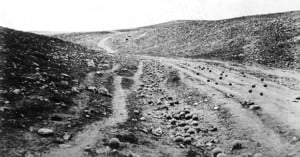
You might recognize the photograph above. Titled Valley Of The Shadow Of Death and snapped by British photographer Roger Fenton in 1855, it's considered to be one of the oldest known photographs of warfare. Problem is, it might also be one of the oldest known examples of a staged photograph.
Ever wonder what it looks like when you fire a gun underwater? Firearm enthusiast Andrew Tuohy of VuurwapenBlog recently decided to find out. Taking his .40 Glock 22 into his swimming pool, he captured some high speed videos of himself firing a round using an ordinary Pentax Optio WG-2 waterproof compact camera (which has a 120fps movie recording mode). The photograph above is a still taken from one of the videos.
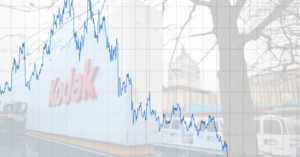
Bankruptcy has not been friendly to Kodak. The once-important camera company -- now a printing company -- is worth less than 20 cents a share today, a completely different picture than its glory days in the mid-1990s, when the price briefly surged beyond $90. Now that the share price is so low, would it be wise to invest in the company in hopes that it emerges from bankruptcy protection? Matt Krantz over at USA Today says no, and writes, …
Want to know what the professional photography industry was like over half a century ago, and what advice was commonly given to aspiring professionals? Check out this 10-minute vocational guidance film from 1946 that offers a quick overview of the various types of photography that people went pro in at the time. Suggested careers include portrait photography, commercial photography, and photojournalism.
What you're looking at is the most zoomed-in photo ever shot by mankind. Titled the eXtreme Deep Field (XDF), it's a followup to the famous Hubble Ultra-Deep Field photo created in the mid-2000s. Scientists combined 10-years-worth of Hubble Space Telescope photos to create this resulting image that shows 5,500 individual galaxies, some of which are one ten-billionth the brightness of what our human eyes can see.
Check out this beastly camera used by Signal Corps during the Cold War. It featured a 100-inch infrared lens that was capable of seeing through over twenty miles of hazy air -- perfect for capturing reconnaissance photographs of enemy strongholds. The camera was so massive that it required two people to operate: one to frame the shot, and one to snap the photo.
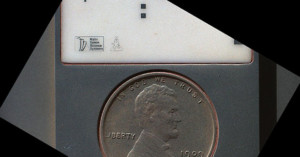
Did you know that there's US currency on Mars? It's true: when NASA's Curiosity rover was launched back on November 26, 2011, one of the things it carried with it was a penny from over a century ago. The 1909 Lincoln cent is part of the rover's onboard calibration target used to check that the cameras are working properly.
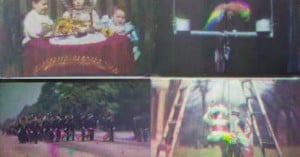
The world's first color moving pictures have been discovered, dating back to 1902. The film sat forgotten in an old metal tin for 110 years before being found recently by Michael Harvey, the Curator of Cinematography at the National Media Museum in England. The pictures were part of a test reel of early color experiments by an Edwardian inventor named Edward Raymond Turner, and show Turners children, soldiers marching, domesticated birds, and even a girl on a swing set.
This photograph of Japanese astronaut Aki Hoshide taking a self-portrait was published to NASA's amazing 2Explore Flickr account on Wednesday. It was snapped during a six-and-a-half hour spacewalk outside the International Space Station. The EXIF data embedded in the photo reveals that he was using a Nikon D2Xs with a 10.5mm fisheye lens at f/11, 1/500, and ISO 200.
In daguerreotype photography, the first commercially successful photographic process, a positive image is recorded directly onto a silvered copper plate. Although mercury is traditionally used to develop the plate, there's a way of creating daguerreotypes called the Becquerel method that eschews mercury in favor of non-lethal ingredients.
Did you know that in California, "rights of publicity" are transfered to a celebrity's heirs after the celebrity dies? This means that photos of the famous individual may continue to be subject to the heir's licensing fees when the photo owners want to license them out for use in commercial products. A court ruling issued last week provides an interesting case study into how this California law can affect photography rights. PDN writes, …
Photo printing company PhotoBox recently conducted a survey of 1,000 women aged 18-65 to find out how they feel about being in photographs. An interesting finding was that the women generally cared much more about how other women view the images than how men view them. Only 10% of women care about what men think of their photogenic-ness. Of the other 9 in 10 women, it's the 36-45 demographic that cares the most about being judged by other women.
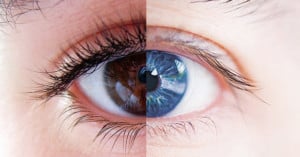
If you think male and female photographers sometimes have very different styles, the reason might go beyond their tastes and approaches to shooting. Men and women see the world differently -- literally. A new study by vision researchers have found that the two genders have different ways of collecting visual information.
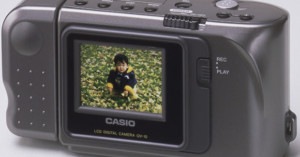
Did you know that LCD screens and live view didn't arrive until a number of years after digital cameras hit the market? The first consumer digital camera that featured those technologies was the Casio QV-10 (seen above), which hit store shelves in 1995. However, the screen was purely for framing shots, not for eyeballing exposure, and it took roughly 10 years for live view as we know it to become ubiquitous.
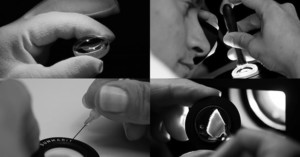
Ever wonder why Leica lenses cost so much? Among the many reasons are two big ones: the lenses are all handmade, and are produced in very small batches. Joe Minihane of Humans Invent has a great interview with Leica's Director of Product Management, Stefan Daniel, who shares some interesting facts about how their manufacturing process works: …
Try imagining a make-believe creature that has absolutely no basis in reality. Can you? Not really. The truth is, everything imaginary is simply a rehash of things that actually exist... just in a combination that doesn't exist. Aliens are simply strange combinations of humans and other creatures that we know. Unicorns are horses with horns. Bigfoot is some guy that accidentally spilled Rogaine all over his body.
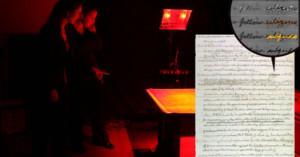
Hyperspectral cameras are those that can capture information in the electromagnetic spectrum, far beyond what the human eye -- and consumer cameras -- can see. American Photo Magazine has a fascinating feature that tells of how researchers around the world are using the cameras to uncover century and millennium-old mysteries: …
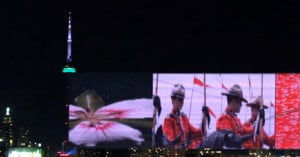
If you've visited the CN Tower in Toronto, Canada anytime during the past five years at night, you've likely enjoyed the dazzling light show that appears on the side of the tower. The 1,330 uber-bright LED lights (which cost a cool $2.5 million) were installed in the elevator shafts back in 2007, and are turned on from dusk every day until 2 the next morning. What you might not have known, however, is that the seemingly random colors that appear are really not so random after all: they're …