OM Exec Says Company Considered Expanding Into Larger Formats
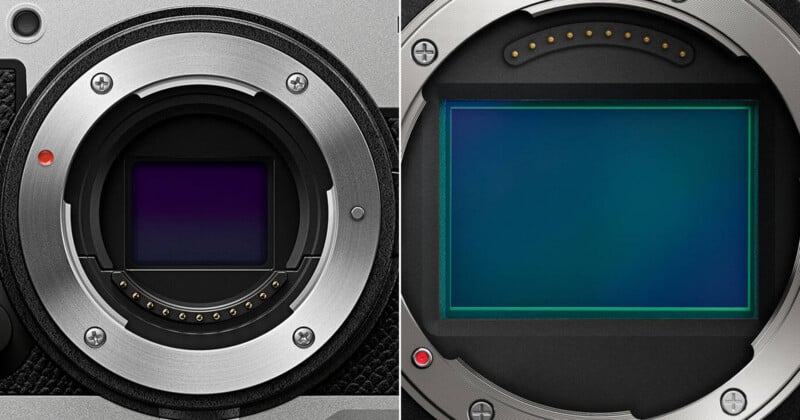
Two longtime OM Digital Solutions (OMDS) executives sat down for a Japanese-language interview on OM’s YouTube channel, covering a wide range of topics, including the company’s development philosophy, whether it should develop cameras with larger image sensors, and what makes Micro Four Thirds special.
The interview, highlighted by Digital Camera Life, is fascinating. The full conversation is below with automatic translations, but a few specific quotes are worth further analysis.
“Do you what’s needed to take a good photo?” asks Setsuya Kataoka, COO and CTO of OM Digital Solutions. “It’s having a camera.”
That said, it’s little surprise that Kataoka strongly believes in the power of relatively compact, lightweight Micro Four Thirds digital cameras.
“Within the company, has there even been discussion or consideration about whether we should make a full-frame or APS-C camera?” Kataoka asks Eiji Shirota, Head of the OM System Business Unit.
“Well, yes,” Shirota responds. “Such suggestions occasionally come up and fade away repeatedly over time.
“But personally, as I mentioned earlier, the value we want to deliver through Micro Four Thirds is clear, and to achieve that, it consistently had to be Micro Four Thirds.

“Of course, I considered what would happen if we went full-frame, but I never felt compelled to switch or build one,” Shirota concludes, asking Kataoka what he thinks about APS-C and full-frame cameras.
“To be honest, shortly after we started Micro Four Thirds, I briefly considered expanding into full-frame or APS-C as a future option,” Kataoka says.
This is quite the revelation. It would have been really shocking if OM System, then Olympus, had pivoted away from Micro Four Thirds. Kataoka continues, saying that ultimately, after discussing it more, he decided it was not the right move for the company.
“But back then, when I consulted a senior colleague, he told me: ‘Before thinking about what happens with other formats, have you truly pushed Micro Four Thirds to its absolute limits? Only after you’ve thoroughly explored and exhausted every possibility might that make sense. But jumping to other formats before you’ve even fully thought things through — that’s just wrong.'” Kataoka recalls.
“Hearing that, I thought, ‘He’s right.’ Since then, regardless of external or internal questions about why we don’t do full-frame, I’ve spent the last 15 years continuously thinking about how we can surpass those limits using Micro Four Thirds.”
Of course, as OM System (and Panasonic) have developed new Micro Four Thirds cameras and technologies over the years, the same is true of APS-C and full-frame digital cameras. Arguably, given the different market scale, full-frame technology has expanded even faster, at least at the top end.

Shirota acknowledges that there always has been and likely always will be some gap between Micro Four Thirds and full-frame cameras, but how meaningful that gap is, and what size it is, depends significantly on the customer.
“While the gap with full-frame may not vanish — they won’t be identical — once image quality reaches a level that fully satisfies users, that physical gap stops mattering,” Shirota says. “We could clearly envision that goal, so we held firm in our beliefs, defined the value we wanted to deliver, and set out to create things that didn’t yet exist. That is true R&D, walking our own path rather than following others. In that sense, full-frame was hardly on our minds.”
Katoka adds that full-frame isn’t bad, noting that full-frame cameras have their own strengths.
“And Micro Four Thirds has its own strengths,” Kataoka says. “I’ve always felt there are plenty of scenarios where Micro Four Thirds is undeniably the best choice. How do you see that?”
“Yes, exactly. People often ask us, ‘Which one is better?’ But it’s not about good versus bad. It’s about which one fits the scenario you want to shoot in, or which one lets you capture images as intended. When we frame it that way, customers understand: if portability is key, Micro Four Thirds is ideal. If someone prioritizes absolute ultimate image quality in specific setups, full-frame is an option. An increasing number of people are choosing Micro Four Thirds, and providing those clear choices is extremely important,” Shirota says.
One of the biggest gaps between top-of-the-line Micro Four Thirds cameras and the best full-frame cameras today comes down to resolution. This is something PetaPixel has spoken to Shirota about before, too.
Last year, PetaPixel asked Shirota about resolution limits with Micro Four Thirds sensors and how computational photography features like Handheld High-Res Shot can help close the gap.
“Basic hardware performance has continually improved, which resolved many issues,” Shirota says in the new interview. “And we’ve developed features to offset any inherent limitations… We genuinely feel that complaints like ‘It lacks X, so it’s unusable’ have decreased significantly.”

While some photographers may still want more megapixels, OM is definitely focused more on other aspects of a camera’s usability and performance. Both Kataoka and Shirota specifically cite OM System’s emphasis on weather sealing and ruggedness.
When asked about photos shot on Micro Four Thirds cameras that resonated with them, Kataoka and Shirota both talked about images shot in extreme situations.
“It might not be obvious just by glancing at the picture, but photos enabled by our weather-sealing and low-temperature durability come to mind. For example, a picture of an ordinary-looking landscape that was actually shot at -40°C, or a photo of a snake taken deep in the Amazon after a three-day trek carrying only our system. The story behind the shot — providing a system that empowers people to reach those places and capture them — is vital to our core value,” Kataoka says.
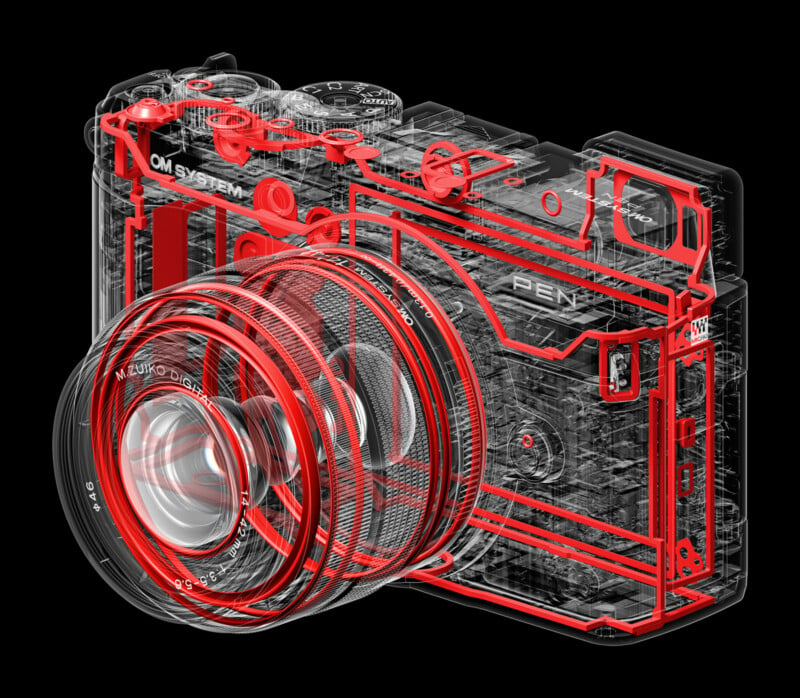
“For me, the most memorable photos are by photographer Tetsuro Shimizu in Mongolia. He traveled on horseback for days, camping out along the way. Since everyday supplies had to go on the horses, the camera gear had to go as well. If the camera system weren’t compact, taking it along wouldn’t even be feasible,” Shirota adds.
“And facing sandstorms or -40°C temperatures at the destination, when he showed us the photos saying ‘This is how I captured it,’ I remember feeling deeply relieved. I wanted to praise the camera, like ‘Great job coming back with those shots.’ Delivering a system that fulfills a photographer’s desire to go to extreme places and bring back art really stuck with me.”

This ultimately ties into OM’s emphasis on the overall usability of their cameras. Shirota says that if a camera is too big or heavy to carry, it has no value.
Kataoka concurs.
“Designing equipment light and compact enough to make someone think, ‘Maybe I’ll pack one more lens today’ — that really makes me realize how important this is.”
OM System is riding high right now thanks to the very popular new OM System PEN camera, which has sold out in Japan, but one camera doesn’t make a camera company. Micro Four Thirds has generally struggled in recent years to make meaningful leaps forward, something OM System believes it can change.
“To achieve sustainable business growth, we believe it is essential to invest not only in delivering short-term results, but also in technologies and manufacturing capabilities that will drive our future competitiveness. To support this, we have established a management structure that enables faster and more flexible decision making on mid- to long-term investments in new technologies, product development, and manufacturing,” OM Digital Solutions CEO Shigemi Sugimoto told PetaPixel earlier this year. Kataoka and Shirota touched on similar topics.
"Our goal is to become the number one outdoor camera brand. Under our tagline, 'Discover More Adventure', our focus is supporting people who want to explore new creative photography and enriching their photography lifestyle through products and services," Kataoka says.
"Carrying a camera and taking photos enriches people's lives. That is our core belief, and we will stay true to it without wavering," adds Shirota.
Image creditsHeader photo includes photos by OM System and Panasonic.
Affiliate Disclosure PetaPixel articles may include affiliate links; we may earn a commission if you buy through one.