Educational

PetaPixel's editorials are in-depth stories, thought-pieces, and opinions on the photography industry led by the minds of our editorial team.

The Kent State Massacre Photo and the Case of the Missing Pole

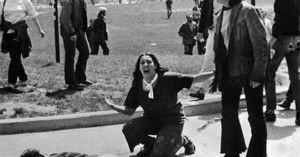
Recognize this photograph? It shows 14-year-old Mary Ann Vecchio screaming and kneeling over the body of 20-year-old Jeffrey Miller, shot during the Kent State Massacre. Kent State photojournalism student John Paul Filo -- just 22-years-old at the time -- captured the image, and was later awarded the 1971 Pulitzer Prize for Spot News Photography.

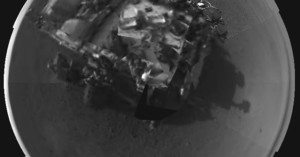
How the Curiosity Rover’s Photography Decisions Are Made

Earlier this month, when we were exploring why the NASA Curiosity rover's cameras are so lame, we mentioned that the total amount of data the scientists can transfer on a daily basis is only around 31 megabytes. As anyone with a restrictive cell phone dataplan can attest to, having a small data cap makes you think carefully about the data that you choose to download.

A Facebook Timeline Showing the History of the Photograph

If the photograph was a living person, what would his Facebook timeline look like? Photo aggregation service Pixable decided to answer this question, creating a giant infographic on the history of the photograph with the layout of a Facebook timeline. It all starts at the very bottom of the timeline, with the photograph's birth at around 1000 AD. Over the years, we see the marriage he has with Kodak, the Kodachrome process born to the couple a few decades later, and a subsequent relationship …

Throw-Away Photographs Shot During Neil Armstrong’s Visit to the Moon

Neil Armstrong passed away this past Saturday at the age of 82. In addition to being the first man to walk on the moon, he was also the first photographer to set foot on that hunk of rock 238,900 miles away. Armstrong and fellow astronaut Buzz Aldrin snapped a total of 122 70mm color photographs using modified Hasselblad 500EL cameras during their short visit on July 21, 1969. However, not all of them were pretty.
Gregory Heisler’s Controversial Photo of President George H.W. Bush for TIME

American portrait photographer Gregory Heisler (whom we featured yesterday) is probably best known for his 70+ cover portrait photos for TIME magazine. One of his most famous portraits shows a double exposure, "two faced" photo of President George H.W. Bush. The photograph, shot entirely in-camera, was used as the first TIME "Person of the Year" cover photo.

Inspiring Photographer Talks @Google

On of the neat things about working at Google is the fact that the company loves letting its employees hear from the world's best minds through the AtGoogleTalks. Through the series of lectures, Google invites well-known individuals to share on their area of expertise for 40-70 minutes. In addition to the thousands of politicians, musicians, and entertainers who have shared so far, there have also been a number of photographers invited for Photographers@Google presentations.

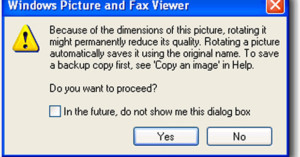
Why You Should Always Rotate Original JPEG Photos Losslessly

Recognize the warning message above? It's what Windows XP would show whenever you tried to rotate a JPEG image 90° using the Windows Picture and Fax Viewer. If you're like me, you probably didn't think twice about it (and checked the checkbox), since you had done it many times already and hadn't noticed any difference in quality. After all, how hard can it be to turn a digital photo sideways? You just move the pixels around right? …

Using a Face Detector to Generate Creepy Mugs from Random Polygons

The man in the moon and the face on mars. These are both the result of a psychological phenomenon known as pareidolia, which involves the brain trying to perceive random signals as significant. It's one of the brain's face detection mechanisms, and causes us to see faces where they don't actually exist -- the Virgin Mary's face on toast, for example.

Why the Mars Curiosity Rover’s Cameras Are Lame by Today’s Standards

Ever since NASA's Curiosity rover landed on Mars and started beaming back photographs earlier this week, people have been wondering, "why are the photos so bad?" The criticism seems merited: consumers these days are snapping great high-res photographs using phones that cost just hundreds of dollars, yet NASA can't choose a camera with more than 2-megapixels of resolution for their $2.5 billion mission? …

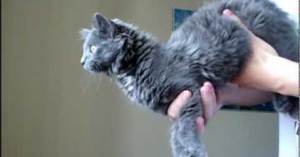
A Cat with Built-In Image Stabilization

A couple years ago we reported on the amazing fact that chickens have image stabilized heads, and shared some interesting "research" into using chickens as camera stabilizers. It turns out birds aren't the only creatures with IS systems built into their hardware: cats have it too!

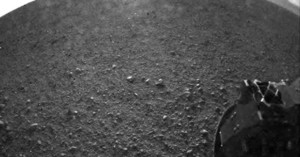
How NASA’s Curiosity Rover Will Shoot Photos of Mars

NASA's Curiosity rover landed on Mars this morning with much fanfare here on Earth. The photo above is one of the first photographs snapped by the rover and beamed back to Earth. Captured through a fisheye wide-angle lens, the landscape photo hows a gravel field in the foreground and the rim of the Gale Crater (the rover's new home) in the distance.

A bright green grassy hill under a blue sky with scattered white clouds. The scene is sunlit and peaceful, with no trees or buildings visible.

The Most-Viewed Photo of All Time

Ever wonder what the most viewed photograph of all time is? One leading candidate is Bliss, the photograph chosen by Microsoft to be the default wallpaper of Windows XP. Showing rolling green hills in Sonoma County, California, the image was shot by the side of a highway by professional photographer Charles O'Rear using a medium format camera. It has reportedly been viewed by over 1 billion people since it first emerged in 2002.

Random Things You Can Use to Make Food Photos More Appealing

There's a reason that most of the foods you buy never look like the photos used to advertise them. Food photographers and stylists have all kinds of random tricks up their sleeve for making food items look picture perfect. Here's a list of various household products that are commonly used to make dishes look more appealing. A warning, though: you might lose your appetite.

London Olympic Photographs from Over 100 Years Ago

The Olympic games in London this year makes London the first city to have hosted the modern Olympic Games three times. The previous times were in 1908 and 1948. Here are some photographs captured at the 1908 Olympics 104 years ago, during a time when megaphones were used to announce events, top hats were all the rage, and dresses were worn by female competitors (this was the third games in which women were allowed to compete).

TED Talk on Femto-Photography Camera that Snaps at One Trillion FPS

This fascinating TED talk was given last month by MIT researcher Ramesh Raskar on his femto-photography camera that snaps images at a whopping one trillion frames per second -- a rate so fast that it can capture light in motion. The technology may one day be used to build cameras that shoot around corners or see into the human body without X-rays.

40 Years of Landsat: Time-Lapse Videos Show Changes to Earth’s Face

Yesterday marked the 40th anniversary of Landsat, the longest-running program focused on acquiring satellite photos of Earth. The Landsat satellite snaps one completely photo of the Earth's surface every 16 days, and the petabytes of photos collected over the years have given scientists a view into how our planet's surface has changed over time, whether by natural or human-caused means. Google is currently working to make the photos easily enjoyable by the general public by transforming them …

Dirkon: The Vintage DIY Pinhole Camera Made of Paper

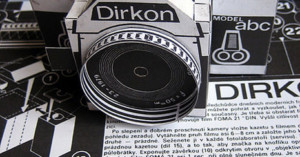
The Dirkon pinhole 35mm camera is made entirely from paper cut from a template by designers Martin Pilný, Mirek Kolář and Richard Vyškovský. The three published the template in a 1979 issue of Czechoslovakian magazine ABC mladých techniků a přírodovědců (translated as An ABC of Young Technicians and Natural Scientists). While original prints of the magazine are rare, the Dirkon gained cult popularity in Chzechoslovakia.

The Reasons and Myths Behind the “No Flash Photography” Sign

There's always been a general consensus that there is an actual reason behind the "No Flash Photography" signs we see plastered all over the place. In some places it makes sense -- not flashing photosensitive animals at the aquarium speaks for itself -- but what about art galleries and museums? Why exactly do we have to rely on natural light there? According to Steve Meltzer on Imaging Resource, no good reason at all.

Atari Compugraph Foto: An ASCII Art Photo Booth

Did you know that Atari was once in the "photo" making business? In 1975 -- 3 years after it's founding -- the young video game company launched the Compugraph Foto, a large coin-operated machine that snapped photos and printed them out as ASCII portraits. Subjects stood in front of a monitor showing their face and then pressed a series of buttons, triggering the 950-pound machine to print out the portrait as a 14x11-inch "photo" on computer paper.

The Fancy Robotic DSLR Rigs Covering the Olympic Games

This behind-the-scenes video by the Associated Press gives a neat look at the various robotic cameras the agency will use at the London Olympic Games (earlier this month we shared some of Reuters' rigs). Fancy remote-controlled rigs will allow for many photographic firsts, as cameras will be found in locations that were previously inaccessible. Wired writes that despite their usefulness, robotic cameras are causing some human photogs to sweat: …

Edwardian Sartorialist: Street Fashion Photos from a Century Ago

The Sartorialist might be a big name in street fashion photography these days, but snapping impromptu photos of the latest clothing trends is nothing new. Over a century ago, a photographer named Edward Linley Sambourne did the same kind of photography on the streets of London and Paris using a concealed camera. His images form a beautiful historical record of what people wore that deviates from what people typically think of when they hear "Edwardian fashion".

Common Photography Mistakes Made by Beginners Back in 1902

Why My Photographs Are Bad is a photography book for beginners first published in 1902 by a man named Charles Maus Taylor. The book contains many of the same basic tips that can be found in introductory books these days, but also many that are very specific to the way photography was done at the time. Here's a selection of common mistakes that newbie photographers were making over 100 years ago.

Why the Camera Adds 10 Pounds: Seeing Ourselves In Pictures

A week ago, a short TED talk by Duncan Davidson called "Why do we hate seeing photos of ourselves" went viral in the blogosphere. While I agree with Duncan's main premise that part of the issue is that we are used to seeing a mirror image of ourselves, I think it goes deeper.

A Glimpse Inside the Lunar Orbiter Image Recovery Project

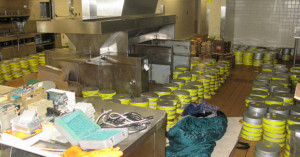
There's an abandoned McDonalds in California that's stuffed with 48,000 pounds of 70mm tape. These tapes contain never-before-seen ultra-high-res photographs of the moon shot by the Lunar Orbiter project 40 years ago. Rather than ship the film back to Earth, scientists decided to scan them on the spaceship, beam them back losslessly, and then record the data onto magnetic tape. Not wanting to reveal the precision of its spy satellites, the US government decided to mark the images as classified.

The Visual Field of the Human Eye

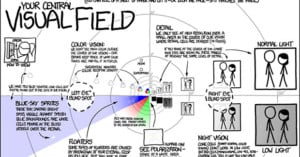
Randall Munroe over at XKCD posted this fascinating comic today that demonstrates some of the peculiarities of human vision. Roll up a piece of paper to set your eyes the correct distance from the screen, and then observe how they perceive things like detail, color, polarization, and more. Click the image above for the large version.

The Crazy Zoom of a 1700mm Nikon Lens

Back in 2010, we shared a video showing Canon's 1200mm lens -- a giant piece of glass that has been called "The Mother of All Telephotos". If you thought that focal length was long, check out Nikon's 1200-1700mm f/5.6-8P lens. Nikon launched a prototype of the lens in 1990 for newspaper photographers covering baseball in Japan. The sample photos above show the lens' ridiculous reach. A standard 50mm FoV can be seen on the left, while the right photo shows what the same scene looks like at …

This is the First Photo Ever Uploaded to the Web

What you see here is the first image ever uploaded to the World Wide Web. It's a graphic featuring a promo shot for comedy band Les Horribles Cernettes, and was uploaded almost exactly 20 years ago by Tim Berners-Lee, inventor of the World Wide Web. Motherboard has the interesting story behind the photo: …

How Canon Camera Gear is Made

Here's a promotional/educational video by Canon that explains both how digital cameras work and how it manufactures them. Interesting fact: lenses are so precise that if they were to be enlarged to the size of a sports stadium, the margin of error would be less than the thickness of a business card.

Beyond The Rule of Thirds: Advanced Composition With David Brommer

In this B&H Event Space seminar, David Brommer takes you "Beyond The Rule of Thirds" by discussing many different aspects of photographic composition. The entire seminar will take about two hours to watch from start to finish, but the information Brommer covers -- from positive and negative space, to theories of color and balance and other advanced composition -- is highly informative for amateurs, and may even benefit some pros.

The Speed of DSLRs and Memory Cards Measured Using Shutter Sounds

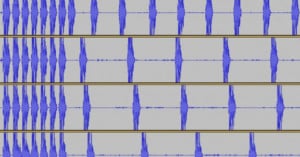
Needing a way to test the speed of memory cards, Jaroslav of Crazy Lab realized that camera shutter sounds can do the trick. By recording the sound of his Canon 600D snapping away in continuous burst mode and then viewing them audio file, he was able to visualize the card's speed and compare them against each other. He also learned some things about burst speed and ISO/format: …

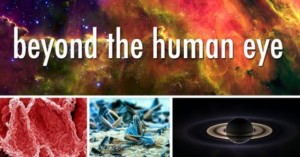
Seeing Beyond the Human Eye

"Science can be beautiful. Art can be scientific." This latest episode of the PBS series Off Book, titled "Seeing Beyond the Human Eye", looks into how science and photographic techniques are helping transform how we see the world.

Digital Cameras Are Cheap to Charge

Ever wonder how much you're paying to keep your rechargeable camera batteries juiced? The answer: probably around a buck or two a year. Researcher Baskar Vairmohan of EPRI conducted a study to determine the effect of popular gadgets on our nation's power grid, calculating the annual electricity costs of various devices. He found that an iPhone uses $0.25, an iPad uses $1.36, a 60-watt light bulb uses $1.61, a laptop uses $8.31, a desktop uses $28.21, and a fridge uses $65.72. Camera batteries …

The Camera Logic of Super Mario World

In both still photography and video, camera work should generally be invisible to viewers, allowing them to focus on the subject being captured. The same is true for video games. Here's a nerdy yet fascinating analysis of the camera in the legendary SNES game, Super Mario World. It's so simple, yet so well designed that it's not something you've probably ever thought about.

Yup, Color Management is Absent in iOS

After we published our browser color management PSA yesterday, those of you reading this site on your iOS devices probably noticed that your browsers failed "the test". The reason? Color management is strangely absent from iOS. Software engineer Jeffrey Friedl, who discovered this fact a few months ago, writes, …

Do You Still Think the Photography is Expensive?

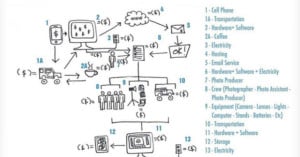
Here's an interesting graphic that's floating around the social networks (anyone know the source?) that shows why photography is more expensive than some people think it should be ("it's just pointing and snapping, right?"). If you like this, then check out our post back in January titled, "Why Wedding Photographers' Prices Are 'Wack'".