Educational

PetaPixel's editorials are in-depth stories, thought-pieces, and opinions on the photography industry led by the minds of our editorial team.

A Teardown of the Popular Fujifilm X100

Goodbye old young friend. Let me give you all a piece of wisdom that I recently learned the hard way. If you go on a fishing trip called 'Hit em' Hard' and the captain tells you that you should take your bag off and put it in the 'dry container', what he really means by 'dry container' is a place that will fill up with seawater after he accidently clogs the drainage pipe, soaking you and your friends cameras, bags, wallets and cellphones for over an hour in salty seawater.

On Traveling to Iran as an American Street Photographer

Photographer Brandon Stanton has generated quite a bit of attention in the photo world through his project Humans of New York, which features thousands of portraits that form a visual census of the city. His goal is to capture 10,000 portraits of New Yorkers that are associated with points on a map.

Flickr Tag Maps Reveal the Most Popular Photo Subjects Across Cities

What are the most popular photo subjects in each location of your city? Is there any easy way of finding out? Those are questions UC Berkeley researcher Alexander Dunkel is trying to answer, and he has his sights set on Flickr as a possible solution. By combining the location geotags and context tags attached to many (or most) of the service's photos, Dunkel is able to create tag cloud-style maps of any location that reveals the tags that dominate each location.

A 5-Minute Video Showing How the Sony RX1 is Assembled

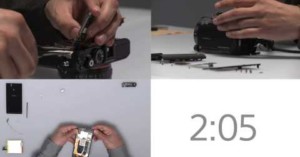
Want to see how the highly-acclaimed Sony RX1 is assembled? At CES 2013 in Las Vegas last week, Sony showed the above video at its special press event, using it as a creative countdown clock for indicating when the show would begin. The split-screen video shows three of Sony's newer products -- the Cybershot RX1 camera, the Xperia Z smartphone, and an HD camcorder -- being assembled from their basic parts.

The Rise, Near Demise, and Rebirth of the Leica Camera

Leica made its name a very long time ago by creating the first practical 35mm camera to use standard cinema 35mm film. The rest, as they say, is history. A history filled with successes and failures alike, most of the latter coming in the early 2000s when the company was having trouble moving into the digital age.

Motion Image Photography: Pulling Stills from Super-High-Res Video

Motion image photography is a new name for an old concept: pulling stills from video. In fact, famed headshot photographer Peter Hurley took a stab at it last year, pinning the 5K Red Epic against his Hasselblad to see if he could recreate his work in video. The issue there, even ignoring price, was that the sheer size of the Red Epic makes it far too bulky for anything but studio work.

The Most Instagrammed Location of 2012 is an Airport in Bangkok

There are well over 100 million users on Instagram (assuming a quarter of them didn't just up and leave), and even though the typical Instagram photo stream consists of food and the family pet, there are certain places that show up more often than others. Times Square, The Eiffel Tower, Disneyland, the Bangkok Airport... wait... that last one seems out of place doesn't it? …

The Photographs Norman Rockwell Used to Create His Famous Paintings

Painter Norman Rockwell's illustrations graced the covers of countless magazines over the course of the 20th century, becoming a much-loved piece of American culture for their simple snapshots of life. You might recognize many of the works, and even the name behind the paintings, but did you know that virtually all of the images started out as photographs?

Why You Should Digitize Your Film Using a Camera Instead of a Scanner

If you shoot film and aren't much into chemicals (or don’t have a basement in which to keep a gigantic 5×7″ enlarger), you’ll soon find yourself needing a way to import those beautiful pictures you’ve taken onto your computer. What? Why didn’t I say, “you'll need a scanner”? After all, it’s not 1987 anymore -- scanners are as common as toaster ovens.

Canon’s Official Solution for Stuck Lens Filters: Use a Hammer and Hacksaw

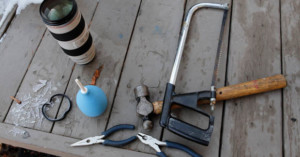
When travel photographer Craig Pulsifer accidentally smashed the front of his lens recently and found his lens filter fused firmly to the metal threads, he went to Canon for help. The removal process explained to him by a Canon Professional services technician is probably something most people wouldn't think to try: use a hammer and hacksaw to surgically remove the stuck filter. Pulsifer followed the advice, and found that it works quite well (though he does warn that it's "not recommended for …
Use Science to Become More Productive as a Photographer

Want to learn how to be more productive with your photography? Instead of simply "trying harder" and relying on your willpower, a better way may be to take simple steps that have been shown to be effective by science. The above 3-minute video, created by artists/educators Mitchell Moffit and Gregory Brown, offers some tips that science has taught us about being more efficient at working and spending less time getting our work accomplished.

How Fake Photos Are Messing With Our Perception of Reality

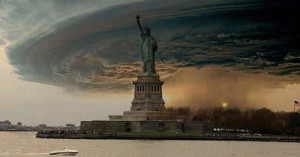
When Hurricane Sandy struck the East Coast back in October, the photograph above was widely circulated by people who believed that it showed the storm bearing down NYC. It doesn't. The image is actually a composite photograph that combines an ordinary photo of the Statue of Liberty with a well-known image by weather photographer Mike Hollingshead.

Double Exposure: A Clever Photo Prank From Half a Century Ago

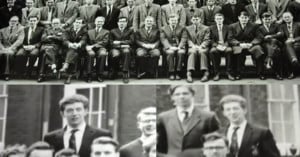
When the engineering students and staff of King's College in London gathered together to take a faculty portrait, the photographer used an old camera that panned from left to right in order to capture an extremely long panorama of the entire group in one frame. It worked a bit like the panorama features on modern smartphones: start the exposure on one side of the frame, and then gradually sweep the camera across the scene while everyone in the frame stays as still as possible.

‘Want More Megapixels? Be Careful What You Wish For’

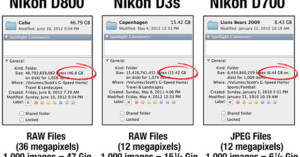
The megapixel war is heating up again in the high-end DSLR market, with the 36MP Nikon D800 leading the charge and rumored high-MP Canon and Sony competitors on the way. If you've been drooling over massive megapixels, be warned: with great megapixels comes great responsibility storage costs. Photoshop guru Scott Kelby writes: …

Camera Obscura and the Paintings of Old Masters

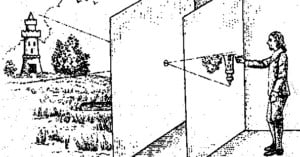
Did you know that some of the most famous master painters from centuries past may have actually used camera "technology" to aid them in creating their masterpieces? According to the hotly debated Hockney-Falco thesis, some well-known artists likely used rudimentary camera obscura rooms as a tool -- essentially "tracing" parts of their work.

Pilgrimage: A Photographer’s Journey to One of the Birthplaces of Photography

If you're at all interested in the history of photography, Henry Fox Talbot is a pioneer that you need to be familiar with. Although French pioneer Louis Daguerre is often credited with being "the father of photography," Talbot, based in England, had announced his own photographic process in the same year. Daguerre's daguerreotype process dominated the industry early on, but Talbot's process -- one that involved creating photographic negatives and then printing photos with them -- eventually …
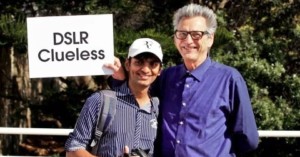
Beware Counterfeit Memory Cards Being Shipped From Amazon Warehouses

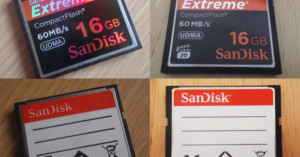
Check out the two memory cards above. One of them is a counterfeit card while the other is a genuine one. Can you tell which is which? If you can't, we don't blame you. Japan-based photography enthusiast Damien Douxchamps couldn't either until he popped the fake card into his camera and began shooting. The card felt a bit sluggish, so he ran some tests on his computer. Turned out the 60MB/s card was actually slower than his old 45MB/s card.
Psychogeography: Go and Get Lost to Shoot Something New

How well do you know the area in which you live? Or any area you regularly visit, for that matter? This may seem like the question of an idiot -- of course you know your area of residence -- but do you really? Have you explored every road and back road and high street and side street and pathway and alleyway? I’m aware I strayed into polysyndeton, but it’s relevant to the question I’m asking: how well do you know the area in which you live?

The Most Popular Cameras and Settings for Reuters’ 2012 Photos of the Year

Reuters has published its list of the best photographs taken in 2012, a massive collection of 95 powerful images showing different events that have occurred around the globe over the past year. In addition to large photos, descriptions by the photographers, and the official captions, each image is also accompanied by information about the equipment and settings that were used to capture it.

‘Double Exposure’: A Portrait of Identical Twin Photojournalists, the Turnley Bros

Even if you've never heard of Peter and David Turnley, you've likely seen at least one of their photographs at some point in your life. The identical twins are two of the most renowned photojournalists to have covered world events over the past few decades. The video above is a fascinating 13-minute-long feature titled "Double Exposure," which aired on 60 Minutes back in 1996 (warning: there are some strong images of violence).

‘The Photographer’: A 1948 Documentary on the Life and Work of Edward Weston

Here's an interesting 26-minute documentary about the life and work of 20th-century-photographer Edward Weston, a man who is considered to be one of the most influential American photographers and one of the masters of photography during his era. The 1948 film, titled "The Photographer," was shot by American filmmaker Willard Van Dyke, an apprentice of Weston's, who went on to become a very notable photographer in his own right.

The Camera Versus the Human Eye

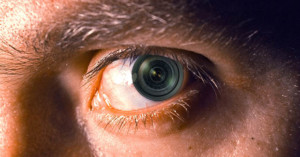
This article started after I followed an online discussion about whether a 35mm or a 50mm lens on a full frame camera gives the equivalent field of view to normal human vision. This particular discussion immediately delved into the optical physics of the eye as a camera and lens -- an understandable comparison since the eye consists of a front element (the cornea), an aperture ring (the iris and pupil), a lens, and a sensor (the retina).

The First Hoax Photograph Ever Shot

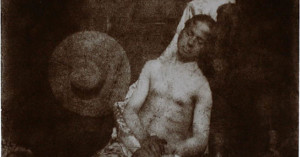
The mid-1800s was a busy time for photographic firsts. In 1838, daguerreotype inventor Louis Daguerre captured the first ever photo of a human being. One year later, in 1839, photograph pioneer Robert Cornelius stepped in front of his camera and created the first self-portrait. 1840 held yet another interesting development: the first hoax photograph.

A Mirror Self-Portrait Captured in 1917

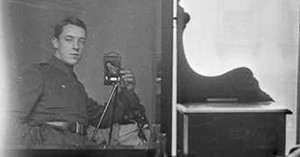
Snapping mirror self-portraits may have gotten a huge boost from the introduction of digital photography and smartphoneography, but it is by no means a new activity limited to our era. The photograph above was created back in 1917 -- nearly 100 years ago! It was snapped by an Australian flying ace named Thomas Baker when he was 20 years old.

How the Wrong Woman’s Facebook Pic Became the Face of Iranian Protests

During the Iranian election protests back in 2009, a 26-year-old woman named Nedā Āghā-Soltān (above right) was shot and killed while standing around and observing protestors. After footage of her death went viral online -- Time says it's likely the "most widely witnessed death in human history" -- Neda's portrait became the face of the movement, as countless protestors around the world held large prints overlaid with statements like, "Neda did not die in vain." The problem is, one of the …

A Brief History of the Chemical Processes Used in Photography Over the Years

Photography isn't even 200-years-old yet, but there have already been over 150 different chemical processes developed over its relatively short lifetime. In this interesting 5-minute video titled "A Brief History of Photography: Innovations in Chemistry," photo conservation scientist Art Kaplan of the Getty Conservation Institute quickly introduces some of the groundbreaking processes that have made a significant impact on the history of photography -- processes such as the daguerreotype, …

American Tintype: A Portrait of a Tintype Portrait Photographer

Documentary filmmaker and photography enthusiast Matt Morris recently noticed a magazine article about a tintype photographer named Harry Taylor based in his hometown of Wilmington, NC. Having recently gotten engaged, Morris and his fiancée decided to have Taylor shoot their engagement photos using the 150-year-old photo process. They ended up sitting for a 5-hour-portrait session, and Morris was stunned by the results.

A Glimpse at the World’s Largest Digital Camera, a 570-Megapixel Beast

Back in September, we shared the first photos snapped by the world's largest and most powerful digital camera: the 570-megapixel Dark Energy Camera located on a mountaintop in Chile. Reuters recently paid a visit to the massive astro-camera and the scientists behind it, and created the short 2-minute piece above that offers a closer look at the unique piece of camera equipment.

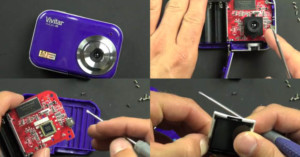
Dissecting an $18 Digital Camera to Show How They Work

Here's a dissection video for those of you who like photography better than biology. It's a Khan Academy lesson that offers a glimpse into how digital cameras work on the inside. The camera being dissected is a Vivitar V25, a 2.1 megapixel camera that you can pick up for around $18 from places like Walmart. Although it's basically the digital equivalent of a disposable camera, the camera still shares some things in common with higher-end digital cameras. You might be able to learn an …

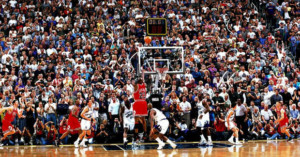
The Greatest Sports Photo of All Time

This photo is the greatest sports photo of all time -- at least according to Sports Illustrated. The magazine has published a gallery containing 100 of the greatest images (from an American's perspective), and the #1 image is the above shot of Michael Jordan hitting the game-winning shot to help the Chicago Bulls beat the Utah Jazz and win the 1998 NBA Finals in 6 games.