Space

Photography and astronomy offer humanity a fascinating view into the universe.

How to Photograph the Moon (Part 1)

Ever since I’ve owned a camera I’ve wanted to take photos of the night sky. When I first got a DSLR camera 5 or so years ago I thought getting decent shots wasn’t very likely with the inexpensive gear I had and it was something best left to the pros. It was only after I became comfortable with the manual mode on my camera that I realized that shooting at night was completely doable.

ISS Astronauts Take the Nikon D2Xs on a Spacewalk, Snap Some Selfies Along the Way

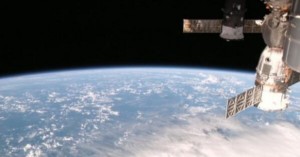
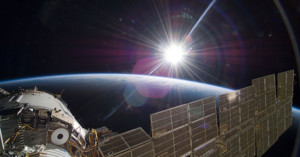
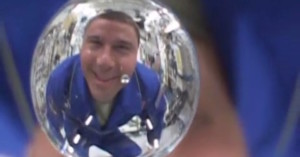
While taking the first of three scheduled spacewalks aboard the International Space Station this month, the Expedition 41 team decided to make the most of their 6 hour and 13 minute spacewalk by taking some incredible photographs of their mission. Beforehand though, they made sure to turn the camera on themselves, capturing a few self portraits while hanging around outside of their vehicle almost 100 miles above Earth’s surface.

Dark Sky Finder Helps Nighttime Photographers Find the Least Light Polluted Spots

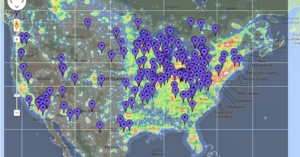
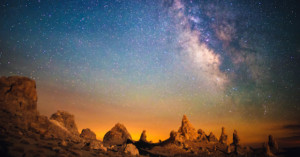
For those of you who partake in any sort of nighttime photography, it’s no secret that light pollution can be the bane of your existence. Thankfully, there’s a neat, simple online resource that can help you better prepare to avoid this enemy of great Milky Way photography.

It’s called Dark Sky Finder, and it’s an easy-to-use website that gives you an up-to-date, radar-style view of what light pollution across the United States looks like.

This is What a Meteor Shower Looks Like from Space

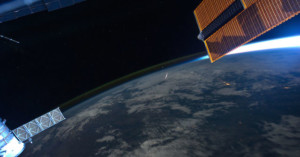
The 2014 Perseid meteor shower will peak this week, and astrophotographers the world over will be gazing up at the skies, cameras contending with a very bright moon in the hopes of capturing some bright streaks across the sky.

Beautiful Astrophotography Time-Lapse Captures Stars and Meteors over the Parks of California

It’s almost no argument that astrophotography and time-lapse photography were made to be together. Gavin Heffernan, a man who certainly knows his way around both, shows us why with the amazing video you see above. Depicting the night sky over Sequoia and King’s Canyon National Parks in California, we’re treated with mother nature at its finest, the milky way making the perfect backdrop for the scenery.
Sony a7S Astrophotography Review

As soon as the Sony a7S was announced, I knew I had to try it for astrophotography. With a full frame sensor and ISO 409600, is it the best low light camera out there?

45 Years After the Moon Landing, We Look Back at the Best Photos from Apollo 11

It was 45 years ago, yesterday, astronauts Neil Armstrong, Buzz Aldrin and Michael Collins took on what is without a doubt one of the most important endeavors in the history of humankind. Packed together into one of the most incredible pieces of engineering to ever exist, the astronauts of Apollo 11 left Earth’s atmosphere, with hopes of being the first humans to ever step foot on the Moon.

Photograph of the Milky Way Taken Out the Window of an Airplane Above the Atlantic

One of the standard cliché Instagram shots that gets ridiculed on occasion is the plane wing photographs, usually accompanied by some clouds or a sunrise or sunset. And while we agree that taking a photo out the window of your commercial airplane is tacky and overdone, the photo above by astrophotographer Alessandro Merga is a big fat beautiful exception.

Time-Lapse Captured with Solar Telescope Shows a Sunset in Magnificent Detail

Swedish astrophotographer Göran Strand uploaded a time-lapse to YouTube today that is anything but your run-of-the-mill sunset lapse. For one, he's waited almost a full year to shoot this footage. For another, it was shot using a solar telescope, and so magnificently captures the sun in striking detail as it dips below the silhouette of the foreground landscape.

Photo of the Massive Wildfire in Alaska, As Seen from Space

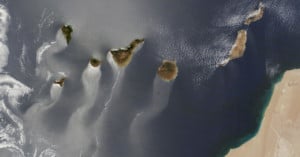
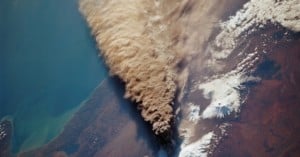
When it comes to natural disasters like hurricanes or wildfires, not even standard aerial photography can really cut it. To capture something that occurs on such a massive scale, you need a massive view, and so these disasters are often best visualized by NASA's satellites.

17 of the Greatest Camera Hacks of All Time

We recently took a look at some of the best camera hacks that will save you tons of money. Today we’ve decided to turn things up a notch and progress to the next level! If you’re the kind of person who loves to take things apart to find out how they work, you’ll love the ingenious camera hacks below.

What Would the World Look Like If the Air Were Truly Transparent?

For the purposes of this question, I'm going to assume that "truly transparent" means that air and its constituents are no longer able to absorb and re-radiate incident radiation, which in visible light seems to be our definition of transparency. To make things much more fun, let's make this true over all wavelengths.

Fantastic Optical Zoom Time-Lapse Takes Us on a Journey to the Orion Nebula

When physics professor and amateur photographer Isidro Villo says he's taking you on a time-lapse journey to the Orion Nebula, he means it quite literally. He doesn't just track Orion across the sky or create yet another Milky Way time-lapse, he literally zooms from ground level all the way in until M42 takes up the entire frame.

Spectacular Horsehead Nebula Photograph Almost Good Enough to Rival Hubble

Photography is hardly a cheap hobby to pick up, but even within photography, some branches are more expensive than others. And ranking pretty close to the 'most expensive' side of that line is astrophotography... at least the kind that will yield incredible photos like the one you see here by photographer Mike Hankey.

Astronauts Beam Down an Epic Christmas Eve Spacewalk Portrait

Well, if you're gonna put a portrait of your mug on Instagram for the whole world to see, this is the way to do it. Taken from outside the ISS during one of the two spacewalks required to replace a faulty water pump, this selfie-like portrait (it is NOT a selfie, contrary to just about every headline you'll read) was uploaded to NASA's Instagram account yesterday.