Space

Photography and astronomy offer humanity a fascinating view into the universe.

The Closest Color Photo of Pluto Ever Shot

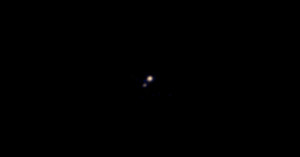
After a nine year journey towards the outer edge of our solar system, NASA's New Horizons spacecraft has beamed back its first color photo of Pluto and its largest moon Charon. The photo above, captured "just" 71 million miles away from the dwarf planet, is the closest color photo ever made of Pluto.

How Astrophotography Has Improved Over the Past 135 Years

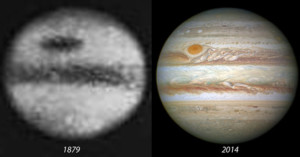
Want to see how much our ability to photograph space has improved over the past 135 years or so? Just check out the side-by-side comparison above. On the left is a photo of Jupiter from back in 1879 as it appeared in the book "A History of Astronomy in the 19th Century" by Agnes Clerk. On the right is a photo NASA shot in 2014.

Iconic Space Photos Are Actually B&W: Here’s How NASA Colorizes Hubble Shots

Did you know that the Hubble Space Telescope is only able to capture black-and-white photos? In order to capture a maximum amount of information in their space photos, NASA captures multiple black-and-white images using different filters in the camera. These images are then combined in post to create the iconic color photographs that you see published by the space agency.

These Space Photos Were Made by Scanning Things Found in a Kitchen

For the past couple of years, photographer Navid Baraty has been experimenting with the idea of creating photographs of the universe without having to leave his home... and without having to point a camera up at the sky. His WANDER Space Probe series of images may resemble photos captured by NASA using its Hubble telescope camera, but the photos were actually created by putting ordinary kitchen items on an Epson flatbed scanner.

A Photo of the Starry Night Sky From Inside a Tent

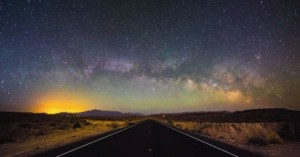
Photographer Mark Gee shot this photograph of the night sky while camping in the great outdoors in New Zealand. It's a view of what his camera was able to see while looking up through Gee's tiny tent with the outer flysheet removed. You can find more of his gorgeous night sky shots in his 500px account.

Forgotten Moon Camera Found Tucked Away in Neil Armstrong’s Closet

After Neil Armstrong, the first man on the moon, passed away in 2012, his widow contacted the National Air and Space Museum. Carol Armstrong had discovered a white cloth bag in one of Neil's closets, and it was filled with items that looked like they had been used in space. Among the contents was a forgotten camera that had been used to capture images of the first moon landing.
Nikon D810a Leaked Briefly on a French Website

Rumors say we will be seeing a special version of the Nikon D810 for astrophotographers announced sometime this week. Those rumors appear to have been confirmed by a French website that accidentally published a news article about the camera early before pulling it offline.

Tutorial: Photographing and Processing the Orion Constellation

Here's a tutorial that will teach you how to photograph and process one of the most colorful parts of the night sky, the Orion constellation. It will walk you through all the steps of planning, shooting, and processing a photograph of Orion and the colorful features in it.

What 100 Million Stars Looks Like: NASA Releases a 1.5 Gigapixel Photo of the Andromeda Galaxy

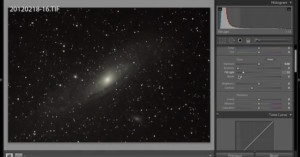
NASA has released the largest and sharpest photograph ever made of the Andromeda Galaxy, the nearest spiral galaxy to ours that contains an estimated 1 trillion stars. The new image (above is a crop showing a portion of it) weighs in at 1.5 gigapixels (i.e. 1.5 billion pixels); it's so big that you would need 600HD televisions to display the entire digital photo.

How to Avoid Star Trails by Following the ‘500 Rule’

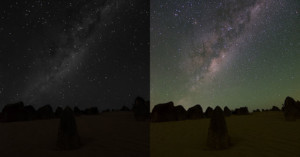
Due to the rotation of the Earth, it appears as though the stars are moving through the sky in long exposures. Star trails can be a desired effect when done for much longer exposures, but in other cases we want points of light to represent how we see the stars with our eyes. To achieve points of light you can use a simple rule that's often called the "500 Rule".

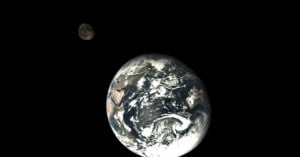
From Above: Astronaut Don Pettit on the Experience of Photographing Earth from Space

Check out this gorgeous short film in which NASA astronaut Don Pettit shares what it was like to photograph Earth from orbit in the International Space Station. During his time aboard the station, Pettit became one of the most prolific astronaut photographers in the history of space exploration -- one time he clogged up data transfers for three days with photos from a 30-minute shoot.

How to Photograph Jupiter from Your Own Backyard On the Cheap

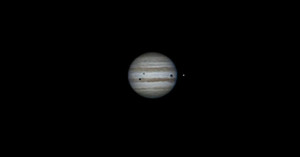
I recently captured this picture of Jupiter, the 5th planet from the Sun. It was well received and many liked it. Lots of people wanted to know how to take a picture like this and what it would cost, and surprisingly I did this on a relatively low budget for astrophotography.

Video: How to Capture Astrophotography Images Without a Star Tracker

In astrophotography, a star tracker is a piece of gear that compensates for the Earth’s rotation so you can take sharp long exposure photographs of the night sky.

Unfortunately, not everyone can get their hands on one of these, and so we've dug up this awesome tutorial by astrophotographer Forrest Tanaka on how to capture impressive astrophotography images without a star tracker.

Beautiful Photographs of Microscopic Plankton that Look Like Photos of Outer Space

When you look at the photographs in her series Into the Umbra, photographer Julia Bennett wants you to think you're looking at outer space. And then, just as your mind is struggling to expand to encompass the far reaches of the solar system where the image was captured, that's when she wants you to realize that you're looking at something you could find in any old liter of Sea Water.

Video Profile of Mark Gee, 2013 Astronomy Photographer of the Year

2013 was a fantastic year for astrophotographer Mark Gee. First, barely one month into the year, he went from amateur photographer to Internet sensation when his gorgeous video "Full Moon Silhouettes" went viral. And then, to finish out the year, he took home the top prize at the Astronomy Photographer of the Year 2013 competition with his beautiful "Guiding Light" photograph.