

Interviews

Interviews with photographers and photojournalists working at the forefront of their fields across a wide range of genres, from fine art to documentary to street to travel, and everything in between. PetaPixel allows photographers to share their experience, opinions, and insights to inform and inspire the global photography community.
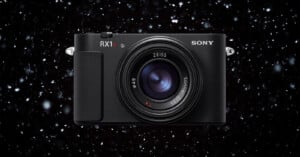
A Sony RX1R camera with a Zeiss lens is shown centered against a dark background with white specks resembling falling snow or stars.
Why 2025 Was the Right Time for the Sony RX1R III’s Long-Awaited Arrival

Last July, Sony surprised the photography world by unveiling the RX1R III, arriving so many years after the RX1R II that many RX1R fans had all but given up hope of a new model ever coming. Sony even released two more A-mount DSLRs after the RX1R II, to put the wait into perspective. So what took so long? Sony told PetaPixel that it needed to develop the right technology to make a new RX1R camera worth it, and that tech took time.

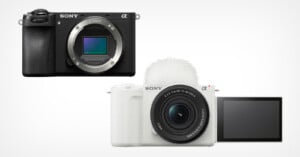
Two Sony Alpha series mirrorless cameras: the black one with no lens attached (top) and the white one with a lens and flip-out screen facing forward (bottom), both on a plain white background.

Despite a Focus on Full-Frame, Sony Says APS-C Is a Growing Segment

Sony's full-frame Alpha cameras rightly get a lot of attention, especially among enthusiast and professional photographers and hybrid creators. However, the company tells PetaPixel it remains very committed to APS-C, and that demand for APS-C products has steadily increased over the years.

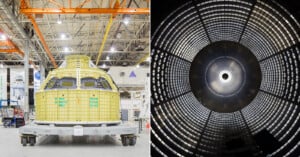
Left: A yellow spacecraft module sits on a platform inside a large industrial facility. Right: Interior view looking up into a cylindrical structure with a circular pattern and metallic panels.

Architectural Photographer Captures the Machines Behind Artemis II

Professional architectural photographer Mike Kelley has achieved extensive commercial success but has remained dedicated to personal artistic projects as well. These personal projects have often been the ones to lead to Kelley's "craziest opportunities," including one that took him to NASA's Michoud Assembly Facility to photograph the Orion crew capsule and SLS rocket that just last week carried four brave Artemis II astronauts into space to orbit the Moon.

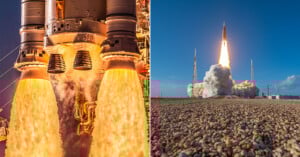
Close-up of rocket engines firing with bright flames and smoke on the left; wide view of a rocket launching, rising above a launch pad with clouds of smoke and blue sky on the right.

How a Photographer Captured the Artemis II Launch With 14 Cameras

Photographer Steven Madow has been photographing rocket launches for over a decade, but arguably no rocket launch he has photographed has been as big of a deal as the Artemis II launch on Wednesday, April 1. Madow set up 14 different Panasonic Lumix cameras to cover the monumental event, including seven remote cameras at the launch site. His outstanding photos are the result of years of practice and planning.

A collage of three close-up images: honey bees on honeycomb, a bee drinking from a yellow flower, and a bumblebee hanging upside down from a white blossom.

A Closer Look at the Beautiful Macro Cinematography in ‘Secrets of the Bees’


As its name suggests, National Geographic's new two-part documentary series, "Secrets of the Bees," turns the lens toward one of Earth's most important inhabitants: bees. The series is fascinating, full of interesting information and science about bees, but also replete with exceptional cinematography. The miniseries has many fantastic close-up shots of bees, unlike anything captured before.

Close-up of a black Nikkor S camera lens, showing detailed texture, focal length markings (135, 200), and two customizable L-Fn buttons on the lens barrel against a dark background.

Nikon Explains How It Makes Lenses Smaller While Somehow Making Them Better

Nikon's original Nikkor Z 24-70mm f/2.8 S and Nikkor Z 70-200mm f/2.8 VR S lenses were already superb when they were released in 2019 and 2020, delivering great optical performance and dependable autofocus inside a well-designed chassis. However, much has changed in lens design in the years since, and Nikon's even better, significantly lighter 24-70mm f/2.8 S II and 70-200mm f/2.8 VR S II zooms reflect multifaceted technological advancements.

Two Lumix cameras are shown side by side on a blue abstract background, with a third camera silhouette on the right featuring a large question mark in the center.

What Is Panasonic’s Path to Success in Micro Four Thirds?

Photographers would be forgiven for thinking that Panasonic is no longer committed or interested in developing new Micro Four Thirds products, but as the company told PetaPixel at CP+ 2026 in Japan, it is still very much interested in developing new MFT products that capitalize on the format's core strengths.

A Canon EOS R1 camera body without a lens is shown against a blue background with interconnected digital network lines and circles.

How AI Changes Canon’s Approach to Camera Tech and Performance

Photographers often feel like certain camera technology has plateaued. Sure, sensors get a little better, autofocus improves with each generation, and cameras are faster than ever. However, camera tech rarely improves by leaps and bounds like it once did. Canon believes AI may fuel many of the biggest camera tech breakthroughs in the coming years.

The logo for the Leica Oskar Barnack Award features a large red semi-circle with a white "L" and red "B" inside, alongside the text "LEICA OSKAR BARNACK AWARD" in black, all on a white background.

How Leica’s New LOBA Women Grant Supports Female Photographers

Leica Camera AG announced a significant expansion of its flagship Leica Oskar Barnack Award (LOBA) this year, introducing the LOBA Women Grant, a new initiative to fund and elevate the work of female photographers worldwide. It is part of the company's broader focus on amplifying important voices in photography.

Close-up of a digital camera body showing the lens mount and exposed image sensor, with textured grip and control buttons visible on the left side.

How Canon’s RF Mount Design Enables Innovative New Lens Designs

When Canon unveiled its first mirrorless full-frame camera, the EOS R, in 2018, the company touted its new EOS RF lens mount. While it has the same 54-millimeter diameter as the DSLR EF mount, the RF mount's flange distance is significantly shorter, shrinking from 44 millimeters to just 20. Canon promised that this would enable bold new lens designs, and the company's latest lenses show that as well as any of Canon's 60-plus RF lenses.

Two Canon digital cameras are displayed side by side against a vibrant background of colorful fireworks.

Despite the Compact Camera Boom, Canon is Approaching Reentry Cautiously

The compact camera market is white-hot right now. Compact camera sales more than doubled in Japan in 2025, and many of the best-selling cameras last year at Map Camera, a major Japanese photo retailer, were compact models. Canon is no stranger to compact camera success and is committed to giving people what they want.

A smiling man holds up a silver Fujifilm camera outdoors, with greenery and water blurred in the background.

Fujifilm Believes Fun Cameras Will Keep Photography Alive

Looking at Fujifilm's releases in 2025, the company did a little bit of everything, and released some very surprising, strange cameras. It is easy to think that Fujifilm is just a company keen to experiment and take risks, but the company tells PetaPixel that hard research data drives its product decisions. That said, fun matters, too.

A Fujifilm digital camera with a black textured body and prominent lens is shown on a dark, reflective surface against a dark background.

How Fujifilm Will Fix its Video Autofocus Woes

Fujifilm's X Series cameras do a lot right. They are extremely capable, performant APS-C mirrorless cameras with many passionate supporters. However, for as good as they are, autofocus performance remains an oft-discussed shortcoming, especially for video applications. Fujifilm says it hears the complaints and is working hard to address the feedback.

Three images side by side: a skier performing a flip on a snowy mountain, a thermal view of an Olympic hockey game, and an overhead view of people playing curling on an ice rink.

Three Photographers Captured the Winter Olympics Like Never Before

Many exceptional photographers captured jaw-dropping photos of world-class athletes performing incredible feats at the Milan-Cortina 2026 Winter Olympics in Italy. In most cases, these photographers used the expected equipment, the latest full-frame mirrorless cameras and telephoto lenses. However, a select group of Getty Images photographers took a very different approach, and documented the Winter Olympics with thermal, infrared, and vintage film cameras, and using unique processing techniques.

Left: A football player in a white jersey, number 10, throws a pass while being blocked by a defender in a dark uniform. Right: A hand holds up a shiny football trophy amid flying confetti in a stadium.

How Seattle Seahawks Photographer Rod Mar Captured Super Bowl LX

Earlier this month, the Seattle Seahawks bested the New England Patriots in Super Bowl LX at Levi's Stadium in Santa Clara, California. It is one of the biggest sporting events in the world, and the Seahawks' team photographer, Rod Mar, was there to capture all the action, and ultimately, the Seahawks' elation.

A collage of three images: a house engulfed in flames, a red sun in a smoky sky above homes, and two people wearing masks sifting through rubble in a burned area.

Filmmaker Uses His Camera to Preserve Life, Loss, and Love

From intimate family stories to documentary and vérité filmmaking that captures life in motion, Myles Matsuno has spent decades turning everyday moments into unforgettable narratives. The photographer discusses the influences that shape his creative vision, the flow states that bring an image to life, and the deeply personal projects that preserve memory and history for generations.

A smiling young man in a gray shirt holds a folded white drone attached to a black handheld stabilizer and points at it, standing indoors against a white door and light-colored wall.

Aerospace Student Invents Mount That Turns a Drone Into a Handheld Camera

Alongside being an aerospace engineering student, Tyler Staub and his brother, Calvin, also started a drone service company to capture aerial media for local businesses. Now you can add "inventor" to Tyler's list of accomplishments, as he has built a new adapter, the aptly named Dronebal, to turn a DJI Mini 4 Pro drone into an easy-to-use, high-quality handheld camera.

A man wearing a gas mask crouches on the ground amid armed police officers in tactical gear; a camera lies on the pavement nearby. The scene appears tense and chaotic.

Photographer Tosses His Leica Away From ICE as He’s Tackled to the Ground

Photojournalist John Abernathy was tackled by ICE agents in Minneapolis last week and his last-ditch effort to save his camera was successful thanks to fellow photographer Pierre Lavie, who captured Abernathy's camera-saving toss in a now-viral image. Lavie's powerful portrait reflects the importance of photojournalism, captures the risks photographers face in the field, and, to the benefit of Leica, shows how rugged the company's cameras are.

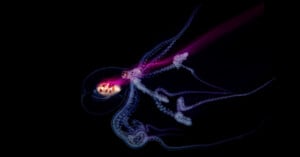
A scuba diver underwater holds a long, glowing, translucent marine organism; on the right, a close-up shows the organism’s intricate, light-blue, threadlike structure against a dark background.

‘Pole to Pole With Will Smith’ Breaks New Scientific and Photographic Ground

In National Geographics new series, "Pole to Pole With Will Smith," viewers follow Smith and world-renowned experts on an adventure across the globe, starting at the South Pole and concluding in the season finale at the North Pole with stops in the Amazon, the Pacific, Himalayas, and Kalahari Desert along the way. PetaPixel chatted with Tom Williams, executive producer of "Pole to Pole," about the series and how it was filmed.

Left: A wall decorated with cowboy hat shapes, a window, and a row of chairs. Right: An abandoned, weathered U.S. Air Force jet resting on the ground under a blue sky with wispy clouds.

The Photographer’s Guide to Breaking Your Own Rules

After 25 years behind the camera, OM SYSTEM photographer Jerred Zegelis thought he knew the rules of photography. Shoot RAW. Stay neutral. Fix it in post. Art Filters are for amateurs. These weren't suggestions. For Zegelis, they were law, absorbed from forums, tutorials, and years of professional habit.

Then he invented a fictional town, shot an entire trip using a filter he once dismissed as cheesy, and intentionally started to break the rules. The Nebraska native calls the results the best work of his career.

A small yellow Kodak digital camera with a large attached lens is shown. On the left, the camera is held in hand facing forward; on the right, the camera is attached to a bulky manual lens, also held by hand.

What Happens When You Put Big Lenses on the Tiny Kodak Charmera?

The Kodak Charmera keychain camera has been a smash hit. Sold in blind boxes, the 1.6-megapixel retro-styled toy camera was one of the biggest photo gifts of the holidays. However, straight out of the box, its capabilities are arguably a bit lacking, thanks in large part to its tiny built-in lens. That's where expert camera modifier James Warner, or Snappiness as he's known online, comes in. What would happen if you gave the Kodak Charmera a better, bigger lens?

Two cheetahs rest closely together in tall grass on the left, while a close-up of a cheetah’s face with its mouth slightly open appears on the right, both set against blurred natural backgrounds.

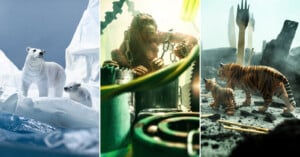
Postman-Turned-Cinematographer Films Cheetahs In Brand New Ways

In National Geographic's latest documentary, "Cheetahs Up Close," Emmy Award-winning wildlife photographer and cinematographer Bertie Gregory travels to the Serengeti to capture jaw-dropping close-up footage of cheetahs as they rest, hunt, and of course, run. Gregory and fellow Emmy Award-winning wildlife cinematographer Tom Walker use long lenses, drones, and specialized equipment to capture remarkable shots, ensuring "Cheetahs Up Close" is as beautiful as it is exciting.

Left: A man in a plaid shirt, cap, and lanyard looks to the side at an outdoor event. Right: Black-and-white photo of a person standing in a grassy field under a cloudy sky.

How a Photographer From a Tiny Town Gets Big-Time Assignments

Mt. Olivet, Kentucky -- named after the biblical Mount of Olives -- is a hamlet in the smallest county in Kentucky. Population estimates vary, from 155 in 2023 to a bit higher number in the 2020 census. Photojournalist Michael Swensen, based in tiny Mt. Olivet, gets big-time assignments. His work has been seen worldwide via The Associated Press, Getty Images, The Washington Post, and more.

Split image: Left, a sea turtle seen from above glows with green bioluminescence in dark water. Right, a black-and-white scene shows people inside a dim, rustic room, one standing by a doorway while a child stands outside.

TIME’s Top 100 Photos of 2025 Tell Powerful Stories Through Incredible Images

At the end of each year, TIME selects its Top 100 photos of the year. As always, the 2025 edition is replete with superb photography, ranging from split-second action shots of important news events to powerful photos from longer-term projects, the collection is a compelling visual reminder of the major events of 2025 and, perhaps as importantly, photography's power in telling the world's most important stories.

A split image showing two scenes: on the left, a woman and a man laugh and clap in a stadium; on the right, two men in casual clothes chat and smile while holding drinks, surrounded by fans in yellow shirts.

Celebrities Are Changing How Pro Sports Photographers Work

Photographer Tammy Ljungblad has worked at The Kansas City Star for 36 years. She has never seen anything like the impact of megastar Taylor Swift on NFL games at Arrowhead Stadium and the broader Kansas City community.

A photo editing software window shows a horse in a green field. The horse is selected and highlighted in red, while editing tools and a histogram are visible on the right side of the screen.

How Two Photographers Transformed RAW Photo Support on Mac

As photographers using macOS know all too well, native macOS-level support for RAW image formats can be hit-or-miss, and new support can take months or years to arrive, sometimes never arriving at all. This means that photographers must rely on third-party software to process many RAW photos, and that support in Apple's own apps, like Photos, is spotty. However, not all is lost, as very talented engineers are working hard to overcome macOS's own RAW limitations.

A black and white split image: on the left, a shark with deep claw marks on its side; on the right, a small whale seen from above, swimming in dark water.

Matt Draper Held His Breath to Capture These Exceptional Underwater Photos

Acclaimed photographer and industrial designer Matt Draper's latest solo exhibition, Within One Breath, opens today at the Leica Gallery New York. The photos featured in the show were all captured on a single breath while freediving with Leica rangefinders and using only natural light, ensuring that the beautiful underwater environment was disturbed as little as possible.