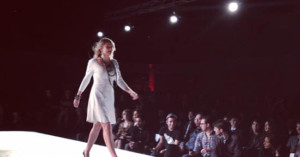
Emerging Trend: “Instagram Moments” at Fashion Shows
New trend alert: Eric Wilson of the New York Times reports that fashion …
New trend alert: Eric Wilson of the New York Times reports that fashion …

Portland, Oregon-based photographer and visual artist Jim Kazanjian is like the M. C. Escher of architectural photography. His art pieces appear to be photos of some of the strangest looking buildings found in the weirdest locations, but the reason the images are so dreamlike is because they came from Kazanjian's mind rather than the real world.
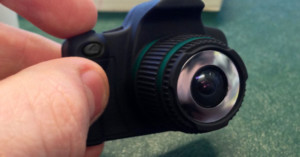
Are you a fan of small things? UK-based photo enthusiast Greg Dash is trying to launch "the world's first digital Lomo-fisheye." It's a pint-sized digital toy camera that packs a 170-degree fisheye lens.
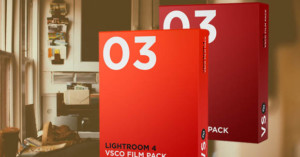
Film emulation software company VSCO has added another offering to its lineup of Lightroom and Adobe Camera Raw plugins. VSCO Film offers the same high-end film emulation power as Film 01 and 02, except it's designed for mimicking the look of instant films rather than standard color and black-and-white film stocks.

In in 1946, the United States conducted a series of nuclear weapon tests at Bikini Atoll in what's known as Operation Crossroads. A total of two bombs were detonated to test the effects nuclear blasts had on naval warships. The second, named Baker, was the world's first nuke to be detonated underwater. Due to the unique properties of underwater explosions, the Baker test produced a number of unique photographs that the world had never seen before.
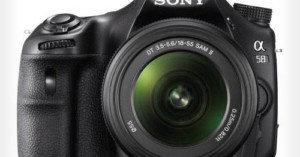
Sony has a couple of new cameras and a set of new lenses coming out, and we're starting to get a better idea of what we'll be seeing announced very shortly. Expect to see a new SLT camera called the A58, a new mirrorless camera called the NEX-3N, and a trio of A-mount lenses.

Online dating websites are a multi-billion dollar business nowadays, and more and more single-and-looking people turn to the Interwebs to find their soul mates. Photographers Patrick Eggert and Sophie Ellis met through the Web as well, but not through a matchmaking site: their relationship started through a Flickr comment.
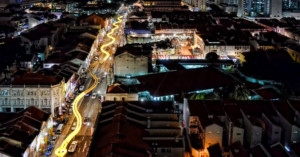
Chinese New Years festivities have been going on over the past week in cities around the world. Over in Singapore, photographer Choo Yut Shing captured this neat photograph of a giant light snake slithering down a street.

Late last year, photographer Cheyne Gallarde turned to Kickstarter to raise funds for an ambitious series of self-portraits titled Universe of One. Inspired by the work of Cindy Sherman, the project features Gallarde posing as a wide range of people, both male and female, of different ethnicities, and from different walks of life. The transformations are done using only makeup, wardrobe, and lighting tricks.
To drum up interest for the series, Gallarde came up with an interesting incentive: contribute to the book, and have a portrait of yours recreated humorously with Gallarde posing as you.

NPR has published a fascinating piece about 25-year-old young Syrian woman named Noor Kelze who has been working the front lines of the Syrian conflict as a conflict photographer for Reuters.
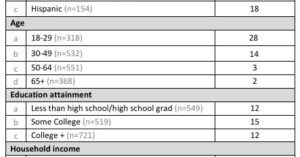
The Pew Internet & American Life Project released the results of a survey this week that sheds light on social media use among Americans. One of the networks they asked participants about was Instagram.
After surveying 1,802 Internet users in late 2012, the study found that 13% of Internet users use the mobile photo sharing service. It also found that the service is "especially appealing" to "Adults ages 18-29, African-Americans, Latinos, women, [and] urban residents."

Photographer Bill Gekas of Melbourne, Australia has been creating portraits of his young daughter in the style of master European painters of old.
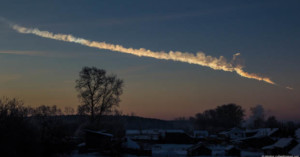
One of the major international news stories today is the fact that a meteorite streak across the sky in central Russian today, causing an explosion and shock wave that injured over 1,000 people. It was the largest meteor reported since 1908. The event was well documented, as many Russian drivers had dashcams rolling as the event unfolded.
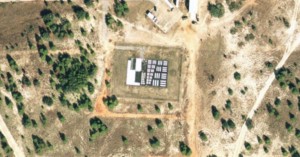
When people test cameras and lenses for resolution, they commonly use special resolution test charts that are filled with black bars of varying lengths and thicknesses. They're kind of like eye charts, except for cameras instead of eyeballs, and with lines instead of letters.
Well, did you know that in dozens of locations around the United States, there are gigantic resolution test charts on the ground?
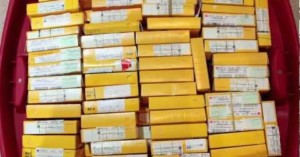
This 2 minute 39 second video is the official trailer for the upcoming documentary, "Finding Vivian Maier." It tells the story of one of the greatest photography finds in recent history, and of the brilliant work of a photographer no one had heard of just a decade ago.
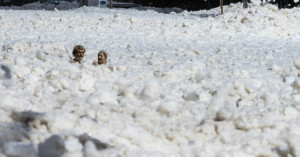
When Eastern Australia was hit by ex-Tropical Cyclone Oswald late January and early February, it caused certain places to turn into foamy wonderlands, as up to 8 feet of sea foam was blown onto land from the sea. Photographer Brandon Rooney took advantage of the occurrence by pulling out his Canon 7D and documenting the strange scene.
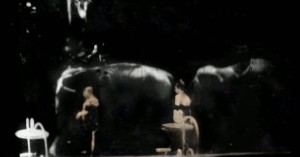
The idea behind stop-motion videos is pretty simple: snap a lot of photographs in rapid succession and then string together all the images afterward to animate them. There was a time when the dominant photographic processes weren't fast enough to create any meaningful kind of animation. Does that mean we'll never see a stop-motion animation created using tintypes? Nope. The video above is one example of a stop-motion video created with a super old photographic process: the dry plate tintype.
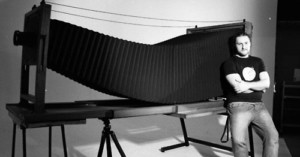
Earlier this week, we shared how photography student Mark Hilton has been hard at work constructing a 20x16-inch ultra-large-format camera by hand. If you found that impressive, get a load of photographer Tim Pearse's handmade 20x24-inch view camera.

The photograph above by Swedish Dagens Nyheter photographer Paul Hansen has been selected as the World Press Photo of the Year 2012. It's a powerful image that shows a funeral procession in Gaza City, with men carrying the bodies of two children while the body of their father trails behind on a stretcher.
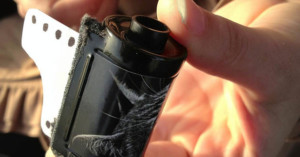
For Valentine's Day today (you didn't forget, did you?), San Francisco-based self-proclaimed super nerd Doctor Popular decided to give his significant other a card packaged inside a 35mm film canister.
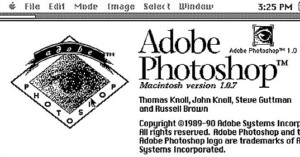
Starting today, you can download a free and legal copy of Photoshop. That's right -- free and legal. There's a catch, though: it's the original 1.0.1 version of the program that was released back in 1990.
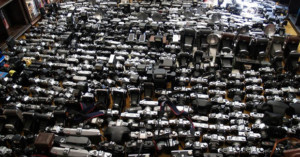
Want to own a giant collection of vintage cameras, but don't want to spend a lifetime acquiring them one by one? If you have deep pockets and money to burn, here's your shot: collector Brain Cue of Alameda, California (kka20101 on eBay) is selling his massive camera collection that he has spent over 50 years building up.
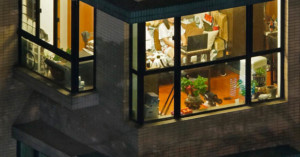
Award-winning photographer Michael Wolf is raising some eyebrows with a new photo project titled "Window Watching." The series features photographs of high-rise apartment windows in Hong Kong, offering glimpses into the lives of people living inside the private residences. Basically, Wolf pointed a telephoto lens at open windows to photograph people going about their day-to-day-lives, without their knowledge and consent.
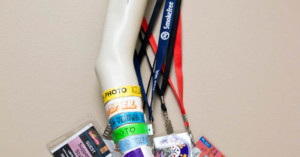
After shooting music events, Perth-based photographer Perry DeGennaro keeps the media …

In December 2012, Instagram took steps toward profitability by adding some controversial monetization-related sections to its Terms of Service. The resulting outcry led to key sections being restored to original 2010 versions, but that didn't stop a certain user named Lucy Funes from launching a class action lawsuit against the photo sharing service.
The latest news in the saga is that Instagram is now asking that the lawsuit be thrown out.

To commemorate the 150th anniversary of the Civil War, photographer Michael Falco is shooting a project titled "Civil War 150 Pinhole Project." His goal is to highlight the haunting beauty of civil war battlefields and to chronicle the various battle reenactments that are happening all across the country. To do so, he's using large format pinhole cameras that gives the poetic images an old fashioned look.
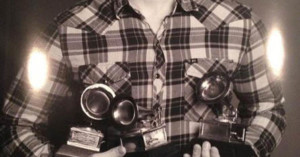
Los Angeles-based musician Paz Dylan recently pulled a pretty funny prank on the Grammy Museum in LA. He made a series of informational wall display pieces featuring strange descriptions and photographs of himself eating tacos, and then hung them up on the walls of the museum next to the real pieces. That's pretty clever, but get this: no one noticed, and the pieces stayed up for a month.
The photograph above is a piece he made for the "Wall of Fame."

Here's a crazy fact that's making the rounds on the Internet: if you live in Australia, it's currently cheaper for you to fly to the US and back to purchase a copy of Adobe Creative Suite Master Collection than to purchase it in your own country.

If you've been closely following the story of Instagram and its role in the world of casual photography, you might enjoy this humorous short film by photographer Grant McGuire. It's titled "Filter My Life."
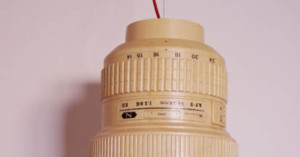
Check out this DSLR Paparazzi lamp, created by Spanish design studio Monoculo Design Studio. It's a wooden hanging lamp that's shaped like a gigantic Nikon 14-24mm f/2.8 camera lens.

Heads up, celebrities: nothing is too personal for the lenses of money- and star-hungry paparazzi photographers. Actress Evan Rachel Wood found out the hard way today after The Daily Mail published paparazzi photographs of her leaving a hospital with an ultrasound scan image clutched in her hands. The article was titled, "Baby's first picture! Pregnant Evan Rachel Wood can't stop smiling as she emerges with ultrasound scan." Understandably, Wood was furious.

A couple of weeks ago, Florida-based photographer Kelli Higgins shared the newborn photos above on her Facebook page.
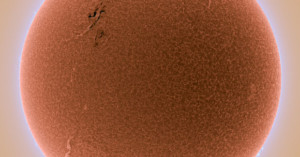
Alan Friedman of Buffalo, New York is an amateur astrophotography enthusiast who captures amazing photographs of the Sun through a telescope in his backyard. His highly detailed photographs show the sun in ways you never see with your naked eye. Using special filters that allow the photos to be captured without destroying his camera or his eyes, Friedman creates images of our life-giving star that look more like something you might see under a microscope.

Bruce Livingstone knows his way around the stock photography industry, and he's doing his best to shake things up. After founding iStockphoto in 2000, he turned it into a microstock juggernaut, finally selling it to Getty Images in 2006 for a whopping $50 million. Now, as both Getty Images and iStockphoto are mired in a licensing controversy, Livingstone has a new stock photo business that may rock the boat even more.
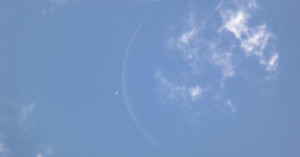
Behold, a photograph of the moon. Can you see it? No, it's not that tiny bright crescent you see... The moon is that faint giant crescent. That tiny one to its left is Venus. Hungarian astrophotographer Iván Éder captured this beautiful photograph back in 2004 from Budapest, Hungary.
Update: This giveaway is now over. The winner was randomly selected and announced below.
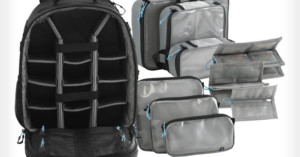
Alrighty folks! Let's do a giveaway! If you're in need of a way to haul around your large collection of camera gear, this one's for you. We're giving away a massive collection of Gura Gear products: a backpack, three cases, three pouches, and three memory card wallets. The entire collection has a combined retail value of $612.40!

South East England-based photography student Mark Hilton came up with an ambitious New Year's resolution this year: he's in the process of building his own 20x16 "ultra-large-format" camera by hand. It's a camera that's designed to expose Ilford Harman Direct Positive paper.
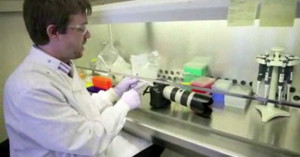
Did you know that 90% of the cells in (or on) the human body are bacteria and other microorganisms? Have you ever thought about how many bacteria live on your DSLR camera? Chicago Tribute staff photographer Alex Garcia recently dove into this second question while visiting the Argonne National Laboratory outside Chicago.

Belgian photographer Francois Lenoir has written an interesting account of how he managed to snap an extremely rare photo of serial killer Marc Dutroux through prison windows with some good ol' fashioned patience (and a dash of good fortune).

Nashville, Tennessee-based food photographer Kyle Dreier has a curious project titled Pairings. The main theme of the photographs can be summarized with the questions: "What food really go well together?" and "What are the stereotypical food pairings?" Dreier finds a good and a drink that are commonly consumed together, binds them together with some string, and shoots a photo of the pairing.
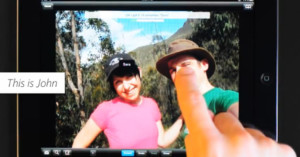
Talking to computers is one of the exciting new trends that's emerging in the tech world, and in the future we may find ourselves casually talking to our gadgets as we go about our lives. One application of this that you may never have considered is photo editing: what if you could post-process your photographs simply by telling an image editor what you would like done to the images?
That's exactly what scientists are currently working on, and the research is further along than you might think. They're already playing around with a prototype version of an app -- one called PixelTone.
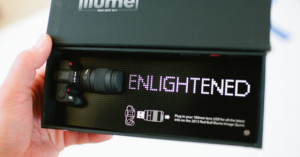
To promote this year's edition of its sports photography competition, Red Bull Illume is sending out a pretty slick promo. It's simply a USB drive loaded with a press media kit, but the presentation is so clever that we thought we'd share it with you (perhaps you can do something similar to promote your own photography business).
Last week we reported that HTC is preparing to launch a new camera sensor technology called Ultrapixels, which aims to improve image quality using a Foveon-style stack of three sensor layers. The smartphone imaging war is heating up, after all, an rivals like Nokia are investing heavily in photography technologies of their own (e.g. PureView).
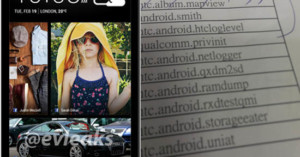
We're reportedly just days away from seeing the official launch of the new HTC phone (which may be named the M7 or the HTC One), and leaks are beginning to spring. There's a good chance we now have the first product shot of the phone and the first published shot captured with the phone.
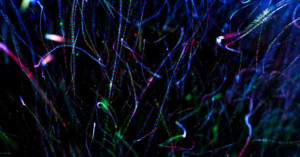
Earlier today, we showed you a number of time-lapse videos of Winter Storm Nemo that were created by people who were stuck indoors due to the heavy snowfall. New York-based photographer Brian Maffitt was also stuck indoors and he also turned to photography, but instead of shooting time-lapse photos, he turned to a different technique: long-exposure light painting.
His technique is rather interesting: instead of a flashlight, Maffitt projected a movie onto the falling snow in order to light up the snowflakes.

People on the East Coast of the United States was battered this past week by heavy snowfall and hurricane-level winds thanks to Winter Storm Nemo. The multiple feet of snow recorded in many areas were among the highest totals recorded in history (one town in Connecticut saw 40 inches!). Although the storm kept many people indoors, many of them decided to point cameras out their windows, creating beautiful time-lapse videos that show how quickly the snow piled up.
The time-lapse above was created by YouTube user miges3111, who captured 22 hours of the storm from his home in Connecticut using a GoPro Hero.
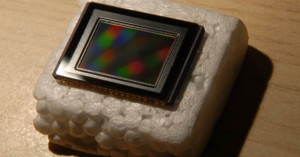
Jack over at the astrophotography blog The Landingfield has published a series of photographs showing what a digital camera's CMOS sensor looks like when viewed through a microscope. The sensor (seen above) was taken from a broken Nikon D2H -- a DSLR from back in the early 2000s.

A new controversy is brewing in the world of stock photography. Just last month, it came to light that Getty had agreed to license 5000 of its stock photos to Google while paying the creators of the images a meager one-time fee of $12. Now, one of Getty's most successful stock photographers is claiming that his account is being terminated in the aftermath of the first hoopla.

For a recent Music Issue of ESPN Magazine, photographer Mattias Clamer created portraits of 14 famous athletes in the style of iconic album cover photos. Clamer paid a huge amount of attention to detail, which resulted in many of the photos looking nearly identical to the covers they were meant to recreate.
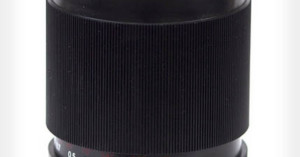
Here's another curious photography-related novelty item for those of you looking to fill your house with them (i.e. those of you who purchased the lens shaped vacuum cleaner and lens-shaped humidifier that we featured recently): it's a lens shaped pepper mill.

Smartphones are being used more and more to capture daily life photography, but many of its loyal users are perpetually stuck at the point-and-shoot level of photographic know-how. If that describes you, and you'd like to add a little more technical understanding to your brain, Photojojo has a new service designed just for you. It's called Photojojo University, a new educational service that teaches you photography lessons through bite-sized tutorials and assignments delivered into your email inbox.