Interview with Angelo Sgambati, Photog for America’s Next Top Model
Angelo Sgambati is a fashion photographer based in Sydney. He has been a photographer for three seasons of the TV show America's Next Top Model. Visit his website here.
Angelo Sgambati is a fashion photographer based in Sydney. He has been a photographer for three seasons of the TV show America's Next Top Model. Visit his website here.
Yep, you read that title correctly. Vegetable Weapons is a photo project by Japanese photographer Tsuyoshi Ozawa. Since 2001, Ozawa has been traveling to various countries around the world, photographing young women holding make-believe firearms constructed using vegetables and other foods.
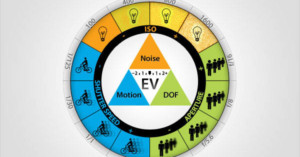
Check out this awesome exposure triangle graphic found in this Exposure Guide tutorial on the fundamentals of exposure:
Over the past month, there have been violent anti-Japanese protests across China over disputed islands between the two nations. Japanese businesses and manufacturing plants have been besieged, leading companies like Canon and Panasonic to suspend their operations and evacuate their premises.
Every year, the MacArthur Foundation selects 20-40 exceptional people in the United States and awards them with $500,000 MacArthur Fellowship "Genius Grants" -- prestigious awards that come with no strings attached. Winners are of all ages, come from all kinds of fields, and are selected purely because they "show exceptional merit and promise for continued and enhanced creative work." …
People sometimes use the expression "slow as a glacier" to describe something so stagnant that even the speeds of snails and molasses would feel inadequately fast in comparison. The fastest glaciers ever measured move at tens of meters per day, while the slowest ones may budge only have a meter over the course of a year. Most of the time, the movement is too slow for the human eye to see.
Gabriel Paez is like a one-man Google Street View. On September 21, 2012, the panoramic videographer and iPhone hacker set out from Seaside, Oregon on a journey across the United States to Portland, Maine. Carrying him from place to place was Pucho, his 2005 Vespa PX150 scooter. Strapped to his back was a giant panoramic camera rig designed to capture 360-degree video footage of his adventure "for a live stage show" he's working on.
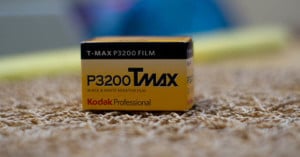
Kodak may be planning to sell its film division, but for the time being the business is still under the company's control. The company announced yesterday that T-MAX P3200 is the latest in its lineup to be discontinued, citing the plummeting demand for ultra-high speed black-and-white film.
Photographers and best friends CJ Kale and Nick Selway tell us they make a living by creating and selling photographs of Hawaiian volcanoes. "Making a living" is an interesting choice of words, because both photographers risk their lives in capturing their incredible images of violent explosions and glowing lava flows.
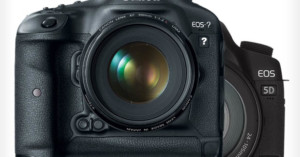
Canon's rumored-but-yet-to-be-announced 46-megapixel DSLR may be named the Canon 3D after all. While browsing camera store B&H last night, the folks over at Nine Volt randomly decided to search the site for "Canon 3D". They were surprised to find that the actually returned a result.
New York magazine editor Christopher Bonanos has written a new book titled Instant: The Story of Polaroid, which provides a behind-the-scenes look at the rise and fall of Edwin Land's revolutionary company. In the video above, Bonanos offers a brief history of Polaroid, including how Land's ideas inspired entrepreneurs to follow: …
How do you stuff a full frame sensor into a compact camera body? The answer: with great difficulty. It appears that Sony is running into a few technical hurdles after announcing its groundbreaking RX1 full frame compact camera. The company announced today that the camera will be shipping with a couple of last minute modifications made to the design and to the specs.
Usain Bolt ran beyond the boundaries of sports and made headlines in the world of photography earlier this year at the London Olympics. After winning yet another gold in his 200m race, he ran over to Scandinavian newspaper photographer Jimmy Wixtröm, grabbed his Nikon D4, and began shooting some awesome photographs of what he was experiencing.
New York City-based filmmaker Casey Neistat has strong opinions on social networks and how they should be used. His favorite one at the moment is Instagram, but he has a message for many of its users: "you're doing it wrong." The video above is his guide on how to "not suck so bad" with the photo sharing app. Don't worry: it's not about filters. (Be warned, though: there's a bit of strong language).
UC Berkeley's library system is the fourth largest library in the United States, so it's no wonder that treasures are often forgotten and buried inside the rare collections. Case in point: a massive collection of signed prints by Ansel Adams have been discovered in one of the 32 libraries, just sitting around in a box.
Symmetrical Portraits is a well-known and oft-imitated series of photos by photographer Julian Wolkenstein, shot back in 2010. After picking a number of subjects based on their facial features, he photographed them staring blankly straight-on into the camera. He then split the faces down the middle in order to obtain two separate "portraits" showing what the subject would look like if they had a perfectly symmetrical face.
Remember this photograph tweeted last week by @weaksauce12? It shows the strange purple flaring reported by many iPhone 5 users, which is being called everything from "purple haze", to "the Hendrix effect", to "Purplegate". Fingers were pointed at everything from the phone's new sapphire lens to the infrared filter -- or supposed lack of -- inside.
Official presidential photographers lead exciting lives. President Obama's photographer Pete Souza attends secret meetings and captures iconic photos. Georgian President Mikheil Saakashvili's personal photographer was arrested last year after being accused of being a spy for Russia. Now Iranian President Mahmoud Ahmadinejad's photographer is the latest to do something noteworthy: he defected to the United States.
In addition to being used for art and documentation, photographs have long been a medium of communication. This is even more true in this social networking age in which photographs can easily be used to tear people down or build people up. This heartwarming video published over at Facebook Stories is a great example of the power of socially shared photos.
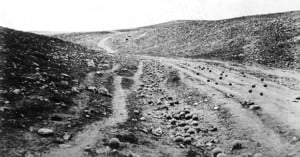
You might recognize the photograph above. Titled Valley Of The Shadow Of Death and snapped by British photographer Roger Fenton in 1855, it's considered to be one of the oldest known photographs of warfare. Problem is, it might also be one of the oldest known examples of a staged photograph.
If you've spent any amount of time in mom and pop Chinese restaurants -- especially around college campuses -- then you're probably seen the strangely colored and faded food photographs used in the menus and displayed on the walls. These photographs look anything but appetizing, yet you can find them everywhere there's cheap Chinese food.
Proto-photo-blogger Ken Rockwell has interesting things to say about what he calls "Nikon's big deception." If you're currently considering the new D600, his "What's New in September 2012" words will be music to your ears: …
Last week we shared a project by photographer Daniel Kukla, who photographed mirrors on easels in the desert in a way that makes them look like landscape paintings. Photographer Brendan Wixted did a similar project earlier this year for a photography class at his university, except he used off-camera lighting to illuminate the reflected landscapes.
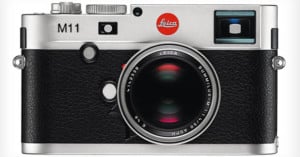
Here's something that's a bit strange: Leica filed a trademark application for "M11" this past May, just a few months before announcing the Leica M -- a camera that did away with the company's number-based naming strategy used since 1954.
IKEA found itself in some hot water today after it came to light that a number of women seen in its catalog photographs had been Photoshopped out of the frame for the Saudi Arabian edition. Swedish newspaper Metro broke the story today with a scathing piece titled, "Women Cannot be Retouched Away," writing that IKEA's new catalog reflects the country's oppression of women by editing out every single human with two X chromosomes.
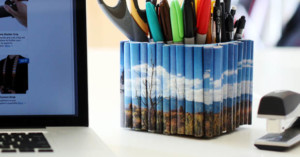
Want a personalized pencil holder for your workspace that features your photography? Check out this neat "photo-roll holder" idea by Tali Schiffer. The basic ingredients are an empty box and a bunch of duplicate prints of the same photograph. If you roll all of your prints to the same diameter (using a pencil or a paintbrush helps), you can line them up side-by-side to recreate your original photo while creating a loopy wall around your box. Depending on the size of your holder and the diameter …
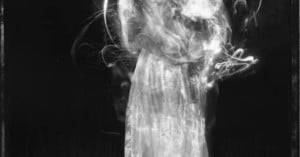
Sonia Soberats' journey in photography didn't start until she couldn't see the photographs she was producing. Around two decades ago, she lost her eyesight to glaucoma between losing her son to Hodgkin's disease and her daughter to ovarian cancer. At the turn of the century, Soberats began taking photography lessons in New York City as a form of therapy and self-expression. Her technique of choice? Light painting.
We've seen ring flash units that redirect light from a DSLR's pop-up camera and a hot shoe-mounted flash, but never from a compact camera's built-in flash. Based on a patent filing published earlier this month and uncovered by Egami, that's what Nikon appears to be in the process of building.
Die-hard Dodgers fan Bobby Crosby is the only person to ever film himself catching a home run at a Major League Baseball game. That's not all though: over the past few years, he has also filmed himself catching tens of home runs during the batting practice prior to games, holding his baseball glove in one hand and his camera in the other. The video above, which is currently going viral online, shows Crosby's amazing first person view of all but a few of those catches.
It is commonly said that a picture is worth a thousand words. It seems that US smartphone users agree, for Instagram has now passed Twitter in active user count. The legions of Instagrammers aren't just checking their beloved social network more than their Tweeting counterparts -- their eyeballs are glued on it longer as well.
Point-and-shoot cameras aren't doing so hot these days as consumers are replacing their multiple electronic devices with a single gadget: the smartphone. The compact cameras that have a chance of surviving are the ones that are special in some way, whether it's having a gigantic sensor or being hardened with serious weatherproofing.
With the advent of Internet-connectivity and apps in cameraphones and digital cameras, images can now be shared with others in ways never before seen in the history of photography. Unfortunately, not all of the ways are positive. Some are downright creepy.
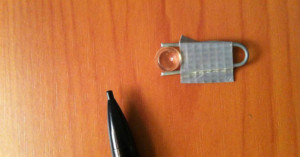
Last month we wrote about how the small focusing lens inside a laser pointer can be repurposed as a cheap macro lens for your smartphone. After seeing this project online, photo enthusiast John Coleman decided to give it a shot. To keep the lens secure against your phone, you'll need something to hold it (e.g. a hair pin) and some tape to attach the holder to the phone. The photo above shows the super simple attachment Coleman created.
Lens caps are often cast aside in favor of lens hoods, but what if you could have both in one accessory? That's what the Hoocap does. It's not as fancy as the blooming lens hood concept we featured a year ago, but it seems pretty well thought out. Extend the cap/hood out from your camera, and the two "curtains" open up, allowing the camera to "see" and blocking errant light from causing flares. Close it, twist it, and push it into your lens, and it locks into its closed position for protecting …
Photographer Noah Kalina has taken a self-portrait a day for the past 12.5 years, but his already-impressive project has now been bested by one that's nearly twice as long. When Leeds Met University student Cory McLeod was born 21 years ago, his parents began faithfully documenting his life by taking a single photograph of his face every single day. This past week, the project was published as a one-of-a-kind video titled "21 Years" that shows McLeod's entire life in roughly six minutes.
One major trend in the camera industry this year is the introduction of mobile operating systems such as Android into digital cameras. By opening the door to things like Wi-Fi, data plans, and apps, camera makers are going in the same direction that phone makers went some years ago, turning their devices into what can best be described as portable computers with specialized functions (e.g. voice-calling, photography).
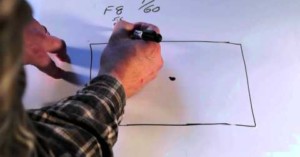
Want a better understanding of how the metering and AE-lock features in your DSLR camera work? YouTube photography tutorial channel PhotoUniverse made this simple explanation that explains the concepts using a whiteboard. He quickly steps through evaluative (which uses a database of many "known" photos) and center-weighted metering before spending a good amount of time explaining spot metering and how you can use it in conjunction with AE-Lock to properly expose photographs.
Two interesting Canon rumors are currently floating around. The first has to do with the 46MP DSLR that Canon is reportedly field testing and may be planning to unveil in late October.
If you're a fan of Instagram, then you'll probably appreciate this neat DIY project by Elsie and Emma of A Beautiful Mess. Their Homemade Photo Filter DIY involves drawing colorful patterns on squares cut from transparency sheets: …
Ever wonder what it looks like when you fire a gun underwater? Firearm enthusiast Andrew Tuohy of VuurwapenBlog recently decided to find out. Taking his .40 Glock 22 into his swimming pool, he captured some high speed videos of himself firing a round using an ordinary Pentax Optio WG-2 waterproof compact camera (which has a 120fps movie recording mode). The photograph above is a still taken from one of the videos.
Played around with the new Samsung Galaxy Camera very briefly at Photokina last week. It's basically a camera-fied smartphone that doesn't do voice calling. It does have 3G/4G/Wi-Fi connectivity though, so it's one of the first -- if not the first -- compact camera you can add a data plan to.
Last year there was a minor controversy when the Portland Police Department began posting photos of arrested Occupy protestors to Facebook. It may or may not have been inspired by the PPD, but Pottstown, Pennsylvania newspaper The Pottstown Mercury has begun sharing photographs of wanted individuals through the popular photo sharing service Pinterest.
Daniel Kukla is a photographer who had formal training in biological and anthropological sciences. His educational background plays a major part of his artistic practice, and this can be seen in his clever project titled, The Edge Effect.
Kodak divisions are falling left and right as the company struggles to claw its way out of bankruptcy protection. After killing off its camera business and selling off its film business earlier this year, Kodak announced today that it will shortly be pulling out of the consumer printing business in order to focus on commercial printing.
Here's an interesting way to provide a behind-the-scenes look at how a portrait shoot was done. After photographing British comedian Frank Skinner, UK-based photographer Harry Borden took all the unedited photos from the shoot and turned them into a one-minute time-lapse movie. The resulting short film is a glimpse into how a session progressed from one pose to another, and the different ideas that were tried.
Samsung is doing one of the strangest promotional stunts we've seen in recent times. To celebrate the new NX1000 mirrorless camera announced back in April, they're giving away the camera to anyone in the UK named David Bailey.
People vs. Places is a creative collaborative photo project by photographers Timothy Burkhart and Stephanie Bassos.
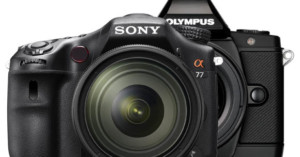
Sony has agreed to pour $645 million into Olympus in exchange for 11.5 percent of the embattled company, becoming the single largest shareholder. While the companies announced that they are considering cooperating in the digital camera industry, the main motivation for Sony wasn't photographic imaging but body imaging. Olympus is one of the major players in the medical endoscope market, holding about 70% of sales, and Sony's investment allows it to dip its toes into this lucrative industry.
Behold: one of the rarest photobooks in the world. What you're looking at is an exceedingly rare complete set of American photographer Edward S. Curtis' book The North American Indian. It contains 772 large-format photogravures on Japanese tissue, 111 signed plates, and 20 extra text volumes that contain an additional 1,505 photogravures, 4 maps, and 2 diagrams.
Earlier this year, we featured a project by photographer Sannah Kvist that showed portraits of urban young people posing next to a pile of all their worldly possessions. Jiadang (Family Stuff) by Chinese photographer Huang Qingjun is similar in concept, but very different in content. He has spent nearly a decade traveling around to various rural communities in China, asking families to take everything they owned and carefully arrange them outdoors for a picture.