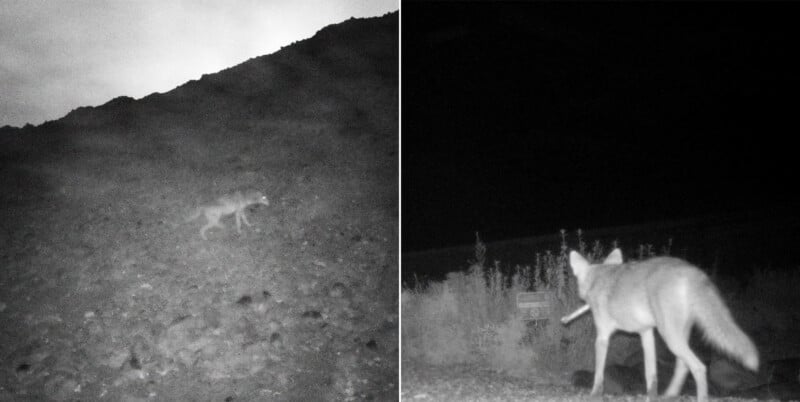
Trail Camera Photos of the First Coyotes to Use the World’s Largest Wildlife Crossing
The world’s largest wildlife crossing, the $114 million Wallis Annenberg Wildlife Crossing, hasn’t officially “opened,” but that hasn’t stopped the animals from using it above the extremely busy Highway 101 in Agoura Hills, California.
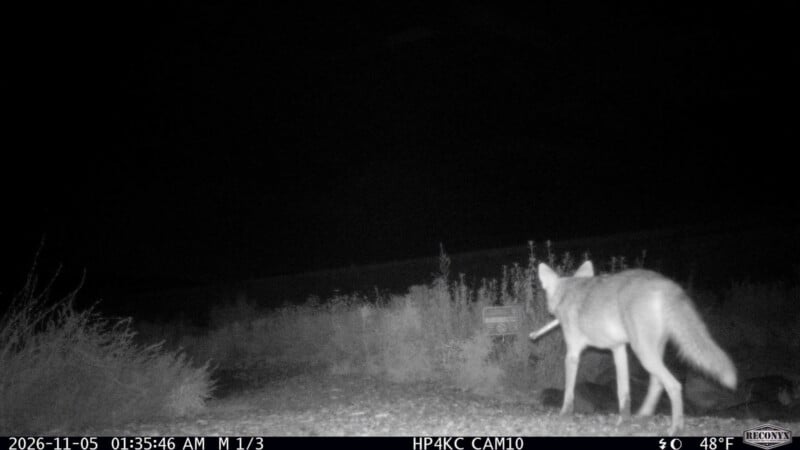
On October 28, a coyote became the first large mammal — a lizard was the first across the line, technically — to use the wildlife bridge. Yesterday, a second coyote went on it.
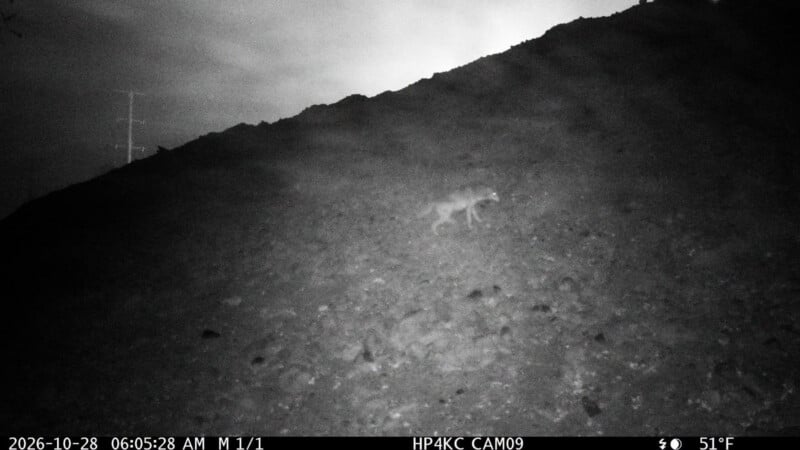
They were both caught on recently installed remote wildlife camera traps, an incredible tool for scientists and award-winning wildlife photographers alike.
As SFGate reports, the Wallis Annenberg Wildlife Crossing, which has been in the works since the National Wildlife Federation (NWF) and Santa Monica Mountains Fund began raising money for it in 2014, isn’t slated to have its ribbon-cutting ceremony until early December. Construction is ongoing, so it isn’t even technically a crossing yet.
Wildlife doesn’t wait. The project, which includes two bridges crossing the 10-lane Ventura Freeway, includes 13 acres of habitat restoration. Birds and bugs have already enjoyed the growing reclaimed habitat above the busy highway, while a western fence lizard was the first to go on the bridge’s surface itself.
The two coyotes were the first large mammals spotted on the structure itself, but a mountain lion and her two cubs, a mule deer, and bobcats have all been spied walking next to the wildlife crossing.
“To everyone who wondered how wildlife would know where to go without signs… apparently, they’ve figured it out,” writes the Facebook account for P22 Mountain Lion of Hollywood, an influential mountain lion that was tragically euthanized in 2022. The famous big cat made a lasting impact on California’s wildlife conservation efforts, inspiring many to get involved and help make projects like the Wallis Annenberg Wildlife Crossing possible.
For scientists, the new wildlife crossing bridge offers many interesting things to learn.
“This is more than just about whether animals use the crossing,” said Seth Riley from the National Park Service’s Santa Monica Mountains National Recreation Area team. “We want to understand how effective it is in reconnecting an ecosystem that has been divided by the freeway for decades. That is a much bigger scientific question and answering it will take years.”
Riley and other team members will learn a lot from cameras set up on and near the wildlife crossing, and the public will get to see many of these photos. For security reasons, there won’t be real-time public feeds from the site, though. Scientists will study how the wildlife crossing affects wildlife diversity, genetic diversity, habitat evolution, how light and sound affect animals, and more.
It’s an exciting time to be a wild animal near Highway 101. And a decidedly safer one.
Image creditsNational Wildlife Federation, Wallis Annenberg Wildlife Crossing
Affiliate Disclosure PetaPixel articles may include affiliate links; we may earn a commission if you buy through one.