Educational

PetaPixel's editorials are in-depth stories, thought-pieces, and opinions on the photography industry led by the minds of our editorial team.

The Great Compositions of Photographer Alfred Eisenstaedt

Has someone ever asked you why you like an image? Beneath the surface of great picture, there is a geometric design in hiding. During World War II, photographer Alfred Eisenstaedt worked for the early version of the Associated Press and went on to become a Life Magazine photographer, taking over fifty cover shots for them. Without getting too deep into Eisenstaedt’s personal story, I will say that he started photography with very little formal training.

Sony Launches Helpful Tutorial Website for New Photographers

With more entry-level DSLRs on the market now than ever, the camera manufacturers seem to understand that it's time to woo the beginners. Canon is doing it with a new DSLR simulator website, and now Sony has launched a helpful microsite of its own, focusing on video tutorials that'll get Sony α beginners off to a good start in the world of photography.

BTS: Shooting the ‘Persons of the Year’ Cover for Time Magazine

Greg Heisler is one of the great photographers of our time, and one of his strengths is meticulously planning his shots. Whether his subject is an NBA player or an olympian, Heisler's photos always capture the essence of that person, and his approach makes his BTS videos particularly educational and interesting to share.

The History of Photoshop as Told by Its Founding Fathers

Back in 2010, Adobe put out a short documentary called "Startup Memories -- The Beginning of Photoshop" to celebrate the program's 20-year anniversary by recalling its past. Somehow, that documentary slipped through our fingers at the time, but seeing as we've already started a conversation on how Photoshop is "remixing the world," we thought it was an opportune time to share this blast from the past.

Canon Introduces a Virtual DSLR Website to Help Beginners Learn the Basics

If you're just starting out in photography, there are a lot of resources out there to help you understand the basics before you just jump in. And while books and videos are certainly helpful, one of the more fun ways to learn your way around a camera is by using an online DSLR simulator. We've shared one with you before, and now Canon Canada has released a simulator website of its own dubbed Outside of Auto.

A Glimpse at Where Camera Gear is Kept on the International Space Station

If you're a photography enthusiast and ever have the good fortune of finding yourself floating around on the International Space Station, here are two words you should know: service module. Formally called the "Zvezda Service Module," it's the component of the ISS that houses all of the station's life support systems, and is where the astronauts gather if there is any kind of emergency. But here's the main reason you'll want to pay the module visit: the fancy camera equipment used by the …
The Oldest Surviving Aerial Photograph

According to the Professional Aerial Photographers Association, the father of aerial photography was French balloonist Gaspard-Félix Tournachon, who photographed Paris from a hot air balloon way back in 1858. Unfortunately, none of his work remains today, and so the title of oldest surviving aerial photograph goes to the picture you see above.

Pro DSLRs Lose Value More Slowly Than Consumer Ones, Study Finds

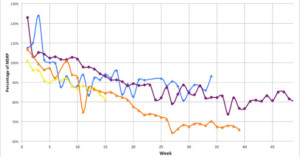
New cameras are like new computers. Both of them depreciate quite quickly as new technologies and new models are churned out year after year. This presents a perpetual problem for photographers, as many constantly grapple with the question of whether to upgrade their camera to a more recent model, or whether to purchase a higher-end model so that it keeps its value longer.

What a Camera Flash Looks Like in Super Slow Motion

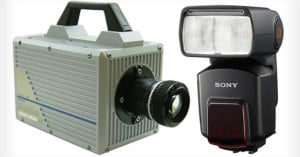
Photographer Florian Knorn recently took a Fastcam SA4 high speed camera -- ordinarily used for observing things like ballistics and fluid dynamics -- and pointed it at a Sony HVL-F58AM flash unit, capturing what a camera flash firing looks like when captured at 500,000 frames per second and then slowed down to to 25fps.

The Print Quality Across Various Editions of “American Photographs”

Walker Evans' famous photo book "American Photographs" was first published in 1938. Since then, the book has been released in new editions every 25 years or so. Although the photos contained within its covers have remained the same, the processes and technologies used to print the photos have evolved over time, causing each edition to be every so slightly different from the others.

Overcoming My Photo Entekaphobia: The Fear of Shooting at f/11

Entekaphobia is fear of the number 11. I’m a resolution fanatic. I test every new lens for resolution. For personal use, I’ll choose the lens with higher resolution over the one with creamy bokeh every time. When choosing a camera, I have a (yes, I’m ashamed to admit it, but it’s true) strong tendency to want the most megapixels. I’m a resoholic.

What 10FPS on a Nikon D4 Looks Like in 1920FPS Super Slow Motion

It's not uncommon for digital cameras to have burst modes as fast as 10 frames per second these days -- especially in mirrorless and pellicle mirror cameras -- but do you think you have a good understanding of just how fast 10FPS is? If not, check out this video by YouTube user krnabrnydziobak, who pointed a Phantom Miro eX2 at a Nikon D4 to see what 10FPS looks like when captured at a staggering 1920FPS.

A Demonstration of the Silent Shutters in the Fujifilm X20 and X100s

When Fujifilm announced its latest wave of X-Series cameras earlier this year, the company stated that the big area they're focusing on is "speed". The new X20 and X100s feature extremely speedy autofocus, burst speed, and startup time. The 's' in X100s may officially stand for "speed," but it could just as well stand for "silent" or "stealth". Both cameras feature extremely silent shutters that won't attract attention while you're snapping away.

Wet Plate Collodion Photography from a First-Person Point of View

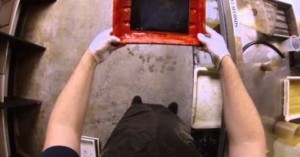
Here's a video that may be very interesting to you if you've never tried your hand at creating a tintype with wet plate collodion photography. Oklahoma City-based photographer Mark Zimmerman recently strapped a GoPro Hero 3 to his head and went through the entire process of creating a wet-plate photo on aluminum, from flowing the collodion in the beginning, through exposing it using his large format camera, and ending with a finished tintype photo of a camera.

Photos from the World’s First Underwater Nuclear Explosion

In in 1946, the United States conducted a series of nuclear weapon tests at Bikini Atoll in what's known as Operation Crossroads. A total of two bombs were detonated to test the effects nuclear blasts had on naval warships. The second, named Baker, was the world's first nuke to be detonated underwater. Due to the unique properties of underwater explosions, the Baker test produced a number of unique photographs that the world had never seen before.

The Fascinating Story Behind The Oldest Surviving Photograph of a US President

In June of last year, we gave you a quick "photo trivia o' the day" lesson on the history of presidential photography. We told you that John Quincy Adams sat for what is currently the oldest surviving photo of a US President, that James Polk sat for the oldest of a US President in office, and that President Obama was actually the first to have his official photo taken digitally. That first of those three facts, however, comes with an interesting story.

“To Omit an Alias Filter… Is like Building a Sports Car with No Brakes”

Last week, we pointed you to a piece by the New York Times on how Fujifilm is attempting to kill moiré without killing sharpness by designing its sensors in a way that eschews the traditional anti-aliasing filters used in digital cameras. Photographer Martin Doppelbauer disagrees with Fuji's claims: he has published a piece arguing that, "digital cameras without aliasing filters are cameras with a built-in design flaw": …

Why Founding Photog William Henry Fox Talbot Would Have Grokked Photoshop

The origin of photography was artistic incompetence. On his honeymoon in 1833, William Henry Fox Talbot struggled to sketch the Italian countryside. He was assisted by a camera lucida, a device that projected the landscape onto a sheet of paper, but his untutored hand couldn’t follow the contours. So he conjured a means to record scenery chemically. He dubbed it “the art of photogenic drawing”, and in the 1840s popularized his invention with a book called The Pencil of Nature.

Fujifilm’s Moiré-Killing X-Trans Sensor is a Throwback to the Days of Film

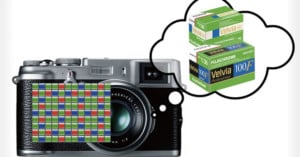
Fujifilm's new X-Trans sensors diverge from the traditional way CMOS sensors are designed by using an irregular pattern of red, green, and blue pixels. This allows the sensors to eschew the standard anti-aliasing filter, eliminating moiré patterns without putting an extra component in front of the sensor. Roy Furchgott over at The New York Times has an interesting piece on how the new tech is inspired by Fujifilm's glory days in the film photography industry: …