Why I’m Ditching Getty Images in Favor of Stocksy for My Stock Photo Sales
Dear Getty Images: I quit.
Dear Getty Images: I quit.
On the morning of December 14th, 2012 I found myself scanning the redundant array of social media apps on my phone. Just as I was about to pry myself out of bed, I had come across a recent twitter post by one of my fellow graduates of Newtown High School. In just a few minutes I would learn that my former hometown elementary school had become the site of one of the most horrific school shootings that this country has ever seen.
The Onion has published a humorous tongue-in-cheek piece that many non-professional photography enthusiasts may find very thought provoking. It's titled "Find The Thing You're Most Passionate About, Then Do It On Nights And Weekends For The Rest Of Your Life." In the commentary, author 'David Ferguson' writes, …
Dear (new-ish) Photographer, …
I did a trip to Paris solely to take photographs for myself back in 1992. That sounds selfish, but I didn't have any children to take care of and my wife was enmeshed in a busy career as an art director for a prosperous advertising agency.
As I sat trapped in a coach seat on an aged and tattered American Airlines airplane I had time to think about the whole spectrum of art photography. I wanted to have a clearer window into the different ways in which people who aren't using their cameras to make a living in a traditional, commercial application of photography approach their subjects and their understanding of style. How much is generated internally and how much is a reflexive reaction to a world inundated in images? …
As the recipient of a great education (thanks in no small part to my parents), I’m always fascinated by discussions of how college influence what we do and achieve later in life. As a music major, I could have never fathomed that I would one day become an entrepreneur, and when I think back to college, it had very little to do with the acquisition of technical knowledge, and more about being exposed to a wide range of subjects, people, and social situations.
I’ve read too many lists online of “traveling photographer tips” that don’t actually appear to be written by actual photographers. Some things work in the real world, others simply do not. Here’s some collected tips shaped from 7 years of travel experience on the road. I don’t think you’ll find most of these anywhere else.
We are in the midst of sea change -- a tidal wave might be more accurate -- within the medium of photography. While the lens is still firmly fixed to the camera body, the body itself appears to have imploded. The inner workings -- that is, the guts of the camera from Talbot’s days (when cameras were called “mousetraps” by his wife who was always tripping over them) -- have changed faster than anyone expected.
Madeleine Corcoran over at Duckrabbit has published a sharp criticism of photojournalist Samuel Aranda's decision to license his most famous conflict photo to Canadian electronic band Crystal Castles for use on their album cover and merchandise.
Entekaphobia is fear of the number 11. I’m a resolution fanatic. I test every new lens for resolution. For personal use, I’ll choose the lens with higher resolution over the one with creamy bokeh every time. When choosing a camera, I have a (yes, I’m ashamed to admit it, but it’s true) strong tendency to want the most megapixels. I’m a resoholic.
"One should still try and get as close as possible to what you want in the initial click." …
On April 8, 2011, Senator Jon Kyl was quoted on the Senate floor as saying, "If you want an abortion, you go to Planned Parenthood, and that’s well over 90 percent of what Planned Parenthood does." …
This is an incredible photo. The range of emotions expressed (anger, grief, despair), the position of the people and bodies, and proximity of the photographer to the subject make it an incredible moment in time. And because of these elements, this photo was deservedly named the World Press Photo of the Year.
In December of 2008, as I was getting ready for a vacation trip to Brussels, I posted the above self-portrait of myself sporting my new winter coat to my Flickr account. I didn’t think much of it after posting it and I’d pretty much forgotten about it over the years.
Sometimes it’s easy for photographers to take for granted our skill set. It becomes natural to forget, from time to time, all of the elements rattling around in the synapses of our visual cortexes in the few tenths of a second it takes to put in motion the mechanics that make a picture. Like any professional of a trade, eventually you get to that point where you can begin to make it ‘look easy’, like anyone can do this. And with digital cameras and software readily available everyone sure …
Paparazzi photography is a topic that has come up quite a bit in recent days, with most of the stories putting the camera wielders in a pretty bad light. Joerg Colberg over on Conscientious has a thought provoking piece on how photographers' rights seem to be trumping basic human decency -- with the blessing of our culture.
Last week, we pointed you to a piece by the New York Times on how Fujifilm is attempting to kill moiré without killing sharpness by designing its sensors in a way that eschews the traditional anti-aliasing filters used in digital cameras. Photographer Martin Doppelbauer disagrees with Fuji's claims: he has published a piece arguing that, "digital cameras without aliasing filters are cameras with a built-in design flaw": …
The origin of photography was artistic incompetence. On his honeymoon in 1833, William Henry Fox Talbot struggled to sketch the Italian countryside. He was assisted by a camera lucida, a device that projected the landscape onto a sheet of paper, but his untutored hand couldn’t follow the contours. So he conjured a means to record scenery chemically. He dubbed it “the art of photogenic drawing”, and in the 1840s popularized his invention with a book called The Pencil of Nature.
When Kodak announced that it had reached a brand licensing deal with JK Imaging, hardly anybody questioned the move. It meant that Kodak-branded cameras were not a thing of the past -- there's even an upcoming Micro Four Thirds offering -- and after all, Kodak probably has standards when making deals like this.
One of the biggest stories in the sports world over the past couple of weeks has been the hoax involving star football player Manti Te’o and a girlfriend that never existed. After the news spiraled into the national spotlight, Te'o agreed to an exclusive off-camera interview with ESPN's Jeremy Schaap to explain his side of the story.
For several years now, my occupation has been to basically read everything written about new equipment. In order to help everyone save time, and to save the Internet millions of electrons, I have developed a concise method to summarize all such discussions for all newly introduced imaging equipment.
This is a cautionary tale about a recent experience with Amazon. For Christmas I was the lucky recipient of a Pentax K-5 -- a gift from a family member who bought it from my Amazon wish list (Yeah me!). Unfortunately, unwrapping was the last happy moment in this tale.
You know that feeling of extreme excitement when an Internet package arrives in the mail? That's what a guy named Jalal felt recently after ordering a Canon 5D Mark III and 24-105mm f/4L kit from Dell.com. Unfortunately for him, what he received wasn't quite what he had expected.
Back in 2009, Popular Photography announced the winning photos of its latest Reader’s Photos Contest. Two of the winners (shown above) had some photographers scratching their heads, due to the fact that they're "Photoshop jobs" rather than non-manipulated stills.
Engadget and gdgt founder Ryan Block has published an op-ed over at The New York Times on why he has decided to quit Instagram. It comes in the aftermath of Instagram's policy hoopla, but it's not the same argument you've been seeing all over the web: …
A camera can be many things. A tool, to produce an image. A bridge, to start a conversation. An observer, to record an event, or bear witness to something. A shield, to distance and separate the photographer from the scene he or she is attempting to capture.
Street photography is a genre that every photographer will try at least once in his or her career. Its broad appeal stems from the fact that you can do it anywhere; there’s a human element to the images that captivate the viewer, and if done well, can make for some extremely arresting images.
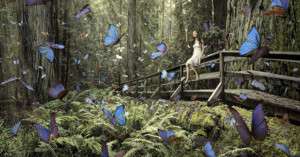
Last month photographer Chris Crisman entered the photograph above, titled Butterfly Girl, into the World Photography Organization’s 2012 World Photography Awards. It was selected from the thousands of entries as part of a promotional campaign for the contest and in that process was spread out all over the Internet. From the Daily Mail to the Huffington Post, the story about the World Photo Awards and Chris’s photo made the rounds across the web.
Since the moment I walked into Milford Photo looking to buy a professional camera in the winter of 2011, I have been exposed to constant judgment for being a rich, stupid and spoiled 13-year-old who wanted an expensive camera to take “artsy” pictures that I didn’t know how to take.
Once upon a time there was an industry largely dominated by two companies. Their domination, over some 30 years, was so nearly complete that they became understandably a bit arrogant. After all, their products were the biggest, the best, and by far the most popular.
I was standing at the top of the stairs in the Suzzallo Library on the University of Washington campus, looking down at my phone when someone tapped me on the shoulder from behind. I turned to see an older gentleman who gestured towards the hardwood box resting on the handrail of the stairway.
How well do you know the area in which you live? Or any area you regularly visit, for that matter? This may seem like the question of an idiot -- of course you know your area of residence -- but do you really? Have you explored every road and back road and high street and side street and pathway and alleyway? I’m aware I str ayed into polysyndeton, but it’s relevant to the question I’m asking: how well do you know the area in which you live?
The Internet can be a tough place for photographers. One can pour an immeasurable amount of time, money, energy, blood, sweat, and tears into a picture (or a series of pictures), only to have his or her hard work torn to shreds by nameless and faceless commenters who hide behind the veil of anonymity.
This article started after I followed an online discussion about whether a 35mm or a 50mm lens on a full frame camera gives the equivalent field of view to normal human vision. This particular discussion immediately delved into the optical physics of the eye as a camera and lens -- an understandable comparison since the eye consists of a front element (the cornea), an aperture ring (the iris and pupil), a lens, and a sensor (the retina).
The National Gallery in London, the world's 4th most visited art museum, is currently holding its first major exhibition of photography, titled, "Seduced by Art: Photography Past and Present." Andrew Graham-Dixon of The Telegraph has published a review of the show, and has some strong opinions on photography's place in the art world: …
What is street photography? The question is controversial, that's for sure. The first problem arises when trying to define it. According to Wikipedia: …
Have you heard of the term sousveillance? It's the inverse of surveillance: instead of a camera pointed at individuals, individuals wear their own cameras on themselves to document their activities. Wearable-camera pioneer Steve Mann has written a fascinating piece for Time, titled "Eye Am a Camera: Surveillance and Sousveillance in the Glassage", in which he offers his vision of what the future will look like once wearable cameras such as Google Glass (seen above) become ubiquitous.
In 2008, I had this kooky idea to take my then 4-year-old son out to an abandoned road and throw him into the air, since it seemed most fathers like to do this with their kids. There was this long, abandoned road near my house, so we set up there. After getting my Nikon D200, self-timer, and tripod ready, my son decided that he didn't want to be thrown into the air, so I just held him up instead. I then took another photo of myself looking up with my arms extended.
Photojournalist Kenneth Jarecke wrote up a thought-provoking piece yesterday titled, "Instagram, the Devil, and You." He offers his thoughts on the question, "Will 'Instagram photojournalism' stand the test of time?":
As a kid growing up in interior British Columbia, it is impossible not to fall in love with the great outdoors. Some of the best ski hills on the continent, endless hiking and biking opportunities, and lakes that stretch over the horizon. The endless opportunities outside my doorstep would often lead to long adventures in the mountains, and ultimately, a budding interest in photographing these places to share with others.
Sometimes the best thing you can do to improve your photography is leave your camera at home.
A few years ago, I came up with a theory. Every person has some balance of two incredibly valuable assets: Time and Money. If you have an excess of one of them, there’s a good chance that you don’t have much of the other. I’d like to take some time and reflect on how being aware of how you spend your time can potentially improve your business... and maybe even your life.
Photographer Richard Esposito has written an interesting article over at Tiffinbox on how weddings are becoming a "too many cooks in the kitchen" kind of environment, where everyone and their mother is a photographer now: …
Recently, a friend and photographer Ben Jacobsen of Ben Jacobsen Photo got his work into a third gallery. One of the gallery owners asked him “Is your work Photoshopped?” This is also a popular question often asked at Art Fairs and Photography exhibits. Why is this question relevant to some viewers? If you are asking this, do you know what Photoshopping means? Better yet, What does that word mean to you, and what is it that you are asking?
Jonathon Keats of Forbes has a great piece discussing truth in photography and Joel Sternfeld's 1978 photo of a fireman shopping for pumpkins as a house burns in the background: …
In an interview we published this past weekend, popular photo blogger Thomas Hawk predicted that one of the major trends over the next five years will be "monetization for non-professional photographers." Paul Melcher of Thoughts of a Bohemian made the exact same prediction today: …
Editor's note: "Tenzing Norgay" is the penname used by the author of this article. He is not related to the famous mountaineer.
It's seems like many photo enthusiasts are hating on Instagram and retro-filtered photos these days, but not photographer Richard Koci Hernandez. He has written a piece for CNN titled "Photographers, embrace Instagram," in which he explains why he thinks that "Smartphones have ushered in a golden age for photography."