I remember exactly where I was when I heard what the new name for the camera brand spun off from Olympus was going to be. I remember sitting at my desk at my old house, looking at the press release, dumbfounded. There was no way they actually picked that, right?
It wasn’t possible to keep Olympus, since the parent company this new company would be spun off from would be retaining and using that brand name. Something else needed to be chosen.
OM System feels like a name decided around a corporate roundtable. OM makes a ton of sense as it had been a part of the Olympus brand history for years, so I can see how the suits decided it would be great to keep it as part of the new company’s name. OM actually comes from Olympus Maitani, in honor of Yoshihisa Maitani who was a very important camera designer at the company. So by choosing OM, they would intrinsically keep part of the Olympus name, albeit mostly hidden since the average person doesn’t know this history.
And it’s not just one product, it’s a system of cameras and lenses! OM System, on paper, makes logical, rational sense. I don’t have any issue with OM Digital Solutions as the corporate name, but OM System for a product? That’s where you lose me.
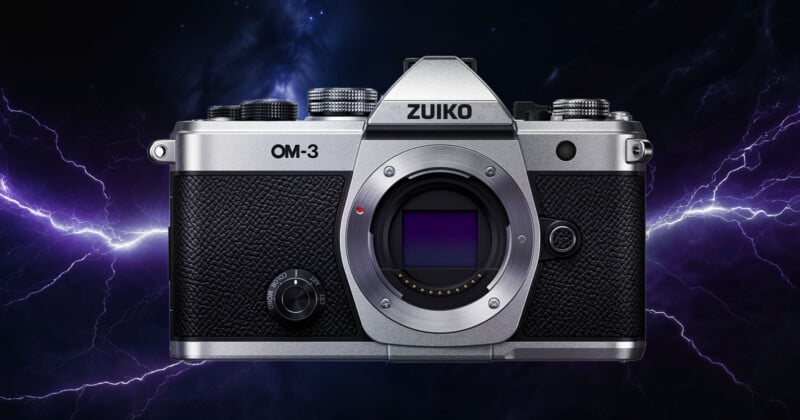
It’s uninteresting and, frankly, comes with some serious downsides. What makes it worse is that there is a spectacular brand name that they could have chosen (and still can) that they own as part of the spinoff: Zuiko.
Light of the Gods
Before becoming Olympus Corporation, the company was known as Takachiho Seisakusho, named after Mount Takachiho, the peak where mythology says the Japanese gods descended to Earth. When the company expanded from microscopes into Western export markets in 1921, it adopted the trademark Olympus as a Greek mythological parallel to Mount Takachiho.
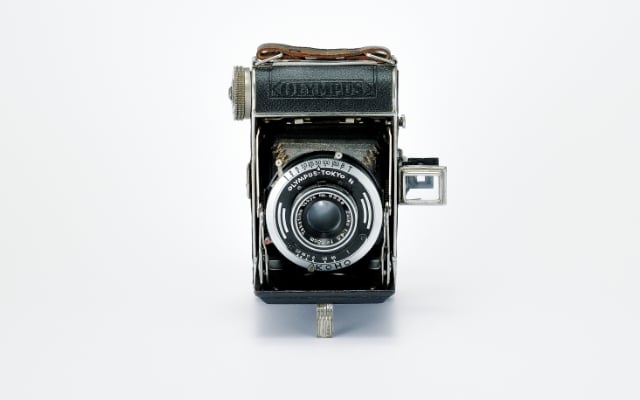
Takachiho Seisakusho developed its first photographic lens at the Mizuho Optical Research Laboratory in 1936. They needed a name for the new optic, so they combined two kanji characters from the facility’s name: 瑞 (Zui) from Mizuho and 光 (Ko) from Kogaku. The word that was formed from there was Zuiko, which most directly translates to “auspicious light” or “holy light.”
More loosely translated, it can mean “light of the gods.”
When Olympus shifted to mirrorless cameras with Micro Four Thirds, it added an “M” to the front of Zuiko to distinguish it from its Four Thirds DSLR lenses. It still uses M.Zuiko today. OM Digital Solutions acquired the Zuiko name entirely as part of its exit from Olympus and still owns it.
The name was right there.
Straightforward, Simple, and Badass
Nikon. Canon. Sony (Alpha). Lumix. Sigma. Pentax. Ricoh. Zuiko.
Japanese camera brand names are short, two-syllable words that are easy to fit on the front of cameras and steeped in rich meaning. Sony itself is already two syllables, but Alpha was inherited from Minolta which picked the name because it symbolized peak performance and the beginning of a new era. Canon is adapted from the Buddhist bodhisattva of mercy, Kwanon. Nikon is a contraction of Nippon Kogaku, the original name of the company. Lumix is a shortened version of luminance, or light.
Sigma comes from the mathematical symbol that means “the sum of parts.” It also was very important to Michihiro Yamaki (father of Sigma’s current president Kazuto Yamaki) that a short, two syllable word be the name, as that simplicity would mirror the contemporaries like Canon, Nikon, and Pentax.
Speaking of Pentax, that is a combination of the DSLR pentaprism and the Contax name. Ricoh is very similar to Nikon in that it is a contraction of Riken Kogaku, the pre-war name of the company.
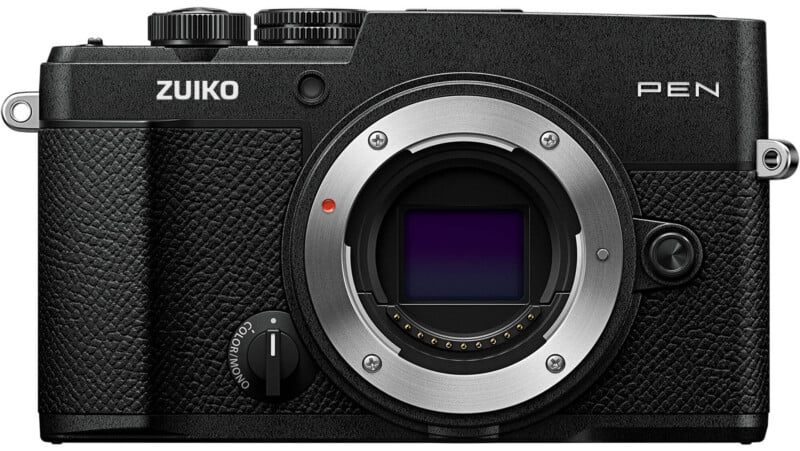
All of these names are strong, quick, and easy to say. They all follow this formula because it a strong foundation and a proven success. Zuiko was right there, bringing with it the entire history of the brand’s power in imaging along with one of the most badass translations among any camera brand. Light of the Gods? My goodness, that’s strong. Fierce, even!
OM System not only has too many syllables, it’s physically too long. The tops of OM System cameras look downright crowded trying to fit those words on there. Embracing Zuiko across its cameras and lenses (and they can drop the M now that the company only makes one type of optic) would have felt like a powerful, intelligent coalescence of the brand’s move into the future by embracing its rich past.
It gets worse when you have OM as part of the company name and the camera names. OM System OM-1 sounds redundant. There is a better way.
There is no reason OM Digital Solutions has to keep OM System. They can rebrand anytime they like. I argue they should. I know that might sound crazy considering how recently OM System was chosen, but continuing to use it would only be falling into the sunk cost fallacy (the mistake of continuing to invest time, money, and effort into something just because you already spent time on it, even when abandoning it would clearly be the better option).
OM Digital Solutions just threw off the shackles of private equity a few months ago. They are charting a new path now. There is no better time to put a stamp on that decision and fly a new flag: Zuiko.
Image creditsElements of header photo licensed via Depositphotos.com.
Affiliate Disclosure PetaPixel articles may include affiliate links; we may earn a commission if you buy through one.