How Close Can an Arri-Powered Phone Get to an Alexa Cinema Camera?
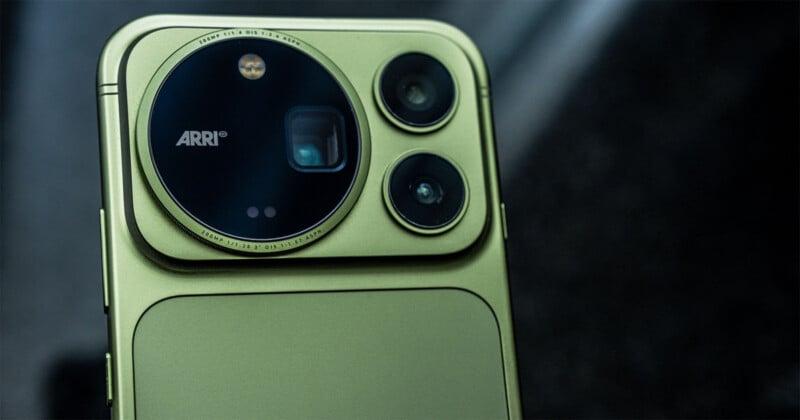
That Honor and Arri are now partners is old news, but putting the latter’s Hollywood-style color science into a smartphone is the more intriguing proposition. The Munich-based company seems like an unusual collaborator for Honor, the smallest of the five major Chinese phone brands.
The phone itself, the Magic9 Pro Max, features headline specs like a dual 200-megapixel camera system, a dedicated imaging chip, and a monster battery. A more substantive addition is the phone’s Arri Cinema mode, inspired by Arri’s Alexa cinema cameras, which we’ve already seen in the Honor Robot Phone. This presents an entirely different way to capture video on Honor’s flagship.
A full review focusing on still photography is forthcoming, but I visited Arri’s studio in Burbank, CA, in October 2026 to see how it helped shape the way the Magic9 Pro Max renders video.
From Film Scanners to a Digital Look
Arri’s history in analog cinema laid the foundation for its color expertise, though early on, the company essentially carried someone else’s color science since the film stock itself determined the look. Arri’s film scanner and film recorder, the Arri Scan and Arri Laser, became fixtures in studios, where engineers learned “what makes film look like film.”
Moving to digital cameras enabled Arri to study many different film stocks to build a single default look, supported by a logarithmic brightness curve and a custom color gamut. Thus came the “digital negative,” a flat, data-rich image meant for grading rather than direct viewing.
With skin tones as a central design goal, the company says it photographed many faces to build a gamut that could consistently render varied complexions. That also means more stable color science when footage is over- or underexposed, with shadows that don’t veer into purple territory. This reflects years of feedback from colorists on how quickly they could achieve a finished look with Arri footage.
For Honor’s part, this marks a first in that it was one of the only Chinese phone brands (along with Huawei) that, until now, hadn’t partnered with a European imaging brand. While not terrible, its previous flagships couldn’t produce the kind of video quality competitors were delivering. Partnering with Arri isn’t just about catching up, but about ultimately surpassing every competitor, including the iPhone.
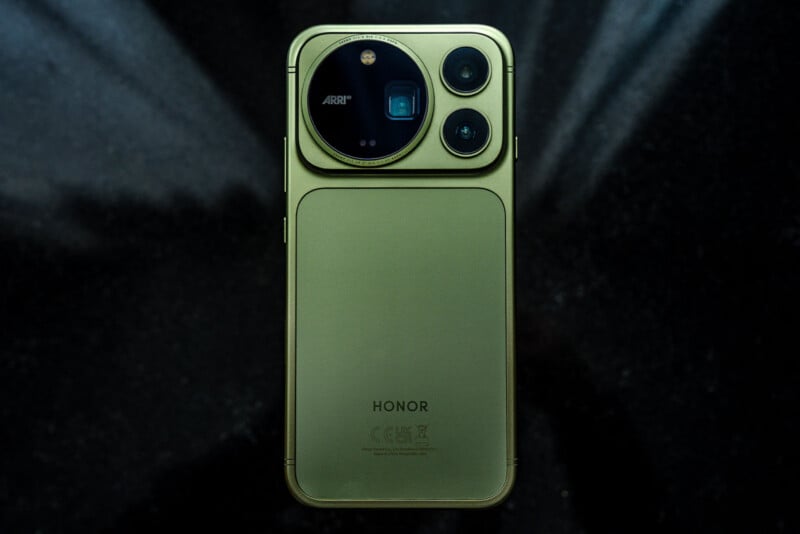
Honor handles the pipeline, which is why its own H1 chip is an integral hardware piece. That chip works in the RAW domain for what it calls “lossless noise reduction and extra dynamic range.” Achieving “cinema-grade” dynamic range requires capabilities beyond what a standard mobile processor offers, which is why this dedicated silicon works in tandem with Qualcomm’s Snapdragon 8 Elite Extreme Gen 6 chipset. Honor reps were coy about how this particular marriage actually works under the hood.
What we do know is that Honor’s team in France worked closely with Arri in Munich, which helped tune the image signal processor (ISP) by sending weekly software revisions during development. Beyond that, Arri personnel made no contributions to the phone’s hardware design.
How Arri Cinema Mode Works on the Magic9 Pro Max
Here’s what Arri has to work with in the Honor Magic9 Pro Max: The dual 200-megapixel main (24mm equivalent) and telephoto (85mm equivalent) cameras both have CIPA 8-rated stabilization. Arri Cinema mode records up to 4K at 60fps, supports a 2.39:1 or 16:9 aspect ratio, and has a base Exposure Index of 160.
Exposure Index (EI) is similar to ISO, though it functions differently on cinema cameras. Arri cameras normally work at the base setting for optimal dynamic range, which isn’t how it works on a smartphone camera given the smaller image sensors. The base EI is the setting where the camera’s designers determined the sensor captures a fixed range of light most effectively, delivering the best possible dynamic range. In practical terms, that means the phone needs more light to hit its sweet spot than an Alexa would, which makes sense for a much smaller sensor. Honor and Arri have to pull this off by warding off noise when shooting at higher EI settings in dim scenes.
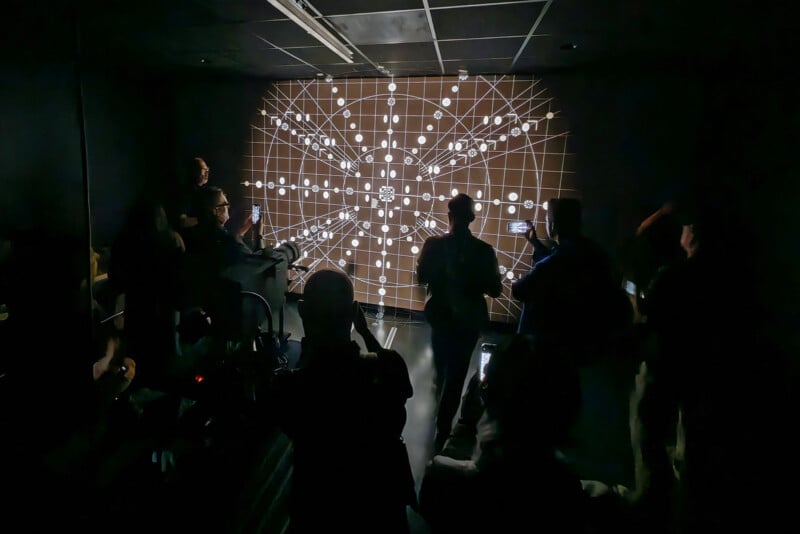
Arri Cinema mode can shoot in LogC3, the logarithmic encoding used in Arri cameras before the Alexa 35, including colors that approach the LogC3 gamut. Honor claims both the main and telephoto cameras track the LogC3 curve almost perfectly, marking a first for Arri, which had never matched multiple sensors in a single device before. But there’s also a catch to exactly how this works.
Showing charts that compared the phone’s response against a real Arri camera, Arri says the phone clips in the highlights because its sensor isn’t custom-designed like Arri’s own “expensive” ones. The sensors are also vastly different in size, making the phone’s dynamic range far more software-driven than it would be on an Arri camera.
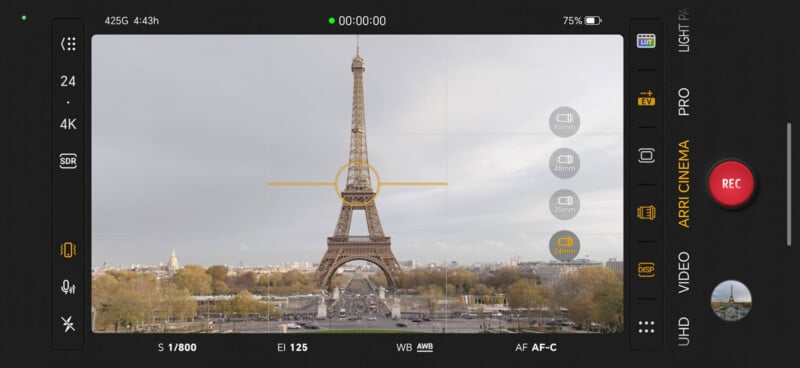
Note that I only mentioned the main and telephoto cameras—because the Arri mode won’t work on the ultra-wide camera. Honor says it reluctantly left the lens out, citing vague time constraints since the partnership was only about six months old (at the time I visited). Rather than rush to get that out, it prefers to “get it right first” before committing to adding that lens. It’s just not clear whether that could happen through a software update or in a future device, since the main and telephoto cameras each required custom curves and color matching.
My own take is that tuning a third camera may cost more money than time, and given that this is Arri’s first attempt without its own sensors, it leaves the ultra-wide as the odd lens out. Even so, a wider focal range isn’t unfamiliar territory for Arri, given that its Signature Prime line includes an 18mm lens, so we’ll have to wait and see.
What the Footage Looks Like
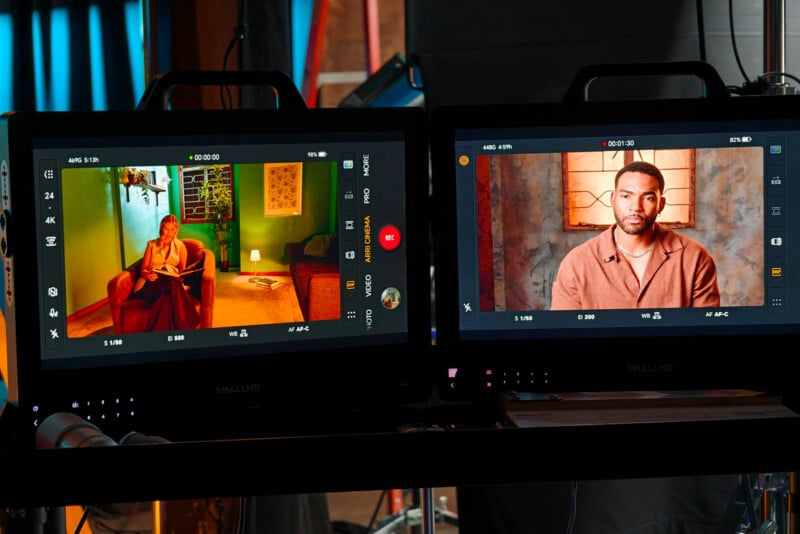
Inside the Arri studio—on a newly built set with both an Alexa and a Magic9 Pro Max capturing the exact same scene—the side-by-side clips look surprisingly close.
Looking at the footage from both cameras later on my own computer monitor and on different phones or tablets, Arri’s clips offer better clarity and gradations in skin tones, but not by the margin I’d expect given how vastly different the two cameras are. It’s fair to say these results not only compete with the likes of Vivo and Oppo, but also fire a real warning shot at Apple. I’m no longer convinced the iPhone is the smartphone video king.
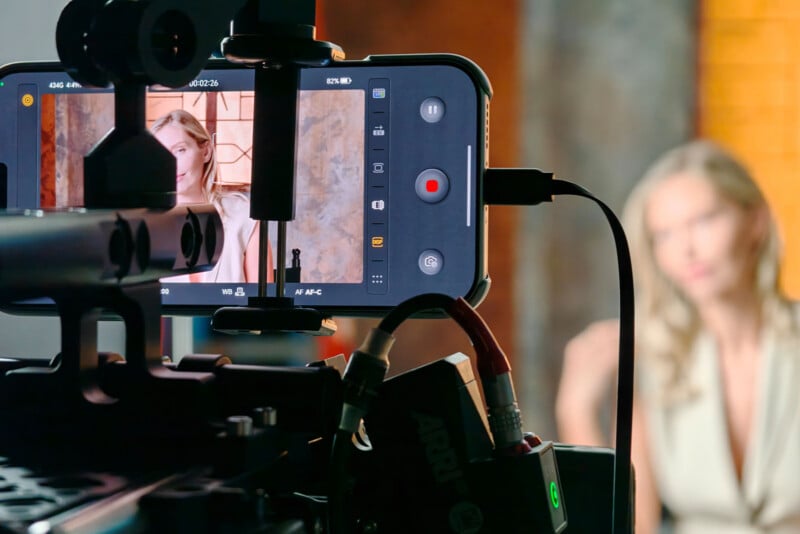
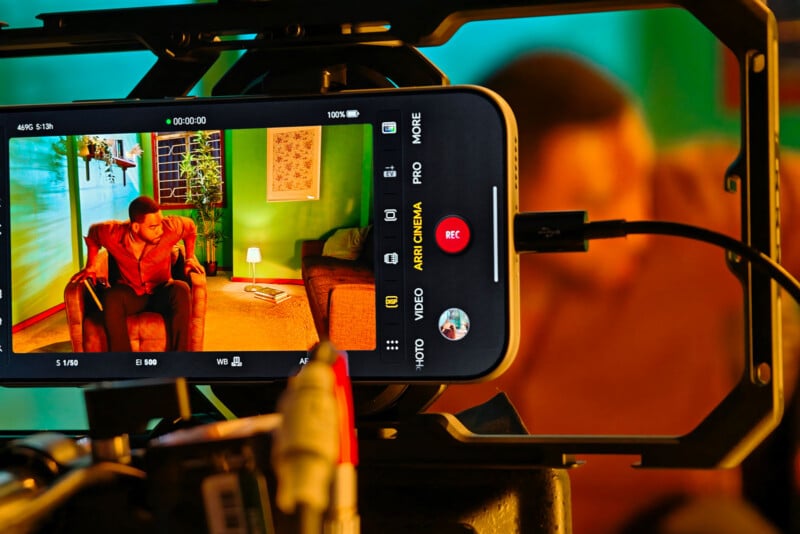
Both Arri and Honor point to how they shifted the phone’s color patches (open circles for where the phone started, solid for where it ended up) so its output lands near a real Arri camera. The default look matches Arri’s pre-Alexa 35 cameras, with 14 built-in LUTs that are always available in Arri Cinema mode out of the box.
Adding LUTs is easy, with a comically high 87 looks available directly from either Arri or Honor online, all assembled from the company’s Arri Media post-production house. These range from black-and-white variants that emphasize different color channels to period film emulations, seasonal grades, beauty, and teal-and-orange looks—all of which also work in DaVinci Resolve. Some are over-the-top throwbacks that might only fit very specific use cases.
While the sheer level of choice is undeniably substantial, it can quickly become a mess once you bring them in. Assuming you add all 87, you have no way of rearranging, organizing, or deleting any. Before long, finding the one you’re looking for becomes an almost endless scroll. You can also freely import custom LUTs from other sources—including any LUT built with Arri’s color science—which only adds to the clutter. I pointed this out to Honor reps, who said they will see about fixing it.
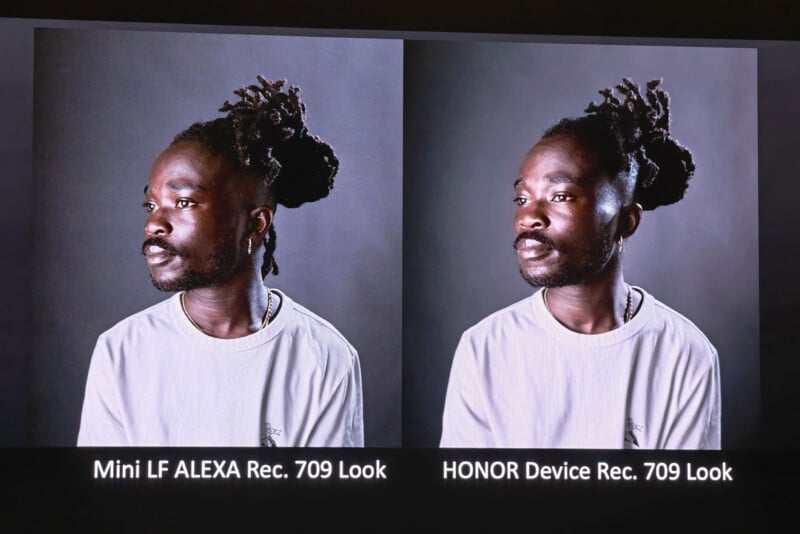
Despite the potential for overcrowding the mode, Arri Cinema is a huge upgrade over what Honor had before. I’ve come away impressed not just by the image quality, but also by the versatility of the included LUTs, which make recording almost anything look interesting. Adding a film-like aesthetic that doesn’t feel like a papered-on filter is a factor, but so is shooting in Log with manual controls for creative license. Excellent stabilization and built-in audio controls help the cause. Tapping the microphone icon offers five directional options: Standard, Long-range, Close-up, Voice isolation, and Voice boost. They’re actually better than I expected, though you can still use an external mic if you want.
The mode offers 4K or 1080p at 24, 25, 30, 50, and 60fps. It also supports the APV 10-bit codec, which, despite some compatibility issues, remains a viable ProRes alternative (thanks to smaller file sizes) when running those files through DaVinci Resolve.
Notably missing is 120fps, which is restricted to the standard Video mode and carries a dubious connection to Arri given the vague assurances I received. It’s not at all clear whether Arri’s color science is sprinkled in here, though my eyes tell me it’s not. What’s especially head-scratching is that the standard Video mode locks 4K resolution to the Vibrant style. Switch to any other style, and resolution drops to 1080p for reasons I can’t ascertain. A software update should easily fix that, but we’ll have to wait and see.
Where to Go From Here
It’s important to remember a key distinction in defining Arri’s role, which is based on image science, not optics. Despite making lenses and accessories for its own cameras, Arri isn’t involved in what Honor is doing on the optical end at this stage. So, unlike Xiaomi and Leica, Vivo and Zeiss, or Oppo and Hasselblad—which routinely collaborate on lens hardware—that isn’t the case for the Magic9 Pro Max.
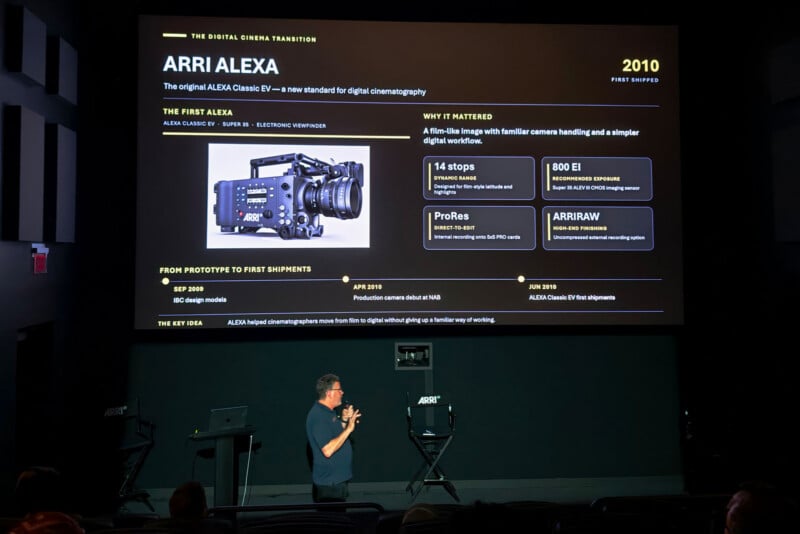
At its core, a cinema company teaming up with a phone maker is a commercial play. Arri reps note that cinema remains the company’s priority, even as the market for high-end cinematography shrinks amid falling competitor prices. Licensing Arri’s color science is a way to reach people who may never buy a cinema camera while making them familiar with Arri Looks and post-production workflows.
Arri tried this before by collaborating with Panasonic on software upgrades, including for the Lumix S1R II, GH7, and GH6, where Arri certified Panasonic’s implementation of the LogC3 curve. A smartphone partnership, however, is far more mainstream and exposes the brand to a much wider audience.
I asked if we might see these color science changes apply to Honor’s still photography as well, but both brands were noncommittal. Arri reps admit they have little experience in stills but would like to see it happen, whereas Honor declined to discuss any roadmaps on that front. It’s not clear if the two brands signed a long-term agreement, but from the looks of it, they plan to collaborate on more than just a few devices.