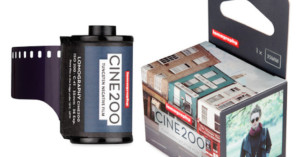
Lomography’s Cine200 Tungsten Film is Cinema Film Repackaged for 35mm Stills
Lomography released yet another unique type of film emulsion. Or rather, it’s managed to repackage an existing emulsion, converting it for use in 35mm cameras.
Lomography released yet another unique type of film emulsion. Or rather, it’s managed to repackage an existing emulsion, converting it for use in 35mm cameras.
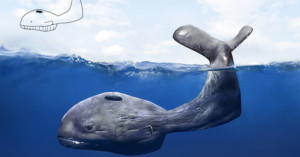
Twenty years ago, at the tender age of 4, Netherlands-based artist Telmo Pieper wasn't quite as skilled at his craft as he is now. And so, in his series Kiddie Arts, he decided to revisit some of his 'early work' and bring it up to speed using his prodigious Photoshop skills.
The video above is called The 6 Minute Dirty Edit Challenge, and it’s an interesting project/dare by photographer Jeff Rojas. The goal is simple: how much retouching can you possibly get done in just six minutes time.

It’s true. Both Neil Leifer and Walter Iooss worked for free.
Traditional 3D motion capture technologies, amazing though they are, are limited. They only give you a small number of data points to work with, and while they seem to capture a great deal of detail, their abilities are far outpaced by the intricate movements of the human body.
Fortunately, there’s a new technology in development that might just be able to solve this problem by throwing a crap-load of cameras at it.
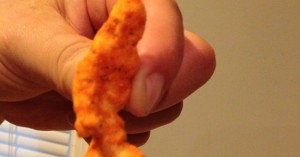
Have you ever looked up and noticed that a particular cloud looks like a face, a dog, a ship, or some other object? It's a psychological phenomenon known as pareidolia, where the human brain takes randomness and tries to turn it into something significant and known.
Andy Huot's project Cheese Curl Art revolves around pareidolia, but instead of spotting things in clouds, Huot photographs Cheetos. Recognize the Cheeto above? The photographer captioned it, "Sasquatch."
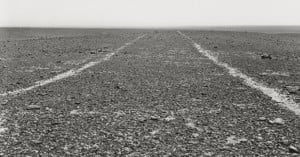
Edward Ranney has been photographing pre-Columbian sites in Peru for over fifty years. His book Monuments of the Incas was released in 1982, reprinted in paperback in 1990, and re-released in 2010 by Thames and Hudson in an expanded edition, with updated text.
His monograph The Lines, being released in August by Yale University Press, presents pictures of geoglyphs created by the Nazca culture in southern Peru, and other cultures in Chile's Atacama desert.
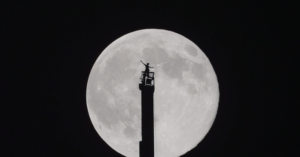
Update: The video has been removed by FilmDubai who originally uploaded it, we'll get it back up as soon as/if it is republished.
Admittedly, this is not photography, but there are so many frames that would be worthy of pulling out of this short real-time 4K visual treat that we thought it was certainly worthy of sharing.
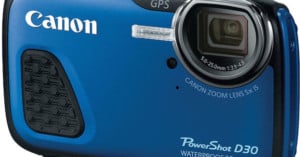
The consumer end of underwater photography is tricky. The pros have expensive underwater housings for their expensive DSLRs, but consumers are stuck with semi-affordable compacts that suffer from some glaring limitations, among them the ability to zoom.
Canon, it seems, is keen to fix this limitation with a newly-patented zoom lens for an underwater camera that will offer an impressive 45x optical zoom.
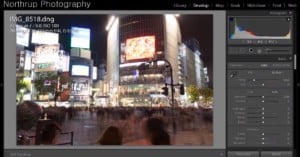
It’s not news that RAW files have a far greater latitude than the same JPEG photographs. However, many beginners only understand this difference on a theoretical level.
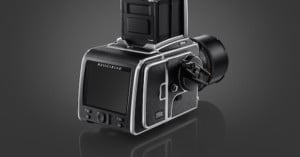
Today, Hasselblad launched the CFV–50c, a 50-megapixel CMOS back – identical to that found in the H5D–50c – capable of being attached to any existing V-system camera.
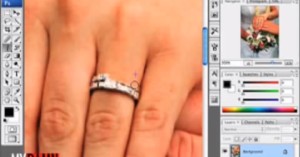
Do you suck at Photoshop? No? Well, Donnie Hoyle seems to think so, which is why he put together this wonderful resource detailing how to properly use the clone stamp and manual cloning tools in Photoshop. (Warning: There is some strong language in the video)
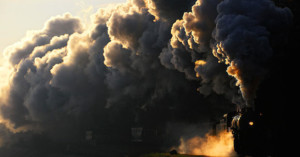
There's something grandiose about the sight of a steam locomotive rumbling down the tracks, massive white plumes billowing in its wake as the picturesque train rumbles and screeches down the metal track. And every ounce of the power and strength and nostalgia these trains evoke is captured in the photography of engineer and self-taught photographer Matthew Malkiewicz.
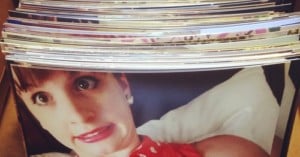
In a move that sent shockwaves through a quiet sleepy neighborhood, photos from an iPhone were printed onto photographic paper.
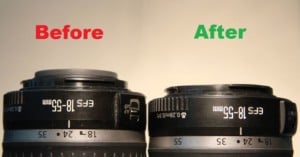
Last week we shared a guest post that detailed how using your kit lens isn’t so bad after all. Following in the footsteps of that post, we have a convenient little DIY project by Instructable user G. M., who decided to prolong the lifespan of his own kit lens, by converting his Canon 18–55 f/3.5–5.6 from an EF-S to an EF mount.
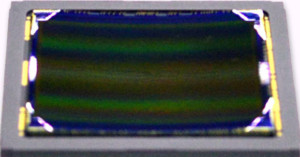
We've heard a lot about Sony's ready-for-production curved sensors -- which will supposedly come in 2/3-inch and full-frame variants -- but no concrete specs had made their way online... until now.
Reported initially by CNbeta, the site has obtained a copy of specs for the 2/3-inch variant of the exciting sensor and the accompanying lens, which is itself an impressive piece of hardware by the looks of it.
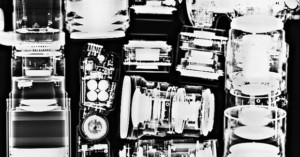
This image shows what you get when you put a high-end Canon DSLR kit under a medical X-Ray machine.
Update on 12/16/21: This video has been removed by its creator.
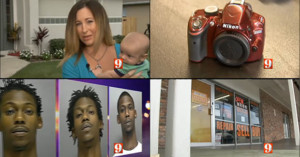
These days, there are a number of search engines, sites and services that can help you track down your camera if it's ever stolen from you. Unfortunately, finding the camera is often only half the problem -- you still have to get it back, and sometimes that can be pretty tricky.
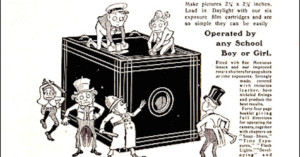
The world of photography is filled with true artists, astounding technology, and experts who can help you become the photographer you want to be. There are photographers who just make you shake your head at the brilliance of their imagery, teachers who give back endlessly to the profession they love, and manufacturers who create tools that help us all produce the pictures we want to make.
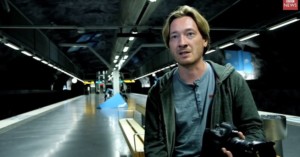
St. Petersburg-born photographer Alexander Dragunov has found his niche in the photography world, photographing the surreal, beautiful -- and often empty -- subway stations of Sweden’s capital in a project titled Stockholm Metro.
Oftentimes looking like something straight out of a sci-fi film, these caves-turned transportation hubs create mind-bending compositions when lack of commuters and symmetry gets involved.
I ate a lot of hamburgers. We had a party.
Photography is a hobby that generally takes plenty of hands-on experience to nail down. Sure, the basics of photography, such as composition and the exposure triangle can be learned through reading and research, but to truly improve on your photography, you need to get out in the field and just shoot... or do you?
One of the rising stars in the world of photography media is the show The Art of Photography, a podcast on iTunes and a channel on YouTube. It was launched by photographer Ted Forbes back in October 2008, and has been growing in popularity quite a bit as of late -- so much so that the channel has become a full-time gig for Forbes.
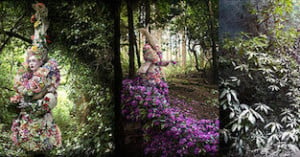
Five years and 74 truly stunning (not the click-bait type) photographs later, photographer Kirsty Mitchell and the heroine of her story, Katie, are both bidding a fond farewell to Wonderland and everything it has meant to them over the past half-decade.
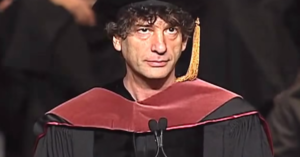
Neil Gaiman is an author, a writer whose work you have probably read at some point or another, but the advice he offers in this 20-minute commencement address is as applicable to photographers as it is to any other creative who is embarking on (or currently in the middle of living) a life whose goal might be best summed up by the phrase 'make good art.'
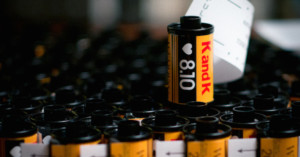
If you're a photo lover and you happen to be getting married to another photo lover, you're going to (at the risk of sounding repetitive) love this little DIY project that photog couple Katie and Kyle put together for their wedding.
Rather than sending out typical wedding invites to all of the friends and family they wanted to join them on their special day, they decided to make these super creative invites using rolls of 35mm film instead!

When it comes to macro photography, knowing how to properly focus stack your images can make a massive difference. To that end, the walkthrough above and Photoshop tutorial below offer a fantastic explanation of what focus stacking is, why and when you should be using it, and how to do it using software most of us already have installed and ready to go.
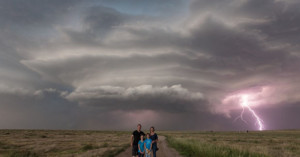
Now there's a family portrait you don't see every day. Photographer Kelly DeLay captured the photo above showing himself and his family standing in front of a gigantic supercell at sunset with a large lightning strike illuminating the horizon.
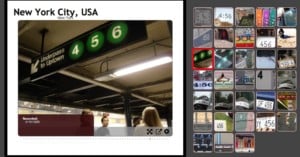
Crowdsourcing can lead to some incredible creations. One such creation is an interesting little website called the Human Clock. It's an online clock that's created with photographs from people all over the world. The website asks people to write down the current time or find it in a creative manner, snap a photograph, and then send it in.
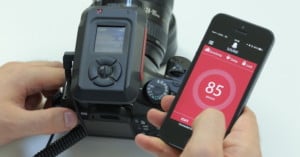
MIOPS is a new smartphone-controlled camera trigger created by the minds behind the Nero Trigger. Looking to get financed through Kickstarter, the team behind it hopes to combine all of the features users want in a high-speed camera trigger into one convenient device.
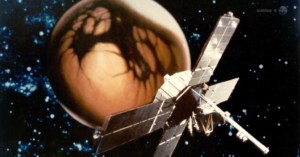
Pluto has had a rough existence. Discovered February 18th, 1930, the largest object in the Kuiper belt has gone through a number of classifications, eventually settling on "dwarf planet" at this point in time.
The interesting thing is, as much as we may know about this dwarf planet, we don’t have a very good idea of what it looks like. Scientists have yet to take a clear photograph of Pluto, but around this time next year (on July 14th, 2015, to be exact) that'll change.
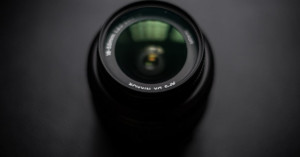
As the saying goes, quality lenses are a lot more important than good bodies when it comes to investing in camera gear. They last longer, retain their value more, and have more utility overall than, say, buying the latest DSLR that will become obsolete in 3 to 5 years. But if you are into photography for the first time, you’ll likely buy an entry level camera that comes bundled with an inferior, even crappy, kit lens. Or is it?
Do you really need quality gear to take good pictures? Spend thousands of dollars on red/golden rings lenses?
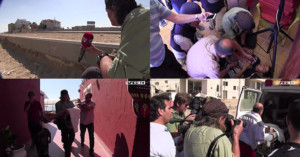
It helps to have experience with first aid when you're working as a photojournalists in conflict areas, and the intense video above is one example showing why. [warning: there's some blood]
On July 16th, Norwegian photojournalist Harald Henden was filming a report outside his hotel in Gaza City when there was an explosion at a beach just a few hundred yards from where he was standing.

Similar in nature to the tribute Peter Essick paid to Ansel Adams, photographer Trenton Moore is on a mission to quite literally retrace the footsteps of famed photographer Robert Frank.
In his project titled Retracing America: A Photo Roadtrip, Essick hopes to visit the exact same locations Frank did for his iconic 1957 photo book The Americans.
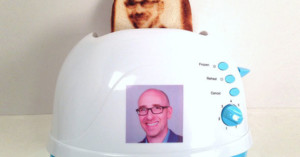
Want further evidence of how far the concept of a "selfie" has spread in our culture? Look no further than this wacky Selfie Toaster by the Vermont Novelty Toaster Corp. Simply provide your favorite shot of your beautiful face, and the company will send you a toaster that can burn your likeness into toast for your morning meal.
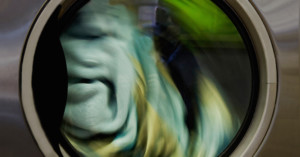
"Inspirational" probably isn’t the first word that comes to mind when you think about laundry, but for photographer Yvette Meltzer, that’s exactly what it turned out to be. Shirts strung over a clothesline, laundry being sloshed around with suds, and most recently, piles of clothes being tossed about inside the confines of a dryer.
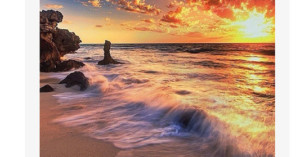
Instagram is a popular platform for celebrities to share photos of their lavish lifestyles, but it's also a social network in which many photos are published without permission and without credit to the original creator. Both of those things happened recently with an image posted by Ludacris.
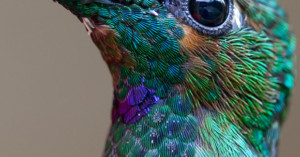
In the world of macro photography, the speedy hummingbird isn't the easiest subject. With a little patience, however, you could nail a shot that reveals details you normally can't see when tracking the bird with your eye.
That's what photographer Chris Morgan was able to do on a recent vacation in Bosque De Paz, Costa Rica (a 3,000 acre biological reserve).
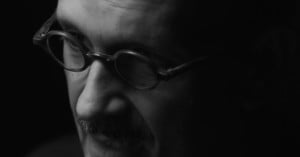
As much information as we’re able to pull in through the Internet, there is one thing that can never be obtained through words or pictures on a screen: experience. Through time and experience, information turns to knowledge, and we begin to wrap our heads around the complicated concepts that baffled us in the beginning.
One phenomenal example of a man who has accrued more experience than most is renowned portrait photographer Gregory Heisler, and in the interview above with Maine Media Workshops + College, he shares valuable insight and advice for photographers both young and old.
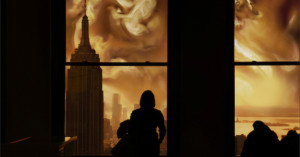
Artist Flora Borsi -- whose fantastic Photoshop skills have made their way onto PetaPixel several times in the past -- loves coffee... so much so that she set out to use her skills as a photographer and digital artist to create a "coffee universe."
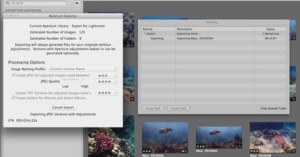
The announcement that Apple is discontinuing Aperture has left many users wondering how they’re supposed to properly transfer their soon-to-be irrelevant file structure over to Adobe's Lightroom.
Neither Adobe nor Apple have yet released an official means to do so (at least not yet), and so software developer Adrian Grah took it into his own hands and created Aperture Exporter: a free utility that automates the process of moving from Aperture to Lightroom 5.
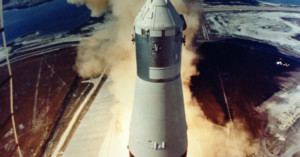
It was 45 years ago, yesterday, astronauts Neil Armstrong, Buzz Aldrin and Michael Collins took on what is without a doubt one of the most important endeavors in the history of humankind. Packed together into one of the most incredible pieces of engineering to ever exist, the astronauts of Apollo 11 left Earth’s atmosphere, with hopes of being the first humans to ever step foot on the Moon.
To commemorate the accomplishment many thought was impossible – and to those who still do – we have put together a chronological collection of photos documenting the entire journey. Shared by NASA as part of their Project Apollo Archive, these images are just a few from the vast archive of medium format, 35mm, and 16mm frames captured throughout the Apollo missions.
Underwater videographer Joel Kistel was filming some footage for reef-conservation nonprofit TISIRI earlier this month when he ran across a rather curious and sneaky octopus who nearly cost Kistel $15,000.

Students at the University of York in the UK spent their graduation day yesterday Tweeting images of a controversial offer by school photo agency Success Photography.
When they went on the agency's site to select their graduation picture options, in addition to how many wallet size prints they wanted and whether or not they wanted a digital download, the site also allowed them to select "Digital Slimming" and "Digital Complexion and Smile Enhancement."
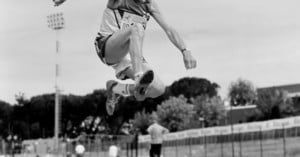
Documentary and portrait photographer Angela Jimenez' series "Racing Age" is not your typical 'photos of old people' photo series. There is no frailty, no struggling with day-to-day tasks or close-ups of wrinkles. The subjects in Racing Age are competitive athletes that could probably out-run, out-jump and out-throw most people half their age.
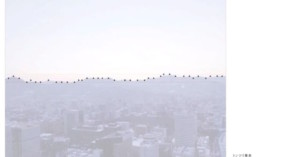
Japanese artist Koshi Kawachi has created a interesting series of work that combines photography and music to create an experience, rather than only an aesthetic. Titled Note Drawing the series transposes the silhouettes of city skylines into musical notation. It’s with these notations Kawachi then turns these cityscapes into actual music, which then accompanies the individual pieces.

It’s not unusual for colleges with large open-source programs to put out a number of courses free for the world to browse through online. In the past we’ve featured courses from both MIT and Stanford.
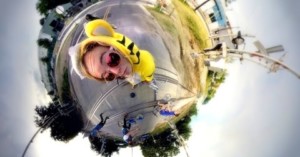
The 360 GoPro rig video is nothing new, but most of the time it's used to create footage that is likely to induce vomiting... or at the very least a minor headache. Wild Child's new music video for the song 'Rillo Talk' is different.
Created by director Aaron Brown, the video uses the little planet effect to fluidly transition between dreamy, psychedelic scenes that perfectly match the song's feel.

Four years (and one day) ago, Kevin Systrom posted the first ever photo to Instagram, then a new social network with an uncertain future and exactly one photo of a cute dog in its archives.
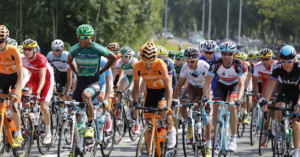
We have another location/situation to add to society's collective "places/times I shouldn't take a selfie" list (there's one of those right?): in the middle of the road as hundreds of Tour de France cyclists barrel down towards you.
This might seem like common sense, but hard as it might be to believe, Tour de France cyclists are complaining that fans standing in the middle of the road to take a selfie as the group approaches are "the new pain in the arse" for riders this year.