How to Use a 35mm Film Canister as a Simple SD Card Case
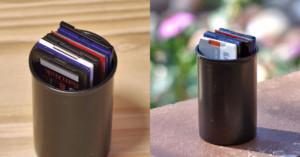
Here's a clever idea: if you have unwanted 35mm film canisters lying around, you can turn them into simple cases for storing and organizing your SD cards.
Here's a clever idea: if you have unwanted 35mm film canisters lying around, you can turn them into simple cases for storing and organizing your SD cards.
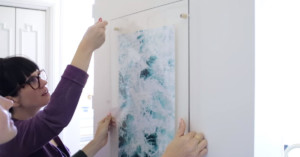
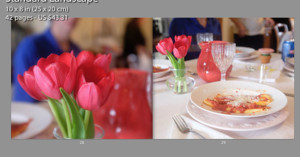
Floating acrylic frames are an elegant way to display your photos on walls, but commercial solutions can be pricey. Here's a 1.5-minute tutorial video by A Beautiful Mess on how you can go a cheaper do-it-yourself route for the same result.
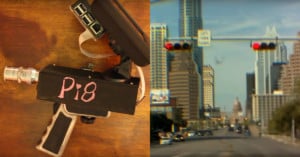
Want the look of an 8mm film camera but the convenience of digital? Instead of using a filter app and your phone camera, you can hack together your own digital 8mm camera using Raspberry Pi.
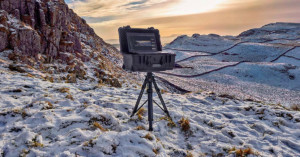
I like to keep the amount of kit I have to carry with me to a minimum. Every single pound counts when you're scrambling up the side of a snowy mountain, and if you've ever had to pay excess baggage charges at the airport you will probably appreciate my 'less is more' mentality!
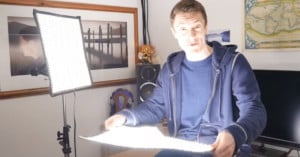
Want to add some flexible LED panels to your lighting kit without breaking the bank? This 19-minute video tutorial by DIY Perks is for you. It's a step-by-step guide on how you can assemble your own LED panel for about $60 by buying high CRI LED strip lights (~$25), a PWM LED dimmer (~$8), an articulating DSLR camera arm (~$18), some faux leather for the backing, some wiring and a solder gun.
If you enjoy do-it-yourself photography hacks and projects, here's an interesting one for you to try: buy an old Soviet MIR-1B camera lens for about $45 on eBay, open it up by unscrewing the front, and reverse the front lens element. The result is a "reverse globular lens," photographer Mathieu Stern says.
Skier Nicolas Vuignier recently shared a viral video in which he created "bullet time" footage of himself skiing by swinging an iPhone 6 around his head using a special contraption he built himself.
The Coffee Drip Printer is a curious contraption created by RIT photography professor Ted Kinsman. It can print out your digital photos, but instead of buying pricey ink for the prints, all you need to do is give the machine some coffee.
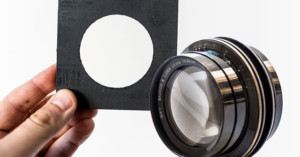
This is the cheapest yet most effective photography hack I can think of. Step one: get disc reflector. Step two: cut lens-sized hole in said reflector. Step three: profit.
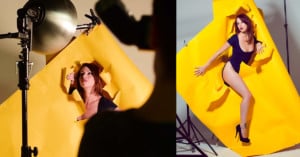
Many moons ago I was enrolled in a class on portraiture by Don Giannatti that studied and sought inspiration from the greats in photographic portraiture. The final artist studied was William Coupon. Coupon is known for his formal painterly backdrop portraits. Being the dutiful student I turned my assignment in post haste, or rather several months late. Either way, I learned that creating a painted backdrop had to be neither difficult nor costly.
The Rodenstock XR-Heligon 50mm 0.75 lens is an old lens that was made for medical X-ray imaging by the German optics company Rodenstock. You can find them for sale on eBay these days for $50 and up.
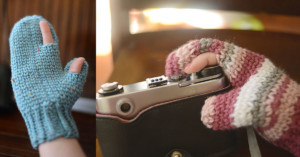
If you live in a cold area and have both a passion for photography and a knack for crocheting, here's a fun project for you: photography mittens. Carmen Jacob of Spindle Shuttle Needle has created stylish mittens that have special holes for your thumb and index finger to poke through, allowing you to operate your camera while keeping your hands warm and toasty.
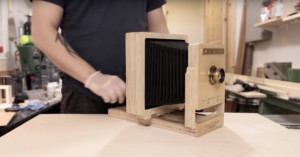
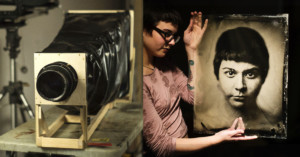
Photographer Dieter Schneider recently built a 4x5 large format camera for wet plate photography out of plywood using his Shapeoko 3 desktop CNC machine. Luckily for all of us, he also documented the entire process on camera.
I've recently become obsessed with the idea of shooting (something close to) true, 2.35:1 ratio CinemaScope anamorphic on my DSLR camera. This is pretty easily done if you can spend $1,000+ on an anamorphic lens made specifically for a DSLR camera... but I don't have that kind of cash, so I went another route.
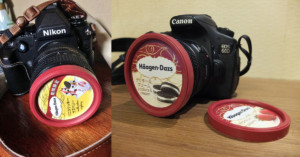
Here's a quirky fact about photography and life: the lids of certain Häagen-Dazs ice cream containers make for perfect lens caps for 72mm lenses.
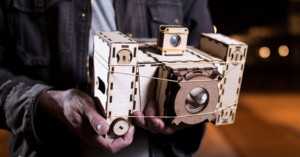
While sitting in a coffee shop last Friday, I really didn’t want to answer any more emails so I went to a bar instead, ordered a pint and sketched out a bit of a doodle for a big camera. I then called my buddy Zach who shares my open schedule and vague ability with power tools, and he stopped by my studio an hour later.
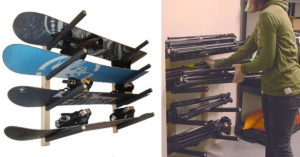
If you're a casual photographer, you probably don't have so many tripods that you have a hard time storing and organizing them. But if that is a problem that you or your studio struggle with, here's a clever solution: you can use a snowboard rack as a tripod storage solution.
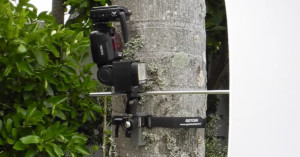
New Zealand-based photographer Chris Cameron has a nice little kit he put together to mount his off-camera flash to any tree or pole. The setup centers around a plastic "dog bone" that you can make for yourself with a 3D printer.
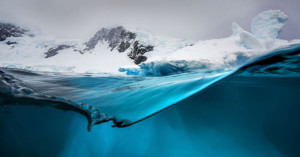
Photographer Steve Mandel just returned from Antarctica, where he made photos of icebergs using an underwater camera, a surface camera, and a drone.
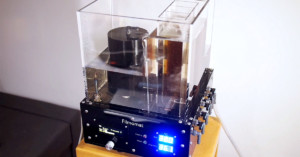
This is incredible: German photographer Lukas Fritz wanted an easier way to process his film at home, so he spent a year creating the Filmomat, a fully automatic film processor that can handle everything from B&W 35mm film to 5x7-inch color slides.
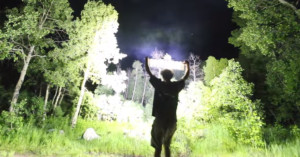
Need a light to illuminate clouds or a mountainside? Check out the world's most powerful flashlight, created by Daniel Riley of Stratus Productions. By stringing together a series of powerful 100W LEDs, Riley created an ultra-powerful 1000W light that puts out a whopping 90000 lumens.
Here's a 5-minute video in which photographer Jon Legge shows how you can put together a tabletop studio for well-lit product photos. It'll cost you just 10 to 15 minutes and about £25 (~$40) in materials.
New York City-based editorial and commercial portrait photographer Felix Kunze says that the number one question he gets asked by people is how he makes his V-Flats for studio portraiture. He answers that question in the 8.5-minute video above, a step-by-step walkthrough of his build process.
Slovakian food recipe site Varme published this simple 1-minute video tutorial on how you can use $25 in IKEA products to create a DIY lightbox for improving your food and product photography.
Want to make some realistic fake blood for a creepy Halloween photo shoot? Here's a short video tutorial by HouseholdHacker on how you can do so with household things in just a minute.
If you thought the idea of a smartphone selfie stick was peculiar, get this: photographer Jesse Chehak has created a gigantic selfie stick for his large format camera, and it actually works.
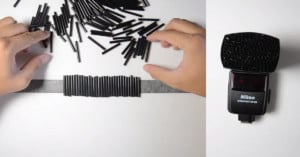
Photographer Isiah Xiong made this 3-minute video tutorial showing how you can quickly, easily, and cheaply build a grid spot for your flash using black straws. Instead of gluing things together, Xiong uses strips of masking tape.
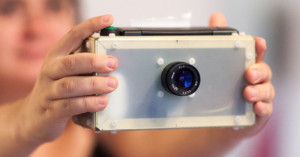
Want your own instant camera that prints lo-fi photos on receipt paper? Muth Pierre has published the designs for a build-it-yourself camera called the PolaPi -- it's a standalone compact camera that combines a Raspberry Pi and a thermal printer for a fun DIY instant camera.
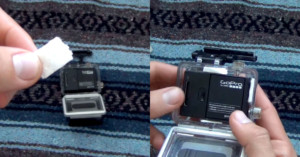
If you want to prevent your GoPro lens from fogging up when you're in cold and humid environments, GoPro sells Anti-Fog Inserts that you can stick into your camera case. If you'd rather not pay $15 for 4-use inserts, you can actually make some makeshift anti-fog inserts for yourself using some paper towel strips.
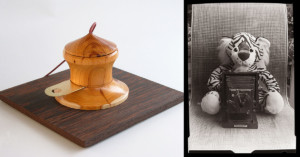
We've shared a number of projects over the years in which photographers create working cameras using wood, but we haven't seen a wooden lens yet... until now. That's what photographer René Smets of Lummen, Belgium, recently made, and the results are impressive.
I've been doing increasingly more portraiture outdoors over the years and most often have been relying on speedlights for their small size and portability. One problem I always faced was choosing a stand to use for supporting the speedlight.
If you ever find yourself needing or wanting to use a newer Nikon G lens on an older Nikon film SLR camera, a little piece of string can help you do so. Since Nikon G lenses lack an aperture ring for manually adjusting aperture, the string is used to do the adjustment mechanically.
After sharing his DIY square "ring light" build here back in July, photographer Isiah Xiong is back again with another DIY project. This time, Xiong is explaining how he built a DIY version of the $300 the Eyelighter reflector for around $40 to $50 in materials.
Check out the rugged Panasonic lenses in the photo above. No, Panasonic didn't quietly release ruggedized versions of the 100-300mm and 42.5mm that you didn't hear about. The lenses were upgraded do-it-yourself-style by photographer Nate Cowlishaw at home using rubberized undercoating designed for the undercarriages of cars.
Back in May, we featured a clever hack by photographer Paul Adshead that involved using an IKEA storage box as a $6 laptop sun shade for outdoor shoots. Now he's back again with another nifty photo trick: using a smartphone and a car phone mount for photographic lighting.
Capturing a collection of photographs and assembling them into a physical photo book can sometimes seem like more trouble than it is worth. Different sites present interfaces with varying levels of efficiency and generally force you to alter your workflow for print optimization. However, did you know that you can create an book directly in Lightroom? Today, we are taking a look at the built-in option available within Adobe’s Creative Suite.
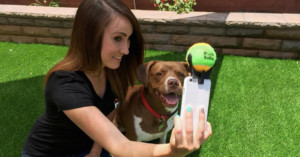
There are a number of products out there, from grid patterns to cute creatures, that are designed to make babies look at your camera while you're photographing them. Pooch Selfie is that same idea, except designed for dogs.
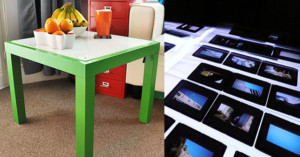
Photographer Jack Watney wanted a lightbox for years, but he lives in a small apartment and doesn't have space to store a large, dedicated lightbox. So, he decided to build one himself using an IKEA Lack side table that costs just $10.
Three weeks ago, I purchased off of eBay a “junk” Minolta MC Rokkor-PG 58mm f/1.2 lens. I had read so many good things about this particular lens in Minolta’s history that I really wanted to get one for my ever-growing collection. A fully-functioning, good condition one will run anywhere between $450-$700. The listing for the one that I bid on stated, “For parts.” …
Want some cheap and simple do-it-yourself photo equipment? Check out the IKEA store near you. In addition to being affordable options for home items, a number of IKEA products can also be repurposed for your next photo shoot.
When particles of dust and debris get on your camera sensors, they can cause frustrating spots in your shots that ruin entire batches of photographs. Thus, many photographers like to regularly give their sensor a cleaning to make sure it's free of spots. In the 10-minute video above, PhotoRec Toby offers a detailed look at how you should go about dry and wet cleaning your image sensor.
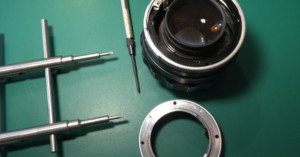
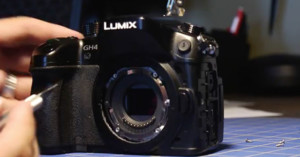
Shane Reetz is a photographer whose Panasonic GH4 developed an issue recently: the lens mount began to wobble in and out. After sending the camera to Panasonic’s repair service and finding out a fix would cost $762, Reetz decided he would try performing surgery on his camera himself. The total cost for fixing the camera turned out to be only $5, and Reetz learned quite a bit along the way.
Whether you are shooting outside or in a studio, reflectors help you make sure that light is hitting your subject exactly how you want it. Typically, reflectors will have a silver side and a white side for varying intensities of light -- they can also cost quite a bit of money. This short video by photographer JP Morgan of The Slanted Lens shows how you can go with a cheaper DIY solution.
YouTube woodworking guru Matthias Wandel just posted this video about how he recently discovered that he can use his tripod as a simple DIY camera stabilizer for some casual filming. After doing some experiments with a DIY glidecam system, Wandel found that he actually got the smoothest shots by simply pointing the legs of his big and heavy Manfrotto tripod out and running around with his camera attached to it.
Love someone who loves photography, and planning to pop the question soon? Check out this homemade ring box Matt Chalker made for his photographer girlfriend recently. It opens and closes like the aperture on a camera, and it took about 50-60 hours to make.
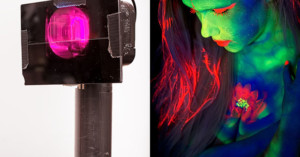
Back in May, a body painter offered to collaborate with me for a photo shoot with airbrushed models. This offer gave me a reason to finally experiment with black light photography, which I've wanted to try for years now.
If you'd like to experiment with some do-it-yourself photography hacks and tricks, check out this new video by DigitalRev. Over the course of 10 minutes, Kai shares 10 different cheap and simple hacks you can do with ordinary things you'll find lying around your house.
In addition to the prototype tripod design that we recently featured, ProductTank has also created a new design for a simple camera slider. A bit different than traditional rail style sliders that keep the camera locked to an axis, the ProductTank slider simply uses a guided rail and friction to get the job done. The result is a slider that be easily adjusted to your shooting situation, and can be seen in the 6-minute video above.
Turns out my great-great-grandfather was a photographer. Born in 1850, Robert Stapleton served in the US Army for two five-year tours in the then-wild-west.
Over the past year, Dutch artist Mathijs van Oosterhoudt has been developing a new camera system. No, it's not a high-tech digital system that's intended to go up against the major camera companies. Instead, it's an open-modular camera system that's intended to teach people how to build complex cameras. Its name is The Focal Camera.