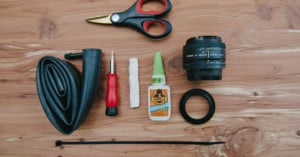
A New Mount for My Great-Great-Grandfather’s 100-Year-Old Lens
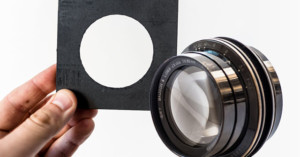
Turns out my great-great-grandfather was a photographer. Born in 1850, Robert Stapleton served in the US Army for two five-year tours in the then-wild-west.
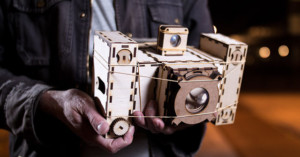
Over the past year, Dutch artist Mathijs van Oosterhoudt has been developing a new camera system. No, it's not a high-tech digital system that's intended to go up against the major camera companies. Instead, it's an open-modular camera system that's intended to teach people how to build complex cameras. Its name is The Focal Camera.
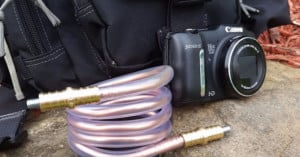
If you need an accessory for mounting your camera to random places, instead of purchasing a Gorillapod (or something similar), you can go a thrifty do-it-yourself route. For just $8, Instructables member Megan Yeomans crafted her own affordable solution that uses vinyl tubing and copper wire. The result is a three-foot flexible 1/4” piece of kit that can be used as a standard tripod, a selfie stick, or an articulated mount.
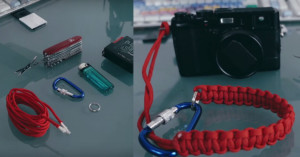
Back in 2011, we shared a simple tutorial on how you can create a sturdy camera strap using about $7 worth of paracord. Hamburg, Germany-based photographer Bo Ismono recently published the 3-minute video tutorial above on how you can use paracord to make a cheap, simple, and durable wrist strap.
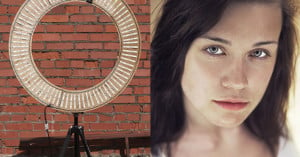
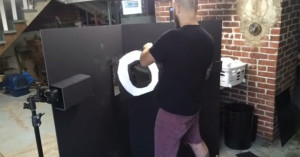
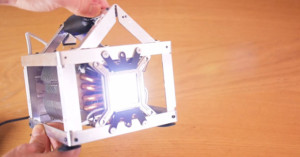
Over the past half year, Latvian photographer Gvido Mūrnieks has been testing out a DIY ring light he made for himself. The light is large enough to shoot with longer focal length, but at the same time it's small and light enough to quickly throw into the trunk of your car on the way to a shoot.
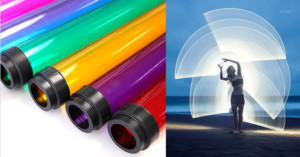
Want a light stick for light painting but don't want to spend a lot buying a commercial product? Light painting photographer Eric Pare recently discovered a cheap and easy solution: tube guards (also known as lamp guards).
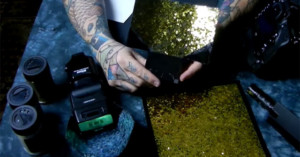
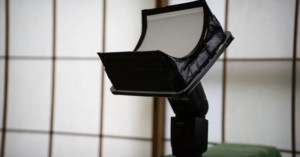
Here's a neat little weekend project you can try doing if you're looking for new lighting ideas. The Angry Photographer on YouTube posted this 10-minute video tutorial on how you can create a custom light reflector for around $5. All you need is black card stock, some colored glitter, and some strong glue.
Photographer Arvid Larsson recently made himself a portable instant camera that's powered by a Raspberry Pi computer camera and thermal receipt printer.
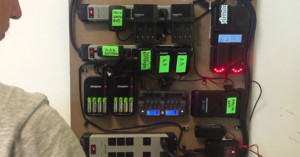
If you have multiple cameras and powered accessories at your disposal, you know that battery charging can quickly become an unorganized nightmare. Prepared to solve one of humanity’s greatest first world problems, the team at Vimeo Video School set out to create a neatly arranged battery charging board. If you choose to follow along and build your own, all you’ll need for this DIY project are a few simple supplies from your local hardware store.
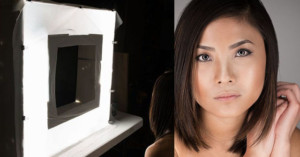
Photographers are familiar with the ring light, which produces a pleasing ring-shaped highlight (or “catchlight”) in a subject’s eyes. It’s often used in the fashion industry to create images you see in many magazines. The Square Ring Light is just like that — except it’s a square. I find it makes a unique, almost otherworldly catchlight that really draws attention to the eyes.
I’ve been taking photos all of my life. Something that I realize now started from a young age: I’ve been genetically disposed with bad eyes, but it was only discovered around the age of ten. This forced me to look closely at what was in front of me for a long time. Once I got tested and got glasses an entire world opened up. As a result, I’ve always looked at things and people with an appreciation I doubt I could’ve had any other way.
As long as I can remember, I’ve been fascinated with the small and wondrous world of macro imaging, predominantly as a macro videographer, but also in the stills realm as of late.
Tokyo-based editorial photographer Irwin Wong is starting a new series of videos titled "Nissin Impossible." Each episode will feature Wong trying to create the best photos he can while following unusual restrictions and conditions imposed on him by the folks over at the flash company Nissin.
Photographer Nick Fancher is the author of Studio Anywhere, a photographer's guide to shooting high-quality portraits in unconventional locations and with low-budget tools and materials.
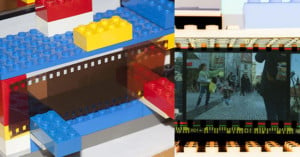
Want to scan some film but don't have a scanner handy? You can actually do some high quality digitization using some LEGO blocks, a smartphone or tablet, and a camera with decent resolution. Filmmaker Zachary Antell uses a method using those components, and his results are pretty impressive.
Here's a quick look at how I created some homemade "petzval swirl" bokeh that mimics photos taken with the new Petzval 58 Bokeh Control Art lens.
Editor's note: This DIY tutorial uses a specific product called Compound 9, but you could use the same ideas/concepts with different materials and/or objects.
Design technologist Roo Williams was recently tasked with creating a better way to capture corporate employee headshots. What he came up with is a Raspberry Pi-powered mobile photo booth that's controlled entirely through the subject's smartphone through a special website. He calls it the "Pi-Booth."
I recently went to great lengths to solve a simple problem. I have a Manfrotto monopod that requires a little screw to attach my camera to the monopod. Without it, I can't use it. The screws are cheap and no big deal... but, they are too easy to lose.
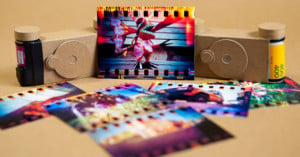
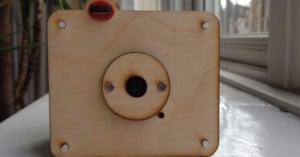
Want to play around with pinhole photography by building your own cardboard camera? Photographer Raymundo Panduro of Pixel Análogo has just released a free template for building a 35mm sprocket camera.
Freelensing is the use of a lens decoupled from your camera, manual orienting the lens on various angles to tilt and shift the lens to alter the focal plane. Freelensing is a great method of isolating your subject or creating interest in an otherwise flat or busy scene. This technique has been around for ages but helps achieve a similar look to that created by a tilt-shift lens used often in wedding photography.
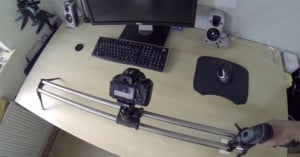
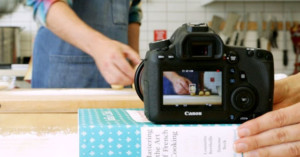
Need to do a quick tracking shot on a table but don't have any dedicated camera equipment for doing so? A book and some fine powder can be a cheap and easy way to get the shot in a pinch.
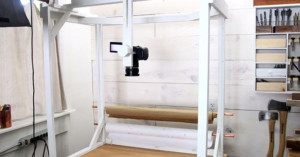
Having an overhead camera rig can be useful for certain types of photography, including product shots, how-to images, and food photos. If you enjoy the challenge and joy of building your own equipment when you can, an overhead rig is another opportunity to do so. You can create one with some cheap materials and some basic workshop skills.
Need to block out some sunlight and glare from your laptop screen during outdoor photo shoots? Instead of dropping some cash on a pricey sun shade or hood, you could go a thriftier route and use an IKEA storage box instead. They cost just $6, are extremely light, and can be collapsed to not take up extra space in your bag.
I'm photographer John Nakatsu of K+J Studios based out of Seattle, and in this post I will share a step-by-step account of how I made a photo booth for weddings and events.
Photographer Mario Nagano has a new camera lens that will undoubtedly draw quite a few looks from fellow photographers: it's an old lens from a 1950s bellows camera that has been converted into a Micro Four Thirds lens for his Olympus OM-D E-M5.
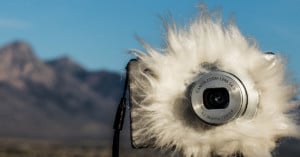
In video productions, microphones are often covered with a synthetic fur cover that's commonly referred to as a "dead cat" or "windmuff." The hairs block wind from hitting the microphone, greatly reducing the amount of wind noise that gets recorded.
I’m what I’d call a professional hobbyist when it comes to photography. I try to make it my life, but my passion sometimes overrides my business sense for it.
Photographer Jim Winters of Miami, Florida, created this crazy-looking DIY shoulder-mounted "triple axis" rig for taking pictures of planes at airshows. He calls his invention the TRIAXEZ.
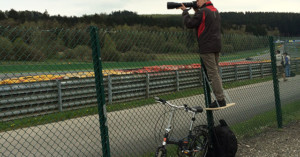
Hobbyist photographer and motor racing fan Carlo Bingen was at a race at the Circuit de Spa-Francorchamps in Belgium yesterday when he cane across this photographer taking pictures over the chain link fence. While many people would be content with shooting through the fence gaps with a telephoto lens, this guy created a DIY platform that lets him stand over the top.
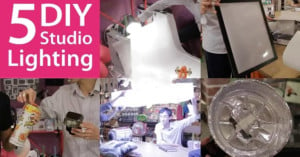
Want to play around with studio lighting from the comfort of your own home without dropping any money on actual lighting equipment? Here's a 10-minute video by DigitalRev TV with 5 different lighting setups you can create using things found around a house. Kai and Lok cover using lamps as hot lights, creating makeshift diffusers with photo frames, using a Pringles can as a snoot, turning a home organizer into a soft box, and crafting a beauty dish from a round aluminum pan.
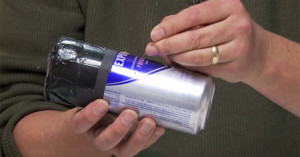
Want to try your hand at creating a solargraph? Photographer Justin Quinnell recorded this informative and humorous 14-minute video tutorial on how you can create a pinhole camera for 6-month-long exposures using only a beer can, some photo paper, a pin, and lots of gaffer tape (which Quinnell calls the "elixir of life").
Moscow-based artist Dmitry Morozov has created a photo booth that prints portraits of live subjects using a Brother SX-4000 typewriter.
Photographer and camera hacker Kevin Kadooka recently built a custom through-the-lens (TTL) light meter add-on for his Canon P rangefinder. Instead of carrying around a light meter with the camera, Kadooka can now get accurate readings straight from his modified camera with his impressively designed system.
When I was 15 years old, I began saving to become a self-employed photographer who owns her own photography studio. After saving $9,000 through working part-time and having an absolutely miserable first year of university, I decided to bite the bullet and pursue my dream now.
Want a portable and powerful LED light for illuminating your shots? The "Sun-Blaster" is a 1000 watt equivalent LED flashlight that you can build yourself for around $40.
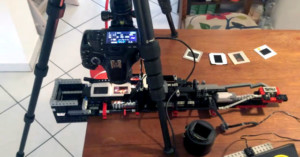
This is pretty impressive: photographer Pascal Kulcsar needed to digitize some old slide film left behind by his grandfather. Rather than purchase a film scanner, Kulcsar decided to combine his technical ingenuity and love for LEGOs to create a DIY slide film scanner using LEGO pieces.
Moscow-based artist Dmitry Morozov has created a strange DIY camera unlike any we've seen before. It's an 8-bit instant photo shooter created with an old Game Boy, a camera, a thermal printer, an Arduino board, and a gun.
Raspberry Pi project platform PiJuice is currently raising funds for its portable module on Kickstarter. As a demo of its capabilities, the team has created a step-by-step tutorial showing how the product can be used to build a DIY Raspberry Pi compact digital camera.
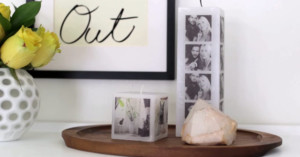
Here's an idea for a fun weekend project and/or personalized gift: make some custom candles that feature your photographs. It's actually incredibly easy, and you may already have the necessary materials lying around at home.
As a photographer, I’m constantly striving for new ways to stand out. While considering that some of the greatest opportunities to create a lasting impression on a potential client in my realm (motorcycle and automotive photography) are at trade shows, or highly publicized events, sometimes all you have is one shot.
Photography enthusiasts Diego Veríssimo and Ana Magalhães (seen in the portrait above) recently shot a series of portraits using a gigantic camera they built using a room and about $10 in materials.
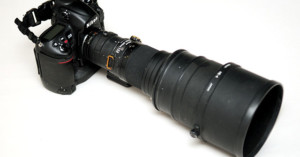
If you'd like to use legacy Nikkor lenses on your modern Nikon camera, one thing you can do to improve functionality is add a CPU to them. While there are services out there that can convert your lenses for a fee, you can also buy the programmable component for $30 on eBay and do it yourself.
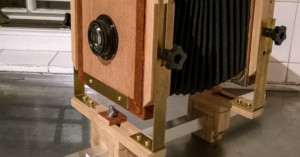
Starting back in May of 2014, I finally put my first foot forward in the making of a 16x20 inch bellows camera. The idea to build a camera was nothing new to me, but I was always hesitant to begin construction since I am the type of person that prefers to work off a set of blue prints and directions. Unfortunately, since my drawing skills aren't amazing, it was pretty difficult to visualize and plan a solid blueprint of the project - which ultimately forced me to bite the bullet and simply …
The Kodak Brownie line of affordable cameras was first introduced in 1900 and cost $1, bringing photography to the masses and pioneering snapshot photography. Mexican photographer Raymundo Panduro of Tlaquepaque, Jalisco wanted to pay tribute to this iconic camera, so he spent two weeks (in his free time) building a homemade pinhole camera based on a Brownie Hawkeye that he had purchased at a flea market.
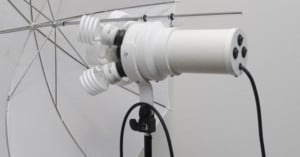
I recently made myself a DIY Spider Light as a thrifty alternative to the Spiderlite that costs hundreds of dollars. The entire project ended up costing $40 per light and can be built entirely with parts from a local home improvement store.
For years I’ve struggled with my workspace, I’ve had loads of different ones, from small ones in the corner of the living room in my old apartment to ones that take up my entire 3 metre wide office in my current house, they have all had their merits but most frustratingly I have never truly liked working at any of them. They’ve all had massive issues that have made working at them difficult and as a result they are hardly the most inspiring way to work in the office.
One of the most important decisions a photographer can make is picking a camera, and with all the different kinds out there, everyone has options. You can look up reviews, talk shop with colleagues, and take your time in the very subjective process of picking out the best camera for yourself and your needs.
How cheap and minimalist can you make a DSLR intervalometer? A camera hacker who goes by Glitchmaker recently wanted to find out, and the SHTTTRRR is the result of his experiment. It's a small low-power device that uses only an on/off switch and a button for setting the interval.
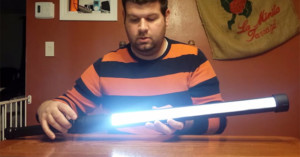
The Ice Light is "a portable, dimmable, daylight balanced, continuous LED light source with a built in battery" that costs $450. In this post I will show you how I made a DIY version for less than $30.