Back to Basics: Short Walkthrough Covers the Exposure Triangle for Beginners
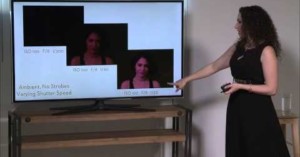
When you're first learning the basics of photography, one of the first things you find out about after dropping out of 'auto' is the exposure triangle.
When you're first learning the basics of photography, one of the first things you find out about after dropping out of 'auto' is the exposure triangle.
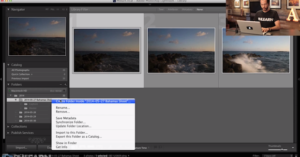
When diving into Lightroom, trying to set up a workflow can be a daunting task. Even once you have one in place, trying to stay consistent with it and properly tweak it as needed is a challenge.
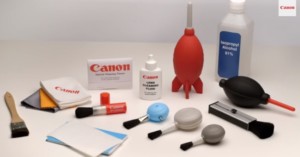
Most camera gear is built with longevity and strenuous activity in mind, but that doesn’t mean you shouldn’t take the best possible care of your gear. To that end, Canon’s service and support team recently put out this video showing the best practices for making sure that you properly and thoroughly clean and check your gear so it can keep working for as long as possible.
Behind every great photograph is a well-crafted creative workflow, and if you haven't honed yours yet, then this seminar by photographer Robert Rodriguez Jr. will help you nail it down. In a little over an hour, he details the four steps he uses in Lightroom's Develop module to go from RAW file to final, edited image.
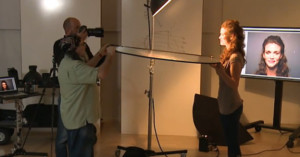
Jay P. Morgan of The Slanted Lens was recently invited to shoot at Luke Air Force Base (again) and he didn't want to miss turning this into an educational opportunity. And so, in the behind the scenes video above, he shows you how he was able to dynamically light up a portrait that involved a fighter pilot and an entire fight jet using only four 400 Watt strobes.
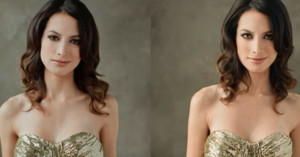
If you're new to the world of studio portraiture and you've noticed that the skin tones in your photos are often turning out wrong, it's possible you're getting color contamination from the ambient lights in your studio -- be that a bank of windows or overhead lights.
An ongoing debate among photographers from all backgrounds is that of natural vs artificial light. Both options have their pitfalls and qualities worth praising, but even so, it seems like some photographers are hesitant to put a subject in front of a strobe if natural light is available.
Butterfly lighting is one of the oldest techniques for lighting a subject. Named for the butterfly-shaped shadow that forms underneath the subject’s nose, this setup is a proven method to ensure your subject is well-lit in a pleasing manner.
This article was reprinted with express permission from Thomas O'Brien and Muench Workshops …
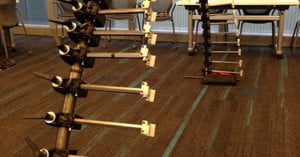
Check out this trippy video showing New York City sidewalks in Matrix-style "bullet time." It was created by filmmaker Paul Trillo, who partnered up with Microsoft to create a special camera rig consisting of 50 individual Nokia Lumia 1020 smartphones mounted to an arc.
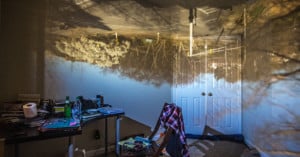
We heard how dangerous it could get outdoors with all of the traffic-crossings, pollen, UV rays and so on, and so we decided to stay inside and paint our walls with a live stream of the outside world...
When it comes to the type of glass used in still photography, versus the glass used in motion picture, there’s quite a dramatic difference in design, quality and price. Quite often, it's the last of those differences that is the most inhibiting for photogs who want to dabble around in motion picture.
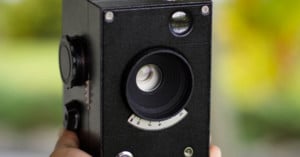
If you want a lens that most or all photographers don't have, one way is to retro fit a vintage lens with a new mount. That's what Washington DC freelance photographer J. David Buerk did with a lens he found on an old Lubitel 2 twin-lens reflex camera, and the results are quite nice.
Roadtrippers claims to be the first and only website dedicated specifically to road travels. “Discovering America’s best lodging & attractions", the website has a YouTube channel dedicated to sharing footage of these locations and attractions, most of which are done so in a time-lapse fashion.
This past weekend I had the incredible opportunity to shoot the Kentucky Derby with the Getty team.
Photographer JP Danko recently put together the above video that takes a 20-minute behind-the-scenes look at the editing of an underwater photo. Detailing from beginning to end, Danko shares his personal technique for turning a straight-out-of-camera shot to something ready for publication.
I first heard about 5 Pointz in a Wall Street Journal article in the summer of 2011. The article detailed the recent attempts by the owner to knock what had become an internationally-reknown street art mecca down, and build high-rise condominiums.
Looking to lighten up his current load while out photographing time-lapses, photographer Doug Urquhart 3D printed and pieced (read: hacked) together a brilliant 3-axis modular time-lapse motion control rig that is 50% lighter than his previous setup.
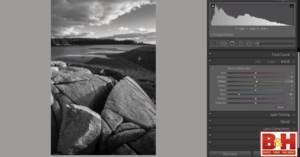
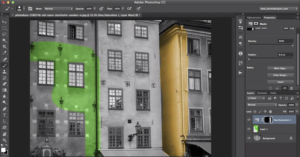
Whether you're just starting to convert color to black and white or you've just never been satisfied with how your previous attempts have turned out, this short tutorial by Hong Kong street photographer Gary Tyson will come in very handy.
Over the past few years, I’ve become overly obsessed with photographing the night sky, so when I saw that we were going to be able to see the lunar eclipse on April 15, I knew I had to shoot it. I had been planning this shot for about two weeks before Tuesday morning.
In a perfect world, we'd all have the studio of our dreams, and it would be filled with all of the best of gear. Unfortunately, we don't live in such a world, and more often than not we're constrained by a (sometimes very tight) budget.
Colorized historical images are very popular in the photo community, but how exactly does one start colorizing photos? Getting to the skill level demonstrated by the Photoshoppers in Reddit's ColorizedHistory subreddit will take countless hours of practice, but if you want to start this Tutorial from Tuts+ is a great primer.
As a photographer, there is nothing more intriguing to me than the unknown. What’s out there and where will it lead me on my next adventure under the stars? …
If you're looking for a comparatively cheap DIY option for adding a variable speed motor to a standard slider (most often used to shoot those cool motion time-lapses), this tutorial is perfect for you.
In November of 2012, we posted an article featuring impressionist-inspired photographs by photographer Matt Molloy that were created using a method called time stacking. The resulting images are quite beautiful, and in the tutorial above Molloy will run you through how to create them for yourself.
Online resources for learning about photography are anything but lacking. But every so often a new one comes around that changes things up a bit -- usually because it's created by a well-known, respected pro.
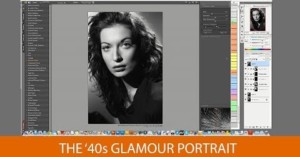
We're not in the habit of sharing full workshop videos during the week. The way we see it, most of you are at work right now (we sure are) and don't have time to watch a one and a half hour workshop at your desk (we sure don't). Problem is, this 1940s Glamour Portraits workshop by Robert Harrington can't wait.
No matter how long you've been shooting or what level you're at in your photography endeavors, there will always be those moments where you walk away from a shoot unsatisfied with how some of the images turned out. It happens to the best of us.
"Do-it-yourself" can mean a lot of things, but for camera dweebs, it's usually entailed some degree of scavenging and recycling parts from factory-made cameras. Grad student and specialty camera builder Kevin Kadooka understands the ease and accessibility of the practice but doesn't think it's sustainable -- eventually we'll run out of old cameras to cannibalize.
UK motion graphics artist and Make Productions founder Joe Fellows specializes in bringing stills to life. Using a series of steps in Photoshop and then After Effects, Fellows is able to transform photos into '2.5D' animated sequences that look like slow motion footage shot with a video camera.
I'm a very accomplished photographer. My photos have been in magazines, newspapers, textbooks, blogs, online videos, television and any other medium that you can think of. My work has been seen by millions and will be one of the most important resources for the history of video games. The only catch is that I'm almost never credited and don't get paid for it.
For the photo above, titled "Dead Little Things," I wanted to create a scene out of strictly dollhouse supplies. Inspired by many of the weather events that have occurred in recent years: tornados in Joplin and Oklahoma City, Hurricane Sandy and even Katrina.
Hyperlapse photography is an increasingly popular technique in which standard timelapse imagery is brought to life with camera movement. Rather than move the camera with a slider or with a crane, hyperlapse shots move the camera across very long distances.
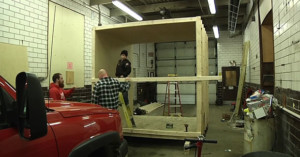
North Webster, Indiana-based photographer and videographer Justin Fredrick Clark recently shared this awesome behind-the-scenes video showing how he and some other guys at his church built a rotating room for just $350 (granted, they already had access to some pretty serious equipment) for a creative work project.
I originally saw the National Beard and Mustache Championships in the local news paper in Vegas, where I currently live. I had missed the 2012 Championships by one day and it was only a mile or two from my studio, so I was kicking myself in the ass for the missed opportunity. I tracked down the person responsible for organizing the "The Championships" and he put me in touch with the producer for the event.
Want to see what kind of work goes into turning a masterful photograph into an iconic print? Pablo Inirio, the master darkroom printer who works at Magnum Photos' New York headquarters, has personally worked on some of the cooperative's best-known images. A number of his marked-up darkroom prints have appeared online, revealing the enormous amount of attention Inirio gives photos in the darkroom.
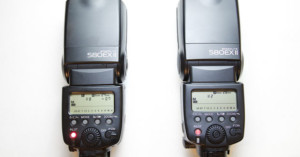
One of the two Canon Speedlite flashes above is fake. Can you tell which one? …
When I first heard of the CamRanger in October of 2012 in New York City at PhotoPlus Expo I was immediately intrigued.
Earlier this year, Swiss photographer Philipp Schmidli attracted a good deal of attention for a series of photos showing the silhouette of a biker in front of a gigantic moonrise.
KFC Restaurants recently opened a new concept store in Louisville, Kentucky called KFC eleven. (The "eleven" being a tribute to the 11 herbs and spices in KFC's original recipe chicken). The new store has a distinctly modern look, and is far from the red and white color palette made popular by Colonel Sanders.
Want to experience what it feels like to be a photojournalist in the midst of the violent protests and clashes that have been occurring throughout the country of Egypt? Check out the video above.
In this tutorial I’d like to demonstrate that you don’t need expensive studio flashes to create a complex scene with subtle lighting. I haven’t yet seen anyone else do this quite the same way and there doesn’t seem to be a name for it, so I named the process “zone lighting”, a form of exposure blending by dividing the scene in different zones. But let’s start with a little bit of background about the project and its concept.
I have a passion for automotive photography at night, but for the most part I'm forced to shoot static images. Long exposures require a stable support for your camera and that's only achievable when everything's locked down -- including the car. Sure, light painting, traffic trails and even the occasional star trail all help to introduce dynamism to static automotive images but sometimes there's no substitute for shooting the car whilst its moving.
With the college football season winding down, I had the assignment of covering the last Texas A&M home game. The last game I was available to shoot was the second to last home game against Sam Houston State University. This game was just a week after A&M upset the Alabama Roll Tide in Alabama, and Johnny Manziel was instantly catapulted into the rare position of becoming a freshman Heisman finalist.
I took this picture with one of five remote-controlled cameras I’d set up by the side of the track to capture the race winner from various angles and perspectives. Of course, I didn’t know for sure who’d win, but when I was setting up the gear it seemed like a fair bet to focus on Usain Bolt’s lane!
Yep, it happened. It really did...
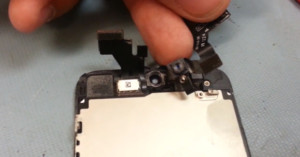
Although cracking open your smartphone and possibly voiding the warranty is never a pleasant task, sometimes it's necessary. For example, YouTube handyman JerryRigEverything's friend recently dropped his iPhone 5 and started getting some serious dust buildup on his front and rear cameras.
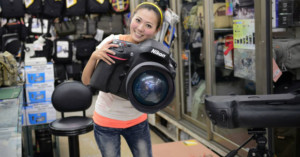
Yage Yang of Taipei, Taiwan is passionate about two things: snapping photos with his camera and building things with his hands. In June 2012, he decided that he would build a giant replica of a Nikon D800 out of styrofoam, just for fun. The project took him an entire year to complete, but the result, a "Nikon D800X," is ridiculously impressive.
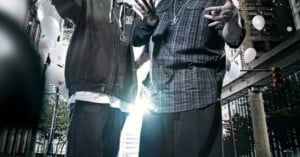
Check out this portrait of the hip hop duo Insane Clown Posse by photographer Paul Mobley and digital artist Mike Campau. Can you tell how it was created?
Red squirrels are my favourite subject to photograph. They each have their own individual personalities, and I love to try and capture their characters in my images. Their natural curiosity makes them great photography subjects, as they will quickly get used to my presence and act naturally in front of me.