Technology

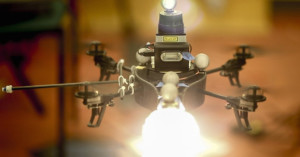
MIT Researchers Develop a Drone that Can Automatically Light Your Subjects for You

A group of researchers from MIT want your next lighting rig to be autonomous and airborne. Set to be on display this August at the Symposium on Computational Aesthetics in Graphics, Visualization and Imaging, they've actually developed a drone that automatically and dynamically lights a subject (living or otherwise) for a photographer while he or she focuses on getting the shot.

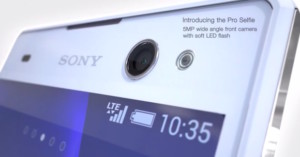
Sony Slaps Front-Facing Flash On the New Xperia C3, the ‘PROselfie Smartphone’

It was inevitable, really. With the advent of front-facing cameras, we should’ve known that eventually a phone would put as much, if not more, emphasis on the front-facing camera as the one in the rear.

The new Sony Xperia C3 is that phone. In an attempt to draw in the selfie-addicted generation, Sony’s latest Xperia C3 touts a wide-angle 5-megapixel front-facing camera with a built-in ‘soft' LED flash.

Sensor Stack Thickness Part III: Summary

Well, I have to admit this has been a fun series. I’ve learned a whole lot. That’s what makes this so fun -- I get some results I don’t understand, get some help figuring out what is going on, and before I know it, I’ve learned something that explains other things I haven’t been able to understand.
Timera Allows Users to Create Then & Now Photographs with Ease on iOS and Android

Timera 2 is the second iteration of a rather unique then-and-now compositing app that crowdsources photographs from around the globe and allows you to easily document the changes that have taken place in the world around you over the decades.

Through a massive user-generated database of historical images, appropriately geotagged to their location, Timera users can create unique then-and-now photos by overlaying the archive photo with a photo they just took.

NASA Packs 17-Ton Telescope in a Boeing 747 to Solve Catch-22 of Astrophotography

NASA is known for using some impressive optics for its telescopes. But with amazing optics come some logistical limitations.

Ground-based lenses used by NASA can be as massive as needed, but are limited due to atmospheric distortion. Those used in space-based telescopes such as Hubble, on the other hand, must be much smaller, capable of being launched into space and fixed on-the-fly. This leaves NASA with a little Catch–22.

A Catch-22 they’ve managed to find an answer to in the form of SOFIA (Stratospheric Observatory for Infrared Astronomy): a Boeing 747 with a 17-ton telescope packed inside.

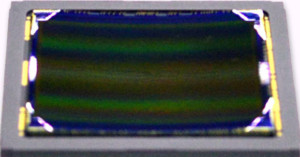
This is the First Photo Taken with the Sony Curved Sensor

Released in an article earlier today, what you see above is the first photograph taken with Sony's revolutionary curved sensor. And while you can't really tell much about the quality or any other specifics about the sensor from it, it's still exciting to see that this tech isn't just schematics on a piece of paper -- it's real and it works.

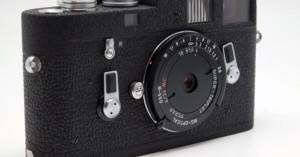
Ridiculously Thin Hand-Made Lens Leaves Pancakes Behind, Borders Crêpe Territory

There’s a good chance you’ve never heard of the company that goes by the name MS Optical, and we won't blame you. It’s a one-man operation, run by Mr. Sadayasu Miyazaki from Honcho, Japan. But you might want to take not of them now.

Specializing in unique lens designs, MS Optical focuses on creating small pancake lenses for the Leica M Mount. But MS Optical’s latest creation leaves the 'pancake' title in the dust... this thing should be called a crepe lens.
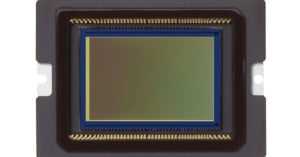
Canon Patents a Multi-Layer Image Sensor with Five Layers Instead of Three

Remember the advent of multi-blade shaving razors? Single blades gave way to two blades and then three, four and five. There are even a six+ blade razors out there in case you want a REALLY close shave. Well, a fresh Canon sensor patent has us wondering if the same thing isn't happening to digital sensors.

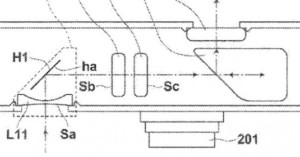
Canon has patented a Foveon-like sensor before -- a type of sensor, initially implemented by Sigma, that uses individual layers for detecting red, green and blue -- but the company's newest multi-layer sensor patent shows not three, but five layers.

Latest iPhone 6 Rumors: Larger Version to Feature OIS, Smaller Will Not

We've already seen that Apple plans to take some serious photographic steps forward when it comes to the its newest mobile operating system, iOS 8, but we have yet to find out what the Cupertino giant has up its sleeve hardware wise.

Of course, even if we haven't heard from Apple, that doesn't mean we don't have some idea what's on the way. As the iPhone 6's inevitable announcement draws ever nearer, vague hardware rumors are beginning to solidify.

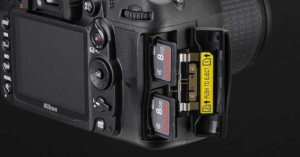
Back to Basics: The Difference Between SD SDHC & SDXC, and Which is Best for You

I will start off by saying I am partial to SanDisk memory cards, but I recently found a great write up on their website that is pretty much universal, explaining the difference between SD/SDHC/SDXC memory cards. I wanted to share this information with everyone because sometimes it can be confusing trying to figure out which SD Card is best for you.

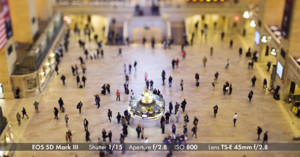
Tutorial: A Basic Explanation of What a Tilt-Shift Lens Is and How it Works

Tilt-shift lenses are nothing short of optical magic... or so it seems. But as their namesake implies, they actually achieve this 'magic' through the use of two clever movements in the lens.

In the short tutorial above, Vincent Laforet, a Canon Explorer of Light and well-known photography educator, explains just how those two components work and how they dramatically impact the look of an image.

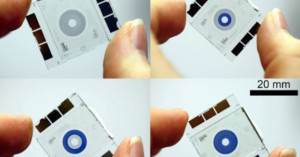
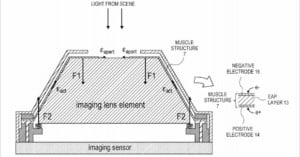
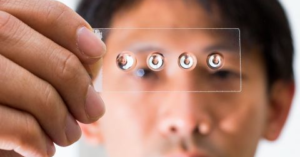
New Chemical Iris Technology May Change the Way Smartphone Apertures Work

As smartphones have gotten smaller and smaller, the need for the cameras inside of them to shrink has become more pressing. One area where there's a lot of room for improvement is in the traditional mechanical aperture.

As we begin to hit the physical limit of the overlapping blades, researchers at the University of Kaiserslautern have designed an exciting new ‘micro iris’ that uses small chemical rings rather than a physical blades, dramatically shrinking the size of the aperture components in the camera.

Detailed Explanation of the Manual Camera Controls Coming in iOS 8

One of the biggest photography-related additions to iOS 8 is the opening of Camera APIs to developers. Access to these APIs means third party developers are now given complete access to the camera in your iOS device. Most notably, this includes the addition of full manual control of camera settings, something that hasn't been discussed in too much detail... until now.

Joshua Ho over at AnandTech has written up a solid piece properly going through the minute details of what it is developers have been given access to and how it may affect photo apps available after iOS 8's pending debut.

Diving Into the Tech Behind the Lytro Illum and Its Impressive 30-250mm f/2.0 Lens

Lytro came into the photography world not only to create a novelty product, but to fundamentally change how we approach image capture. Because despite light field photography being around for over a century, it’s only with the latest technology that the company is able to exploit what it is a camera is truly capable of doing.

We recently spoke with Lytro about its upcoming Illum camera a bit, diving into the technology behind the specs and revealing how Lytro's approach is allowing the company to not only step, but leap into the future.

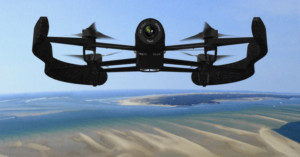
Hexo+ Autonomous Camera Drone Lets the Adrenaline Junkies Film Their Own Stunts

Adrenaline junkies who want to capture their stunts on video have thus far been limited to two options. They either had someone else photograph/film them, or strapped an action cam to themselves for some first person point of view shots. Now, thanks to Hexo+, they have a third option: have your autonomous drone film you from above.

Lytro Makes Interactive Web Player Open-Source, Partners with 500px for Integration

A major drawback of Lytro's technology has been the closed ecosystem its files are trapped in. Unable to be edited in programs such as Lightroom or viewed on the Web without a proprietary image viewer, the experience is lacking the ubiquity needed to gain the acceptance of the masses.

Well aware of this problem, Lytro today takes the first of what we assume will be many steps in the right direction, by announcing that their images will now be viewable on the Internet via a new, open-source WebGL player.

MIT Project Would Like to Bring Light Field Photography to Every Smartphone

When it comes to technological innovations, the acronym MIT comes up often. Known for their incredible collection of human capital in the form of intellect, The Massachusetts Institute of Technology is constantly pushing the boundaries of what’s capable in every facet of life.

And in the case of a project called “Tesseract,” the boundaries being pushed are those surrounding the field of smartphone camera technology.

Sensor Stack Thickness: When Does It Matter?

The first post I made on sensor-stack thickness wallowed deeply in PhotoGeekery. This one is meant to be of practical use so I’ll try to leave the Geek stuff out. We’ll start with the simple facts.

Scientists are Using the Nokia Lumia 1020 to Get a Better Look at Diseased Tissue

Do you know what Histopathology is? No, it’s not the study of histograms, it’s actually the study of changes in tissues caused by disease. And now, advances in photographic technology that you or I could go pick up at Best Buy are actually helping to study those changes like never before.

Using the Nokia Lumia 1020 smartphone, scientists are once again bringing together the worlds of Science and Photography to do some amazing work.

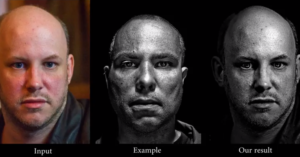
MIT Project Mimics Iconic Portrait Photogs, Takes Your Selfies to the Next Level

Are you not impressed with your average Instagram selfie? Is the lighting too bland and out of place for your liking? If so, a team made up of a researcher from MIT and a few individuals from Adobe and the University of Virginia might just have a solution to your problem.

They’ve created an algorithm capable of accurately stylizing an average, otherwise insignificant selfie to look like the works of some of the best-known and well-respected portrait photographers of all time.

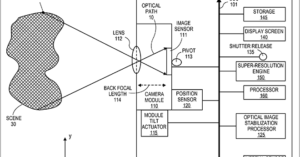
Apple Patent Shows Off Unique Use of OIS for “Super Resolution” Photos

Coming from Apple Insider is a discovery of an interesting patent application by Apple. The application, aptly titled “Super-resolution based on optical image stabilization” explains in words and graphics a way in which an optical image stabilization (OIS) system can be used to capture a series of images at variable angles, then combine them together to create a high-resolution file.

Vhoto: An App That Automatically Pulls the Best Photos from Video Clips

There are times when actually creating and composing a photo are key. But, there are also times – especially to the general population – when just capturing an ‘alright’ photo is hard enough. Here to help solve this problem is a new iOS app called Vhoto, which blurs the line between capturing videos and photos.

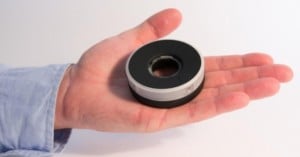
Centr Cam Offers 4K 360º Footage Out of a Hockey Puck-Shaped Device

In the never-ending chase to create the most unique camera around, San Francisco-based Centr Camera Inc. has launched a Kickstarter for a new style of camera. Called Centr, this 360º, 60fps, 4K-resolution panoramic camera will allow you to capture incredible footage all around you, in a device roughly the size of a hockey puck.

Dude, Who Took My Photograph? Curating Automated Photography

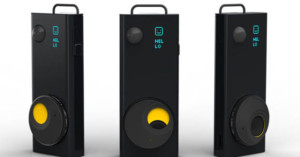
A slew of new technologies are making it possible (even easy) to document everything around you without much effort or input. Wearable, automated cameras represent the most extreme end of this spectrum - devices like Autographer and the Narrative Clip record your daily life with a mind of their own.

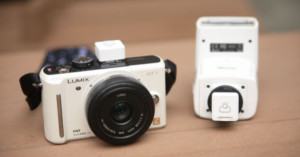
The FlashQ System Shrinks Wireless Flash Triggering Tech for Mirrorless Cameras

When it comes to choosing wireless flash trigger systems, there’s no shortage of options. From PocketWizards to cheap, $20 systems on Amazon and Ebay, there seems to be one for each and every situation and price point. However, despite all of the options, there is one thing that every single one of them has in common: they're all pretty big.

Of course, when shooting in a studio with a DSLR a PocketWizard doesn't seem that beastly. But when you’re wanting to trigger a flash with a small mirrorless camera or compact camera, none of the options out there right now will allow you to do so without making your camera look like the attachment rather than the trigger. That’s where FlashQ comes in.

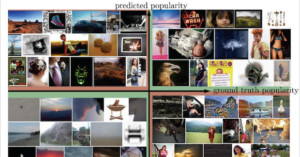
MIT Algorithm Tries to Predict How Many Likes Your Photo Will Get Per Day

A photographer's primary concern when taking a photo might not be "I wonder how many likes this will get," but being able to gauge popularity could still come in handy when you're trying to decide which photos to upload to your favorite sharing site.

Enter MIT PhD candidate Aditya Khosla and his new algorithm that does just that: tells you how popular your photos will be before you even upload them.

Sony Unveils Curved Sensor Technology

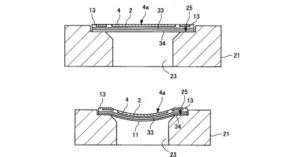
What happens when someone creates a camera sensor that better replicates how our eyes are shaped? Well, according to Sony and a recent presentation they published, this curved sensor and accompanying glass will allow for faster apertures without taking a hit on image quality.