Technology

HP’s New Sprout Computer Could Transform the Way We Interact with Photos

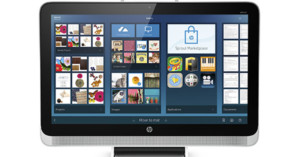
HP has announced a futuristic new personal computer called Sprout that hopes to transform the way we interact with our computers. The system consists of an all-in-one Windows 8 computer, a system of 3D scanning cameras, a large tactile touchpad, and a projector that beams a display onto the touchpad.

It's a computer that may make working with photos as easy as moving your hands around on your desk.

Fireside SmartFrame is an Intelligent Digital Picture Frame That Shows You Pics You Want to See

Digital picture frames seemed like a brilliant idea about six or seven years ago. But the low-res screens, clunky interfaces and lack of any sort of standard operational platform left them to be a fairly niche market floundered when it arrived into the world.

Fireside is a small start-up that's looking to breathe new life and ideas into this market. After two years of development, they’ve created a "smart" picture frame called SmartFrame that rethinks how photos are curated and displayed on the walls of your home.

Nikon Patent Shows a Vibrating DSLR Shutter Button That Helps You Track Moving Subjects

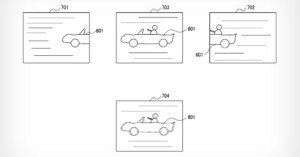
Cameras have many different methods of guiding photographers toward capturing quality shots, but physical feedback isn't really one of them... yet. In addition to providing useful visual and auditory information, DSLRs in the future might actually guide photographers through their sense of touch.

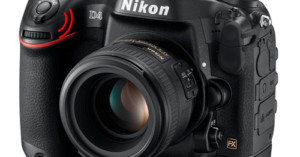
A recently published Nikon patent shows a DSLR that helps photographers capture moving objects without having to look through their viewfinder. Instead, the camera uses vibrations to guide the shooter.

It Would Take 21 of These IBM Hard Drives from 1956 to Hold a Single D800 RAW File

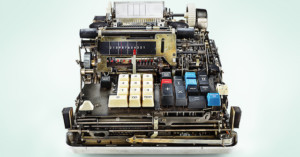
Here's both a neat picture and a mind-blowing fact for you. What you see above is the IBM Model 350 Disk File from 1956. It weighed over a ton, contained fifty 24-inch disks, and was leased to companies for $3,200 per month. It could hold... 3.75 Megabytes.
That means that it would take 21 of these puppies to hold the largest 14-bit RAW file the Nikon D800 spits out.

The Macropod is a $20,000+ Rig That Makes Macro Photography Stupidly Easy to Do

Macro photography is a wonderful tool for scientists and researchers, but the complex nature of capturing detailed, focus-stacked macro images of everything from insects to the human tongue puts the tool out of reach of many.

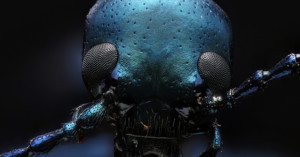
The Macropod photographic system solves this by making the entire process both portable and automatic, and producing some of the sharpest, most striking macro photographs we've ever seen.

This Free App Uses Your Smartphone’s Camera to Do Your Math Homework for You

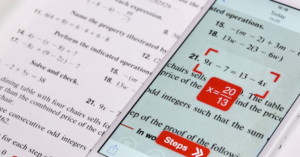
Your smartphone's camera might fall short of the typical DSLR in just about every respect, but there is one thing it now do that not even your ultra-portable mirrorless camera can handle: your math homework.

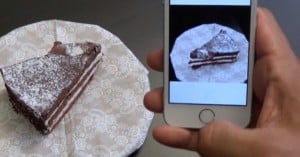
No, we're not talking about shutting down the camera and opening your calculator app, what we're talking about is PhotoMath, a new app from MicroBLINK that uses your smartphone camera to solve equations for you.

This Experimental, Single Pixel Digital Camera Takes Color Pictures

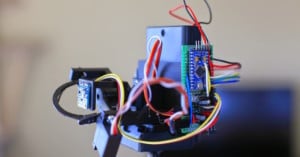
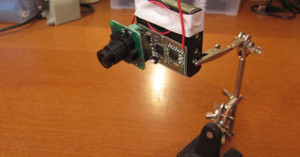
A single pixel color digital camera sounds an awful lot like a camera that captures a single bright red, green or blue dot, but when scientist Ben Greer set out to build his own single pixel camera, that's not what he was creating at all.

No, by moving a little autmatic arm in front of the sensor, scanning the scene multiple times, and then getting into a bit of math, he built something that can take actual pictures.
Newly Developed Lithium-ion Batteries Have Lifespan of Over 20 Years

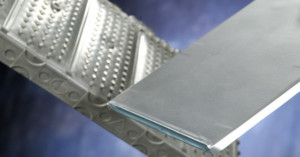
If you've ever used a lithium-ion battery for many years, you've probably experienced the gradual loss of the ability to hold charge over time. Thanks to researchers over in Singapore, however, future Li-ion batteries will last much, much longer than present day ones.
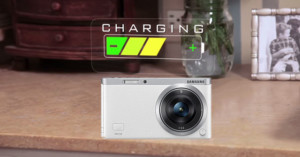
Scientists at Nanyang Technology University have developed a new type of lithium ion battery that can reach a 70% charge in a mere two minutes and will keep charging day in and day out for over 20 years. Yes, you read that right. Two decades.

Yovo Photo Sharing App Uses Slatted Fence Optical Trick to Prevent Screenshots

In the ongoing app battle to keep private photos safe and sound from unintended recipients (and the general public), a new app called Yovo – You Only View Once – brings an interesting technology to the table.

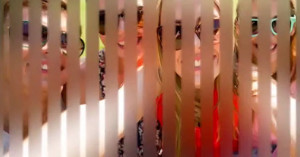
It's called D-fence, and is based around the idea that your eyes can see what's behind a slatted fence as you're driving by at a high speed.

This Camera Shoots a Gigapixel Photo of Your Entire Body for Skin Cancer Screening

While it’s the fifth most common type of cancer in the United States and the deadliest of all skin cancers, melanoma can often be cured if caught early enough. So, in an effort to step up early detection efforts, a team of researchers at Duke University have developed a gigapixel whole-body camera that captures high-resolution images that will allow doctors to more quickly and effectively diagnose melanoma.

Adobe Shows Off Features for Changing Time of Day Lighting and Removing Fog

At the Adobe MAX 2014 conference this past week, Adobe showed off some of the crazy technology current brewing in the company's labs. Two of them offer a glimpse at what may soon be available to photographers in Photoshop: changing the time of day (i.e. lighting) in photographs with a simple slider and removing haze from a scene automatically.

Panasonic Patents Optical Viewfinder for Mirrorless Cameras that Could Communicate with Your Lens

Panasonic might have found the last piece of the puzzle keeping many DSLR users from switching over to mirrorless cameras.

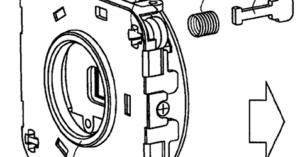
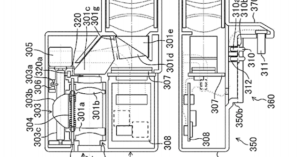
The above image is taken from a patent that diagrams the basics behind adding an optical viewfinder to mirrorless cameras. Even more interesting, the viewfinder would be able to change focal length when synced with any Micro Four Thirds lens.

It’s Official: A.I.s are Now Re-Writing History

The other day I created a Google+ album of photos from our holiday in France. Google’s AutoAwesome algorithms applied some nice Instagram-like filters to some of them, and sent me emails to let me have a look at the results. But there was one AutoAwesome that I found peculiar. It was this one, labeled with the word “Smile!” in the corner, surrounded by little sparkle symbols.

It’s a nice picture, a sweet moment with my wife, taken by my father-in-law, in a Normandy bistro. There’s only one problem with it. This moment never happened.

New Imaging System Promises 12-Times More Color Sensitivity than a Traditional Sensor

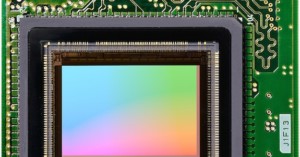
What's the use of an image sensor that's 12 times more color sensitive than the human eye? We're not entirely sure, but thanks to a team of researchers at Universities of Granada, Spain and Polytechnic University of Milan, Italy you may someday get to try it out and find out for yourself.

Researchers at those two universities are using "Transverse Field Detector" technology to distinguish 36 individual color channels without any need for a filter, making it 12-times more color sensitive than standard Red/Green/Blue sensors and the human eye both.

Joey Captures 4K, 360º Seamless Video that You Can Livestream and Share

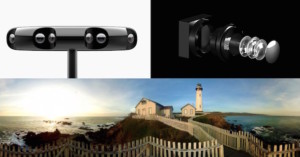
When imaging company Kogeto created Dot -- a clever little system that gave the iPhone 4 360º panoramic video -- little did the general public know that this was merely a stepping stone towards what they really wanted to create. Three years later, they’ve finally let the panoramic cat out of the bag.

It’s called Joey, and it’s a professional-grade 360° 4K video capture device with a seemingly endless list uses.

piccure+ Software Promises to Give Your $300 Lens the Magic of a $3,000 Lens

What's the difference between the results of a $300 consumer lens and a $3,000 top-of-the-line lens? If piccure is to be believed, one answer is "post-processing."

Today, the German computational photography company is releasing a new version of its software called piccure+ that can effortlessly correct the flaws of cheap glass, allowing photographers to obtain high image quality without having to spend a fortune on gear.

Your Future Smartphone Camera May Be Able to See Cancer Thanks to the Mantis Shrimp

Mimicking animal and bug vision to create unique and interesting cameras is nothing new. Bug vision cameras with, for example, infinite depth of field, have been made in the lab before. But researchers at University of Queensland in Australia are developing a camera that can do something pretty unique: it can see cancer.

The idea came after the scientists discovered that mantis shrimp have this incredibly useful ability.

Nixie: A Tiny Flying Camera Drone You Wear On Your Wrist

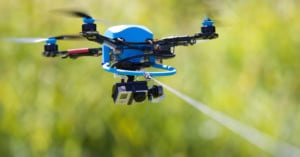
If the idea of a wearable camera drone seems downright strange to you, you're probably not alone, but a new wrist-mounted flying concept camera called the Nixie makes this strange idea seem both possible and completely logical.

This is What Yesterday’s Equinox Looked Like from Space

Over the past 24 hours, the Earth has been experiencing its autumnal equinox. That is, the length of day and night across the globe was the same due to the sun hitting the earth at just the right angle to align its shade perfectly with the Earth’s spin axis.

And thanks to the photographic work of Russian satellite Elektro-L, we get an awesome (albeit quick) view of this bi-annual occurrence from a pretty spectacular vantage point: space.

JIBO: The World’s First Family Robot That Can Double as Your Private Photographer

Cynthia Breazeal envisions a world in which every family has its own personal robot helping out at home -- one that can help out around the house, and even help take photographs when needed. To turn this idea into a reality, the MIT robotics professor has created a robot called JIBO.

The robot has already become a top 5 most funded campaign on Indiegogo after raising over $2.2 million from over 5,500 supporters.

Canon Pixma Photo Printer Hacked to Run Doom

The "Internet of Things" is likely what the future holds, but it's a future that has it share of security concerns. As more and more devices are making their way online, hackers will have newer points of entry into our lives.

Case in point: a security researcher has shown that Canon Pixma printers can be hacked to run custom code. As an example, he loaded the game Doom onto the printer.

Researchers Create Software Capable of Intelligently Averaging Thousands of Photos Into One

Researchers at UC Berkeley have created software that automatically averages hundreds or thousands of similar images to create the pinnacle of amalgamations.

Unveiled last month, AverageExplorer lets users see the average image that represents whatever collection of images they’re looking at. The idea is to break down the overwhelming amount of images given when searching through Google Images, Flickr or Bing and combining it into one visual summary of the result.

Amateur Photographer Experiments with Using a 4K Video Still as its Magazine Cover Photo

The idea that 4K+ resolution video will soon become a big thing in still photography is one rooted in convenience. While it doesn’t seem video will overtake still photography for good anytime soon, Amateur Photographer wanted to dip their toes in the water.

In a recent experiment, the Amateur Photographer team decided that the September 20th issue of their magazine would feature a cover that uses a still image extracted from video shot at 4K.

Satellite Uses Infrared Photography to See Beneath California Forest Fire Smoke

DigitalGlobe really wants people to get behind their super-high res public imaging satellite, the WorldView-3, and understand just how useful it could be. To that end, they're showing off the satellite's capabilities once again, this time using the onboard infrared sensor to see beneath the smoke of a California forest fire and capture some incredibly detailed images of the inferno.

SteadXP Adds an Accelerometer to Any DSLR or GoPro for Better Image Stabilization

Image stabilization is a tricky business. There are a plethora of ways to do it: optical image stabilization, algorithmic stabilization and, more recently, hybrid options that combine the best of analogue and digital input.

A great example is Instagram’s new Hyperlapse app, which gathers data from the accelerometer built into your iPhone and uses that data to digitally correct for camera shake and give you smooth footage.

And now, an upcoming product called SteadXP wants to do the same thing for your DSLR or GoPro.

Impressive New Smartphone Software Can Turn a Blurry Mess Into a Clear Shot

Besides sensor size, quality glass is the other major hurdle that smartphones need to overcome if they ever want to truly compete, quality-wise, with their bigger more capable brothers.

But since attaching a 500mm lens to a smartphone looks... well... kind of dumb, the folks at Canadian startup Algolux are taking a software-based approach and producing some truly incredible results in the process.

Here’s How iPhone Thermal Cameras Can Be Used to Steal Your Pin Codes

There are a lot of great, fun, and interesting things people can do with an iPhone and that FLIR 'predator vision' infrared camera case we told you about at the beginning of this year. But, as it turns out, there is also a very bad thing people can do.

Using just an iPhone and the Thermal camera case, people can actually steal your PIN codes, be that for an ATM or that keypad on your car or garage door.

This is How Instagram’s Hyperlapse App Creates Such Silky Smooth Footage

Instagram only just released Hyperlapse earlier this week, and already it’s amassed a cult-like following thanks to its dead-simple interface and amazing results.

But, as simple as the interface may be and as impressive as the results are, what happens between when the app is opened and the final hyperlapse actually involves a lot of incredibly technology at work.

Your Future Camera Might Be Powered by Hemp

In an interesting development in the world of batteries, researchers have discovered and demonstrated a way to make extremely efficient carbon electrodes by heating up the fibers of hemp in a two-step method.

The resulting carbon electrodes hold as much energy as the super-material graphene, are more durable in extreme temperatures, and come at a much lower cost -- pretty much the ideal material to make batteries out of.

ESA’s Disposable Space Camera Will Record and Transmit Its Own Death Upon Re-Entry

The European Space Agency has designed a disposable piece of equipment affectionately referred to as the Break Up Camera. As you could expect from the name, the sole purpose of the camera is to capture it’s own death.

How will it capture its own death though? With the help of a dedicated Infrared camera, hooked up to a storage device that will be contained in a ceramic-shielded Reentry SatCom.