Sony a7R VI Review: The High-Resolution Camera to Rule Them All
The Sony a7R VI might very well be the last camera many photographers truly need. It won’t be the last camera people want, of course, but there is very little this camera cannot do, at least for still photography. It’s exceptional and, in many crucial ways, the new standard-bearer in the industry.
The Sony a7R VI might very well be the last camera many photographers truly need. It won't be the last camera people want, of course, but there is very little this camera cannot do, at least for still photography.
Pros
- Fully stacked image sensor provides significant speed improvements
- Robust and comfortable grip design
- Versatile new custom mode dial with 30 slots
- Useful illuminated rear buttons for low-light shooting
- Bright, high-resolution electronic viewfinder
Cons
- New battery type lacks backward compatibility
- EVF color reproduction can appear inconsistent
- Grip changes may not suit all user preferences
The Sony a7R VI has also been a long time coming. It may not feel like the a7R V is all that old, and having arrived in 2022, it really isn’t. However, that release ushered in some new AI-based autofocus performance and smoothed a few of its predecessor’s rougher edges, but was otherwise the same camera as 2019’s a7R IV. Since then, Sony has released some remarkable cameras, including many with image sensors that are significantly faster and more performant than the one found in the a7R IV and V.

With the a7R V, we finally get a new sensor, and it maintains the high-resolution and dynamic range strengths that the Sony Alpha R Series has always been known for while fixing the other, much less charming thing it is known for: sluggishness. The a7R VI finally makes the jump to a fully stacked image sensor, ushering in speed that no a7R camera has ever had. Oh, and it has a few more megapixels to boot and the all-new processor introduced late last year with the a7 V.
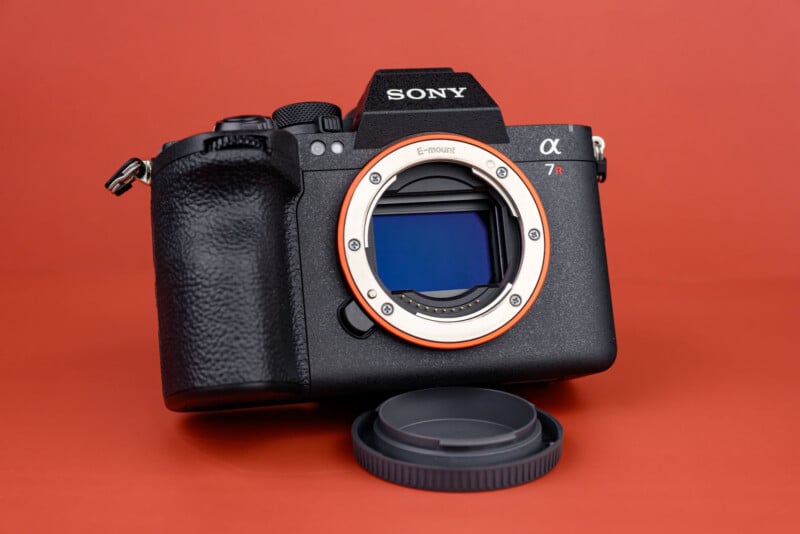
There’s a lot to cover, so let’s get right to it. But spoiler alert, this is the camera a lot of Sony shooters have been waiting for, and the competition better take notice.
Sony a7R VI Design and Handling: Familiar With a Few New Tricks
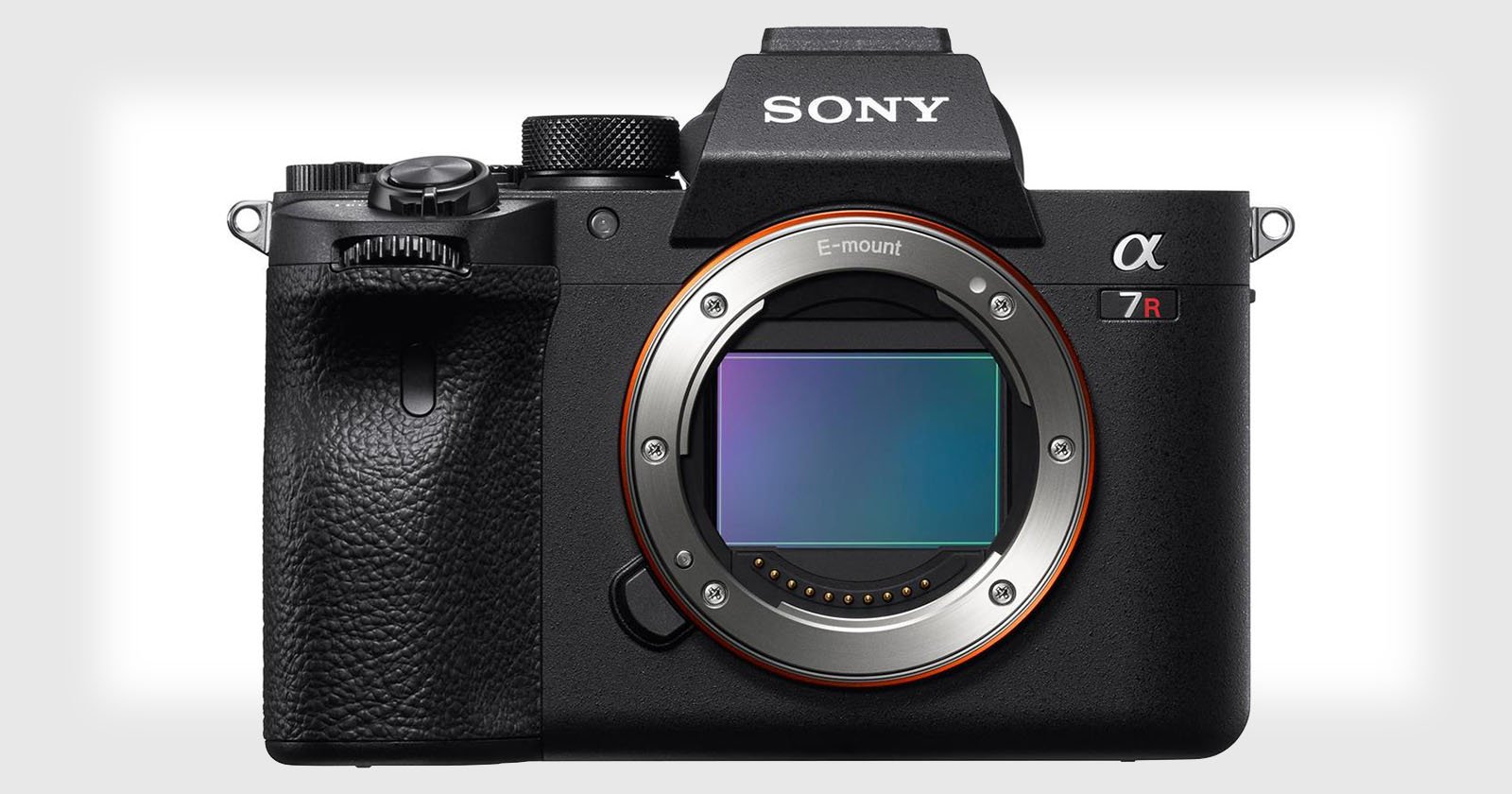
The Sony a7R VI looks and feels a lot like the Sony a7R V. That’s not a bad thing, but anyone hoping for a big transformation will find nothing of the sort here. This is very much an “if ain’t broke” situation. That said, there are some tweaks here, nearly all positive in my book.
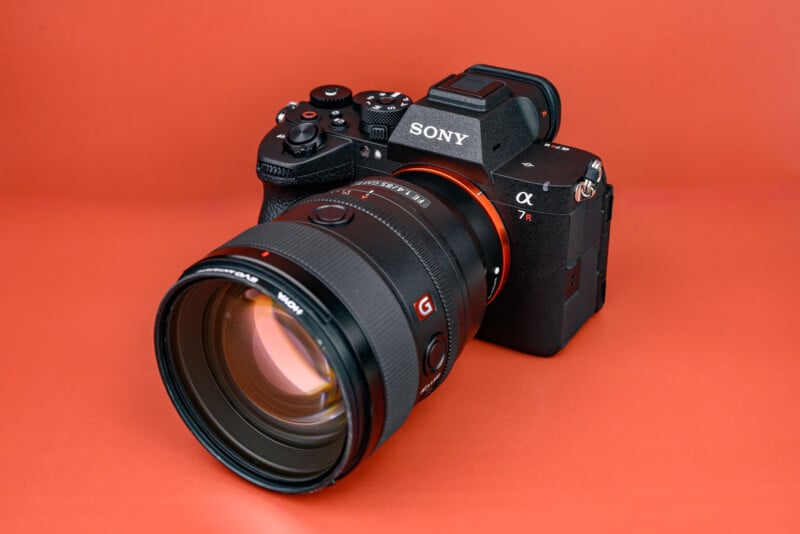
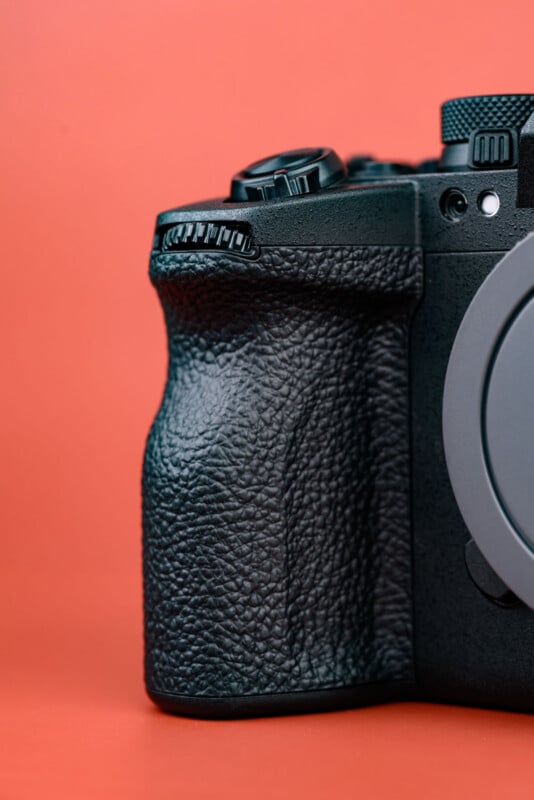
The front grip is a little bit different than before. It’s a minor change, but it’s just a little chunkier. I like it better, as it feels a bit more robust and offers more purchase than the a7R V. On the other hand, as Chris Niccolls explains in our video review, he preferred the a7R V’s grip.
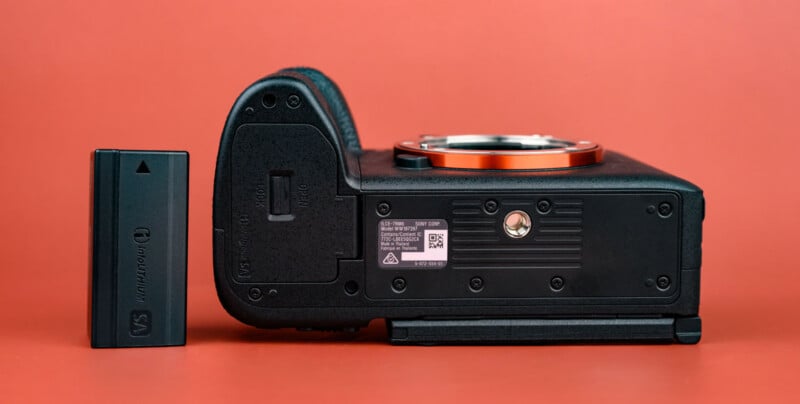
Another change that is arguably a mixed bag concerns the new battery, which probably also explains the revised grip shape, for that matter. Sony has, for the first time in what feels like an eternity, moved away from its tried-and-true NP-FZ100 battery. In its place is a brand-new Info-Lithium NP-SA100 battery. It’s chunky, cube-ish, and has some interesting new capabilities. It has a higher capacity and voltage, which is fine. It can also show its battery health now, which again, is fine. Moving to a new battery shape means backward compatibility is shot, though, which is unfortunate. That said, if Sony didn’t think it needed a new battery, it wouldn’t have made one, so this is probably just a necessary evil.
I think the rest of the changes are all obvious improvements, ranging from minor to rather significant.
There’s a new “*” position on the mode dial that lets users set up to 30 custom modes, 10 for stills, 10 for video, and 10 more for S&Q. It replaces the old custom three mode and is much more versatile.
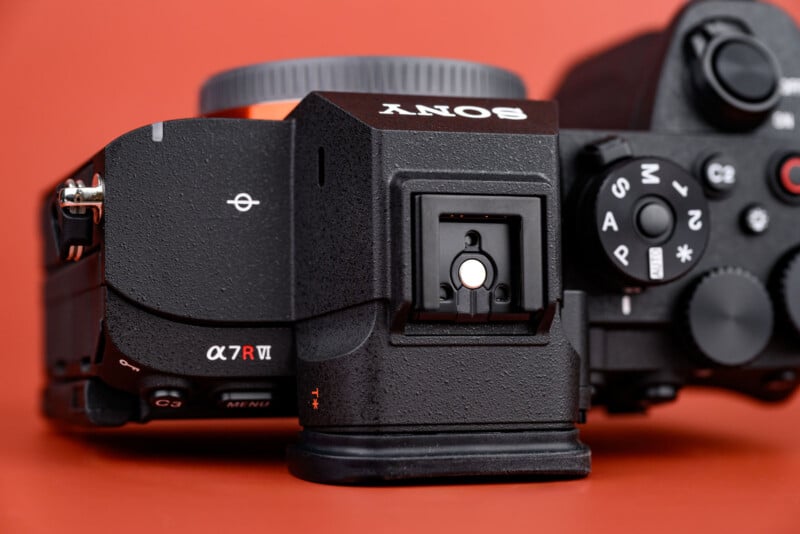
The a7R VI now has a tally lamp on the front, which is never a bad thing for hybrid and video-focused users. While it doesn’t mean much to me, it’s a smart inclusion. Another smart inclusion that actually does matter to me is the new illuminated buttons. By pressing the small “light bulb” button at the top of the camera, users can illuminate many of the rear buttons, including C1, C3, AF-ON, AEL, Fn, Playback, Delete, and Menu. It’s perhaps a little odd that no buttons on the top of the camera light up, but frankly, there aren’t that many to memorize, so it’s a minor criticism.
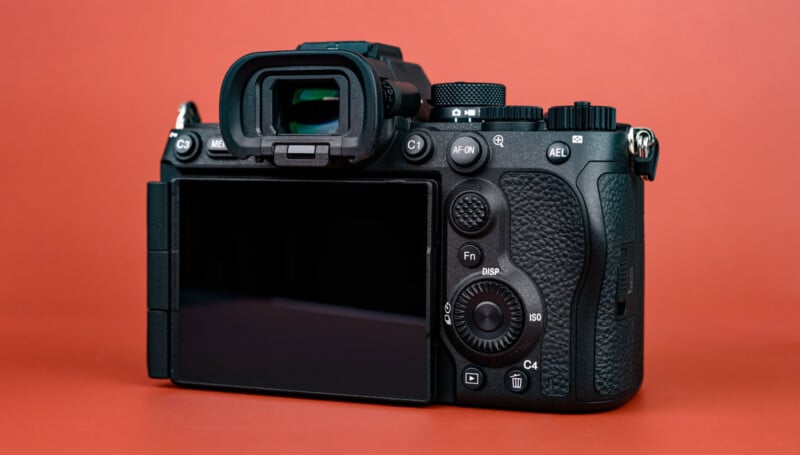
There are also two very minor changes that many users may not notice, but they are smart tweaks. The “Auto” position on the mode dial is now raised, so you can feel it without looking. It’s a nice reference point to have, especially because the new * position is right beneath it. There’s also a new bump on the lens mount where the lens should be aligned. Sony already puts bumps on its lenses, so it’s nice to have a camera with a matching bump. Just line them up and twist. Are these big deals? Heck no. But they’re intelligent improvements that show attention to detail.
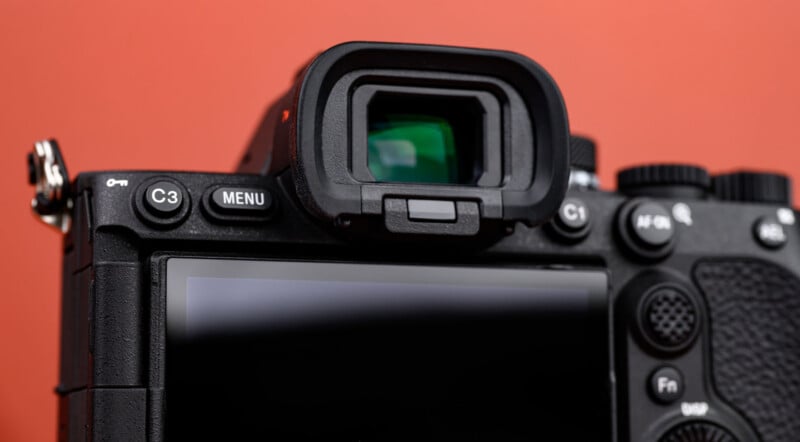
Perhaps the biggest change to the overall usability of the a7R VI comes down to its electronic viewfinder. The new EVF is very high-res, sporting 9.44 million dots like its predecessor, but it’s now three times brighter than before. It also displays the DCI-P3 color space and 10-bit HLG HDR, so that’s an upgrade.
It’s an excellent EVF, don’t get me wrong, but I did find the new, higher brightness perhaps a bit too bright for my tastes. It can be adjusted, of course. I also found the colors to be a little bit off, for lack of a better term. The EVF didn’t quite match the appearance of the camera’s rear LCD or how images looked on my calibrated display. It’s hard to put my finger on exactly what is odd about it, but the tones appeared inconsistent across the camera’s two displays.
Listen, I’m nitpicking here, but when a camera handles this well, there’s not much else for me to do.
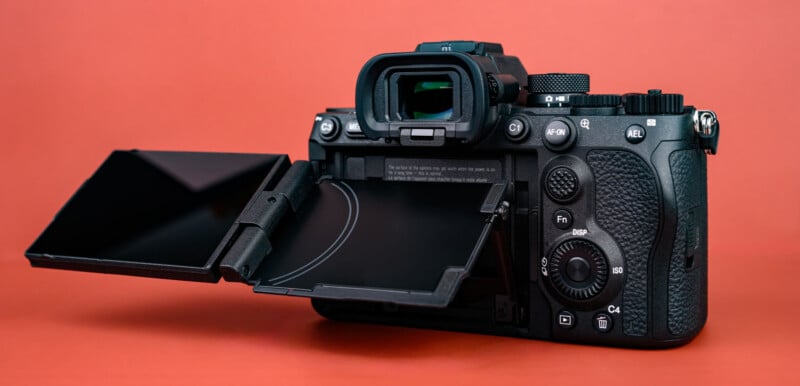
In nearly every possible way, the Sony a7R VI is a well-designed camera that is easy and enjoyable to use.
Autofocus: Even Better Than Before
The Sony a7R V’s autofocus has never been a problem. That camera, Sony’s first to include a dedicated AI processing unit, delivered reliable, swift, and accurate focusing across a wide range of challenging scenarios.


So there really isn’t much room for improvement with the a7R VI, but its autofocusing is nonetheless better across the board. It still features a 759-point hybrid autofocus system, but this time it includes Real-time Recognition AF+; the “plus” is new. This new symbol at the end of the name ultimately that human pose estimation is better and more accurate, tracking has been improved, and focusing is more precise when photographing really small subjects.
In my experience with the a7R VI, which focused primarily on nature and wildlife photography, it performed excellently. The Real-time Tracking+ uses a mix of artificial intelligence, spatial information, and color data to reliably identify and track a wide range of subjects.

For birds in flight, the a7R VI, especially when paired with the new FE 100-400mm f/4.5 GM OSS, proved very good. While the camera didn’t always instantly lock onto the desired subject, once it had acquired focus, it consistently stayed glued to the subject. I primarily used the subject detection mode specific to my subject, like Birds for photographing birds, but there is an Auto mode that seems to work just as well.

The improved detection of small and distant subjects proved especially useful when photographing birds, which can be very small in the frame and occasionally far away. The a7R VI’s precision enabled me to more easily capture shots that are historically very challenging to get. While some of the camera’s speed requires a suitable lens to match — it takes two to tango — when used alongside one of Sony’s fastest-focusing lenses, the a7R VI’s performance is incredible.


Performance: Speed and Resolution? Oh My
The Sony a7R V’s biggest shortcoming has always been its speed, or more accurately, the lack thereof. The new a7R VI addresses this in a major way, moving from a 61-megapixel back-illuminated CMOS sensor to a brand-new 66.8-megapixel fully stacked Exmor RS CMOS sensor.
This is the first new sensor the a7R series has had since 2019’s a7R IV and sets a new high watermark across the entire industry in terms of resolution. Historically, for the a7R series, this consistently high resolution has always come at the cost of performance. You get more megapixels, but you give something up in exchange. That’s the way it historically works, but no longer.


Paired with the new Bionz XR2 image processing engine Sony debuted in the a7 V late last year, the new 66.8-megapixel full-frame, fully-stacked Exmor RS CMOS sensor can capture full-resolution 14-bit RAW files at up to 30 frames per second (FPS) using its electronic shutter. This is a huge deal. There is no longer an obvious compromise for photographers with the a7R VI, you can have your cake and eat it too.

That’s not to say it’s all sunshine and daisies and there are still reasons someone might opt for the 24-megapixel a9 III or the 50-megapixel a1 II.
The case for the a9 III is obvious. If you need speed, that’s the camera in Sony’s lineup for you. It shoots at 120 frames per second and, thanks to its global shutter, has no rolling shutter distortion, period.
While the a7R VI’s sensor is faster than before, the a1 II’s is still considerably faster, delivering less rolling shutter than the a7R VI. The a1 II’s readout speed is under four milliseconds, while the a7R VI is around 18 milliseconds. This is leaps and bounds ahead of the a7R V’s nearly 100-millisecond readout speed, but still far enough behind the a1 II that, for really exacting scenarios, especially in sports, the a1 II is still the clear winner.
I think for many situations, the a7R VI’s sensor is sufficiently swift. There were not too many times when the rolling shutter reared its ugly head. But it did happen.

Another big thing to think about when dealing with a 66.8-megapixel camera capturing RAWs at up to 30 frames per second is the buffer. Given that Sony did not make the move to CFexpress 4.0 architecture with the introduction of its new Bionz XR2 image processor, it seems fair to say it’s not currently an engineering priority for the company, which is a real shame because a camera like the a7R VI could really take advantage of the higher data bandwidth.

But alas, that is not what Sony elected to do here, so what do we have for buffer performance? There’s a lot to consider here. The testing below was conducted on an OWC Atlas Pro 480GB CFexpress Type A card with a promised write speed of 1700 MB/s.
When using the mechanical shutter, the a7R VI can shoot about 140 frames of lossless compressed RAW files before slowing down, which is 14 seconds of uninterrupted action. That number jumps over 220 when shooting Compressed RAW (HQ). While this format has some occasional compatibility issues with some photo editing software, it’s essentially indistinguishable from a lossless RAW file except in extreme edge cases.
For my money, when buffer performance matters and Compressed RAW HQ works in your workflow, this is probably the best overall balance. If you really need more buffer depth, you can shoot standard Compressed RAW files and fire away for what feels like an eternity. God help your hard drive if that’s the way you approach things, though.

Now, what about 30 frames per second with the electronic shutter? With lossless compressed, you’re looking at about 70 frames. You get about five more by going for Compressed RAW (HQ).
These buffer depths will depend a bit on whether you’re using Pre-Capture Shooting, which only works with the electronic shutter. This is a great feature for photographing unpredictable action, as it continuously rolls the buffer when the shutter is half-pressed. Once it is fully depressed, the most recent “shots” before the shutter was fully pressed are saved, up to one second of shooting.
You can customize this pre-capture duration from 0.1 to a full second, and whatever you use counts against your buffer. Considering that you’re shooting at 30 frames per second for a little over two seconds, it’s an important decision to make. I settled in around 0.5 seconds when using Pre-Capture Shooting.

One quick note about the Pre-Capture setting is that the EVF’s frame rate is not quite as buttery smooth when using this feature with the shutter half pressed. I chalk this up to the extreme processing load, but it’s a rare sharp edge on what is otherwise a smooth shooting experience. It is not a dealbreaker that would prevent from using this mode when it is useful to my photo goals, but it can make it harder to track moving subjects, which is a pretty common situation when in this mode.
While there’s not a dedicated Speed Boost button, this awesome feature introduced in the a9 III is available here as well. Photographers can set a custom function button to temporarily put the camera into a faster shooting mode when held down, so you don’t have to lock yourself into shooting everything at 10, 15, 20, or even 30 frames per second.
It is also important to note that the a7R VI shoots at 30 frames per second, with complete blackout-free performance. This is a boon for photographers trying to track fast-moving subjects in the viewfinder, like I was with birds in flight. I’ve used a lot of cameras over the years, and the a7R VI was up there among the very best in terms of ease of use for high-speed photography and overall performance.
The uncompressed RAW option found in the a7R V is gone. It is no longer an option, and while photographers may debate what sort of loss this is, I think the difference between lossless compressed and uncompressed RAW files is essentially zero, save for the occasional very extreme edge case. That said, by rule, I am not a fan of removing features from cameras, even if I think are worthless.

The a7R VI has also improved in-body image stabilization. The improved IBIS system delivers up to 8.5 stops of correction in the center of the frame and up to seven stops in the periphery. In the real world, it is not too difficult to get a reasonably sharp shot at 1/2s shutter speeds.
The hit rate was great, and most importantly, I thoroughly enjoyed using the camera. Frustrations in the field were nearly exclusively because I screwed up, not the camera. Although I occasionally missed my crutch of blaming the camera for my gaffes, it was nice to be able to trust the camera so much. It’s not a great time of year for most of the photography I like to do, but the a7R VI put me in the best position to succeed. I can’t ask for much more than that.

Image Quality: Still Incredible
Although you could fairly criticize the a7R V for certain aspects of its performance, one thing it always had against the competition was image quality. That 61-megapixel sensor held up very well over time in terms of dynamic range and sharpness. It was the image-quality standard-bearer in the full-frame space until, well, now. Sony never relinquished the crown, and it has now passed it along to the a7R VI.

The a7R VI somehow has better dynamic range than its predecessor, with some extra pixels to boot. Well, at least when using the mechanical shutter. We suspect Sony has gone back into the a7 V’s bag of tricks and is using some sort of Dual Gain Output (DGO) to improve dynamic range despite moving to a fully stacked image sensor. While confirming exactly what’s going on will require further testing, it’s a safe bet that Sony has drawn from that same DGO well. It makes sense, it’s really incredible technology.
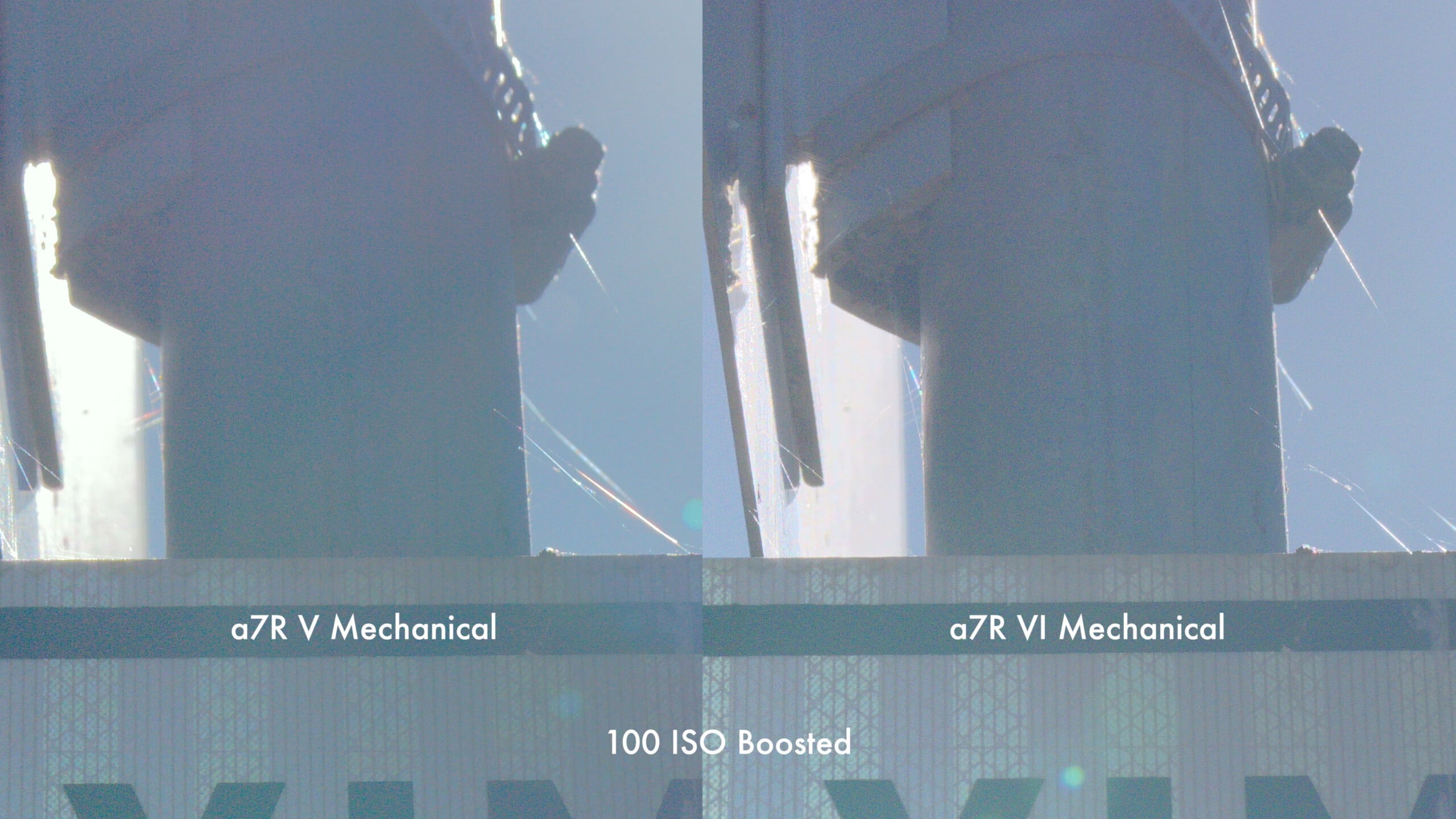

What about when using the electronic shutter, which is required to take advantage of the a7R VI’s faster shooting speeds and Pre-Capture Shooting? While there is a slight hit to dynamic range when using the electronic shutter, it is pretty minor, and dynamic range remains excellent.

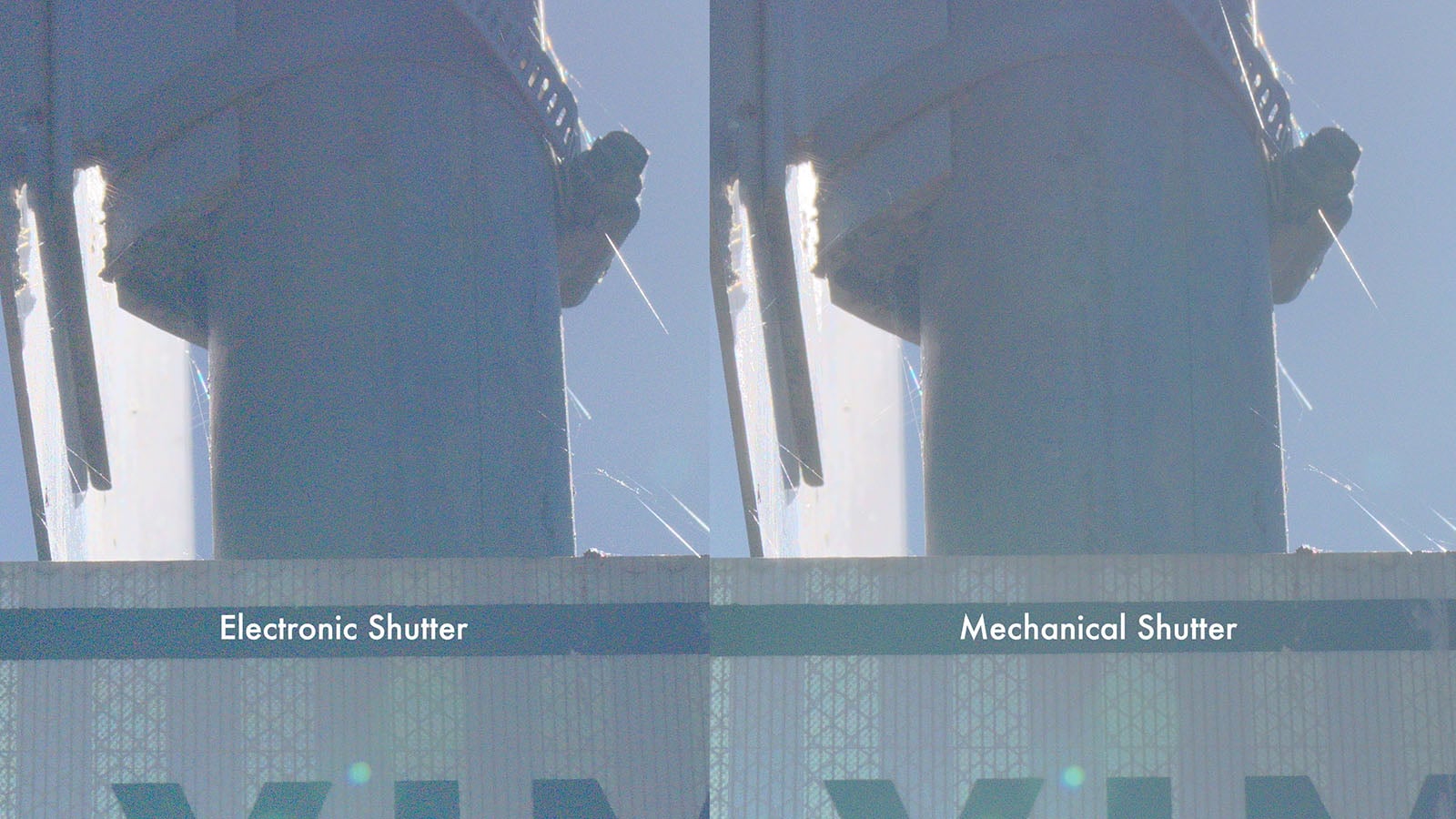
When possible, using the mechanical shutter makes sense, as it affords you the best image quality. However, I didn’t hesitate to use the electronic shutter when the situation demanded it, because I knew I wasn’t really giving up much. The image quality is still outstanding and RAW files eminently versatile.
Sony has also made some improvements to automatic white balance, which may not sound particularly exciting, but I did notice it out in the field. The camera combines a visible-light and IR sensor with deep learning to improve AWB accuracy, particularly in challenging scenarios.
With some prior Sony cameras, I’ve found that shaded areas or scenes with a lot of color casting can end up being neutered, often appearing much cooler than they did to my eyes in real life. The a7R VI has seemingly overcome this issue, and I was seeing colors that were generally truer to life. While yes, I can easily adjust white balance to my heart’s content when processing RAW files, I still prefer working from an accurate foundation.


As expected, the Sony a7R VI delivers incredible image quality. Its predecessors were celebrated for their image quality, and the a7R VI will be no exception. The best got better.

Note: Due to incompatibility with publicly available software at the time of this review, including my primary workflow tools Adobe Lightroom Classic, Adobe Photoshop, and Adobe Camera Raw, I was forced to process a7R VI RAW files inside a beta version of Sony Imaging Edge Desktop (IEDT) for this review. As of May 19, Sony a7R VI RAW files are supported inside Adobe Camera RAW and Lightroom Classic support arrives on May 27. I will be doing a follow-up story that looks closer at the a7R VI’s image quality.






Video: Much Better but Not Perfect
The move to a new, faster image sensor and processor pays dividends in the video department, too.
The a7R VI offers 8K recording like its predecessor, but now it’s up to 30p, up from 24p. It also now records 8K video with around 17 milliseconds of rolling shutter, way down from 38 milliseconds with the a7R V. This makes 8K recording dramatically more usable than before, although there remains a small 1.2 times crop factor. It would have been nice to have full width oversampled 8K recording like what the Nikon Z8 and Canon EOS R5 II offer.
In 4K recording, readout speeds are excellent, down to around just eight milliseconds in full width. Rolling shutter will rarely be a concern when shooting 4K, which is good news for most users.
However, there’s a downside. 4K image quality is good, but not great. The a7R VI isn’t sampling all the pixels on the sensor, so the image can be a bit soft. Some users may prefer to shoot in 8K even for their 4K projects, which will deliver a better image, albeit only at up 30p and with a slight crop.
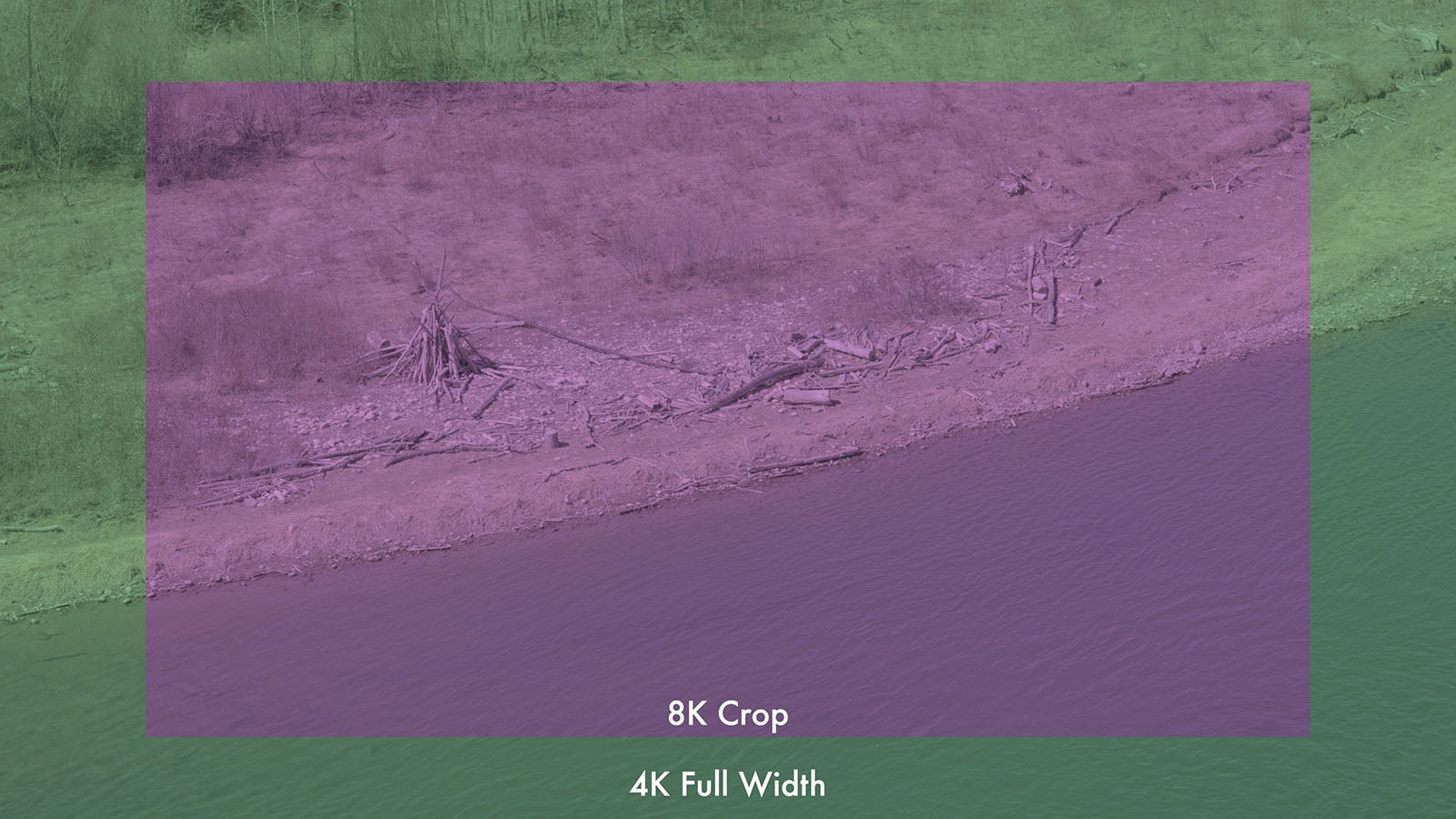
There’s also 4Kp120 recording now, which is a great new addition. The quality is strong, although again, there is a crop.
A new “Dual Gain” readout option, similar to what the Panasonic S1 II includes, can increase dynamic range when recording in Log. The cost is slower readout, about 20 milliseconds instead of eight, and a 30p recording cap. But the dynamic range is decidedly better with Dual Gain recording, so it may be a worthwhile tradeoff.
There’s no question that the a7R VI is a significantly better video camera than the a7R V. It’s not even close. The better modes, much faster readout speeds, and other new features like 32-bit float audio recording with the new XLR-A4 attachment elevate Sony’s new camera. Plus the autofocus, which was already a strength with the a7R V, is even better in the a7R VI.
However, there are still some glaring omissions. There are no waveforms, no internal RAW recording, and open gate is missing.
For some, the a7R VI could absolutely succeed as a professional video camera, but it’s hard not to find some of the compromises disappointing. This is not quite a great hybrid camera, although it can certainly capture excellent video and could believably meet the video needs of some high-end users. I would have been hard-pressed to say the same of the a7R V.
The Sony a7R VI Is the Perfect Camera for Me and Maybe for You Too
 Is the Sony a7R VI a faultless camera? No, certainly not. It has some drawbacks in the video department that hold it back from being the hybrid camera to beat. But for still photographers, the a7R VI comes very close to perfection, and for me, it’s more than close enough.
Broadly speaking, “nature” photography is my favorite, including landscapes and wildlife. For landscapes, I want the most resolving power and dynamic range possible. On the other hand, for wildlife, megapixels alone mean little if autofocus and shooting speeds can’t keep up. What good is 66.8 megapixels when photographing unpredictable, fast-paced action if an autofocus system lacks precision and pace and continuous shooting performance putters along? Well, I’ll tell you, it’s no good at all. They’d be wasted pixels for me.


For a very long time, Sony’s a7R series has expertly ticked that first box, resolution, while leaving something to be desired when it comes to the rest. No longer. With the a7R VI, every photography-oriented feature I care about is in one camera, with zero compromise and absolutely no meaningful tradeoffs.

At the very top of this review, I said the a7R VI might be the last camera some photographers ever “need” to buy. I truly believe that. Not because better cameras won’t come along — they will — but because I believe that for the vast majority of photographers, the a7R VI has all the features and performance they require to do work they are proud of while having a good time doing it. If you can’t achieve the photographic results you want with this camera, then you’re an extreme edge case. These edge cases are why flagship cameras like the a9 III and a1 II exist.

The a7R VI captures photos with more resolution than I need for even massive prints, delivers excellent image quality, offers swift and reliable autofocus, and shoots fast. It is ruggedly built and able to withstand professional demands. The overall user experience is very good with only minor drawbacks.
I’ve reviewed nearly a hundred cameras by now, including plenty of professional flagships. In nearly every single case, there is some big “but” waiting just around the corner. Even the very best cameras come with a caveat. They seldom prevent a camera from being great, but they often render it a suboptimal choice for some group of photographers. I’ve used the a7R VI for weeks, and I cannot find that asterisk lurking in the shadows. At this point, I don’t think one exists. Sony has killed the boogeyman.

Are There Alternatives?
For photographers who really only care about image quality and don’t need speed or overall performance, the Sony a7R IV and a7R V remain perfectly reasonable options at prices lower than the a7R VI’s $4,499 asking price. For that matter, the a7C R is also a great choice for photographers who want to take really sharp, high-resolution photos in single-shot mode and don’t require the latest and greatest autofocus performance.
Remaining in the Sony ecosystem, well-heeled shooters who want high resolution but want even more performance than the a7R VI offers, the a1 II is the obvious choice. It is still Sony’s most versatile and performant camera overall, though I’d personally rather have $2,000 and nearly 17 extra megapixels at my disposal than a faster sensor.
Outside Sony’s Alpha offerings, there are plenty of 40-something megapixel cameras that are fast and capture great photos. The Canon EOS R5 II, Nikon Z8, and Panasonic S1R II are all currently cheaper than the a7R VI and offer strong combinations of resolution and speed. None of them comes very close to matching the a7R VI’s megapixel count, but they’re all extremely good full-frame cameras in this same segment.

Should You Buy It?
Yes. In Sony’s long legacy of exceptional, often class-leading mirrorless cameras, the Sony a7R VI is arguably the most impressive camera Sony has ever released.
Affiliate Disclosure PetaPixel articles may include affiliate links; we may earn a commission if you buy through one.