Photographer Spends Night on Freezing Mountain to Capture Rare Triple Galaxy Arch
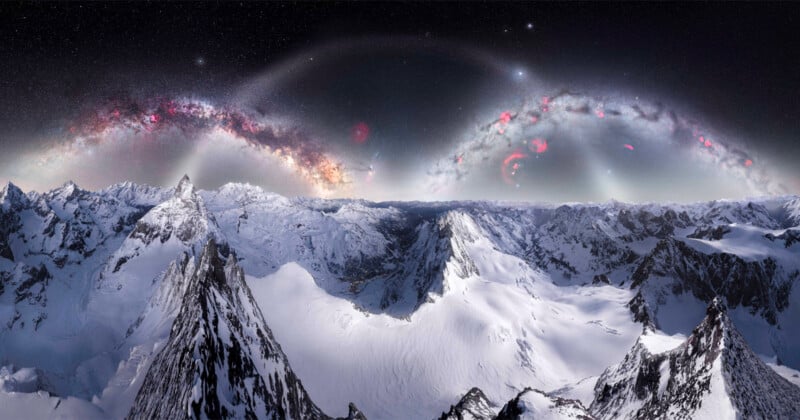
Few people get to see the full splendor of the Milky Way Galaxy arch — even fewer get to see the summer and winter arms in the same night.
Intrepid photographer Angel Fux had to meticulously plan her trip to the top of Dent d’Hérens on the border of Italy and Switzerland — a summit just under 14,000 feet high near the Matterhorn — where she would spend the night in temperatures approaching minus 28 degrees Celsius (minus 18 degrees Fahrenheit).
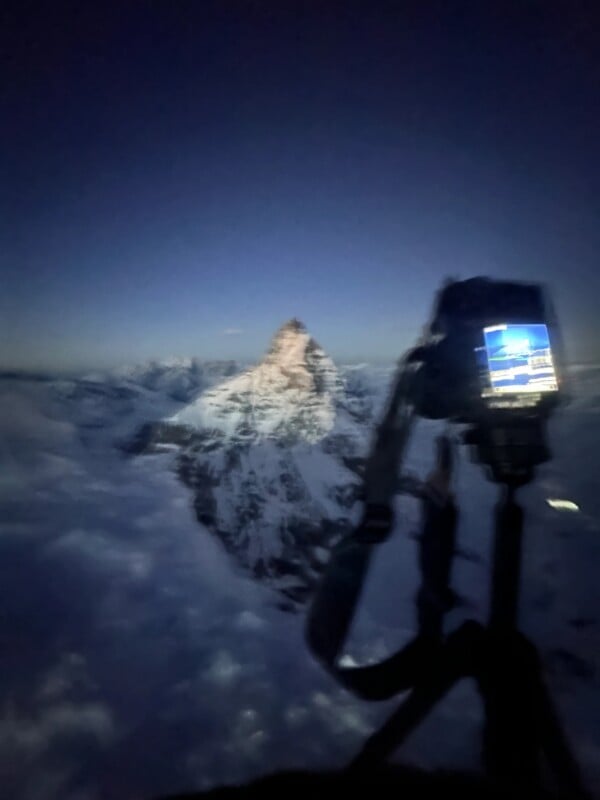
A double Milky Way Galaxy arch is only visible to people on Earth for a short period of time each year, around the equinox.
“I first discovered the phenomenon two or three years ago, and from the moment I understood what it was, I knew I wanted to photograph it,” Fux tells PetaPixel.
“I attempted it for the first time last year from around 3,000 meters [9,800 feet], and the image received a lot of attention. I have since noticed more and more photographers attempting it, which I find genuinely exciting.”
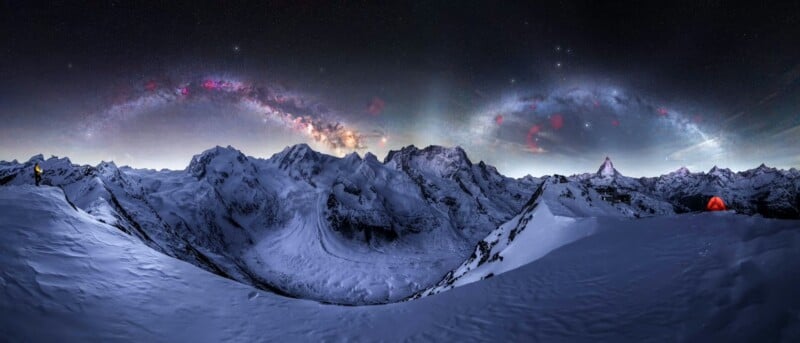
But to get a better photo, Fux needed darker skies, and that meant going higher. The Dent d’Hérens was the perfect vantage point, but it’s a summit that even the most serious of climbers may not attempt.
“Photographers do not go there, certainly not in winter, certainly not at night,” Fux, who lives in the Alps, writes on her blog. “The gear required for astrophotography and the gear required for alpine climbing are simply incompatible in most situations.”
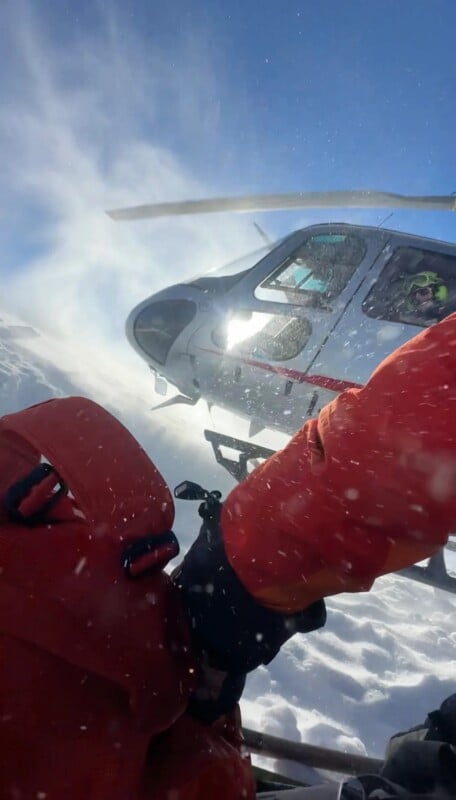
Fux enlisted the help of mountain guide Richard Lehner. Together, they hatched a plan to get a helicopter lift to the top of the mountain.
Along with her astro-modified Nikon Z6 II, Nikkor Z 20mm f/1.8, and Benro Polaris star tracker, Fux had to bring a sleeping bag rated for sleeping in minus 30 degrees Celsius (minus 22 Fahrenheit), three-layer mountaineering boots with attachable crampons, and lots of warm clothing.
“We also had a rope and harness system prepared because once on the summit, I had to be connected at all times when outside the tent,” adds Fux. “Because the cornices surrounding the area made any unroped movement genuinely dangerous.”
There was a serious chance that the helicopter might not be able to make it up the mountain for their return trip. The severity of the trip made Fux hesitant about telling family and friends about her plans.
“When I showed my parents where we would be landing and spending the night, it looked like what it was — high mountaineering — and they went into a fairly stressed mode, asking why on earth I had to go to a place like that for an image,” she says.
“My answer is usually that if something moves me that deeply, and the risk is manageable, then why not pursue it?”
None of this was theater. It was the minimum required to make that night survivable.
Fux went early to Gornergrat to acclimate and practice with her equipment. It was there she discovered a problem with her camera.
“It shot an entire hour and a half sequence and recorded nothing,” she says. “The images existed on the display but not on the card. Apparently, this is a known issue with mirrorless cameras in extreme cold, but I had never experienced it before.”
“Turns out that switching the camera off and on again helps,” she adds. “But it also means checking your images regularly to make sure you’re not missing any shots.”
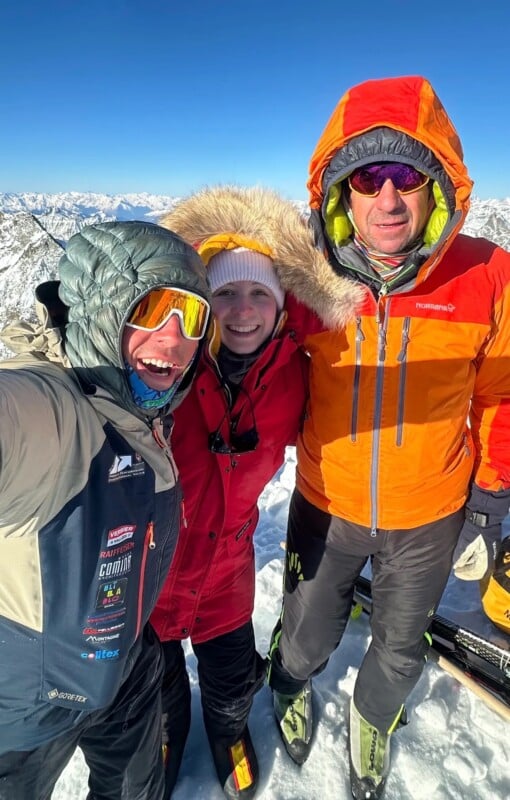
Finally, on March 19, Fux and her guide Richard, along with his son Arnaud, flew to the summit of Dent d’Hérens.
“The moment the helicopter left, and the sound faded, something settled in,” she writes. “There was no going back until morning at best.”
Celestial Surprise
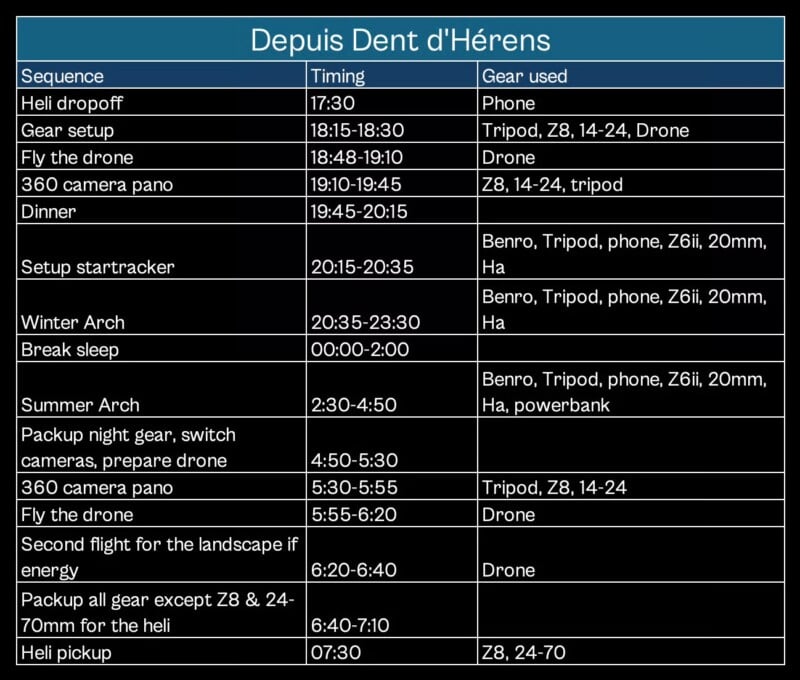
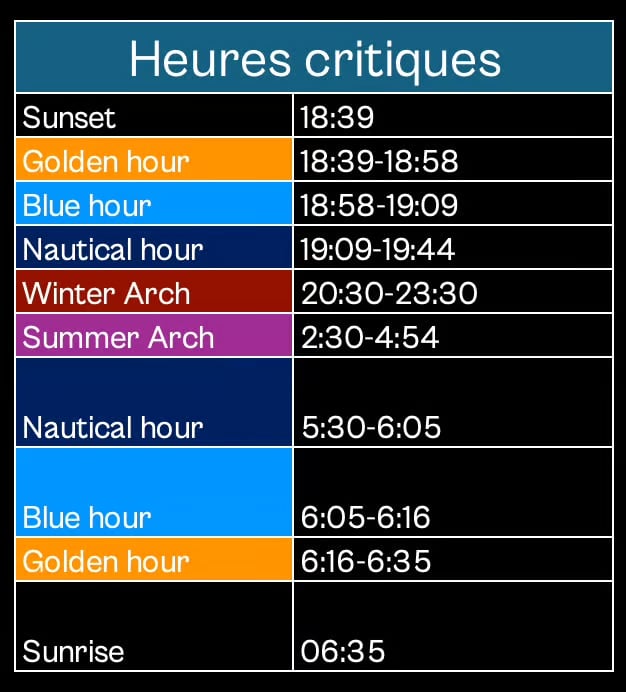
In the first half of the night, the winter arch appeared. In the second half, the summer arch came out. Out of the two, the summer arch is the better-known one, as it contains the galactic center and is densely populated.
But as Fux reviewed the images, she noticed a third arch, which didn’t belong to the Milky Way Galaxy.
“It was a faint oval arch extending in the direction opposite to the Sun, crossing the frame in a subtle but unmistakable gradient,” she says.
“This is called the Gegenschein, or counterglow, which is a diffuse brightening of the night sky caused by sunlight backscattering off interplanetary dust, directly opposite the Sun’s position.”
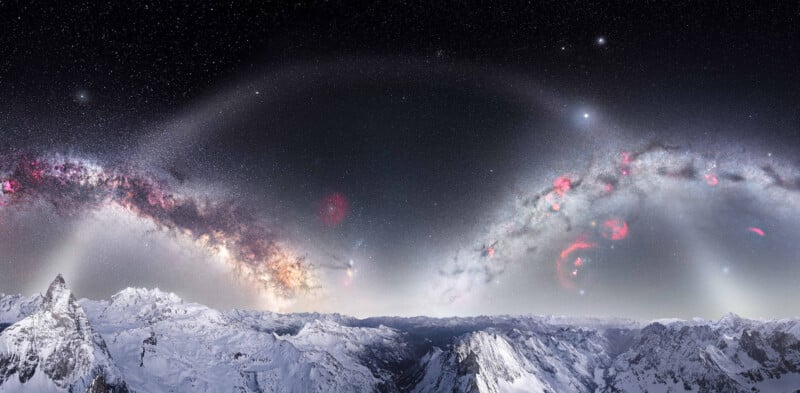
“It is extremely faint and rarely captured in photography. It was there, visible even in the unprocessed files, which told me immediately that the final image would contain more than I had planned for,” she adds.
The double arch had become the triple arch. And after safely returning to a more sensible altitude, she recovered from her efforts, and began to edit.
40 Hours and 300 Gigabytes
Fux says on her blog that it was the longest time she had ever spent editing a single image — 40 hours.
“This time I worked entirely with FITS files, a format used in scientific astronomy that stores raw light data with a much higher bit depth and dynamic range than standard RAW files opened directly in Photoshop,” she explains.
“While Photoshop works in 16-bit, FITS files preserve the full precision of your sensor data, which means more information survives the stacking process.”
“To get there, I stacked each panorama panel in PixInsight, a professional astronomical imaging software, then stitched the FITS panoramas in AstroPixel Processor, the only software that can currently mosaic FITS frames, before returning to PixInsight for calibration and final sky processing,” she continues.
Fux says the process was gruelling: the first 10 hours were spent just looking at numbers, histograms, calibration scripts, and lines of code — no images
“For someone who is accustomed to seeing what they are working on, this was genuinely disorienting,” she adds.
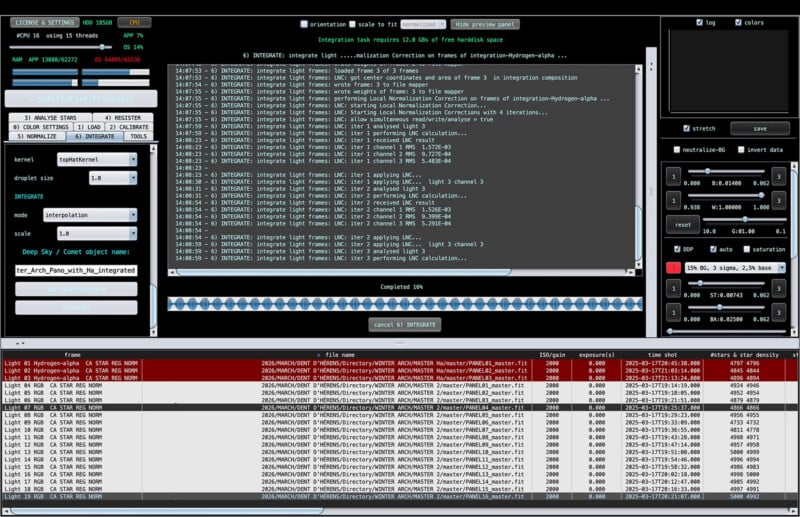
The final image contains 260 individual exposures: 17 panels for the winter arch and 16 for the summer arch, each panel being a stack of four tracked frames at 40 seconds, supplemented with additional H-alpha data captured through a 12nm clip-in filter, plus 32 landscape shots taken at nautical twilight. That’s a total project size of roughly 300 gigabytes.
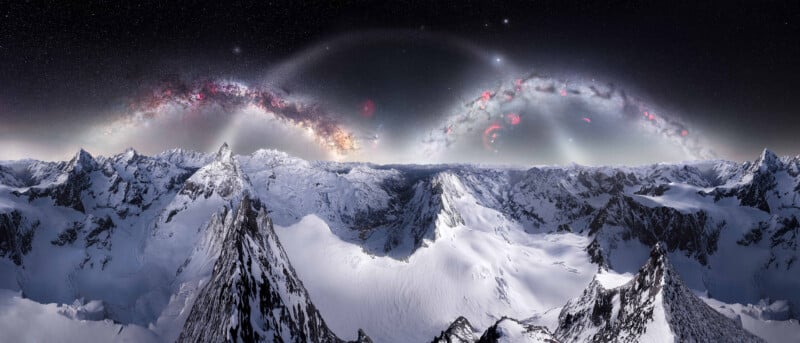
It’s a unique view of the Alps and a celestial phenomenon that has never been captured in this exact way before. It’s also a view that is fast disappearing as artificial light continues to pollute the skies.
“In Europe, if you want truly the darkest skies possible and an unobstructed 360-degree horizon, you have to go up — light pollution is everywhere at lower elevations,” she says.
And as for her worried parents?
“When I came back and shared the final image a few days later, their reaction completely changed,” she says. “They told me they wanted to be the first to get a large print of it. So I think it answered the question for them.”
More of Fux’s work can be found on her website and Instagram.
Image creditsPhotographs by Angel Fux
Affiliate Disclosure PetaPixel articles may include affiliate links; we may earn a commission if you buy through one.