Space

Photography and astronomy offer humanity a fascinating view into the universe.

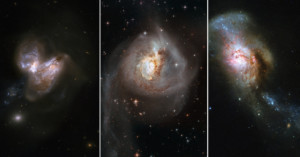
Six Incredible Photos of Galaxies Colliding

As part of its celebration of a new year, the NASA/ESA Hubble Space Telescope has published six different galaxy mergers. These rare astronomical phenomena were captured as part of a recent survey to investigate the rate of new star formations.

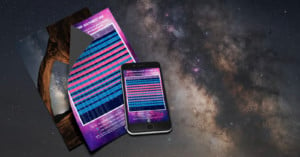
Use This Astro Calendar to Plan Your Milky Way Shots This Year

Planning is key to capturing the best Milky Way images. Unlike other types of photography, shooting our galaxy requires you to consider many astronomical factors, like the sunset, the moon phase, and the Milky Way’s location in the sky.
Photographer Captures ISS Passing Between Jupiter and Saturn

Last night, photographers and stargazers around the world were treated to the Great Conjunction, a event in which Jupiter and Saturn appeared closer to each other in the sky than they have for hundreds of years. Countless photos were undoubtedly snapped of the rare sight, but photographer Jason De Freitas captured a particularly lucky one a few days ago showing the ISS zipping between the two planets.
Stellar Astrophotography Tips for Upcoming Astronomical Phenomenons

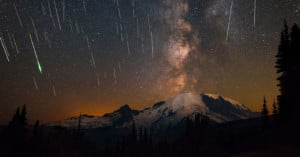
With several astrolnomical events coinciding with the Winter Solstice, including the Jupiter-Saturn Conjunction and the Ursids Meteor Shower, December 21st is poised to be a prime opportunity for practicing nighttime and astrophotography skills.

Nikon Z 14-24mm f/2.8 S Review for Astrophotography

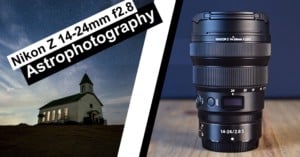
I took the Nikon Z 14-24mm f/2.8 S out to see how it performed taking astrophotography and nightscape photos with a Nikon Z6. I’ve compiled notes and comparison images to help those out who are looking at purchasing this lens for astrophotography and nightscape photos.

New Photo Map of the Milky Way Shows Never-Before-Seen Details

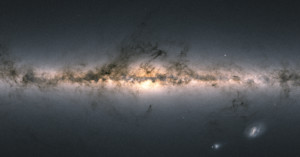
The European Space Agency (ESA) satellite observatory Gaia, whose mission is to produce a 3D map of the Milky Way, has sent back a new and updated map of the galaxy that contains detailed information on more than 1.8 billion sources and is being called a "treasure trove for astronomers."

Photographer Catches the ISS Crossing the Sun and Moon

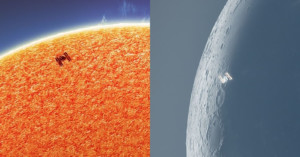
Photographer Andrew McCarthy is known for shooting incredible astrophotography images from his backyard in Sacramento, California. He recently added two more jaw-dropping images to his portfolio: ultra-clear views of the International Space Station (ISS) crossing the Sun and Moon.

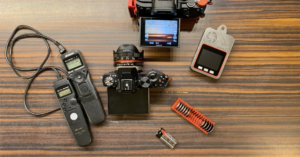
How to Make a DIY Camera Timer for About $60

A must-have tool when shooting a number of photography genres, including the night sky, is a remote release trigger for your camera. Triggers range from very simple cable releases over phone apps that connect to your camera’s Wi-Fi to very specialized intervalometers. I wanted to build something even better...

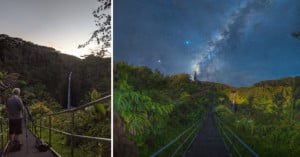
Akaka Falls by Moonlight: How I Got the Shot

Summer and Fall are wonderful for photographing the Milky Way here in Hawai'i. We have many locations with dark skies and breathtaking scenery too. In October, the brightest part of the Milky Way (galactic core) is near the horizon at sunset; by November it'll be below the horizon when it gets dark.

NASA Turns Space Photos Into Music

NASA has a new project that turns space photos into sounds. Using sonification, images obtained from telescopes are turned into "music" that sounds like what you'd hear when your operating system boots up.

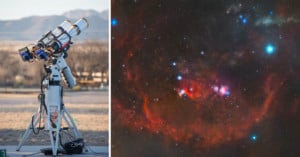
I Shot All These Photos from My Yard — Here’s How You Can Do It Too

As recently as the early 1900s, astronomers believed the Milky Way was all that existed in the universe. That view persisted until 1923, when Edwin Hubble used glass plate photographs of the Andromeda galaxy (then still thought to be just a nebula) to discover that the universe was unimaginably larger. His discovery was so significant that NASA’s first space telescope was given his name.

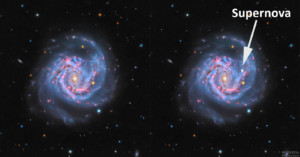
NASA Shares Time-Lapse of Exploding Star that Outshone Its Entire Galaxy

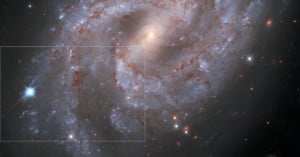
NASA has just published a stunning, one-of-a-kind time-lapse captured by the Hubble telescope. The short video shows an exploding star (AKA a supernova) in a galaxy 70-million light-years from Earth—a fireworks show so bright it outshone every other star in its galaxy before fading into oblivion.

Sigma Sent Two Cameras Into ‘Space’ to Capture Earth from 100,000 Feet

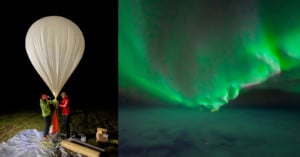
Sigma UK recently teamed up with the company Sent Into Space to... well... send a couple of their cameras to space. The group tied a pair of Sigma fp's to two weather balloons and sent them each to an altitude of ~100,000 feet so they could capture some stunning photos and 4K RAW video of Earth from the upper atmosphere.

This Tilt-Shift Photo of Andromeda Was Shot Using a DIY Adapter

The Royal Observatory Greenwich’s Insight Investment 2020 Astrophotographer of the Year, Nicolas Lefaudeux, has revealed his technique and the simple DIY adapter that made his award-winning image of the Andromeda galaxy possible.

You Can Shoot 96MP Pixel-Shift Astro Photos with the Panasonic Lumix S5

The Panasonic Lumix S5 has just been released in New Zealand, and I received mine a few days ago. Last night, with clear skies, I took it to the south coast of Wellington, New Zealand, to see what the new advances in High Resolution mode included in the S5 could bring.

This 546 Megapixel Astro Mosaic Took 336 Hours and 208,000 Photos

The folks at French startup Vaonis recently put their robotic camera telescope Stellina through its most intense test yet: capturing a 208,000-photo mosaic of the night sky, without any need for human input or astrophotography expertise. The result is breathtaking.

Canon EOS R5 vs R6 Astrophotography and High ISO Comparison

Photographer Brent Hall recently went out to shoot a comparison video that a lot of Canon shooters are eager to see: the brand new EOS R5 vs the EOS R6, for astrophotography, at high ISO. Does the lower resolution sensor of the R6 give it a low-light advantage?

This is a Milky Way Timelapse Shot on 35mm Film

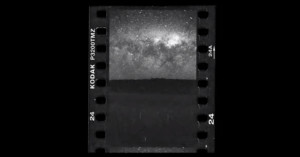
Photographer Jason De Freitas recently took his 35mm film camera out into the night and spent over an hour manually shooting a photo every minute. He then turned those photos into this 30-second time-lapse of the Milky Way.

This Full Astrophotography Workshop is Now Available for Free on YouTube

Ian Norman and Diana Southern over at Lonely Speck just uploaded their full 2016 astrophotography workshop to YouTube for free. This incredible resource covers everything from getting the shot, to basic editing, image stacking, and panorama stitching. They even included the Q&A from the end of the meetup!

This is What Comet NEOWISE Looks Like from the ISS

As photographers across the world are trying their hands at shooting Comet NEOWISE before it's gone for the next 6,000 years, astronauts onboard the ISS have a nice view of the comet that isn't obscured by Earth's atmosphere. Here's a 7-minute real-time video showing what NEOWISE looks like from about 254 miles above our planet's surface.

New Solar Orbiter Sends Back Closest Pictures Ever Taken of the Sun

NASA and the ESA's new Solar Orbiter is off to an auspicious start. The spacecraft's very first images of the Sun—captured from within 48 million miles of our closest star—weren't just taken from closer than ever before... they've already revealed a new solar phenomenon.