Kodak Launches Kodachrome, A New Magazine for Film and Art Lovers
Kodak has just launched Issue #1 of Kodachrome Magazine, a new limited edition journal that's geared toward people who love "art, film and analog culture."
Kodak has just launched Issue #1 of Kodachrome Magazine, a new limited edition journal that's geared toward people who love "art, film and analog culture."
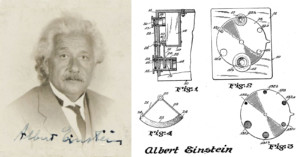
Here's an interesting piece of photo history: five years before Kodak’s automatic Super Six-20, Dr. Albert Einstein received a patent for a camera which could automatically determine the proper aperture and exposure to take a photograph. Yes, that Einstein.
I remember how excited I was when I first started posting on Instagram. I finally had a platform to get my work seen, tell my stories, share my life and get inspired by those of others. It was all about creativity and art and the work. It was fair and ethical and just awesome!
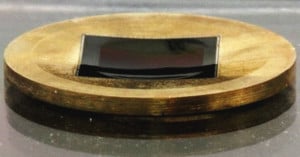
The development of curved image sensors may be the biggest advance in camera technology in decades, allowing for simpler, flatter lenses with larger apertures as well as dramatically better image quality. Canon, Nikon, and Sony are working on the technology, and now Microsoft Research has developed a sensor with three times more curvature than previously achieved.
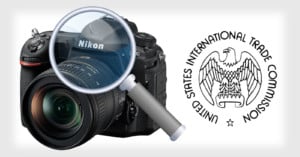
There have been some legal rumblings in the camera industry over the past couple of months. It's an ongoing patent dispute between Nikon and two other companies involved in camera technologies: Carl Zeiss and ASML. The latest news is that the United States has opened an official patent infringement investigation into Nikon's products.
Oliphant Backdrops are iconic backdrops used in portrait photography. You've probably seen these backdrops in photos by Annie Leibovitz and many other famous photographers. Art always comes with a price and rightfully so, and the biggest question many people ask is how much the backdrops cost.
Android co-founder Andy Rubin and his new startup company, Essential Products, just launched its first product: a powerful smartphone called the Essential Phone. Its photo-related features include dual 13MP cameras, 4K video, and a dedicated monochrome sensor for "true" black-and-white photography.
Google received praise from photographers last year when it made its $150 Nik Collection of popular photo editing software 100% free. But alas, all good things come to an end: Google has quietly announced that it will be abandoning the Nik Collection from here on out.
A new copyright protection service called Binded just launched this week. It's actually a rebrand of the company formerly known as Blockai, and the purpose remains the same: using the Bitcoin blockchain to protect photographers' copyrights.
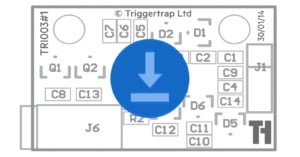
As Triggertrap continues winding down its business, their Triggertrap Mobile Dongles are becoming increasingly difficult to find. But there's some good news now: the company has decided to open source the hardware, making it is possible to build your own dongle.
I discovered this week that my 500px Marketplace photo is being sold elsewhere, and I haven't gotten a dime of sales (yet). If you sell photos through 500px, this is something you should be aware of.
The German start-up behind the Panono panoramic ball camera has filed for insolvency proceedings in Berlin, making it very unlikely that backers of their $1.25 million Indiegogo campaign will ever get their hands on their camera.
Citing a “potential safety issue”, Profoto is recalling the battery of their powerful B1X monolight, which was announced only 10 days ago.
Photokina—the world's leading trade show on photography, videography, and imaging—is making some big changes. Starting in 2018, the show will begin to happen every year (currently, Photokina happens every other year); it also plans to 'reposition' itself to cover a broader range of products.
Imagine, if you will, that the photography industry is a very large swimming pool. Not one of those backyard models, but rather an Olympic sized pool. And this very large pool is filled with photographers. However, we will call them swimmers, as that’s how analogies work.
Heads up: if you're the new owner of a camera drone in the United States and you're not planning to fly the drone commercially, you no longer have to register the drone with the FAA. That's the decision handed down today by a federal court in Washington, D.C.
If you were to ask me whether or not I was surprised that there is another scandal in the photojournalism community, I would reply with a resounding and exasperated, “Hell no.” It seems that we can’t go a year without a new photo manipulation scandal. The Souvid Datta scandal is no different.
Here's the crazy corner Nikon is in: they can claim a modest 7% increase in operating income for the fiscal year that they just finished, but had far lower net sales and, with restructuring costs, had a significant loss. Nikon predicts that they'll recover to profitability next fiscal year, but with lower sales.
Big news in the photo industry today: Polaroid's brand and intellectual property has been acquired by the largest shareholder of The Impossible Project, Polaroid announced. Now a single family has control of both the Polaroid brand and The Impossible Project.
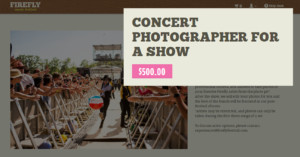
A popular music festival is offering a new "fan experience" that's raising eyebrows among some photographers: pay $500, and you'll have the opportunity to shoot concert photos for the festival from the photo pit.
Google announced this week that they are releasing a new certification standard that they are calling “Street View Ready”. This certification will be used for 360° cameras that are able to publish to Street View, and are guaranteed to support the level of quality required for Google’s 360-degree mapping service.
Snap Inc., the parent company of image and video sharing app Snapchat, reported their quarterly financial results for the first time since going public on Wednesday, and it isn’t pretty. Snap’s user growth slowed down and revenue was below Wall Street expectations for the quarter.
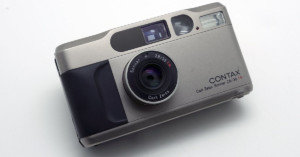
Over the past several years, I have watched as the prices for compact film cameras have steadily increased into the sort of price ranges usually reserved for collectible cameras.
I was sitting in my dorm room at Arizona State University. To my left I had my XBox on (as it was pretty much 24/7) with some racing game on pause. In front of me I had my future, for I was entering a photography competition that I believed would make me famous and rich beyond my wildest dreams.
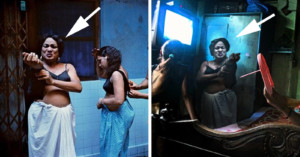
Yesterday, we revealed that award-winning photographer Souvid Datta had published a photo back in 2014 in which a woman had been copied-and-pasted from a 1978 photo by renowned documentary photographer Mary Ellen Mark. Datta today admitted that he had indeed doctored that photo, as well as "appropriating" other photographers' work as his own.
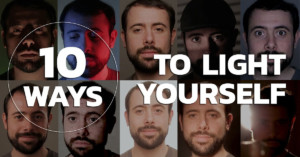
The Lighting Channel made this rapid-fire 1-minute video with examples of 10 different ways you can light a face to create different moods and themes, from "horror" to "1920s beauty."
ME: I don’t want to be a dick but could you please stop using my image on your website? …
After years of declining sales figures and the requisite reporting on the industry's "imminent" collapse, it seems the camera market has finally plateaued. The latest CIPA numbers show modest growth in some areas and neutral numbers elsewhere, hinting that a long sales slump might finally be over.
The award-winning photographer Souvid Datta found himself in the middle of a controversy this week when his photo of a young sex trafficking victim was used to promote a photo contest. But now a serious new accusation has emerged that threatens Datta's credibility as a photojournalist: one of plagiarism.
Just days after Instagram announced that they had reached a whopping 700 million users, PBS NewsHour headed over to Instagram Headquarters in Silicon Valley to have a chat with CEO and Co-Founder Kevin Systrom.
We tend to treat the ethics of taking photographs in a very much black and white fashion. We judge "He should never have shot that" or alternatively "She is on firm ground shooting that, it is OK" and then arguments revolve around that, never resolving anything.
I’ve never entered a photo contest. In part because I have a fear of not winning and confronting my own mediocrity. But mostly because I have never viewed photography as sport.
The Columbia Journalism Review recently surveyed 30 veteran freelance photojournalists to find out what publications treat photographers best, and how much they pay. What they found is revealing, maybe even encouraging, and definitely useful information for the photogs out there.
Well-known photographer and photo industry figure Sal Cincotta is finding himself at the center of a heated online debate after a number of his photos were selected as winners of the ShutterFest photo conference's Image Competition. Cincotta is the owner of ShutterFest.
Instagram isn't just growing, it's growing faster than ever. Earlier today, the photo sharing giant announced that it has added 100 million new users in the last four months alone, bringing the total Instagram user count to a whopping 700M.
Sony sent out a press release a week ago that went immediately viral within the photography community: "Sony Overtakes #2 Position in U.S. Full-Frame Interchangeable Lens Camera Market."
Yesterday I found out that one of my photos was misused, stolen if you ask me, by a major international company. Sadly this type of thing is so common that it’s almost not worth writing about. However, it’s what happened during my quest to call-out the company that really captured my attention.
Over the past several years, the Web has been moving away from having separate website URLs for mobile and desktop versions and toward having a single "responsive" website that changes its look depending on what device you're visiting with. Flickr today announced that its main website has finally caught up to this trend.
8K is the future... at least that's what Matt Granger believes. And so he recorded this educational video at the YouTube studio in NYC to prove his point, explain some of the benefits and pitfalls of ultra-high res footage, and convince you to adopt 8K just as soon as you can.
Sony's DI department is probably scrambling around in emergency mode right now. According to a "solid source," a truck carrying all of Sony's gear for the NAB show was stolen en route to Vegas.
The drone industry is still growing at a extremely fast pace: in 2016, the sales of drones in the United States more than doubled, increasing a whopping 117%.
Sony has just passed Nikon to become the #2 company in the United States for full-frame interchangeable lens camera sales.
GoPro has announced a trade-up program in which you can get $100 off a HERO5 Black or $50 off a HERO5 Session when you trade-in your older Hero camera. This offer is available starting now, and you can do the swap by going to the trade-up page.
Pentax has a long legacy in the modern history of photography, but its days may be numbered: Ricoh is said to be considering killing off its consumer camera business, which is bleeding money.
Sad news in the photo industry today: Australia's biggest newspaper company, News Corp, has announced that it will be gutting its photography departments at newspapers across the country, axing most of its staff photographer and subeditor positions in an effort to cut costs.
Since late 2015, rumors and reports have claimed that Samsung was killing off its digital camera business, and the company subsequently pulled out of camera markets around the world while announcing zero new products. Now a new report is confirming that Samsung has indeed ditched the business, and largely due to the rise of smartphone cameras.
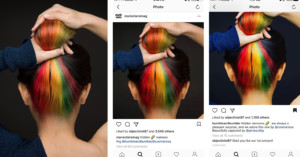
In the world of Instagram, there is a practice known as botting -- and I hate it. For the uninitiated, botting is the process of tying your Instagram account to a wide variety of automation software, which charge users small sums of money to juice their profile. At the heart of it, it’s a pay-to-play relationship where you’re paying money to grow your following on Instagram.
There’s a very succinct analogy by Marshall McLuhan, summing up our society’s focus on the past: …
As camera makers struggle to innovate, consumers are finding little need to upgrade. The market is slowing to the point of inertia—manufacturers need to take a left field approach to stay competitive.
In the New York Times 2020 Report about the future of the journalism at the Times, the paper put this point first: "The report needs to become more visual." And now, it looks like the publication is putting its money where its report is.