Technology

Samsung’s New Camera Module Promises Steadier & Brighter Shots for Smartphones

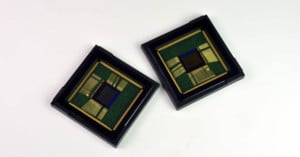
Samsung seems to be hard at work making sure that smartphone camera quality continues to improve in leaps and bounds. In addition to debuting ISOCELL technology a couple of weeks ago, the company has now announced a new smartphone camera module that will offer twice the optical image stabilization of anything on the market, while also capturing better photos in low light.

Researchers Develop Method for Getting High-Quality Photos from Crappy Lenses

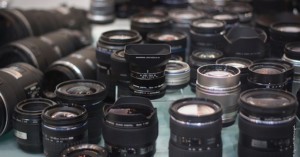
There are many reason high-quality lenses cost as much as they do (and in some cases that is quite a lot), and one of them is that high-end lenses use many specially-designed elements that are perfectly-positioned to counteract aberrations and distortions.

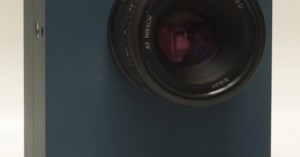
But what if you could correct for all of that in post? Automatically? With just the click of a button? You could theoretically use a crappy lens and generate high-end results. Well, that's what researchers at the University of British Columbia are working on, and so far their results are very promising.

New Camera Tech Combines Ultra-Wide View with Fine Detail Capture

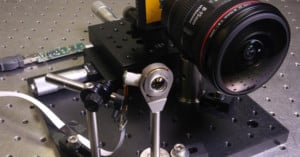
Researchers at the University of California-San Diego are fine-tuning some new tiny camera technology that could dramatically boost the detail and field of view of smartphone cameras. Joseph Ford, a professor in the university's Jacob School of Engineering, describes the system in a paper to be presented next week at the Optical Society of America's annual meeting.

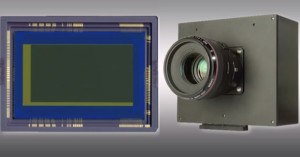
According to Ford, his team will soon have the system -- seen above next to a Canon 5D Mark III setup -- refined to a camera assembly with 85-megapixel resolution, 120-degree field of view and f/2 aperture, all in a package about the size of a walnut.
The OPPO N1 Smartphone is the World’s First to Feature a Rotating Camera

Back in July, Chinese electronics company OPPO confirmed that it was working on an "N-Lens" line of camera-centric devices that would be the "most important flagship series for OPPO going forward."

Well, the first of these devices has officially arrived, and although it is still more of a smartphone with a camera than a camera that can make calls, the phone packs some interesting features, including (according to OPPO) the world's first rotating smartphone camera.
Samsung Debuts ISOCELL Sensor Tech, Promises up to 30% More Dynamic Range

Although the pixel war probably isn't ending anytime soon, a new sensor technology from Samsung shows how yet another company is focusing on improving the tech instead of stacking the spec sheet.

We've seen amazing low-light sensors and dual-pixel AF tech from Canon, organic sensors with insane dynamic range from Fuji and Panasonic, and now new ISOCELL technology from Samsung, which promises substantial increases in color and light sensitivity.

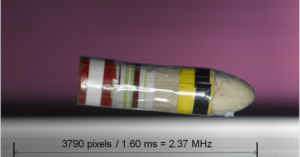
The edgertronic: A Small and Affordable Super Slow-Motion Camera

High resolution, super slow-motion video is usually reserved for movie studios or individuals with very deep pockets. Once the frame rate capabilities reach into the thousands, the price range often hits the tens of thousands.

Two MIT-trained engineers are looking to change all that, and with their new edgertronic super slow motion camera, they've done just that.

Dual Photography Lets You Virtually Move a Camera for Impossible Photos

Want to see some mind-blowing research into photography (from the mid-2000s)? Check out the video above about "Dual Photography," a Stanford-developed technique that allows you to virtually swap the locations of a camera and a projector, allowing you to take pictures from the perspective of the light source instead of the camera sensor.

Four Innovations that Could Revolutionize the Photography Industry

Good or bad, photography as a medium is closely tied to the technological heritage of our cameras. As a result, technological developments often influence the type of gear we use and the type of photographs we take.

With that in mind, here are some areas of innovation that are likely to create even more change in the way we take pictures and the way manufacturers design cameras in the future.

New Tech Totally Eliminates Zoom and AF Noise from Video Soundtracks on the Fly

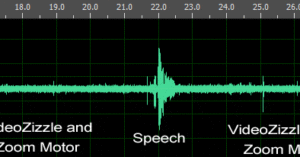
DSLRs and Compact System Cameras are becoming increasingly capable video capture devices in addition to being solid still shooters. But when it comes time to focus or zoom using the lens' or camera's built-in motor, you're often left with glaringly obvious noise on your soundtrack.

So far manufacturers have tackled this problem by introducing silent focusing motor lenses, but one group of engineers is taking a firmware-based approach that seems to work just as well (if not better) and might someday soon do away with zoom and AF noise entirely.

There is No Such Thing as a Perfect Lens

I get asked a couple of questions every time I publish a graph showing Imatest results for multiple copies of lenses like the one below. Most people understand that some copy-to-copy variation is inevitable in the manufacturing process. Most are surprised, though, at how large the sample variation seems to be. Heck, I was surprised at how large the sample variation was when I started doing this kind of testing.

Firefly Footage Captured in 0.01 Lux with Canon’s Amazing Low Light Sensor

jstream.PlayerFactoryIF.create({
base: "eqa292biws.eq.webcdn.stream.ne.jp/www50/eqa292biws/jmc_pub/jmc_swf/player/",
contract_id: 628,
meta_id: 28,
player_id: 1,
width: 620,
height: 349
});

Please enable JavaScript to watch this content.

Back in March, Canon announced that it was working on a special 35mm low-light sensor that would blow away all other competition when it came to seeing things in near complete darkness. In order to further prove that point, the company sent a prototype out to shoot tiny fireflies in less than 0.01lux on Japan's Ishigaki Island.

High-Res DIY Film Scanner Made from a DSLR, Lumber and an Arduino

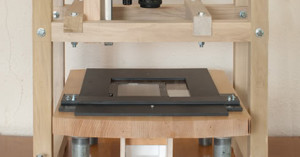
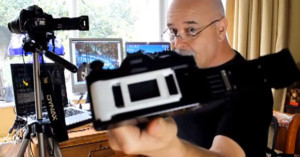
Consumer film scanners don't provide enough detail, and professional models require too much money and pampering. What's a dedicated film nerd to do? For Peter De Smidt, the answer was to build his own high-res scanner using the Nikon D600 and 50mm Micro lens he already had on hand, a bit of lumber and a lot of patience.

Pixy: A Low Cost Camera that Recognizes and Follows Objects by Color

Camera technology is always being used/tweaked in one way or another to yield surprising or novel results. In some cases, that means creating a camera that sees like a bug's eye. In others, one that perceives only motion, like a retina.

The most recent camera innovation we've stumble across falls a bit closer to the second of those. It's called Pixy, and it's a color-detecting camera that might some day soon be the eye with which your friendly neighborhood robot sees and interprets the world.

Rumor: Sony to Launch ‘Extraordinary’ E-Mount Camera with a Moving Sensor

No doubt there are both Sony fans and detractors reading this right now. But if there's one thing even the detractors can't say about Sony at the moment, it's that the company isn't innovating.

Sony's upcoming lens cameras (SmartShots?) are so out there CNET didn't even believe they were real, the rumored full-frame NEX camera has the mirrorless crowd abuzz, and now, it seems the company has yet another "extraordinary" invention on the way.

Fuji is Using 3D Printing and Scanning to Create Near-Flawless Van Gogh Replicas

For those art enthusiasts who just don't have the millions of dollars required to purchase their own original Van Gogh painting, Fujifilm has a solution for you. After seven years of development, the company's "Reliefography" 3D scanning and printing technique is ready to create near-flawless replicas of great works of art, which will be available to the public for tens of thousands instead of tens of millions.

New Nikon Patent Shows On/Off Switch for Anti-Aliasing Filter

When Nikon released its D800E and D7100, people were surprised to learn that these models did without the optical low-pass filter (AKA the anti-aliasing filter). The resulting images from these cameras were sharper, but more easily fell pray to moire patterns in certain situations -- in other words, it was a tradeoff.

But Nikon would like you to have your cake and eat it too, at least according to a recent patent the company filed with the Japanese Patent Office.

Retina-Inspired ‘Dynamic Vision’ Camera Works Like the Human Eye

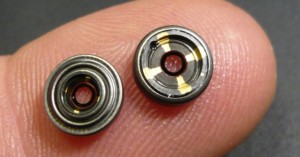
Technology often borrows ideas from nature, and camera technology is no exception. For example, you might remember the bug-inspired compound eye camera we shared just a few months back. Engineers at Swiss company iniLabs don't want to mimic bug eyes, however, they'd rather create something that mimics the human eye. And that's exactly what they did with the new Dynamic Vision Sensor (DVS) 128 camera.

New Telescope Cam Takes Highest-Ever Resolution Photos of the Night Sky

When it comes to visible light photos of the night sky, Hubble has been king. That's because Earth-bound telescopes -- even those with much higher-quality optical systems than Hubble -- must deal with the blurring effects of our planet's atmosphere.

A newly developed camera called VisAO, however, has done away with that problem, and in the process enabled astronomers to take the highest-resolution visible light photos ever captured of the night sky.

FlexCam is a Flexible Camera that Snaps Dynamic One-Shot Panoramas

Companies and researchers are always coming up with interesting new camera concepts and prototypes that approach snapping photos in some unique way. The most recent creation to make its way across our desks is the FlexCam, a panoramic camera array that does away with sweeping or stitching to create panoramas. Instead, you simply bend the camera itself.

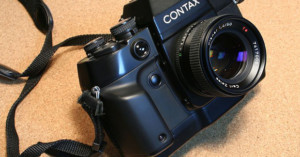
Convert Your Old Film SLR Into a Digital Camera with the DigiPod

The idea of fitting electronics into a film SLR in order to capture digital photos with it is not new. The thing is, most of the ideas we've shared ranged from April Fools jokes to promising concepts that never seem to advance beyond that.

The DigiPod is the first product we've seen actually become a reality. It's a digital cartridge that fits inside your old film SLR, and if it makes it to market, it could be quite groundbreaking.

New Algorithm Can Pick Out Photo Fakes by Looking at Shadows

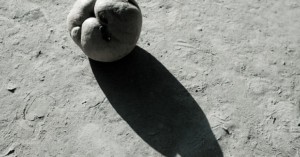
As post-production software continues to become more and more powerful, researchers are doing their best to keep up by developing new methods of spotting digital photo fakes. In the past, we've seen that noise patterns and even Twitter trends can help spot fakes, but a new method out of UC Berkeley is taking a look at something else entirely: the shadows.

This Crazy Rig of 60 DSLRs Can Turn You Into a 3D Selfie Sculpture

Got a few dozen spare DSLRs and fistful of startup capital? Then you, too, could get into the emerging field of 3D selfies, as pioneered by Texas photo studio Captured Dimensions.

Photographer Jordan Williams started the business a few years ago after becoming convinced there was more to 3D printing than making industrial prototypes and the like. He fashioned a 360-degree photo studio in the Dallas suburb of Richardson, outfitted with more than 60 DSLRs, all remoted-out for simultaneous shutter release.

NASA’s Experiments with Digital Cameras in Capturing Shuttle Launches

Ever since June of 2011, NASA has had cause to retire the photographic equipment it used to capture shuttle launches because, well, they don't plan on launching any more shuttles. But before that decision was made, it looks like NASA was finally giving digital photographic equipment a chance to oust the analog cameras they had always used in the past.

Photog Turns His DSLR Monochrome by Swapping Out the Sensor

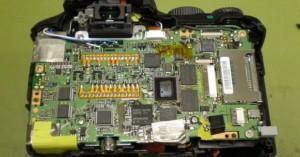
Earlier this month, we showed you how some astrophotographers were turning their standard DSLRs monochrome by physically scratching the color filter array off of their sensor in order to get sharper black-and-white photos.

Another photographer is doing something similar, only instead of scratching off the color array and possibly doing damage to the sensor, he decided to swap out the sensor entirely.

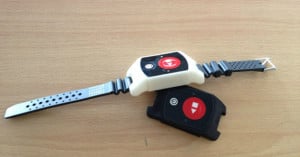
Hyetis Crossbow: A New Smartwatch that Packs a 41MP Camera

Smartphones might be bludgeoning the point-and-shoot market, and wearable computers like Google Glass may someday return the favor, but there's a new gadget picking up steam that could help the smartphone retain superiority. We're talking about the smartwatch, and if the new Hyetis Crossbow is any indication, smartwatches aren't playing around when it comes to photography.

First Pictures of Sony’s Groundbreaking Lens Cameras Surface

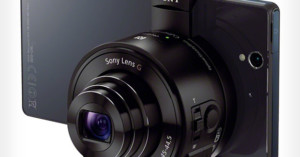
There's been a lot of doubt surrounding recent rumors that Sony is working on a couple of revolutionary "lens cameras." The smartphone-attachable lenses -- complete with built-in sensor and processor -- seemed far-fetched to some, but now that we have our first leaked images, any remaining doubts should start melting away.

Lytro Will Launch ‘Multiple Breakthrough Products’ in 2014, CEO Says

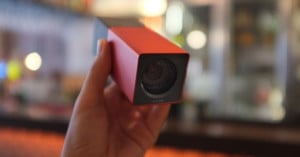
Ever since Lytro caused a stir by releasing the world's first consumer light field camera almost two years ago, the company has been somewhat quiet. With the exception of a few updates in November of last year and an iOS app released a couple of months ago, most of the stories we've covered with "Lytro" in the title had to do with competitors working on Lytro-like features. All of that is about to change, however, in 2014.

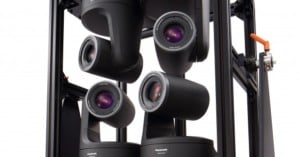
New Multi-Cam Rig May Soon Let Sports Fans Pick Their Favorite Camera Angle

There seems to be a growing desire among the networks to give sports fans the absolute best angle of the action when they're watching a game on TV, but what angle is that?

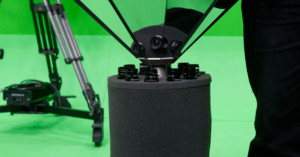
Sunday Night Football is tackling the problem by giving fans every angle with the newly installed FreeD system, but researchers at the Fraunhofer Institute are taking a different approach. With their new OmniCam360, they intend to give you both 360° views as well as the ability to choose whatever angle you like best.

Researchers Develop a Method for Taking 3D Photos with a Single Static Lens

For a while now, researchers have been trying to remove two things from 3D photos and video: the glasses and the second lens. Some companies have made headway in the area -- think of Samsung's single-lens 3D technology and Panasonic's special single-lens 3D sensor -- but some new research out of Harvard offers a software-based alternative.

First Magic Lantern Canon 7D RAW Video Sample is Impressive

A couple of days ago, to the delight of many a 7D user, we heard that Magic Lantern was working on bringing RAW video goodness to the semi-pro model. And now, only four days later to be exact, we have our first RAW video sample shot with the aging prosumer camera.

The Fuel3D Camera is the World’s First Point-and-Shoot, Full Color 3D Scanner

3D printing has made inroads into photography in many ways. From 3D-printed photos, to DIY flash diffusers, to a camera made entirely out of 3D printed parts, there's a lot of photographic applications to the third dimension.

But even as 3D printer costs are dropping, there's still the problem of capturing a proper, high-quality 3D scan of whatever it is you would like to print. The Fuel3D handheld bridges that gap.