Technology

Researchers Reconstruct Highly-Accurate 3D Scenes Using High-Res Photos

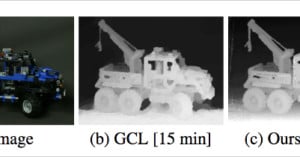
3D modeling for movies and video games is often done using lasers. The modeler scans whatever it is they are trying to reconstruct using a laser and then ends up spending a good bit of time cleaning up the results in post. In contrast, a new method developed by the folks at Disney Zurich promises to generate much more accurate results by replacing the lasers with photos.

nanoflight movie 1

Footage of Plants and Insects Magnified Thousands of Times

They look as if they're a complete fabrication of one's imagination, but they aren't. German photographer Stefan Diller has managed to create worlds using microscopic images of plant and insect life, giving us a view of what our eyes can't quite see. The technology, called nanoflight, is described as "a revolutionary new way to visualize structures of the microworld," and has "the ability to move a virtual camera in eight degrees of freedom around the specimen."

Sony Patent Reveals Plan to Start Tagging Photos with Vital Signs

Have you ever looked back at a photo and wondered "what was my heart rate and blood pressure when I took this photo?" Yeah, neither have we. But on the off-chance that you have, a new Sony patent application might pique your interests.
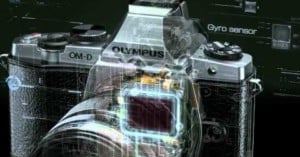
The technology specified in the application intends to enable the company's cameras and mobile devices to tag your photos with vital sign information -- allowing you to not only ask those questions, but have them answered as well.
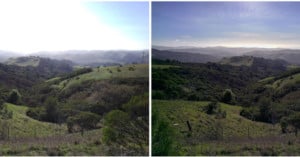
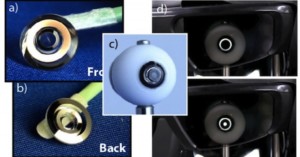
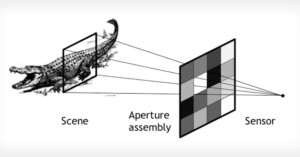
DSLR Add-On Brings Features Like Lytro-Style Refocusing to Any Camera

Lytro may have made a splash when the company first burst onto the scene with its 'snap now, focus later' technology, but the competition has been growing steadily ever since. In addition to companies like Pelican gunning at the light-field market, a new SLR add-on created by researchers from Saarland University in Germany promises to bring Lytro-style refusing and much more to almost any camera.

Cardiff Camera

Camera Used For Stargazing Helps Detect Common Form of Sight Loss

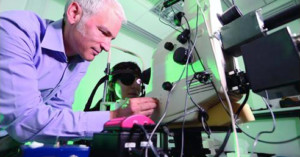
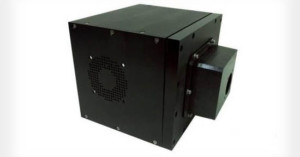
Here's yet another example of how technology used in space can help us earthlings in other ways. A partnership between scientists at Cardiff University and the UK Astronomy Technology Center has yielded a prototype device that can help detect Age-Related Macular Degeneration (otherwise known as AMD) -- a common form of sight loss -- using camera technology designed originally for use on space telescopes.

Video Comparison Puts Magic Lantern’s Dual ISO Hack to the Test

Yesterday, we shared the groundbreaking news that Magic Lantern's a1ex had managed to squeeze 3 more stops of dynamic range out of Canon's 5D Mark III and 7D by using a new feature dubbed Dual ISO. Today, we have a comparison that shows what RAW video shot on the 5D Mark III looks like taken both with and without the Dual ISO feature enabled.

Chinese Institute Builds a 100MP Camera, Boasts Highest Resolution in the Land

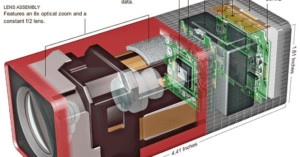
If you think your SLR camera is capable of taking high-resolution photos, the folks over at the Institute of Optics at the Chinese Academy of Sciences are about to put your gear to shame.

That's because they claim to have developed a 100-megapixel camera that captures 10,240 x 10,240 images, thanks to its square-format sensor. That's a whole lotta megapixels (though we fear in a number of years we'll look back at our marveling of this and laugh, whilst holding our gigapixel cameras). In fact, it's the highest megapixel camera in China, at the moment.

Get Ready for Photo Editing in Photoshop Done with Hand Gestures

You know those computers in Minority Report and Iron Man that are completely controlled through hand gestures? One day soon, we may all be using Photoshop in the same way.

The video above is a short demo showing a Photoshop plugin that introduces some introductory gesture controls to the image editing program.

Photo Legend Don McCullin Discovers the Potential of Digital in ‘Seeking the Light’

Don McCullin is a photojournalism icon. He's spent his life chasing haunting images that, more often than not, he's succeeded in capturing. And even though his career has taken him all over the world -- to Cyprus, the Congo, Biafra, Vietnam, Cambodia, Bangladesh, El Salvador, and the Middle East among others -- one thing has sed the same throughout his journeys: he's always shot film.

In this short documentary put together for Canon Professional Network by ICE Productions, he takes his first go at using a digital camera and discovers the potential (and potential pitfalls) of the technology.

Ziphius: The Aquatic Drone That Captures Photos While Speeding Across the Water

There's been a lot of talk about UAVs -- as in Unmanned Aerial Vehicles (aka. Drones) -- lately, but what about Unmanned Acquatic Vehicles? When it comes to remote-controlled water drones that you can use to photograph underwater life, there's far less choice in the affordable/DIY range.

The new aquatic drone Ziphius is here to change that, as it makes its way to market sporting the title of world's first app-controlled aquatic drone.

CrowdCam: A Photo App That Lets You See a Scene from Multiple Angles

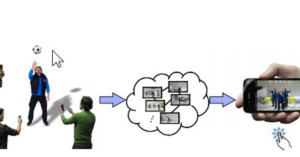
First Lytro tried to make focusing irrelevant, and now an MIT project wants to make choosing a camera angle a thing of the past.

Aydin Arpa, a reserarcher at MIT's Media Lab, recently presented a paper on CrowdCam, an app in development that would combine images taken from multiple perspectives into a seamless visual field where you could change the perspective just by swiping your finger on the screen.

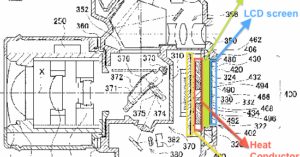
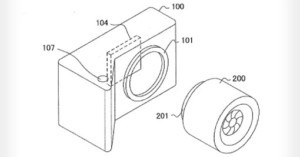
Nikon Patent Solves Camera Overheating by Integrating Removable Heat Storage

As DSLRs become more and more capable video capture machines, the problem of overheating becomes a more pressing one. With RAW video in particular, where the amount of data being captured is staggering, the sensor needs to be protected if you expect to keep using the camera for any extended amount of time.

Cinema cameras, like Canon's 1D C, have attacked this issue in the past by arranging the internals in such a way as to provide better cooling. But a couple of new Nikon patents take a different approach.

Researchers Take Aim at Automatically Detecting Photo Fakes on Twitter

You might remember the photo above from last year. For a while, it circulated the web like mad, claiming to show Hurricane Sandy bearing down menacingly on the Statue of Liberty. But if you've read our previous coverage on the photo, you'll know that it is, in fact, a fake -- a composite of a Statue of Liberty picture and a well-known photo by weather photographer Mike Hollingshead.

Photo fakes like this wind up going viral online all the time, often helped along by Twitter where retweet upon retweet puts it in front of thousands of unsuspecting people. Having had enough, a group of researchers from the University of Maryland, IBM Research Labs and the Indraprastha Institute of Information Technology are trying to do something about it.

Rumor: Almost Official Canon 70D to Set a New Benchmark in ISO Performance

As the Canon EOS 60D gets ready to make way for its big brother at an announcement expected later tonight, more info is leaking about the soon-to-be official 70D. In addition to the whole list of leaked specs and pictures from last week, we're now hearing that the camera will set "a new benchmark" when it comes to ISO performance.

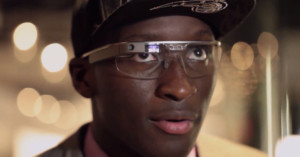
Victor Oladipo Records His Experience at the NBA Draft Using Google Glass

At this year's NBA Draft, the Orlando Magic used the second overall pick to select former Indiana University guard Victor Oladipo. For Oladipo, this day at the draft represented the fulfillment of a life-long dream. And thanks to Google Glass, we get to experience a lot of that special day for ourselves.

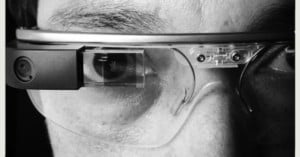
Google Glass for Photography: A Street Photographer’s Perspective

Street photographer and Assistant Professor at UC Berkeley Richard Koci Hernandez (known best as just Koci) lucked out when he won Google's #ifihadglass contest and earned the right to purchase (that's right, they didn't give them to him for free) a Google Glass pair and become a "Glass Explorer."

We also lucked out, because Koci has been able to do what many Glass Explorers can't: give us a street photographer's perspective on the revolutionary product that may one day do to smartphones what smartphones did to point-and-shoot cameras.

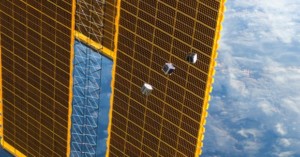
Company Plans to Send 28 Tiny Satellites Into Space to Collect Aerial Photos

There are a couple of different types of imaging satellites currently orbiting our planet. On one end of the spectrum are specialized satellites that gather very high-resolution imagery in which you can identify objects as small as 3 feet across. On the other are the lower resolution satellites that beam down photos of larger areas.

California company Planet Labs wants to fill the space in-between, by providing an affordable middle-of-the-road option for companies interested in using it. To that effect, they're planning on launching 28 tiny, mid-resolution satellites called "Doves" into space before the year is out.

smell cam 1

Scent-ography: This ‘Camera’ Captures Smells Instead of Pictures

For most of us, a simple photography can remind us of a time and place, and has really served as the de facto method of capturing a moment. From personal memories to iconic events -- there's a photograph to remind us.

Designer Amy Radcliffe has a different method of capturing a moment, however. It's a 'camera' that captures smell, not pictures. Radcliffe is working on the project at Central Saint Martins, an art school in London.

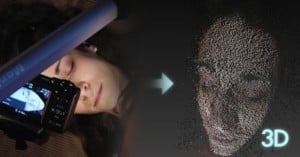
Using Focus Stacked Photos to Create 3D Reconstructions

Creating a 3D scan of an object can be done several different ways. We've seen everything from long distance laser cameras and hacked Kinects used to great effect. Computer engineer Giancarlo Todone's take on creating a 3D reconstruction takes another approach: using focus stacking.

Glasses LED 1

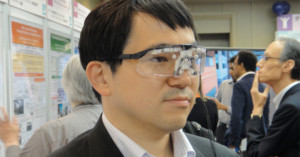
These Privacy Glasses Use Infrared Light to Hide Your Face from Cameras

In this day and age, you're likely to have a hard time walking down the street and not seeing a camera somewhere. If it isn't held by the shutter-happy tourist in short shorts, it's the CCTV camera mounted at the entrance of the local subway station.

How does one maintain anonymity? Staying in? No! You put on fabulous privacy-protecting glasses under development by Japan's National Institute of Informatics.

Smile, You’re in a Criminal Database

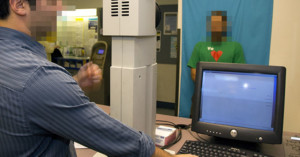
Turns out that driver's license photos are useful for more than acute embarrassment. States, realizing they have a de-facto visual database of most of their residents, are increasingly plugging those photos into facial-recognition software and Facebook to solve crimes -- and worrying privacy advocates in the process.

The First Animated GIF to be Beamed Into Deep Space

We humans have done quite a lot in the span of a thousand years. We've discovered new lands by sail boat, sent men to the moon, and successfully managed to ruin the economy-class flying experience as we know it. So now that it's 2013 -- the obvious move would be to beam an animated GIF to a distant solar system, right?

Camera Sensor Flickr

Researchers Tweak Camera Sensors to Boost Smartphone Battery Life

There's no doubt about the fact that using the camera on your shiny smartphone is killing your battery life. But up until now, it seems like the only proposed solutions have been to work on the battery itself instead of looking at the camera.

Researchers at both Microsoft and Rice University think they've come up with a solution that will make your gadget's camera far more energy efficient by focusing on the camera's sensor and the power it uses.

Video: NASA Gives a Tour of the Cameras on the Mars Curiosity Rover

The Curiosity Rover has been trekking the surface of Mars since late last year, and so far, there has been no shortage of great imagery.

But what gear is behind those intriguing images we see so frequently? NASA JPL has put together a short video on the camera equipment on board the Curiosity rover.

A Deeper Look at the Technology Driving Google’s New Personal Photo Search

Right after Google I/O wrapped up in May, we shared the news that Google's personal image search had just gotten a whole lot better. The tech giant claimed that you could now search through yours and your friends photos based on visual content, even if the photos themselves weren't labeled or tagged.

At the time, all we knew was that the system used "computer vision and machine learning" to detect subjects like "flowers," "food" or "car" and generate searchable tag data that makes your photos easier to find. Now, thanks to Google's Research blog, we're getting a bit more detail on the tech under the hood.

Fuji and Panasonic’s New Organic Sensor Boasts Insane 29.2 Stop Dynamic Range

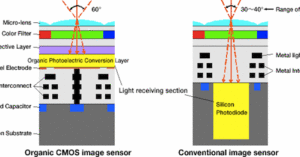
Fujifilm and Panasonic have joined forces and created an image sensor that blows everything currently on the market completely out of the water. By using Fuji's patented "organic photoelectric conversion material" to collect light instead of the traditional silicon photodiode, they've created a sensor that nearly doubles the dynamic range of the best sensor currently on the market.

The Future of the iPhone Camera: How the New iPhone May Forever Change the Way We Think About Pro Photography

As Apple's WWDC kicks off this week, my thoughts keep coming back to the heated debate with my friends about the future of photography.

Let me step back for a second. Marissa Mayer famously said a few weeks ago that there’s no such thing as professional photographer anymore. The Internet rage followed, and she apologized, saying that what she meant is that we all take photos now. And it’s true. Nothing has revolutionized photography and made it truly global as Apple’s iPhone.

Video: The James Webb Space Telescope and the Future of Deep Space Imagery

Infrared imagery has shown its value in many different respects: from keeping an eye on photosynthesis to lending a new perspective on a decades-long humanitarian disaster. But did you know that the future of outer space imagery also lies in infrared technology?

The James Webb Space Telescope, which is set to launch in 2018, is an infrared telescope that is primed to see much further than even Hubble ever could, piercing into the furthest reaches of our cosmos and answering questions we may not have even thought to ask yet.

WebRAW Screencap

WebRAW Utlility Introduces Simple RAW Viewing to Firefox

When it comes to viewing and editing RAW photos, many photographers turn to editing software such as Adobe Lightroom or Apple's Aperture. But one developer hopes to harness the power behind web browsers to view -- and potentially edit -- RAW image files.

HDR camera Toronto Uni

Canon 60D DSLR Hacked to Capture HDR Video in Real Time

HDR (high-dyanamic-range) video is no new concept. In fact, Magic Lantern has offered a way to shoot HDR footage utilizing Canon DSLRs since 2011. It's even become a feature of some mobile phones. But capturing and displaying HDR video in real-time? Well, that's another story.

This Robotic Camera System Can Capture Bullet Time Slow Motion Replays

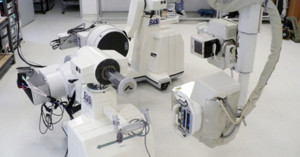
The folks over at NHK's (the Japan Broadcasting Corporation's) Science & Technology Research Laboratory have developed a groundbreaking multi-viewpoint, motion-controlled camera rig that could very soon be changing the way we view sports, among many other potential applications.

The rig is a robotically controlled system that links one camera to eight sub-cameras, all of which are pointing at the same thing. Basically, it's a bullet time rig that moves, enabling the people behind the lenses to take the technique of timeslicing to new heights.

Anti-Photography Patent Shows a Device that Will Spoil a Paparazzo’s Day

There are those who don't mind being photographed, those who do, and those who are photographed so often they can't help but mind. Celebrities in particular must deal with an onslaught of photography every time they leave their home, and inventors Wilbert Leon Smith, Jr. and Keelo Lamance Jackson want to do something to help.

That's why they invented a new anti-photography photo-ruining device that may wind up putting the paparazzi out of work.

Swift Galaxy Pictures 160 Megapixel

NASA Constructs 160-Megapixel Mosaic of Neighboring Galaxies

High-resolution photography is seemingly where it's at in today's day and age. NASA knows this, and as such, astrophysicists at both the Goddard Space Flight Center (GSFC) in Maryland and Pennsylvania State University have stitched together a remarkable 160-megapixel UV image of the Large and Small Magellanic Clouds -- our two closest neighboring galaxies (less than 200,000 light years away).

Inexpensive ‘Infragram’ Camera Lets You Take a Peek at Photosynthesis

Public Lab, also known as the Public Laboratory for Open Technology and Science, is all about creating affordable, DIY versions of expensive scientific equipment. In the past, we covered Public Lab's work creating a balloon mapping toolkit that allowed anyone and everyone to take and add user-created weather balloon imagery to Google Earth's repertoire.

For their most recent project, they're bringing things a little closer to the ground. This time, the folks at Public Lab are photographing the secret internal life of plants using an extremely affordable near-infrared camera they've designed.

Picsio App 2

Pics.io Wants to Bring RAW Photo Editing to a Browser Near You

Traditionally, a photographer's post-processing workflow does not include a web browser, but rather, tools like Lightroom and Aperture. Pics.io is hoping to change that, and is working to bring serious RAW picture editing and collaborating to the web browser.

The start-up, founded by three Ukranian entrepreneurs, uses WebGL technology (which, in short, allows web browsers to harness the power of a computer's graphics card) to make the online tools they offer a reality. The mission? Get more people to dabble into RAW photography by offering easy access to editing tools.

NTU Graphene Sensor 1

New Camera Sensor 1000x More Sensitive Than Current Sensors

Researchers at the Nanyang Technological University in Singapore have developed a graphene image sensor one thousand times more sensitive to anything available on the market today. The sensor is capable of detecting broad spectrum light, making it a great solution for all types of cameras. Its uses could include traffic cameras, infrared cameras, and so forth.

Imagined Kodak Technology Puts Face-Detection on Steroids

Despite the proliferation of SLRs and Micro Four Thirds cameras, “auto” mode isn’t going anywhere. As evidence, consider a recently published patent application from Kodak that assumes the average camera user can’t even figure out which direction to point the thing.

Samsung Working on Overlay Feature to Help Strangers Snap Better Shots of You

Asking a stranger to snap a photograph of you is a risky proposition. If the person has no concept of basic photography concepts and techniques, the resulting photographs may be completely different than what you had hoped for -- and you're too embarrassed to ask for another photo (so you wait for that person to leave and for a new one to walk by).

Samsung wants to help solve this problem: they're working on a camera feature that helps guide photo-inept strangers in snapping the shot you want.