Educational

PetaPixel's editorials are in-depth stories, thought-pieces, and opinions on the photography industry led by the minds of our editorial team.

How the Other Half Lives: Photographs of NYC’s Underbelly in the 1890s

Jacob A. Riis arrived in New York in 1870. As the economy slowed, the Danish American photographer found himself among the many other immigrants in the area whose daily life consisted of joblessness, hunger, homelessness, and thoughts of suicide. So when he finally found work as a police reporter in 1877, he made it his mission to reveal the crime and poverty of New York City's East Side slum district to the world.

A Mathematical Look at Focal Length and Crop Factor

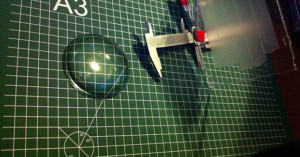
I'm hoping this post can explain a lot of the confusion beginning photographers have about focal length and crop factors. Some understanding of basic geometry is required for you to fully grasp this post. Also note that I'll be rounding the math decently well. Just run through the calculations if you want exact answers.

Taking Pictures on an Offshore Oil Rig Is Serious Business

Taking pictures on an offshore oil rig is serious business. For starters, due to the risk of flammable gas coming up the oil well, normal electronics are banned outside the living quarters. Smartphones are strictly forbidden and regular cameras require "hot work permits" be opened prior to use.

Kodak’s Problem Child

Rochester, New York — The cold hits me as soon as I leave the Amtrak station, stepping into a swirl of snow eddies that etch the low streets in black and white.

Photographing Earth from the Cupola on the International Space Station

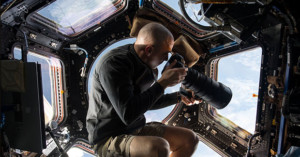
NASA's Image of the Day today is a photograph showing one of the best photo op spots to be found on the International Space Station: the Cupola module. The image (shown above) shows astronaut and flight engineer Chris Cassidy pointing a Nikon DSLR and 400mm lens out one of the Cupola's windows to photograph some location on Earth 250 miles below him.

This Zoomable Composite Aerial Photo of San Francisco is Like a 1938 Google Earth

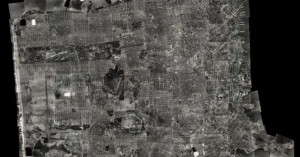
What you see above is an ultra-high resolution aerial photograph of San Francisco as it looked in 1938. The David Rumsey Historical Map Collection put the image together using 164 large format black-and-white photos of SF that were shot in 1938. When viewed through a zoomable image viewer, the composite photo is pretty much a 1938 version of Google Earth's satellite view.

The Story Behind the Iconic “Tank Man” Tiananmen Square Photo

When the Chinese military moved into Beijing's Tiananmen Square on June 5, 1989 to forcibly remove pro-democracy protestors, an anonymous man famously decided to place himself in front of the long column of Chinese tanks that were rumbling into the area. Photos and videos of the incident were immediately published and broadcast around the world. AP photographer Jeff Widener's "Tank Man" photo, shown above, is widely considered to be one of the most iconic photos of the 20th century.

A Comparison of Burst Mode Speeds and Shutter Sounds of Canon DSLRs

Canon's DSLRs come with a variety of continuous shooting speeds, ranging from 2.5 frames per second on the 300D (AKA Digital Rebel/Kiss Digital) to a whopping 14 frames per second on the high-end 1D-X. If you want to get a taste of what these shutter speeds sound like on the actual cameras, check out the comparison video above by YouTube user dochero2005.
Animation Shows How the Galaxy Shapes in Space Photos Come About

Space collisions are massive, unbelievably powerful events. When two galaxies collide -- that is, when their gravitational fields start interacting with one another -- the resulting billion-year-long process contorts and twists the galaxies into the fascinating shapes we've seen in photographs taken by powerful space telescopes.

Tutorial: How to Get the Perfect Photo of a Steaming Cup of Coffee

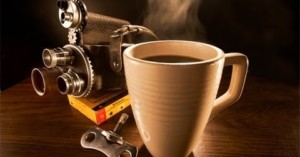
Coffee is a wonderful thing. Early in the morning, there are few things that can put you at ease like a steaming cup of hot coffee warming your hands and firing up your brain. But have you ever wondered how those coffee advertisements manage to get the perfect shot of a coffee cup, steam and all? …

Infographic Maps Out the Landscape of the Photography Industry

The company LUMA Partners has gotten in the habit of occasionally mapping out various industry landscapes to show how a product or service gets from Point A (i.e. the creators, marketers, businesses, etc.) to Point Z (i.e. the buyers, brands and publishers), going through the rest of the alphabet in between.

Old Color Footage Shows What London Looked Like Back in 1926

Want to see what London looked like back in the year 1926? Check out this beautiful color footage shot in various London locations by Claude Friese-Greene, an early British pioneer of film. Frisse-Greene created a series of travelogues nearly 90 years ago using a color process developed by his father William Friese-Greene.

These Schematics Offer an Exploded View of Old Nikon SLR Cameras

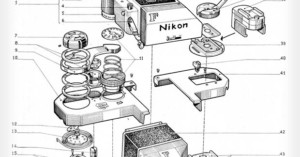
Want to see how old film single-lens reflex cameras were put together? Clare (Wyoh on Tumblr) recently found a number of camera schematics inside an old French magazine from decades ago. The schematics show exploded views of the Nikon F, Nikon F2, Nikon FM, and Nikon FA SLRs. Each camera is shown in its most basic parts, which are numbered and labeled (in French).

A Slow Motion Look at the Fujifilm X100S’ Shutter Speeds and Syncing

After reading the great reviews of the Fuji X100S, I decided to take the leap and buy one. I’ve been getting more interested in street photography lately, and this camera seemed like a good fit. Plus, it's supposed to sync at all shutter speeds, which is great for flash photography outside in bright sun. David Hobby and Zack Arias both have nice in-depth reviews.

Survey Reveals the Average Day Rates of US and UK Photographers

Eposure, a UK company that brings commercial photographers together with the companies that need them, recently released the results of a survey they conducted about the day rates of UK and U.S.-based photographers. And even though some might expect that the vast majority are charging a pittance in our photography-saturated world, the outlook isn't as grim as you may think.

Check Out How the Pros Used to Capture Space Shuttle Launches in the 1980s

The end of NASA's Space Shuttle program in 2011 meant the end for more than the shuttles themselves. One aspect of the program you may not have known about was the plethora of incredible photo and video equipment that was used during the program's heyday to capture each launch. At any given launch, about 138 professional still, video and TV cameras were pointing at the shuttle, and some of them were downright incredible.

Informative Tutorial on the Types of Light Meters and How to Properly Use Them

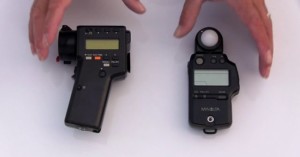
Mark Vargo is a big time cinematographer who has worked on too many well-known movies to list. He's credited as a second unit director of photography on everything from Deep Impact and The Green Mile to Rise of the Planet of the Apes and Ted. In other words, knows what he's doing, and now he's chosen to share some of that knowledge with his fellow photographers and videographers.

A Beautiful Video of the Daguerreotype Process

The way film photographers feel about digital photographers may be the way daguerreotype photographers feel about the film guys. Working with dangerous chemicals, buffing out silver coated plates, spending an entire day preparing for, taking and developing one shot; that's what daguerreotype photographers love to do. It's the difference between "crafting a photograph" and "just snapping away." …

Did You Know: The World’s First Portable Motion Picture Camera was a 12fps ‘Rifle’

Here's a fun piece of photographic/cinematographic history: the first ever portable motion picture camera was invented by a French scientist named Étienne-Jules Marey, and it was in the shape of a gun. Sort of a great grandfather to the the Mark III Hythe Machine Gun Camera used by the British during WWI to train aerial gunners, the Fusil Photographique (or "photographic rifle") made its debut on the scene all the way back in 1882.

Disassembling a Tripod Ball Head to See How It Works

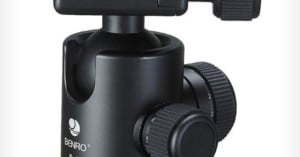
This will probably be of limited interest to most of you, but we like to know how things work, not just how well they work. We thought we’d take a couple of pictures when we disassembled a ballhead in case any of you were interested. Our demonstration partner today was a Benro B1 ballhead that had a stripped tension adjustment knob, but all ballheads work basically the same way.