Analog

Hunger Games & Jurassic World Decide to Go Analog in Increasingly Digital Industry

At a time when digital production workflows are becoming more and more ubiquitous within Hollywood, the news of a director utilizing an analogue workflow on a big production always seems to strike a chord with those who appreciate the aesthetic and feel of film.

Thankfully, for those of you who do enjoy such news (myself included), two major directors are choosing film over even the highest-of-res digital for their upcoming (and already released) blockbusters.

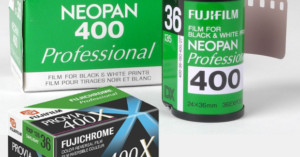
Fujifilm Discontinues Neopan 400 PRESTO 35mm and Fujicolor PRO 400 120 Film

Queue up Queen's Another One Bites the Dust, because it's time to mourn the loss of two more analog films. Despite talk that certain segments of the analog market are doing well, specific types of film that are having a hard time selling continue to kick the bucket.

The most recent of these are Fujifilm's Neopan 400 PRESTO 35mm black-and-white and Fujicolor PRO 400 120 color film.

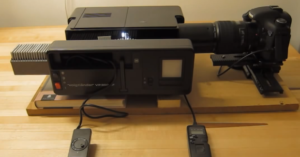
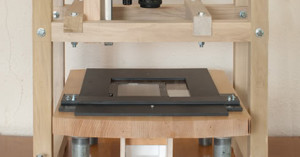
Neat DIY Projector Rig Lets You Digitize 15 Slides Per Minute Automatically

Not having a dedicated film scanner is no barrier to being able to digitize your slides, but DIY methods we've presented in the past tend to be time-consuming. Even if it's an easy DIY solution that will let you, say, use your desktop all-in-one to scan them in, it'll still take you a long time to digitize the hundreds of slides you might have lying around.

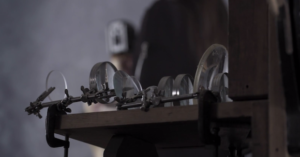
Well, we've finally stumbled across a rig that fixes this problem: All you need is a modified slide projector, a macro lens, and an intervalometer to digitize hundreds of slides in minutes.

Darkroom Gear Recycled Into Chic Table Lamp

You, of course, are an analog purist who will forever be devoted to film. Other folks, however, may be wondering what they're going to do with a bunch of darkroom equipment that's getting lonelier by the year.

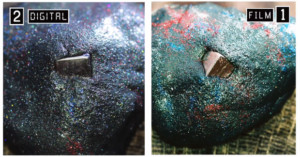
Film Takes on Digital in Head-to-Head PBS Showdown, Can You Tell the Difference?

When it comes to the film vs. digital debate, many people are fairly entrenched on one side or the other. But can you really tell the difference between RAW digital footage and film footage? What about when the digital footage is made to look like film using filters in post? PBS Digital Studios wants to put you to the test.

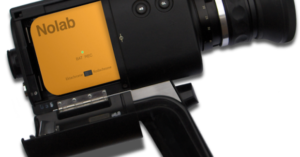
Nolab Digital Super 8 Cartridge to Breathe New Life into Old Super 8 Film Cameras

A lot of film people have deep connections to Super 8 cameras, once the medium of choice for everyone from film school students to porn directors. But it's getting harder and harder to actually use the things, as stocks of film cartridges dwindle.

To the rescue comes Nolab, a project to build a digital adapter that will allow any Super 8 camera to shoot 720p HD video.

Joe McNally, Lynn Goldsmith and Bob Krist on Shooting with the Nikon Df

First comes hype, then comes the announcement, and last comes the post-release marketing. In regards to the Nikon Df, we've officially moved into the last of those three steps, and right on cue, Nikon has released three videos of big time photographers endorsing the Df by talking about their experiences shooting with it.

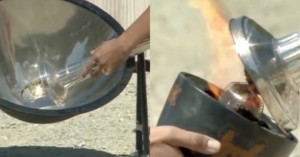
Does Lighting the Olympic Flame Involve Setting Fire to a Piece of 35mm Film?

Every two years, the lighting of the Olympic Flame amidst the ruins of the Temple of Hera is a pretty interesting performance. The torch is lit from the light of the Sun, using a parabolic mirror to focus the Sun's rays on the fuel in the torch and set it ablaze... but what exactly is that fuel? By the looks of it, at least a small part is a piece of

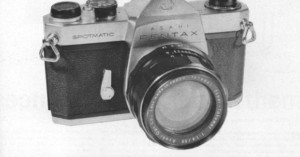
Blast from the Past: 1965 Pentax Spotmatic Review

Photography has a rich history that is really fun to peer back into once in a while when you have a spare minute to stop oogling over the next piece of gear (*cough* NEX full-frame *cough*) that'll steal your heart and most of the funds in your bank account.

On that note, check out this awesome old review of the Pentax Spotmatic. It was written in 1965 by the late Fred Springer-Miller, and it might make you think twice before you take today's technology for granted.

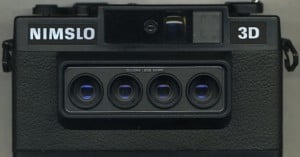
Blast from the Past: Vintage Commercial for the Nimslo 35mm 3D Camera

Sure, the 1980s isn't quite so far in the past as, say, the first photo, but the commercial above is classic nonetheless. It shows off the Nimslo 35mm 3D camera, the first consumer level 3D lenticular camera of the 80s and, if you believe the commercial, "the most important new camera of your lifetime."

Miley Cyrus’ Nikon N80 SLR is Currently Bidding at Over $90K on eBay

We hate to contribute in any small way to the Miley Cyrus hoopla/shenanigans/ruckus (pick your poison) but when an old 35mm SLR that would normally go for about $60 starts bidding at almost $100,000 we can't help but take notice.

The camera in question is an old 35mm Nikon N80 SLR, and as you might have already guessed, the reason it's going for so ridiculously much is that ... well ... Miley is selling it.

Kodak Alaris Will Keep the Kodak Legacy Alive, Has ‘No Plans’ to Stop Selling Film

Now that Eastman Kodak's bankruptcy woes are over and the company has switched its focus primarily to commercial printing, its name probably won't show up here as often as it once did. But that doesn't mean that the Kodak photographic legacy is dead.

One of the steps Eastman Kodak took to get out of bankruptcy was to sell its personalized and document imaging businesses to the UK Kodak Pension Plan (KPP), and that has birthed a company that plans to keep that legacy alive: Kodak Alaris.

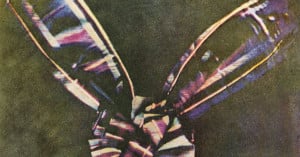
Color in Filmmaking: From the First Color Photograph to Digital Color Manipulation

Long before there was any way to capture colors on film, filmmakers were hand painting their short movies frame by frame to breathe life into black-and-white productions. The desire to capture color, it seems, far precedes our ability to do so.

In the Filmmaker IQ video above, John Hess takes you through a comprehensive history of color in filmmaking. From hand-tinting, to Technicolor, to digital color manipulation, take a look and see just how far we've come when it comes to capturing the reds, greens and blues of our world.

High-Res DIY Film Scanner Made from a DSLR, Lumber and an Arduino

Consumer film scanners don't provide enough detail, and professional models require too much money and pampering. What's a dedicated film nerd to do? For Peter De Smidt, the answer was to build his own high-res scanner using the Nikon D600 and 50mm Micro lens he already had on hand, a bit of lumber and a lot of patience.

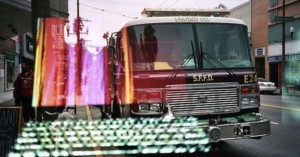
Ethereal Double Exposures Merge Digital Glitches with Analog Street Photography

San Francisco-based photographer and self-proclaimed super nerd Doctor Popular -- the same one that made this film canister valentines day card back in February -- started off his photographic career with an iPhone. Unlike many photographers, he moved backwards, eventually purchasing a film camera "strictly out of curiosity" at a yard sale and shifting his focus more and more to film.

His most recent endeavor, Glitch Double Exposures, mixes the two worlds of digital and analog by combining street photos with photos of purposely glitched images into ethereal double exposures.

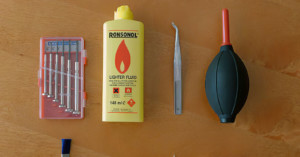
How to Clean Up Your Old Cameras

Treasures are often buried under dirt. Well, that's usually the case, anyway. Treasures for photographers may mean finding a working copy of their dream camera at a flea market or on the second-hand camera market. However, more often than not, the camera may not be looking great.

DIY: Film Canister Bag Address Tags

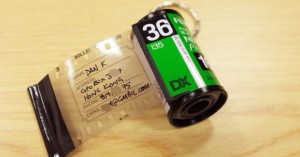
I’ve seen lots of used film canisters repurposed as dangling bag accessories for sale in trendy parts of Hong Kong. The idea is to drill or burn a small hole in the top of the plastic spool and fit a keychain to that. I figured it would be a lot more useful to use the can to give a return contact address in case the bag is lost and found. What better way could there be than to use film?

Blast from the Past: 18,000fps High Speed Photography in the 1960s

Back in 1948, The Society of Motion Picture and Television Engineers defined high-speed photography as any 3 frames or more captured at a rate at or above 128 frames per second, but even back then high-speed cameras performed well past that mark.

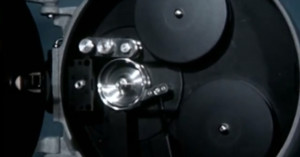
The public domain video above gives us a short peek at how far high-speed photography tech had advanced by the mid-1960s, when Wollensak's Fastax models were some of the foremost high-speed cameras on the market, capturing action at speeds of up to 18,000fps.

Philip Bloom on Shooting Film and Using Too Many Cameras

British filmmaker Philip Bloom was recently in Frankfurt working with digital agency Szyygy, and while he was there, he was selected as the subject of a filmmaking exercise he assigned the students of the 3-day private workshop he gave.

The assignment was to film a mini doc, and the four students picked Bloom as the subject, choosing to interview him about the street photography he shoots during his time off.

So You Want to Shoot Film?

I have been shooting a lot of film lately and enjoy it tremendously, so I thought I'd share some of the experiences I've had in the last year or so, mainly so you can learn from the mistakes I made, avoid them and then make your own.

For the sake of getting some kind of structure into this post I'll try and describe three typical scenarios of people shooting film today, differentiated by the amount of control you'll have over the image.

The Rise and Decline of Film, As Told from Film’s Perspective

Film has seen better days. With legends like Kodak's Kodachrome gone, and staples like Fujifilm's Neopan 400 very recently following suit, most news about film is met with dismay and long drawn out "No's" (if you doubt it, check out the comment section on the Neopan 400 and Provia 400X discontinuation announcement linked above).

Trailer: ‘Everybody Street’ Documentary Chronicles NYC Street Photography

There's no doubt about that fact that street photography is wildly interesting. There's just so much to it that makes it appealing. Real people, real moments -- good and bad. Best of all, there's something new to capture every day. And while many of us don't have the courage to get out there and point our camera at a stranger, it's interesting to see it happen, especially in a metropolis.

Filmmaker Cheryl Dunn (who is a street photographer herself) is working on a documentary called Everybody Street, which features the master street photographers in America's most populated city -- New York City. The trailer above gives a taste of what it's about (note: it's slightly NSFW).

Fujifilm Discontinues Neopan 400 B&W and Provia 400X Slide Film

Unfortunately, the news that a particular type of film is being discontinued is anything but surprising these days. And even though we haven't had reason to report any such news for a little while, we can once again cue "Another One Bites the Dust" by Queen, this time in honor of Fujifilm's Neopan 400 B&W film and Provia 400X slide film.

212 Instagrammers Join Forces to Create Stop-Motion Car Video

Never underestimate the power of 212 Instagrammers. Now that might seem like a strange thing to say, but vehicle manufacturer Lexus quite literally put over 200 mobile-phone-toting-picture-takers on a lot with a 1,400-foot track and let them go to town on the 2014 Lexus IS F SPORT -- a vehicle we all would probably like to see sitting outside our front doors.

Film Photography Technique Tips for the Digital Photographer

Film photography is similar in many ways to digital photography, and most of your standard digital photography techniques apply to film too. You just have to understand the peculiarities of film and its limitations and you’re good to go.

That will be explained in detail in this article, which presumes readers are already reasonably proficient at digital photography and are embarking upon film photography for the first time.

Photo Legend Don McCullin Discovers the Potential of Digital in ‘Seeking the Light’

Don McCullin is a photojournalism icon. He's spent his life chasing haunting images that, more often than not, he's succeeded in capturing. And even though his career has taken him all over the world -- to Cyprus, the Congo, Biafra, Vietnam, Cambodia, Bangladesh, El Salvador, and the Middle East among others -- one thing has sed the same throughout his journeys: he's always shot film.

In this short documentary put together for Canon Professional Network by ICE Productions, he takes his first go at using a digital camera and discovers the potential (and potential pitfalls) of the technology.

Spliced Film Negative Portraits That Show the Similarities of Siblings

Back in 2011, we shared a series of "Genetic Portraits" by photographer Ulric Collette that showed portraits of various family members spliced together to show the similarities and differences of those who share DNA. Photographer Andrew Ryan did something similar for his project Base Pairs, except he ventured along the analog route instead of going fully digital.

Amazing Color Footage of Britain from the 1920s

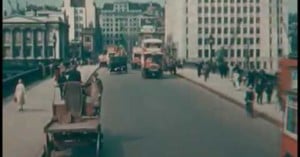
About a month ago, we shared some stunning footage that showed what London was like all the way back in 1926. The original filming was done by Claude Friese-Greene, whose father William invented the 'Biocolour' technique of capturing color film footage.

That particular video was a compilation of snippets that Friese-Greene had filmed in London when he returned form a 2-year journey. He called the final product The Open Road, and it was a 26-part series that took him all over Britain. Fortunately for us, much of it has now been digitized and uploaded bit-by-bit to YouTube by The BFI National Archive.

Photojournalist Bill Eppridge Discusses the Importance of the Still Image

At last year's Fall Photography at the Summit, the folks at the Summit Series of Workshops got a chance to sit down and speak with legendary photojournalist Bill Eppridge. They asked him about "the importance of the still image," and Eppridge responded by sharing the wise views on photography he has spent a lifetime acquiring.

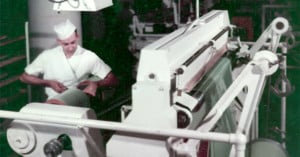
Making Film at Kodak

Kodak Axes Acetate Film Base Production

It will probably come as no surprise to many that Kodak is planning to discontinue production of the acetate base, a primary component film, according to a WROC report published Tuesday.

Blast From the Past: High Quality Color Footage of New York City in the 1930s

Color film first burst onto the scene in 1935 when Kodak introduced the world to Kodachrome, and the first of this film that was available to the public was the 16mm variety for home movies. Later, Kodak introduced similar 8mm and 35mm film for home movies and photography, respectively, but it was the 16mm film that had finally offered consumers the ability to easily capture their world in color for the very first time.

The above video is a rare clip released by the Romano Archives that shows what French tourist Jean Vivier was able to capture using the 16mm film all the way back in 1939, when he came to visit the Big Apple.

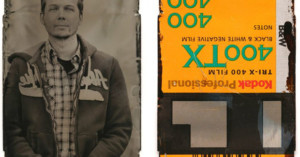
Tintype Portraits of Photography Students Created on Their Discarded Film Canisters

Photographer David Emitt Adams experiments with unique metal bases in his experiments with tintype photography. Last week we shared a project in which he used abandoned tin cans found in a desert to create tintype photographs.

36 Exposures is another project of his that uses unconventional materials for creating old school photos. It's a series of tintype photographs that were created using 35mm film canisters.

PhotoExif Helps You Record EXIF Data for Film Photos On the Go

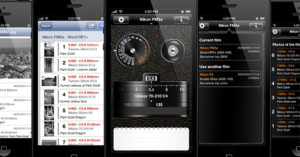
One of the advantages of digital photography is having information about how each photo was shot embedded within the photograph's file itself. This EXIF data is something photographers commonly jot down in notebooks as they walk around and shoot with their analog cameras.

Photographer Oriol Garcia wanted a better solution than manually writing down shot times and details. Since most people have smartphones now, why not make an extremely easy to use app that can document the info of every photograph taken? He ended up creating an app called PhotoExif that can do just that.

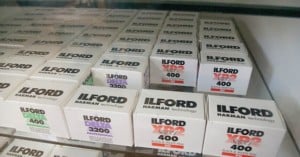
Ilford Imaging Taking Custom Orders for Ultra Large and Specialty Format Film

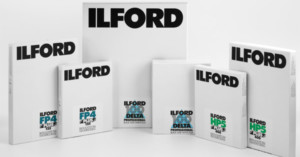
Thanks to the prevalence of digital photography and the fact that camera stores seem to be closing left and right, it can be hard enough to find film in the first place these days. But if you shoot with ultra large or specialty format films, your job is even more difficult. Thankfully, Ilford is here to help.

Harman technologies Inc. -- the folks behind the manufacture of Ilford film -- are opening their annual window during which photographers can order as much custom-manufactured specialty film as their hearts desire.