Satellites Could Start Smashing into Each Other in Less Than Three Days, Study Finds
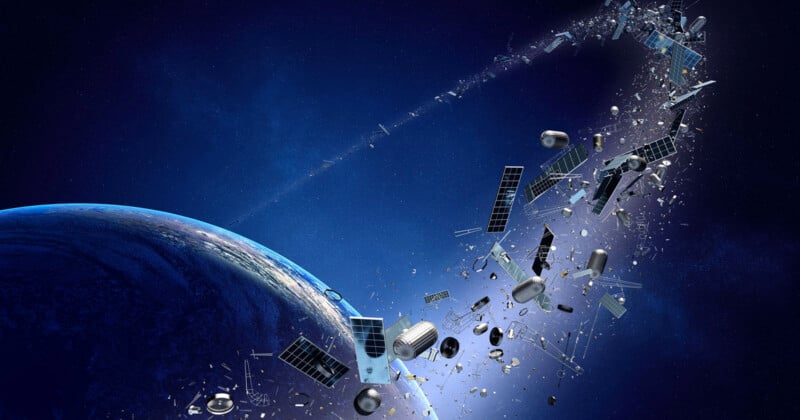
They fly above us unseen — some are taking photos of outer space — but the intense network of satellites that orbit Earth in perfect coordination could collapse in just a couple of days, according to a new study.
Satellites in low-Earth orbit have increased exponentially in recent years, largely thanks to SpaceX’s Starlink program. In the 1970s, NASA proposed a doomsday scenario where collisions between satellites cascaded to the point that they blunt human activity in space. Known as Kessler Syndrome, it was based on multiple accidents causing a lot of debris.
But new research led by Sarah Thiele at Princeton University has found that one of the biggest threats is a solar storm that could cause a cut in communications between satellites and their operators. If the resulting geomagnetic storm did cut comms, the research shows that it could take just 2.8 days before a collision.
SciTech Daily cites SpaceX’s own report which says that between December 1, 2024, and May 31, 2025, Starlink satellites performed 144,404 collision avoidance maneuvers. That means every 1.8 minutes, a satellite in the Starlink network had to correct course to avoid an accident.
Thiele’s study introduces something called the Collision Realization and Significant Harm (CRASH). It’s a metric that estimates how long it might take for a significant collision to occur in space if operators on Earth lost contact with satellites and could no longer make maneuvers. Less than 72 hours is a period that’s come down dramatically since 2018, when it was more like 164 days.
Things are already tight up there. Every 47 seconds, a Starlink satellite passes within one kilometer (0.62 miles) of another object. A team on the ground is gauging the satellites’ course, guiding them through. Nevertheless, there’s very little room for error.
Star Threat
SciTech Daily reports that very strong solar storms are rare. In 1859, a strong solar flare caused an intense geomagnetic storm that reportedly set some telegraph stations on fire. Known as the Carrington Event, if it happened today, it would likely cause a lot more damage and interfere with satellites.
If operators lost control of satellites and there was a collision, it could endanger future space missions, like the recent Artemis II.
The researchers aren’t calling for satellites to be eliminated; rather, they want to make plain just how delicate the system is and how it requires constant, precise control.
Image creditsHeader photo licensed via Depositphotos.
Affiliate Disclosure PetaPixel articles may include affiliate links; we may earn a commission if you buy through one.