Iceland’s Targeted Drone Ban Is Nature Conservation Theater
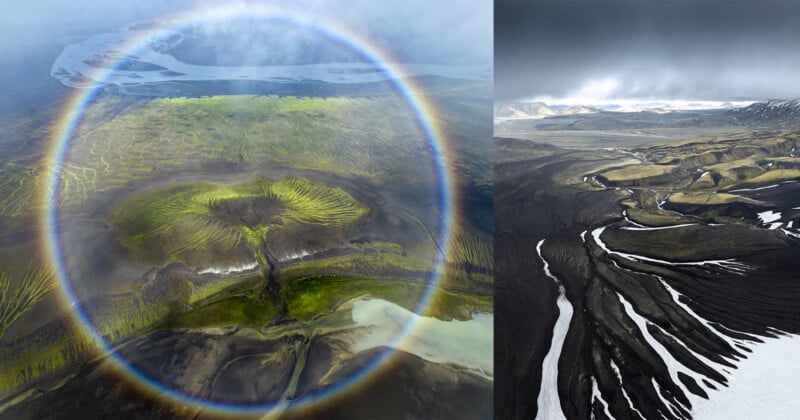
For several summers, I have taught drone photography in Iceland’s highlands under permits issued by the country’s nature conservation agency. I applied on time, followed every condition, and never received a complaint from a ranger, another visitor, or the agency itself.
To be clear: Iceland has not outright banned all drones. You can still fly legally across much of the country under the normal EASA and Samgöngustofa rules. What changed is far narrower: the Nature Conservation Agency now refuses recreational and educational drone permits on 25+ specific protected areas, while still granting them for film and advertising. Outside those protected sites, responsible drone flying is as legal as it ever was. This article is about that selective change, not a countrywide ban.
For the 2026 season, the agency has refused my permit. It has refused every other operator I know of in the same line of work. On May 17, 2026, it published a new policy that makes the situation impossible to read as anything other than what it is.
Under the new rules, drones in Fjallabak Nature Reserve can still be flown between June 15 and September 15 with a permit, but only if the purpose is research, monitoring, construction, a permit-required event, or “filming projects such as cinematography, advertising, television programmes and for news purposes.” A Hollywood production shooting a streaming series can fly drones. An advertising agency shooting a tourism campaign can fly drones. A news crew can fly drones. A small commercial workshop helping three photographers fly drones responsibly and ethically to photograph Iceland’s incredible nature, cannot.
The activity is identical. The difference is who is holding the controller and what they are paid for.
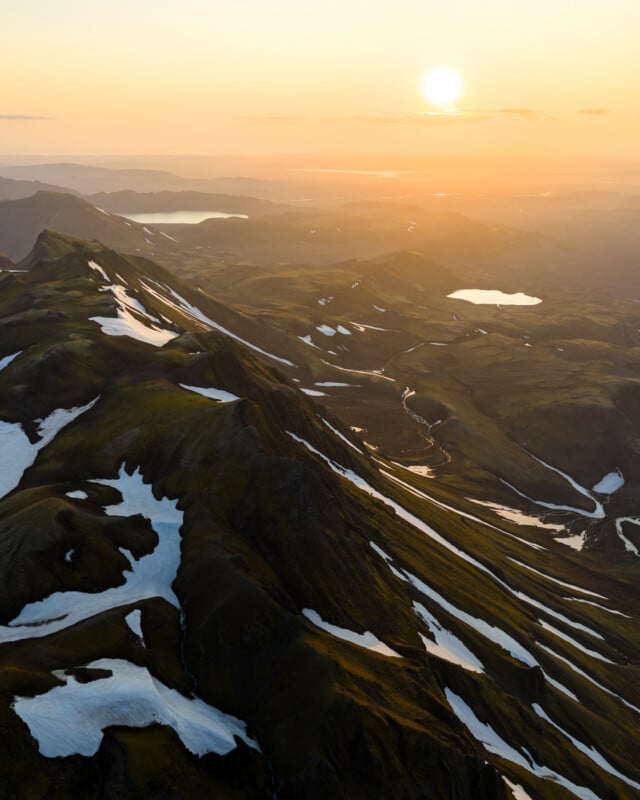
For years, the agency processed my workshops as professional applications and charged the full commercial permit fee of 83.200 ISK. The new policy bans only “recreational and educational” use. To refuse my workshops under it, the agency has had to reclassify the same professional, paying work as if it were a recreational hobby.
There is a better way to handle this, and the same agency is already using it elsewhere in Iceland. The rest of this piece uses the agency’s own evidence to show why the policy does not hold up, and what a better alternative looks like.
Why This Should Matter, Even If You Don’t Care About Drones
Twenty-Six Sites, Not One
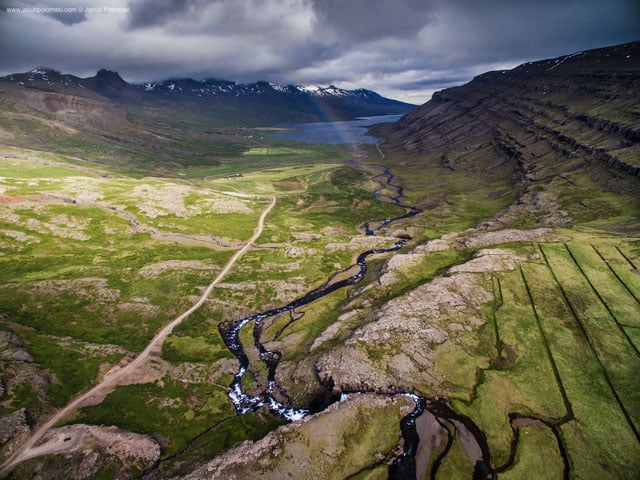
This is not only about Fjallabak. The same policy applies to more than 25 protected areas across Iceland. Goðafoss, Gullfoss, Geysir, Dyrhólaey, Látrabjarg and Mývatn are now year-round closed to recreational drone use. Hornstrandir, Snæfellsjökull National Park, and Þjórsárver are closed seasonally from May through September. Háifoss, the second site on my own application, is year-round. Fjallabak is the focus of this piece because it is where my workshops were scheduled, but the same logic and the same commercial-versus-recreational exception apply country-wide.
Regulation By Opinion
Unfortunately, the agency has produced no measurement, no field study, and no peer-reviewed evidence that drones in Fjallabak disturb wildlife or visitors. When I asked them in writing for the scientific basis of the refusal, the answer was that the conclusion was based on “an impact assessment carried out by a local Agency advisor.” I have not been told who that advisor is. I have not been shown what they consulted, what they measured, or what reasoning they used. When I produced a decibel figure for drone noise, the denial letter wrote that “the Agency does not agree” without producing any measurement of its own.
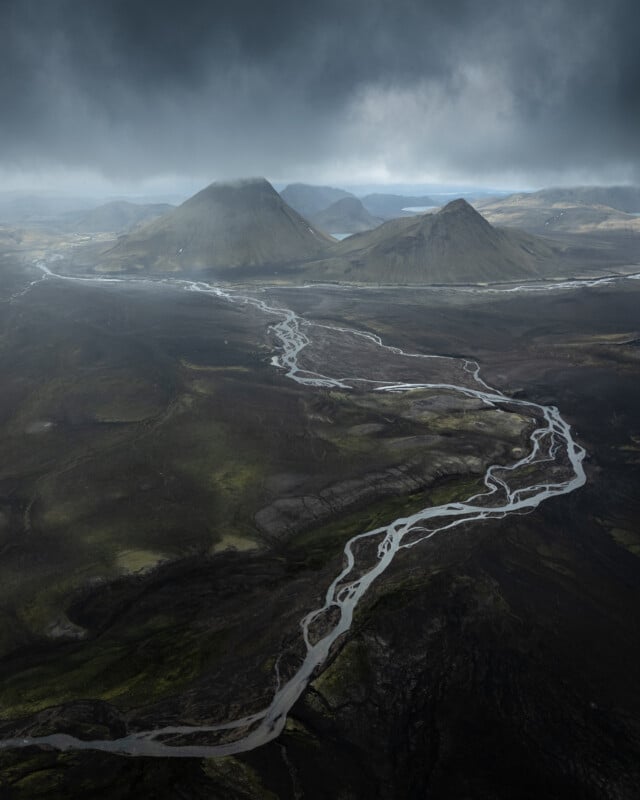
This is regulation by opinion, and it is a dangerous thing for any country to allow. If a regulator can refuse permits on the basis of what they believe rather than what they can demonstrate, the citizen has no way to defend themselves. You cannot argue against a feeling. You cannot present counter-evidence to a private conviction the regulator declines to articulate. The activities that survive in such a system are the ones that happen to be popular with whoever is sitting in the chair, and the small operator without the lobbying budget loses every time.
The Precedent This Sets
This is not a hypothetical risk. The new policy from May 17, 2026, makes an exception for commercial productions while denying recreational and educational use. The exception is not based on environmental impact. It is based on who the activity benefits. Read that sentence again. Náttúruverndarstofnun (Iceland’s Nature Conservation Agency) is now formally sorting access to part of the highlands by purpose rather than by environmental footprint.
And it raises a question the agency has not answered: where does this end? If “disturbance to visitors and tranquility” is sufficient grounds to refuse a permit, what stops the same logic from applying to everything that produces equal or greater noise? A consumer drone is quieter than every other permitted activity in the same reserve. Helicopters, tour buses, quad bikes, modified 4x4s, snowmobiles. All measurably louder. All permitted. The agency’s own 2025 to 2027 action plan actually moves to expand the loudest of these, with new helicopter landing sites beyond Landmannalaugar, new snowmobile routes, and more car and bus parking. If the principle were really about decibels, those activities would have fallen first. They have not. The only way to read this consistently is that the stated reason is not the real reason.
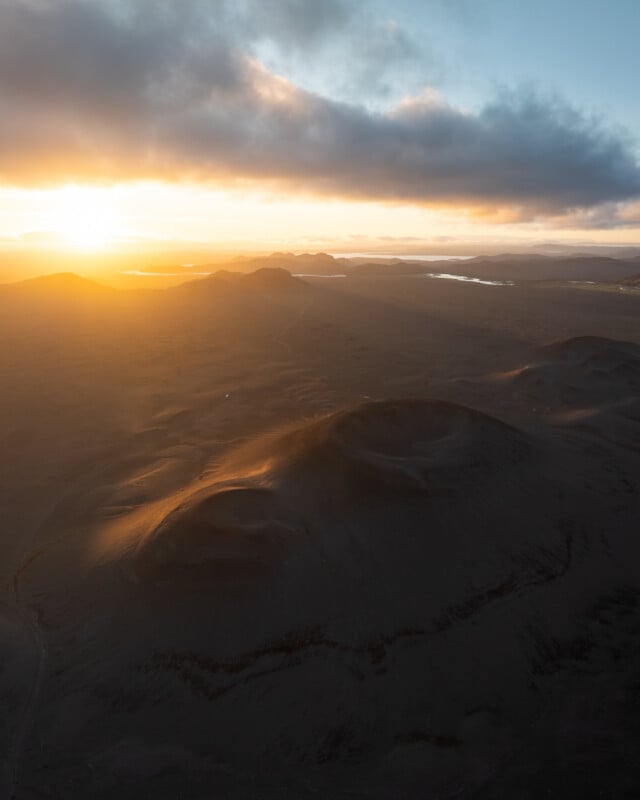
Public administration is supposed to run on evidence and produce decisions that can be examined in public. When that principle is set aside, even on a small matter like a workshop permit, the precedent stays. Whoever sits in that chair next, regulating something else, will know that opinion is now sufficient.
Whether you are a photographer planning a trip to Iceland, an Icelandic taxpayer wondering what your agencies are doing, or simply someone who believes public bodies should reason from evidence, this story is not really about drones. It is about whether a regulator can decide what it wants and then declare itself satisfied with its own decision. I would rather not be the case that establishes that precedent.
What follows is the case, drawn entirely from the agency’s own documents.
The Agency Said The Opposite One Year Ago
In its 2025 permit assessment for my company, the agency wrote, in its own words, that my project was “not likely to have a negative impact on conservation value of the sites and nature.” It noted that flights “might have negative effect on other visitors’ experience” and concluded that the impact “can be reduced if conditions of the permit are followed.” That is what they wrote on official letterhead in February 2025, for the same operator, the same areas, and a larger operation than the one I have just been refused.
For 2026, they have decided that the same activity has a “negative impact on the characteristics of the areas, that is, tranquility and overall nature experience.” Nothing material in my operation has changed. The maximum number of drones airborne at any moment is still four. Participants still fly one day per location. Several of the sites on my itinerary are the same sites the agency approved in 2025. No new research is cited. No new survey is referenced. The agency’s view changed. The reason it gives is “increased demand, disturbances, and incidents”. Strip that down: more people tried to apply for permits, more people tried to follow the rules. The agency’s response was to make the rules harder to follow. That is a reason to expand processing capacity, not to ban the activity.
Fourteen Days In 2025. Almost Two Hundred In 2026.
There is also a problem of process, not just substance. The agency’s own website states that the processing time for photography and drone permits is 15 days. In February 2025, I filed my permit application on the seventh, and the agency issued the permit on the twenty-first. Fourteen days. Comfortably within the standard.
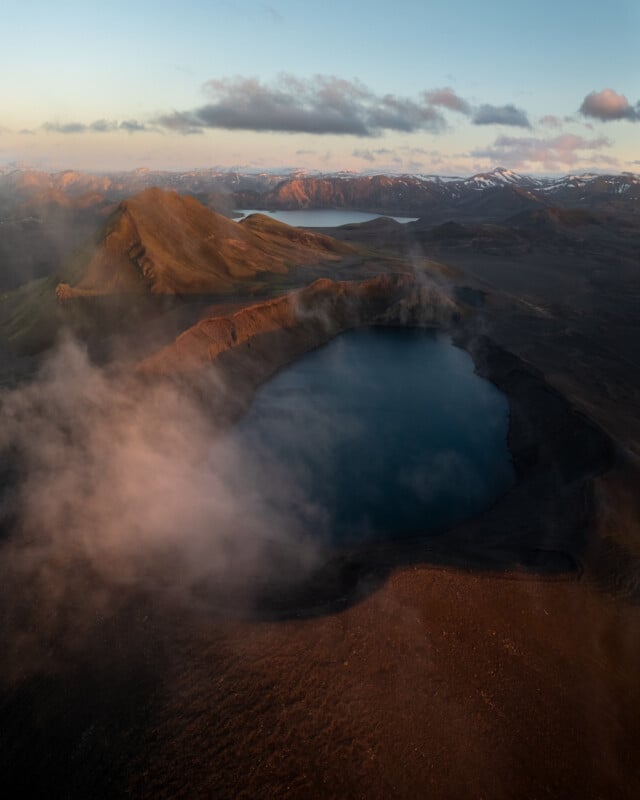
For 2026, I filed on October 1, 2025. The intention to decline arrived on March 27, 2026. The final decline arrived on April 16, 2026. One hundred and ninety-six days from submission to decision. More than thirteen times the published standard.
A timely refusal in autumn 2025 would have allowed me to redesign workshops, contact clients, refund deposits, or offer alternatives. A refusal in mid-April 2026, with the season beginning on June 15, made all of that impossible. Whatever the substance of the decision, the timing made the damage as bad as it could be.
Same applicant. Same activity. Same legal framework. One application handled in two weeks. The other was held for six and a half months. The agency has not explained the difference.
Their Own Research Says Visitors Are Not Disturbed
The agency’s own study of visitor attitudes in Fjallabak, conducted in 2019 and quoted in their 2021 to 2030 management plan at section 2.4.1.1, found that “few considered themselves disturbed by flying traffic.” The official ground for refusing my permit is disturbance to visitors and tranquility. The agency is citing the very document containing that finding to refuse a permit on the ground that flying traffic disturbs visitors. Their own evidence, in their own document, says this is not happening. No follow-up study has been published in the seven years since.
The Management Plan Does Not List Drones As A Threat
Section 2.8 of the same management plan lists the agency’s official threats to the conservation value of the reserve. The threats are off-road driving (with “tens of cases recorded every year”), erosion from foot, bicycle and horse traffic, and climate change. Drones are not on the list. The same plan, in section 2.9, describes drone photography as “popular” in the same paragraph as helicopter tourism, with no suggestion that one is a more serious problem than the other.
This is the document the agency uses to govern the reserve until 2030. They wrote it. They are bound by it. And in the document they wrote, drones do not appear among the things that threaten the reserve they are sworn to protect.
The 23 Bird Species Argument
When I objected that the locations on my itinerary had little wildlife, the agency responded that there are 23 known breeding bird species in the reserve. They are right, in the most technical sense. Twenty-three species are listed in section 2.2.6 of the management plan.
Where The Birds Actually Are
But that section also tells you where the rare and concentrated breeding habitats are: in the wetlands along Tungnaá, in Landmannalaugar, and at Löðmundarvatn. That is where the red-throated divers, great northern divers, whooper swans, pink-footed geese, ducks, and the red-necked phalarope breed, along with the redshank, wagtail, and common snipe, all rare as highland breeders.
The Tungnaá Contradiction
And here is the part I find most difficult to reconcile. My 2025 permit, issued by the same agency in writing, authorized drone flight near Tungnaá, the single most sensitive bird habitat in the reserve. The agency itself thought drone flight was acceptable there last summer. No new evidence has emerged. But the same agency now refuses permits for sites where the management plan documents no breeding habitat at all.
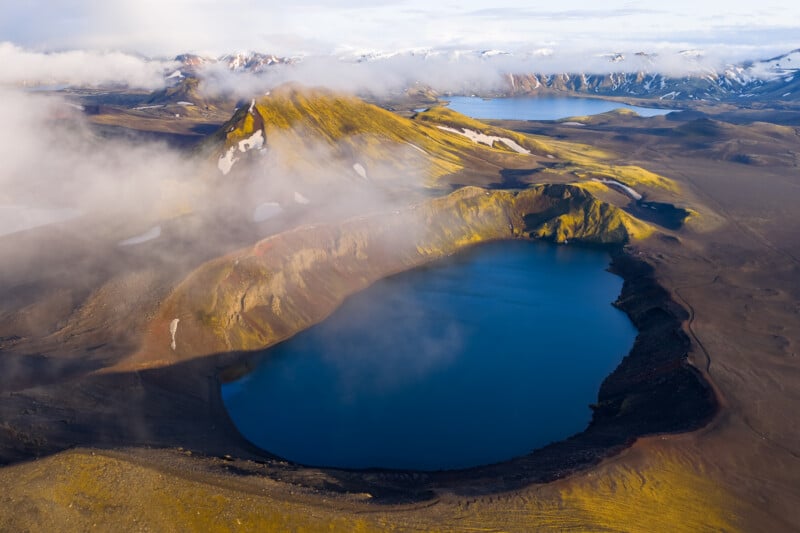
My 2026 flight sites are not in those wetlands. None appear in any of the plan’s bird sections. The nearest of them to Landmannalaugar is Bláhnjúkur, and the area I fly there sits roughly three kilometers from the wetland with considerable mountain terrain in between. A drone there is neither visible nor audible from Landmannalaugar. If the agency wants to argue that drone activity within three kilometers of the wetland needs special handling, that is a conversation worth having. They have not had it. They have refused everything.
Banning The Quietest, Expanding The Loudest
Helicopter tour operators fly tourists over Fjallabak. The management plan acknowledges that this generates “considerable” traffic over the reserve in good weather. The agency’s 2025 to 2027 action plan contains a 2026 priority to expand helicopter landing sites beyond Landmannalaugar. The same plan defines snowmobile access routes and aims to build more car and bus parking. Bus operators run scheduled services to Landmannalaugar twice a day. Buggy tours and modified 4×4 tours come and go.
A consumer drone of the kind I fly produces around 81 decibels at one metre. Sound falls off with distance; at 100 metres in highland wind, you cannot hear it. A helicopter at 150 metres altitude is 95 to 105 decibels at the listener position. A tour bus on an F-road is 80 to 90 decibels. So is a quad bike. Helicopters are louder. Buses are louder. Quads are louder. They are all permitted. The thing the agency has refused is the quietest activity in the inventory, and the denial letter rejects my noise claim without producing a single measurement to contradict it.
And here is the sharpest contradiction. The infrastructure being expanded is concentrated at and around Landmannalaugar, which the agency’s own management plan identifies as the most sensitive site in the reserve and the breeding ground for the red-necked phalarope, redshank, wagtail and common snipe. The agency is increasing visitor pressure where its own plan says protection is most needed, while refusing drone permits at sites the plan documents as having no breeding habitat at all. If “tranquility and wildlife” were the actual priorities, the agency’s investments and its refusals would look the opposite way around.
If You Banned The Tool For Its Worst Use, You Would Ban Cars First
Take the strongest possible version of the agency’s logic and apply it to anything else. Cars are used in Iceland to drive off-road in the highlands. Off-road driving is, according to the agency’s own management plan in section 2.8, the single most serious threat to the conservation value of Friðland að Fjallabaki, with tens of cases recorded every year. The vehicles used to commit those offences are motorised vehicles.
Should we therefore ban all motorized traffic in the reserve?
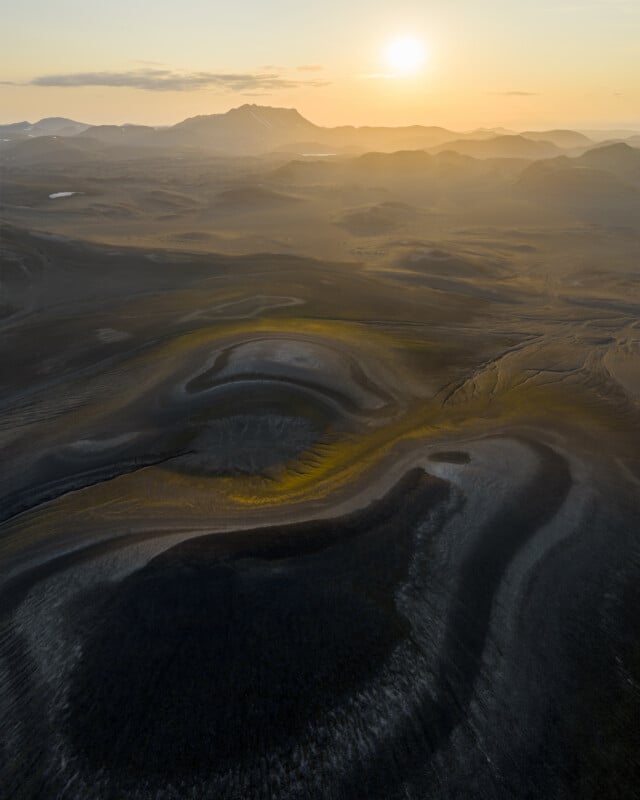
The question answers itself. Cars are regulated, not banned. There are roads they can drive on and roads where they cannot. Off-roading activity is illegal. There are seasonal closures when the ground is too wet. There are conditions, enforcement, and signage. The activity is permitted under rules calibrated to actual impact at actual times in actual places.
This is how any responsible regulator treats a category of tool. You regulate the harmful use, not the tool. The agency has not banned cars because some drivers go off-road. It has not banned hiking boots because some hikers cut rogue trails in areas closed for conservation. It has not banned horses or bicycles. However, it has decided to refuse drone permits for educational and recreational use specifically, despite drones not appearing in the management plan’s list of threats. That is not regulation. That is categorical punishment of a tool for the sins of some of its users.
Drones Are Photographic Tools
Drones are photographic tools. The people flying them in Iceland are photographers, filmmakers, and visual storytellers. I am one of them. So are most of my customers. So are most of the visitors arriving with a DJI Mini in their bag and a wishlist of places they want to shoot.
The agency treats drones as recreational gadgets. To the people actually using them, they are working tools. This is not only about equipment. It is about professional access, creative freedom, equal working conditions, and whether independent artists can practice their craft on the same footing as the people backed by big production companies. A solo filmmaker is not less of a professional than a Netflix crew. A travel photographer is not less of a professional than an ad agency. The only difference is the size of the operation behind the camera.
The Quiet Part Said Out Loud
The new policy from May 17, 2026, makes this impossible to ignore.
The same drone, the same flight, the same impact on the same wildlife in the same locations is permitted if a major production company is operating it, and refused if a small business teaching paying customers is.
As established above, my workshops are commercial activities, processed and charged as such by this same agency. So the rule the agency is invoking against me is a rule it has chosen to apply by reclassifying my work, not by following its own published categories. That is not conservation. Conservation does not depend on who is holding the controller.
Háifoss is the clearest example of what this exception actually buys. It is the second site on my own 2026 application, and it is on the agency’s refusal list. It is also the location of the final scene of Stranger Things, which Netflix released on December 31, 2025. In the weeks that followed, Google searches for “Háifoss” rose by roughly five thousand per cent. Tourism inflow follows search interest, and a single Netflix scene at a single waterfall on the 25+ refusal list will bring more visitor pressure to Háifoss than every small drone workshop ever held in Iceland combined. I do not know whether the production held a permit, and that is not the point. The agency’s policy is now built specifically to keep this kind of work flowing. The activity with the largest impact is the activity the new policy is designed to enable. The activity with the smallest is the activity it is designed to refuse. If protecting visitor experience and tranquility at Háifoss were the real concern, the order of those decisions would be the other way around.
What Is Actually Happening
The agency has decided, without supporting evidence, that recreational and educational drone photography is what it wants to discourage. The rules it is tightening, though, are rules it does not currently enforce. Iceland already has comprehensive drone regulation: Samgöngustofa’s regulation 990/2017, the Nature Protection Act, and a management plan for every reserve. What is missing is not rules. It is enforcement.
The illegal operators are not affected by any of it. They do not apply for permits. They turn up, fly, and leave. The agency told me in our meeting that it cannot enforce against them due to a lack of manpower and authority. Adding a categorical refusal of educational and recreational permits does not change that calculus. It just removes the legal operators from the field while the unlawful ones continue at the same rate. Refusing legal applicants is cheap and produces a paper trail of permits-not-granted that can be presented as conservation activity, while the illegal flights continue at the same rate. I would call this an oversight if I thought the agency had not noticed.
Workshops Are Not The Problem, They Are Part Of The Solution
Teaching people how to fly drones responsibly in nature is not a problem the regulator should be trying to solve. It is part of the solution.
Drone-flying photographers are coming to Iceland with or without permits, and the operators most likely to do the wrong thing are the ones who have never been taught what “wrong” looks like. Workshops are how you reach those people: how an experienced operator passes on knowledge about altitude, nesting season, line-of-sight, weather windows, and the operational discipline that distinguishes a careful flight from a careless one. They are also how new pilots learn that the highlands demand respect, not just access.
Pushing Activity Underground
A country that wants drone use in its highlands to be done responsibly should be encouraging more education on the subject, not less. The agency’s decision does the opposite. It pushes the activity underground, where no instructor is supervising, no conditions are being enforced, and no one is teaching the next generation of visiting pilots how to act in this landscape.
Iceland Already Has A Working Model: Vatnajökull
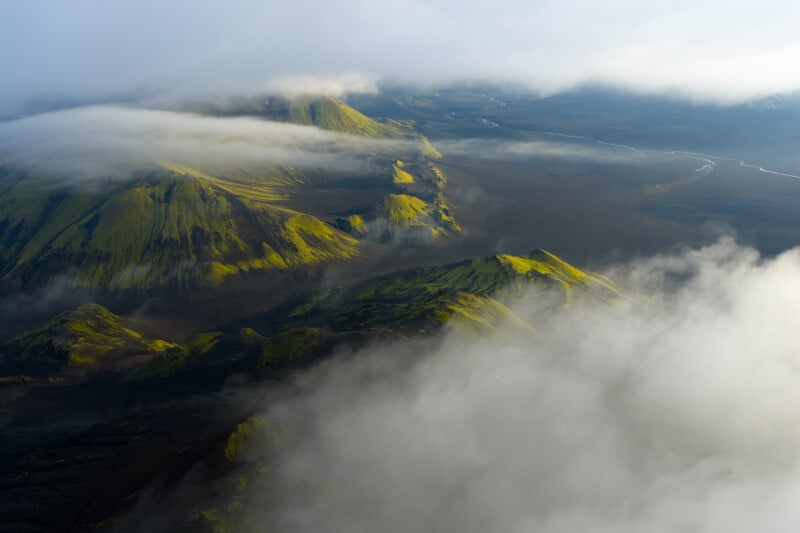
Recreational drone photography is not, in itself, a problem worth banning. Done responsibly, with appropriate time-of-day windows and exclusion zones around sensitive habitats, it is part of how visitors today engage with a landscape. And the agency already knows this, because it runs a framework that proves it.
The same Nature Conservation Agency that refuses recreational drone permits across more than 25 protected areas takes a completely different approach in Vatnajökull National Park, which it also manages. The Vatnajökull approach isn’t just less restrictive. It is fundamentally different: recreational drone flying is presumptively allowed, with sensible per-area conditions.
In Vatnajökull, recreational drone flying is generally permitted, subject to clear published regional rules. The agency has divided the park into five categories: areas where drones are prohibited outright (the most sensitive bird habitats and the most popular viewpoints), areas where rangers can give verbal permission based on conditions, and areas where flying is permitted with time-of-day restrictions calibrated to daylight and visitor traffic. At Skaftafellsjökull, drones are allowed before 09:00 or after 18:00 in summer. At Jökulsárlón, drones are banned during nesting season from 15 April to 15 July but allowed outside that window with daylight-based timing rules. At Dettifoss on the west side, similar time-of-day rules apply.
This is graduated, evidence-based regulation calibrated to actual conditions at actual sites. It is exactly the framework that the rest of the agency’s protected areas should be operating under. The agency already knows how to write rules like this. It already has. It is simply choosing not to apply the same approach to Fjallabak, Geysir, Goðafoss, Mývatn, Háifoss, or any of the other 25+ sites on its new ban list.
What A Reasonable Policy Looks Like
What is not defensible is a blanket policy that treats every recreational and educational drone application as equivalent to the noisiest helicopter flight, and treats every commercial film production as equivalent to a research permit. That is not regulation. That is a sorting mechanism dressed up as one.
What I Am Asking For
- Revert the 17 May 2026 administrative practice and reopen recreational and educational drone permits in the affected reserves under the prior standard.
- Adopt the Vatnajökull framework across all 25+ protected areas: graduated rules calibrated to actual conditions at actual sites.
- Re-process the 2026 refusal against the same standard the same agency applied in 2025, when my permit was granted.
- Invest in enforcement of the rules already on the books: rangers, signage, and consequences for unpermitted flights. Blanket refusals of permits that were going to be filed properly anyway do not change the rate of illegal flights.
- Distinguish operators by track record and actual impact, not by category. A small business with a clean compliance history is not the same as an uninstructed pilot turning up without a permit.
Where This Leaves Me
I have filed a formal appeal to the Ministry of Environment, Energy and Climate under Article 26 of the Administrative Procedures Act. I will continue to work in Iceland. I will continue to take photographs in this country I love and have made my home. My business will adapt, as it always does.
The agency tasked with protecting the country’s nature is refusing permits to small businesses that have followed every rule. That is not what conservation is for, and this country deserves better.
I Am Not The Only One
Over the past weeks, I have spoken with several operators and photographers who are in the same situation or who are raising the same concerns. These decisions, and the way they were made, have caused a great deal of anger, frustration, and disbelief in the photography community, in Iceland and beyond. Some have already spoken up publicly:
- Glacier Adventure: Iceland’s 2026 Drone Regulations: What Changed?
- A video on Instagram about the new restrictions
I Want To Hear From You
If you operate a tour or workshop business in a protected area and have been affected by the 2026 permit decisions, I would like to hear from you. Get in touch through the contact page.
Affiliate Disclosure PetaPixel articles may include affiliate links; we may earn a commission if you buy through one.