Xiaomi 17T Pro Review: High-End Photography Without the Flagship Price
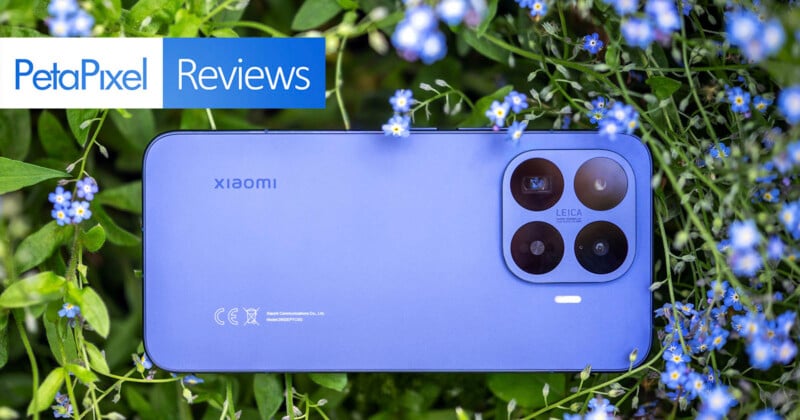
The new Xiaomi 17T and 17T Pro feature impressive cameras, due in large part to Leica’s engineering expertise and Xiaomi’s commitment to mobile photography. During extensive hands-on experiences in beautiful Vienna, Austria, I tested Leica’s imaging influence, low-light performance, telephoto capabilities, battery life, and all the other features that help set the Xiaomi 17T Pro and its more affordable sibling apart from the competition.
While the Xiaomi T Series sits below the company’s flagship lineup, it occupies a particularly interesting position for photographers. The latest generation continues Xiaomi’s partnership with Leica Camera AG, bringing Leica-inspired optics, image processing, and creative shooting modes to a more accessible segment of the smartphone market.
Full disclosureXiaomi provided travel accommodations for the purposes of hands-on time with the Xiaomi 17T and 17T Pro, but did not pay for coverage and was not provided early access to PetaPixel’s findings: Xiaomi is reading this review at the same time as everyone else. As always, PetaPixel’s opinions in reviews are its own.
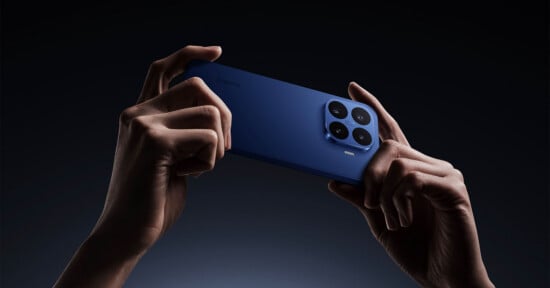
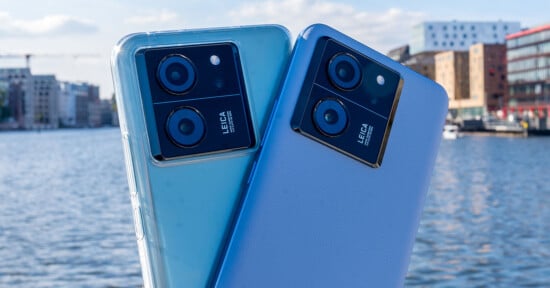
Ahead of the launch event, I received both devices to test in real-world situations, the Xiaomi 17T Pro in Deep Blue and the standard Xiaomi 17T in Deep Violet. Once in Vienna, I had ample opportunity to put the smartphones through their paces. This review focuses on the 17T Pro, as it is the more compelling model for mobile photographers, but I tested each device.
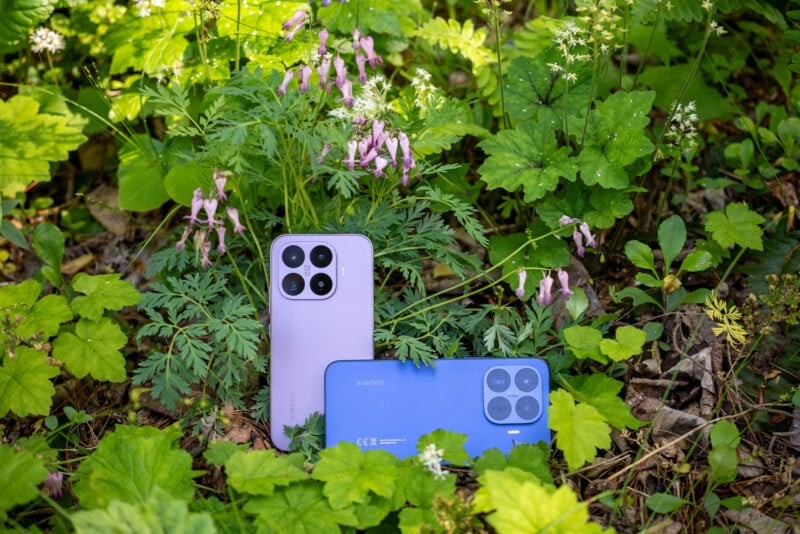

What surprised me most during my time in Austria with the 17T Series devices was that I never once reached for my mirrorless camera.
For a professional photographer, that’s not a statement I make lightly. Yet throughout several days of sightseeing and travel photography, I found myself relying entirely on the Xiaomi 17T Pro and Xiaomi 17T. The reality is that the best camera is often the one that’s immediately available, and in many travel situations, I simply didn’t feel the need to stop, unpack a larger camera system, set up equipment, and process images later when the smartphone in my pocket was capable of capturing the moment effectively.


Leica Imaging Takes Center Stage
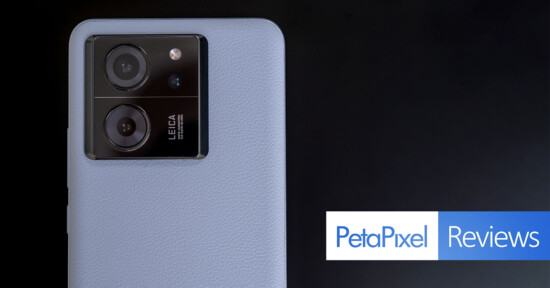
The biggest selling point of the Xiaomi 17T Series is undoubtedly its Leica-branded camera system. Both models feature Leica Summilux optics and a triple-camera setup comprising a 50-megapixel primary camera, a 50-megapixel Leica 5x telephoto camera, and a 12-megapixel ultra-wide camera.
“With the Xiaomi 17T series, we’re taking another step towards our shared vision of mobile photography. We’re bringing together Leica Summilux optics, versatile telephotography and the Leica Live Moment to create an experience that goes beyond the classic single shot. This helps bring memories to life in the shape of dynamic photos,” explains Marius Eschweiler, Vice President, Mobile Business Unit at Leica Camera AG.
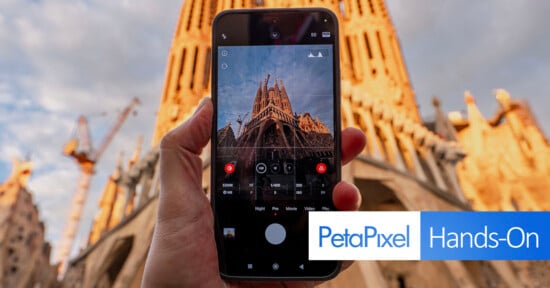
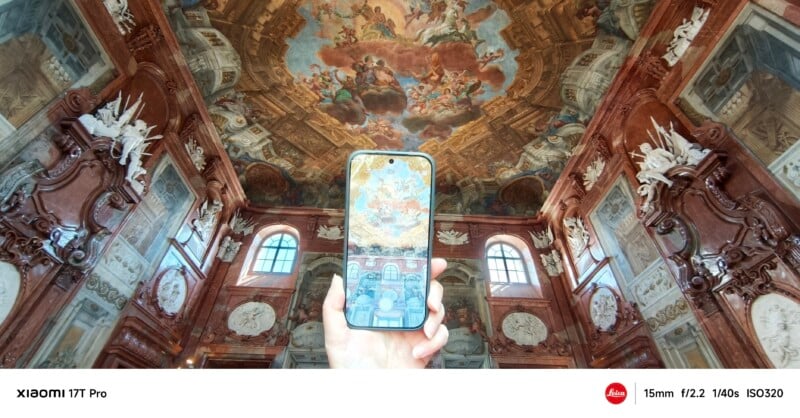
For photographers, the focal length range is one of the most practical aspects of the system. The cameras cover an equivalent range from 15mm on the ultra-wide lens to 115mm on the telephoto camera, giving users access to everything from expansive architectural and landscape scenes to tighter compositions and portrait work without needing to switch devices.
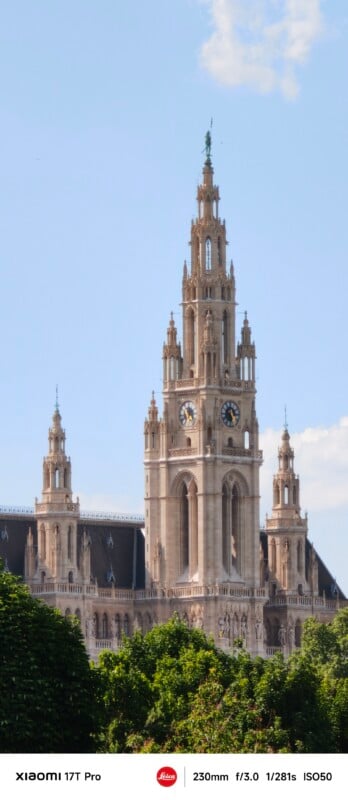
What stood out in practice, however, was how capable the system is at closer distances. The telephoto camera in particular proved surprisingly effective for close-up work, with a minimum focusing distance of around 11.8 inches (30 centimeters) enabling strong telephoto macro-style shots. This made it possible to isolate textures, details, and small subjects with a level of separation and background compression that you don’t typically associate with a smartphone camera system.

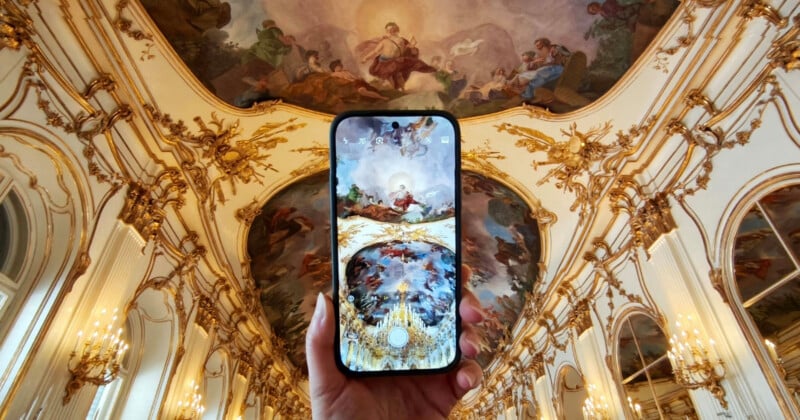
During my time in Vienna, I found myself using the telephoto lens for more than just distant subjects. Architectural details, decorative elements, and even small environmental textures often looked more compelling when shot from a slight distance using the 115mm equivalent focal length. The combination of optical stabilization and high resolution also helped maintain clarity and fine detail, even when working at closer focus distances.
As a result, the system didn’t just feel versatile across traditional focal lengths, it also encouraged a different way of seeing everyday subjects, where stepping back slightly and using the telephoto lens often produced more intentional and visually layered images than shooting up close with the wider cameras.

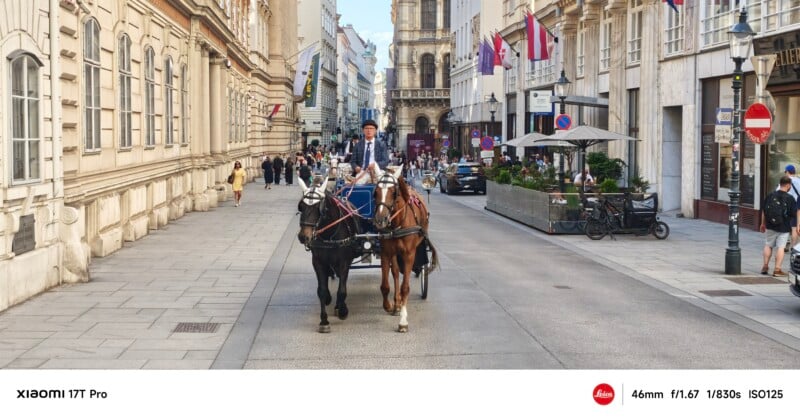
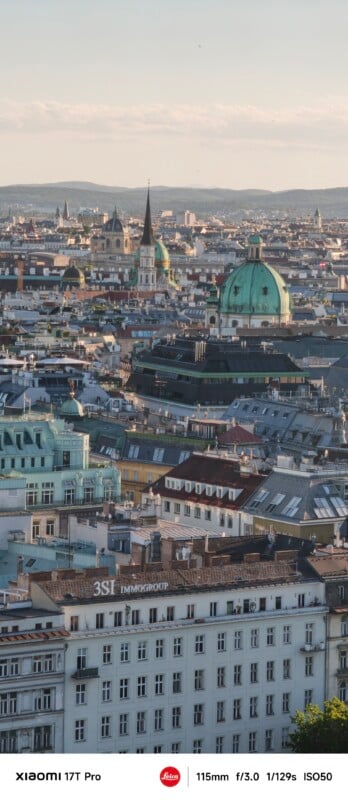
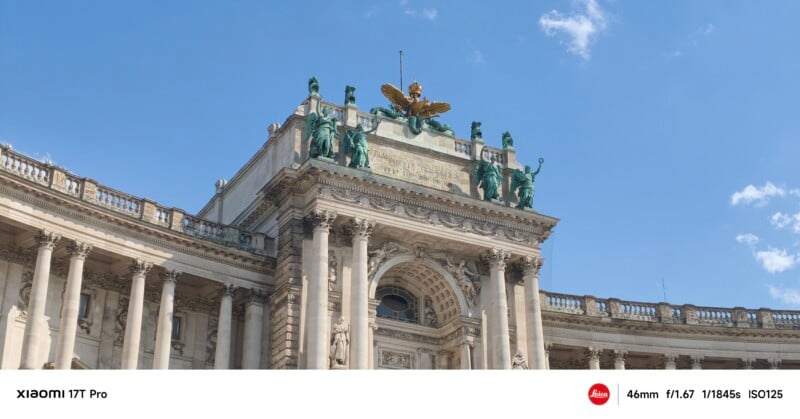
The inclusion of a Leica 5x telephoto camera on both models is particularly notable. The 115mm equivalent focal length proved genuinely useful while exploring Vienna, allowing me to isolate architectural details and create compressed compositions that would be difficult to achieve on many competing smartphones.
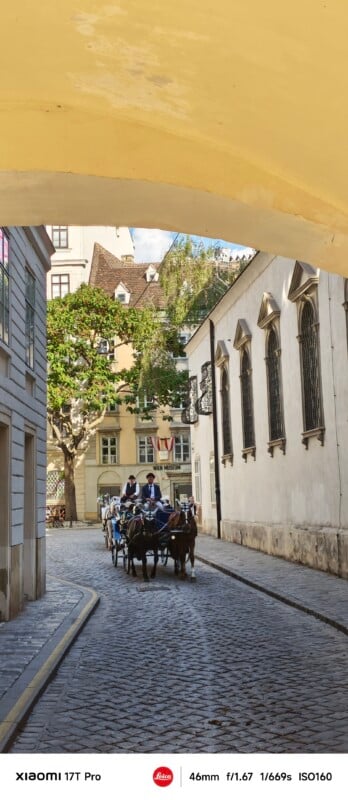
While both phones offer digital zoom beyond that range, I still believe dedicated camera systems maintain a significant advantage when photographing distant subjects. If I were photographing wildlife or subjects requiring substantial telephoto reach, I would still choose a mirrorless camera with a dedicated telephoto lens. However, for everyday travel photography where you may experience a mix of street photography, architecture, and portraits, the 115mm equivalent lens proved more than capable. The following two images, the first taken through a glass window and the second from a moving vehicle, show how quickly I could grab the phone and record a travel memory.

Leica Vivid Became My Go-To Look
One area where the Leica partnership feels more meaningful than simple branding is the image rendering itself.
Modern smartphones have largely reached a point where most flagship and premium devices can produce technically good photographs. For me, the difference increasingly comes down to how images look and feel rather than simply how many megapixels a sensor contains.
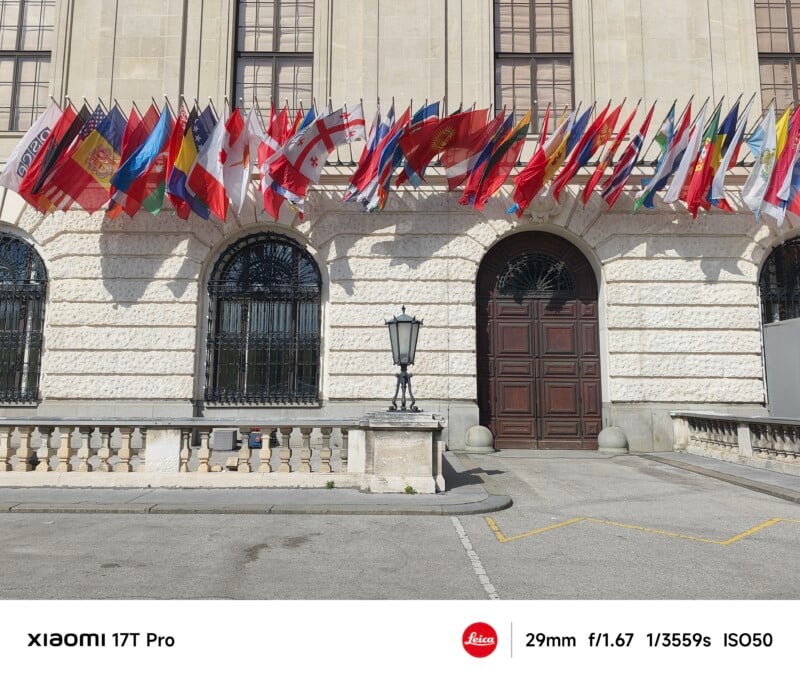
The Xiaomi 17T Series offers multiple Leica-inspired image styles, each providing a distinct visual character. During my time with the phones, I gravitated toward Leica Vivid. I tend to prefer vibrant colors and stronger saturation in my travel photography, and Leica Vivid consistently delivered images that closely matched the look I would typically create when processing files from my mirrorless camera.
That was one of the most interesting aspects of using these devices. The images often looked remarkably close to what I would have edited them into later, eliminating much of the post-processing work that typically follows a day of shooting.
For casual users, that means attractive images straight out of the camera. For photographers, it means less time spent behind a computer.
Dynamic Range and Low-Light Performance
One of the strongest impressions the Xiaomi 17T Series left on me was its dynamic range performance.
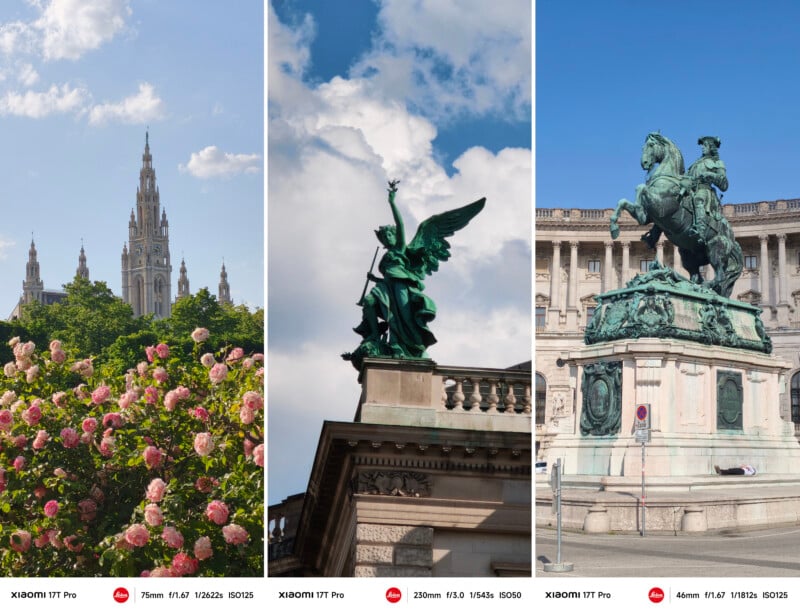
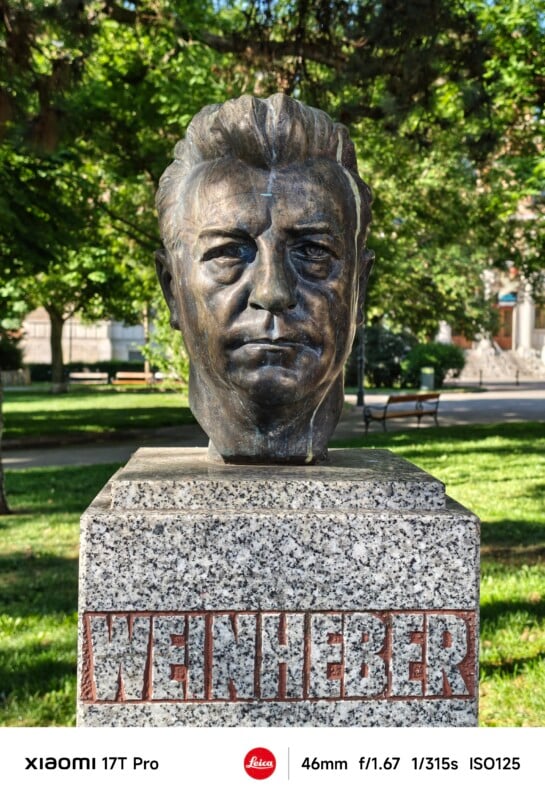
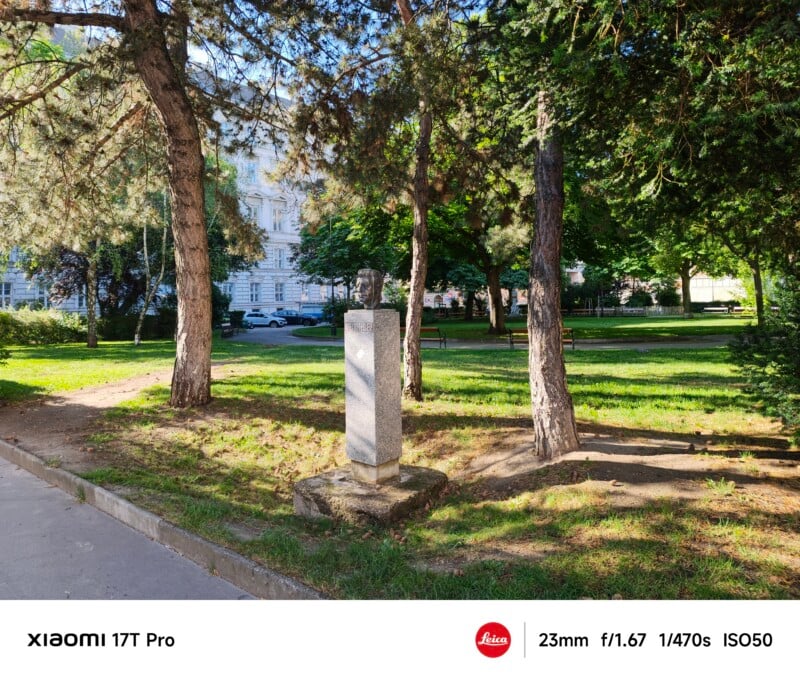
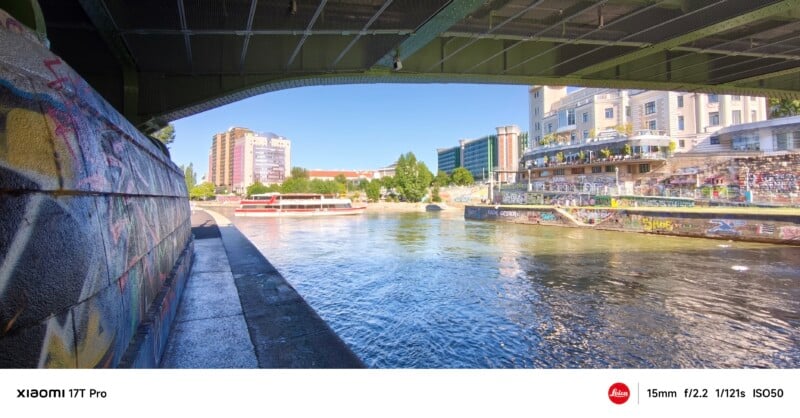
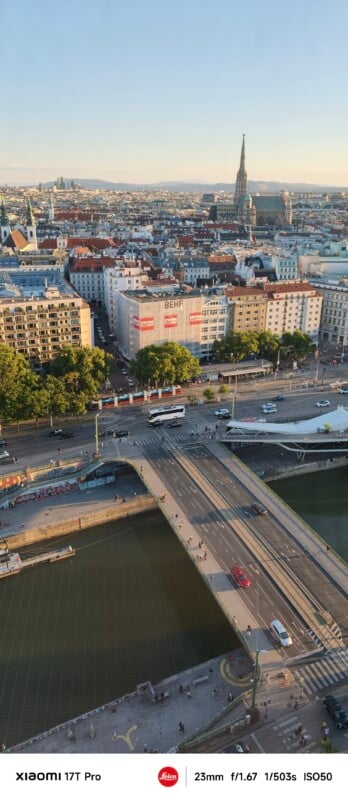
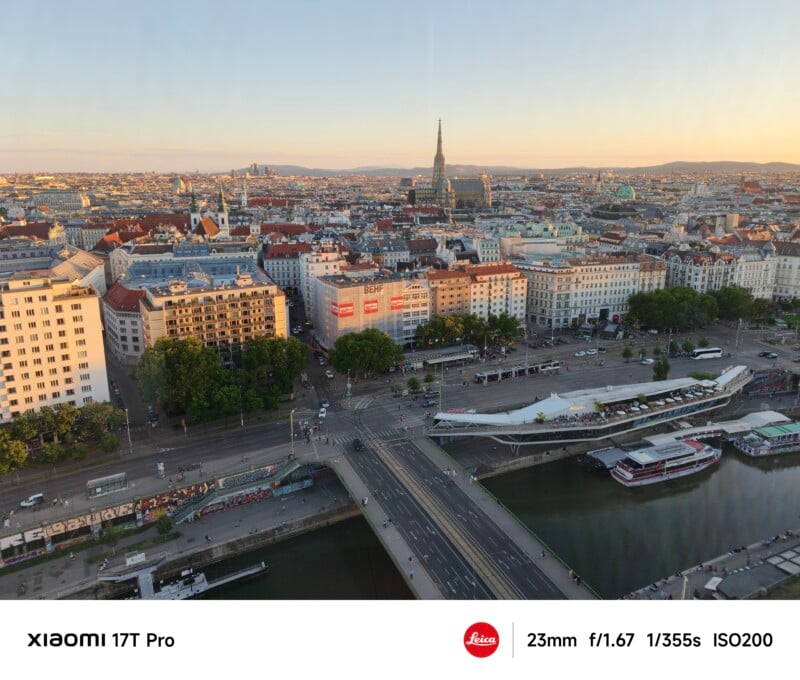
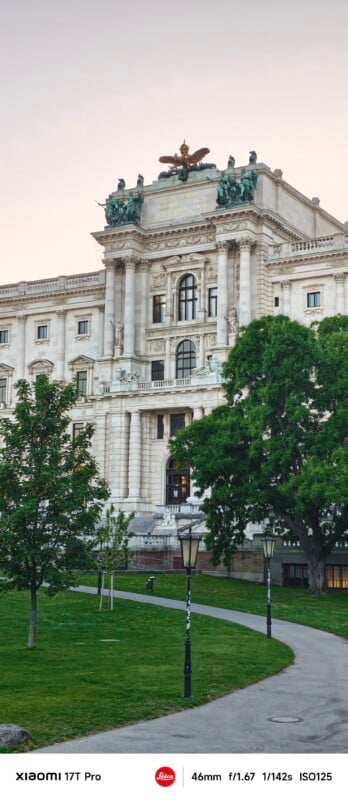
Every image accompanying this article was captured with the phone and left completely unedited. I intentionally avoided any post-processing, including removing distractions or making adjustments to highlights, shadows, or color. What you’re seeing is exactly what came out of the devices.
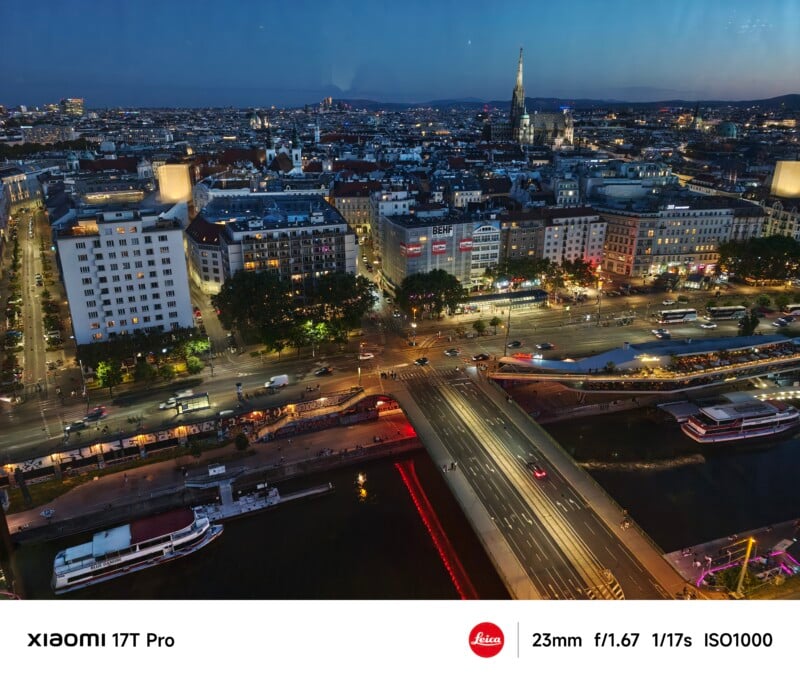
This approach highlights one of the system’s strengths. Whether photographing bright daytime scenes or evening cityscapes, the cameras consistently retained detail in both highlights and shadows while maintaining the contrast and color saturation that I personally enjoy.
The Xiaomi 17T Pro benefits from a larger 50-megapixel Type 1/1.31 Light Fusion 950 sensor paired with a Leica 23mm f/1.67 lens. The standard Xiaomi 17T uses a smaller 50-megapixel Type 1/1.55 Light Fusion 800 sensor with a Leica 23mm f/1.7 lens.
The two phones have the same ultra-wide and telephoto setup, featuring the same 12-megapixel Type 1/3.06 sensor and 15mm f/2.2 lens as before and the all-new 50-megapixel Leica 5x telephoto camera with a 115mm equivalent f/3 lens and Type 1/2.76 sensor.
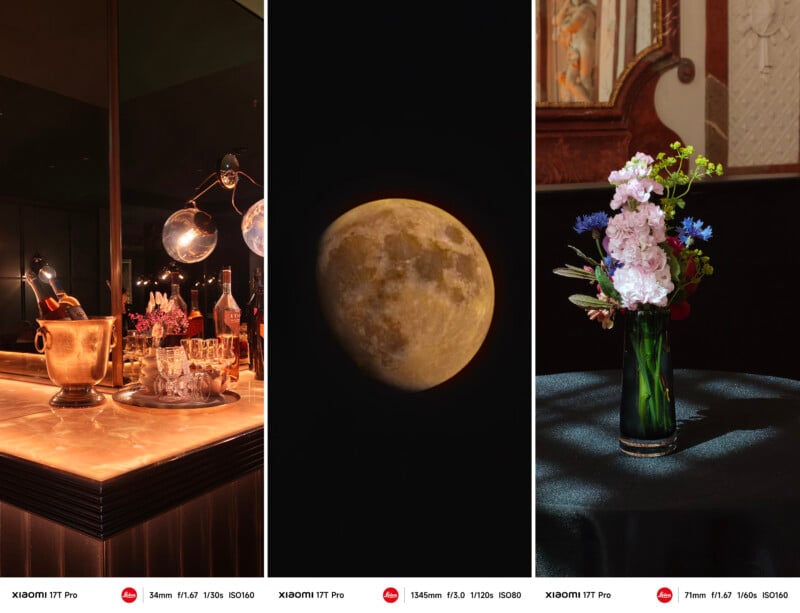
While both phones performed well, the larger sensor in the Pro model gave it a noticeable advantage in more challenging lighting situations. Walking through Vienna after sunset, I was impressed by how well the camera retained detail and color without introducing excessive noise. Some smartphones achieve brighter images at night by aggressively smoothing details, but the Xiaomi 17T Pro managed to preserve both sharpness and vibrancy while maintaining a natural look.
Leica Live Moment Is More Useful Than It Sounds
The feature I initially expected to overlook turned out to be one of the most interesting aspects of the phones.
Called “Leica Live Moment,” the feature records a brief sequence surrounding the moment the shutter is pressed and uses AI-assisted selection to identify what it believes is the strongest frame.
The mention of AI may cause some photographers to roll their eyes, but in practice, the feature is surprisingly practical.
If someone blinks during a portrait, Leica Live Moment can select the frame where their eyes are open. When photographing birds or moving subjects, I often selected frames where wings were extended, or body positions appeared more dynamic.
For casual users and newer photographers, this can dramatically improve success rates without requiring any technical knowledge.
What surprised me was that the feature also has creative applications beyond simple automation. Leica Live Moments can be combined into collages and motion-rich social media content, making it useful even for experienced creators who don’t necessarily need assistance capturing the decisive moment.
The feature works across all rear camera focal lengths and is also available in portrait mode through Leica Live Portrait.
Battery Life That Actually Lasts All Day and Then Some
The other standout feature for me was battery life.
Smartphone cameras have become incredibly capable, but none of that matters if your phone runs out of power halfway through the day. As photographers increasingly rely on smartphones for both image creation and content sharing, battery endurance becomes just as important as camera performance.
The Xiaomi 17T Pro features a massive 7,000mAh silicon-carbon battery paired with 100W wired HyperCharge and 50W wireless charging. The standard Xiaomi 17T includes a still-impressive 6,500mAh battery with 67W charging support.
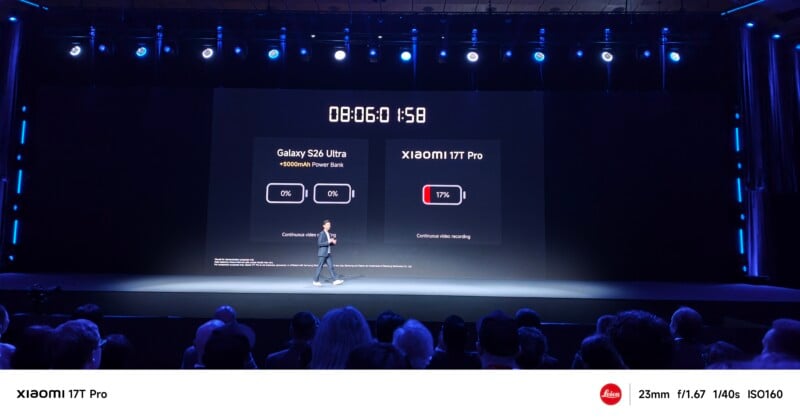
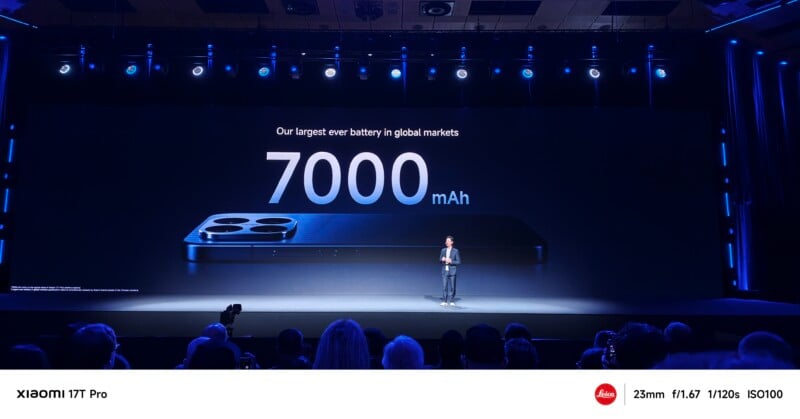
More importantly, my real-world experience confirmed Xiaomi’s ambitious battery-life claims. After full days of photography, navigation, social media use, and general travel activity around Vienna, I routinely finished the day with 30 to 40 percent battery remaining.
That’s significantly better than what I typically experience with my personal Samsung Galaxy device. In everyday life, I often carry a power bank to make it through a long shooting day. During my time with the Xiaomi 17T Pro, I never felt the need.
For photographers, creators, and travelers, that level of endurance can be every bit as valuable as a new camera feature.
Performance and Display
Both phones are powered by MediaTek’s latest chipsets, with the Xiaomi 17T featuring the Dimensity 8500-Ultra and the Xiaomi 17T Pro stepping up to the flagship-class Dimensity 9500.
The devices pair those processors with LPDDR5X memory, UFS 4.1 storage, and Xiaomi’s 3D IceLoop cooling system. Throughout my testing, performance remained responsive whether switching between camera modes, editing content, navigating maps, or multitasking during travel.
The displays are equally impressive. Both models feature bright 1.5K AMOLED panels capable of reaching 3,500 nits peak brightness. The Xiaomi 17T offers a more compact 6.59-inch display with a 120Hz refresh rate, while the Xiaomi 17T Pro increases the screen size to 6.83 inches and boosts the refresh rate to 144Hz.
Photographers will appreciate the excellent color reproduction, HDR10+ support, Dolby Vision compatibility, and TÜV Rheinland eye-care certifications designed to reduce eye strain during extended viewing sessions.
Eye Care Display for Long Shooting Days or Long Nights Scrolling
Beyond brightness and color accuracy, the Xiaomi 17T Series also emphasizes long-term viewing comfort. For photographers, this becomes more relevant than it might seem at first. Reviewing images, editing on the go, and checking framing in varied lighting conditions can mean hours of looking at a screen throughout the day.
Both the Xiaomi 17T and 17T Pro feature Xiaomi Vision Care, a suite of display-level adjustments designed to reduce eye strain during extended use. This includes adaptive control of blue light, flicker reduction, and motion tuning that adjusts based on ambient lighting conditions.
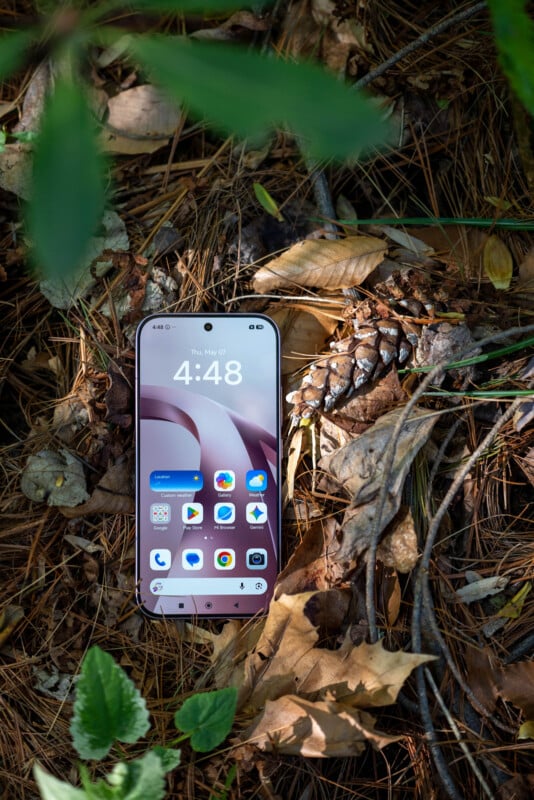
The displays are also TÜV Rheinland certified across multiple categories, including low blue light performance, flicker-free operation, and circadian-friendly viewing. In practice, this means the screen subtly shifts its behavior depending on whether you’re shooting in bright daylight or reviewing images at night.
I made sure to use the phones extensively in both bright and low-light conditions, as well as while reviewing and capturing images, to better understand how the displays adapt in real time. The auto-adjustments were subtle enough that they often shifted without me noticing.
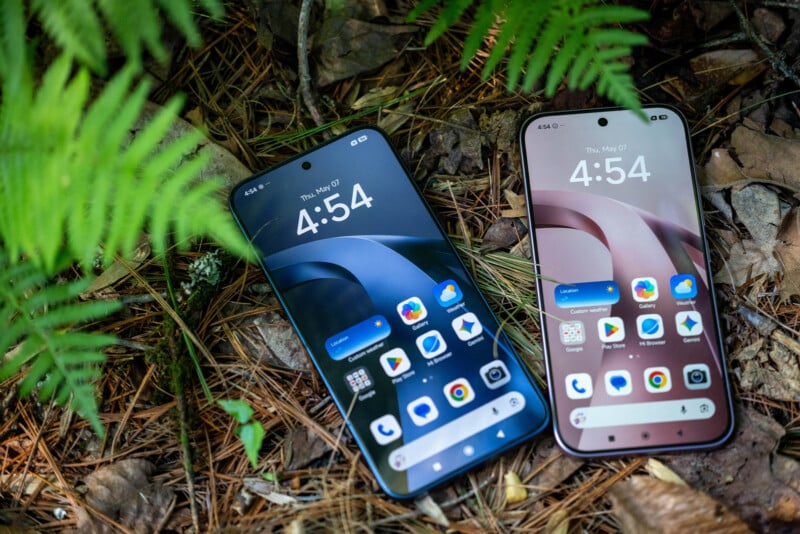
One of the more noticeable benefits during my time in Vienna came after long days of shooting. Whether I was going through images in bright light while walking around the city or reviewing compositions late at night, the display remained comfortable to use without feeling overly harsh or fatiguing.
While eye-care features rarely headline smartphone marketing in photography contexts, they do contribute to a more usable experience for creators who spend extended periods working directly on their devices in the field.
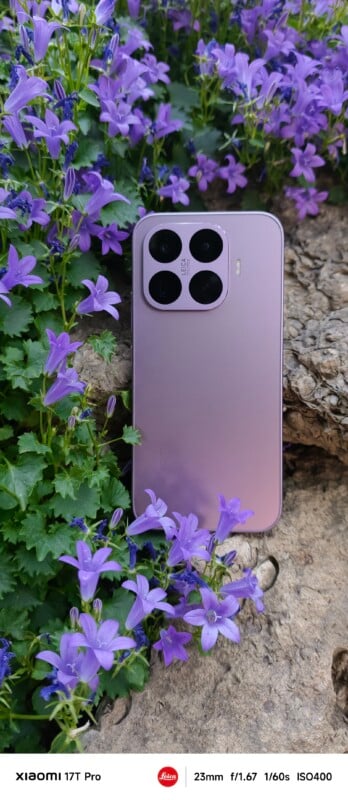
Xiaomi 17T vs Xiaomi 17T Pro: Which One Should Photographers Choose?
After spending time with both devices throughout the launch event in Austria, I found myself reaching for the Xiaomi 17T Pro more often than the standard Xiaomi 17T. That is not to say the 17T is lacking. In fact, for many users, it may be the better value. However, photographers and content creators are likely to appreciate several advantages offered by the Pro model.
The most significant difference is the primary camera sensor. While both phones feature Leica Summilux optics and share the same 50-megapixel telephoto camera, 12-megapixel ultra-wide camera, and Leica imaging experience, the Xiaomi 17T Pro’s larger image sensor has real-world photography benefits.
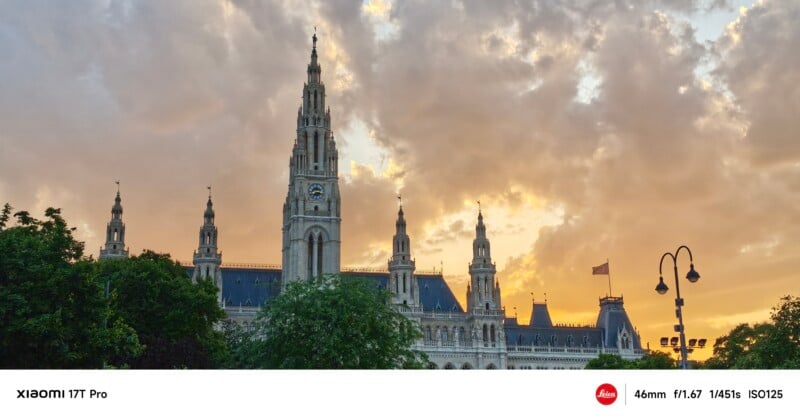

In practical use, that larger sensor translates into better low-light performance, improved light-gathering ability, and slightly stronger dynamic range in challenging conditions. During evening photography sessions around Vienna, the Pro model consistently produced images with a bit more depth and confidence in difficult lighting conditions.
Battery life is another area where the Pro distinguishes itself. The Xiaomi 17T already offers an impressive 6,500mAh battery, but the Xiaomi 17T Pro pushes that even further with a massive 7,000mAh silicon-carbon battery. Combined with 100W wired HyperCharge and 50W wireless charging, it became the device I naturally gravitated toward during long days of travel and photography.
The Pro also offers additional video capabilities for creators. Support for 8K video recording, 4K recording at up to 120 frames per second, Movie Mode, and advanced cinematic features provide more flexibility for users who regularly create video content alongside still photography.
Display preferences may come down to personal taste. The Xiaomi 17T features a more compact 6.59-inch display that is easier to use one-handed and slips more comfortably into a pocket. The Xiaomi 17T Pro, meanwhile, offers a larger 6.83-inch display with a 144Hz refresh rate, making it particularly enjoyable for reviewing images and video content.
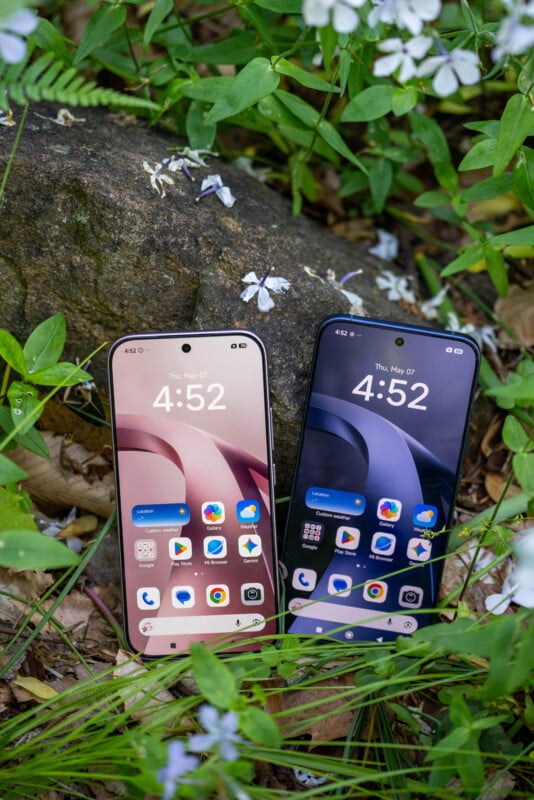
If your primary interest is obtaining the Leica imaging experience at the lowest price point, the Xiaomi 17T delivers much of what makes the series compelling. You still receive the Leica 5x telephoto camera, Leica image styles, Leica Live Moment, strong battery life, and the same overall photography-focused philosophy.
For photographers who frequently shoot in low light, travel extensively, create video content, or simply want the most capable camera experience available within the lineup, the Xiaomi 17T Pro is the model I would personally recommend. It was the device I found myself relying on most throughout the trip, and the combination of the larger sensor, exceptional battery life, and expanded video features makes it the more complete tool for serious image makers.
Availability in the United States
One important thing for U.S. readers to understand is that Xiaomi smartphones are not officially sold through major American carriers. Unlike brands such as Apple, Samsung, and Google, Xiaomi does not maintain partnerships with U.S. wireless providers, meaning you won’t find the Xiaomi 17T or Xiaomi 17T Pro displayed in carrier stores or offered through installment plans from providers such as T-Mobile, AT&T, or Verizon.
The absence of Xiaomi devices from carrier shelves is largely due to business and regulatory challenges that have limited the company’s presence in the U.S. market for years. While Xiaomi remains one of the world’s largest smartphone manufacturers and enjoys strong market share across Europe, Asia, and other international regions, the company has chosen not to pursue a large-scale retail presence in the United States.
That does not mean Americans cannot use these devices.
The Xiaomi 17T Series can typically be purchased through third-party retailers and importers, allowing consumers to buy the phone outright and activate it on a compatible carrier. For many users, T-Mobile offers the best compatibility with international smartphones because of its support for a wide range of LTE and 5G frequency bands. Depending on the specific regional model purchased and local network coverage, users may also find varying degrees of compatibility with other carriers.
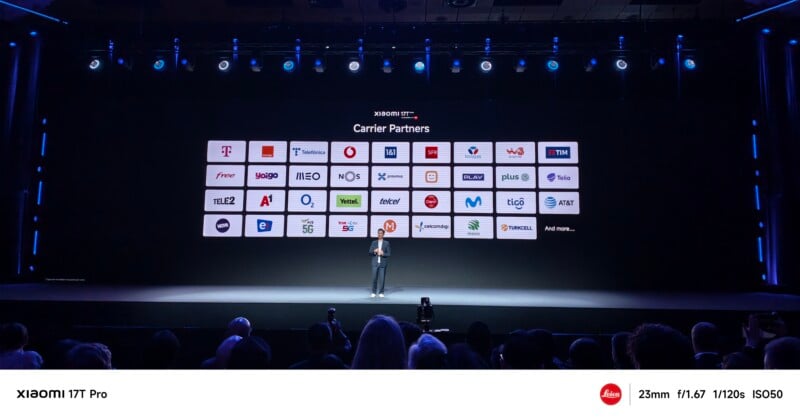
As with any imported smartphone, prospective buyers should verify band compatibility before purchasing to ensure the device supports the frequencies used by their carrier in their area. Features such as Wi-Fi calling, carrier-specific services, or certain 5G bands may not always function identically to devices officially sold by U.S. carriers.
For photography enthusiasts, however, importing a device is hardly uncommon. Many photographers already purchase camera gear, lenses, and accessories from international markets when a product offers unique capabilities unavailable domestically. The Xiaomi 17T Series falls into a similar category. While obtaining one requires a bit more effort than walking into a carrier store, the process is relatively straightforward for those interested in experiencing Xiaomi’s latest collaboration with Leica.
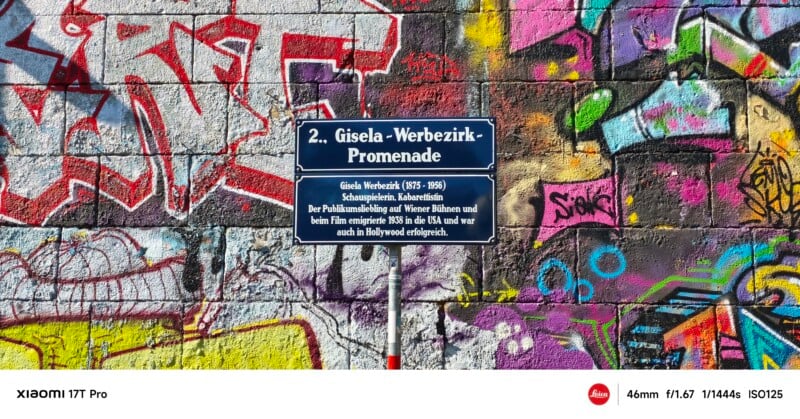

The Xiaomi 17T Pro Is An Extremely Compelling Smartphone for Photographers
Taken as a whole, the camera system remains one of the most well-rounded options in this price segment. Leica’s influence on color science is immediately noticeable, delivering a consistent and distinctive rendering that gives images a more intentional look compared to many competing smartphones, which tend to look more snapshot-like.
Beyond still photography, there’s also a genuinely strong set of creator-focused tools built into the system. Features such as 4Kp60 recording with Log support push the Xiaomi 17T Series beyond casual shooting, offering flexibility for users who want more control in post-production. In many ways, it feels like Xiaomi is steadily closing the gap between smartphone convenience and more serious creative workflows.

That said, not every part of the system is equally strong. As with previous generations, the 15mm ultra-wide camera remains the weakest link in the lineup. It uses a 12MP sensor, which sits well below the resolution of the main and telephoto cameras, and it still lacks autofocus, relying instead on a fixed-focus f/2.2 design. In practice, this limits its flexibility, particularly when compared to the more capable and consistent 50MP main and telephoto lenses.
The 15mm ultra-wide camera does still serve its purpose, and I found myself using it for several wider compositions throughout the trip. For many users who primarily share images on social media to be viewed on pocket-sized screens, the difference in resolution may not be particularly noticeable in everyday use. However, from a photography standpoint, it feels more like a supporting utility lens rather than an equally balanced part of the overall camera system.
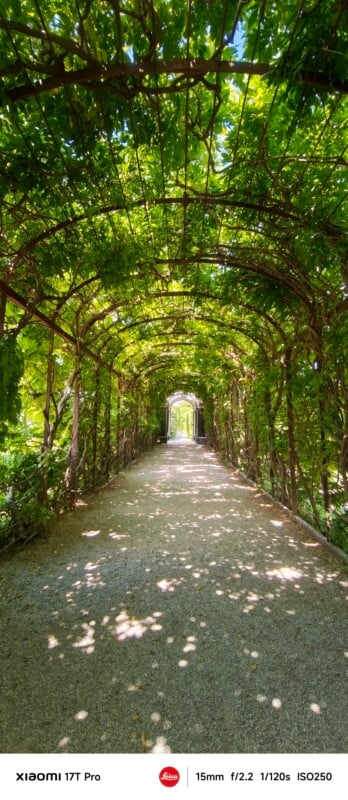
While the Xiaomi 17T Series delivers a strong overall imaging experience, there are still a few minor nitpicks where refinement could make a meaningful difference, particularly from a photographer’s point of view.
One limitation I noticed is in panoramic shooting. At the moment, panorama mode appears to default to the widest available camera, with no option to use the 5x (115mm equivalent) telephoto lens. Adding telephoto support for panoramas in a future update could open up some very interesting creative possibilities, especially for compressed architectural scenes and layered landscape compositions.
I also found myself wanting more scene-aware shooting modes beyond what is currently available. The Stage mode, in particular, stood out as one of the most effective intelligent tools in the system. It handles complex lighting situations well, automatically adapting exposure and processing in a way that feels natural and unobtrusive. Expanding this behavior to additional scenarios could make the camera system even more versatile without requiring user input.
More broadly, the direction Xiaomi is heading with features like Leica Live Moment and Stage mode feels promising. I’d like to see that approach evolve further into a wider set of intelligent, scene-detecting tools that can recognize different environments and respond dynamically, while still preserving a natural photographic look rather than an overly processed result.
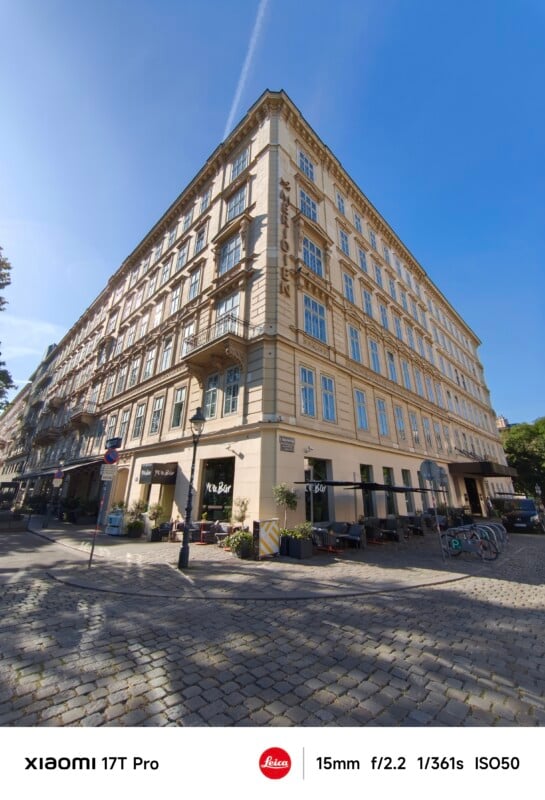
Overall, Xiaomi’s Leica partnership feels meaningful rather than superficial, producing images with a distinct visual character that stand apart from many competing smartphones. The new 5x telephoto camera significantly expands creative possibilities, Leica Live Moment introduces genuinely useful functionality, and battery life and 100W fast charging on the Xiaomi 17T Pro is among the most impressive I’ve experienced on a smartphone.
During several days exploring Vienna, I had a mirrorless camera in my bag but never felt compelled to use it. That’s perhaps the strongest compliment that I can give the Xiaomi 17T Series.


Are There Alternatives?
The Xiaomi 17T Series sits in a fairly competitive space where several brands are pushing hard on computational photography and creator-focused features. Naturally, there are a few strong alternatives depending on what you prioritize as a photographer.
The most obvious Android comparisons come from Samsung and Google. Devices like the Samsung Galaxy S-series offer extremely polished all-round camera systems, particularly in video consistency and social-ready output, while Google’s Pixel lineup continues to front-line computational photography, especially for effortless still images with minimal user input. Both are strong choices if you prioritize point-and-shoot simplicity and predictable results.
Apple’s iPhone lineup also remains a key benchmark, particularly for video creators. The consistency across lenses, industry-leading video workflow, and tightly integrated ecosystem continues to make it one of the most reliable choices for professionals who rely heavily on mobile video production, especially those already working within Apple’s ecosystem.
Should You Buy It?
Yes. The €899 (approx. $1,046) Xiaomi 17T Pro and its slightly cheaper €749 (approx. $871) sibling may not sit at the very top of Xiaomi’s smartphone hierarchy, but after spending time with both devices in Austria, I came away impressed by what they offer photographers and everyday users alike, especially the 17T Pro.
The Xiaomi 17T Pro succeeds in doing exactly what mobile photography should do: make it easier to capture and share moments without getting in the way.
Image creditsPhotographs by Kate Garibaldi