Apple Apologizes for Slowing Down Aging iPhones
Apple has just issued a public apology for slowing down aging iPhones. The company originally admitted to the slowdown last week, sparking outrage and a flurry of lawsuits against the company.
Apple has just issued a public apology for slowing down aging iPhones. The company originally admitted to the slowdown last week, sparking outrage and a flurry of lawsuits against the company.
JOBY today announced a new GorillaPod model called the GorillaPod Mobile Rig. It's a flexible tripod that builds upon the original classic by adding more arms for holding more accessories.
The iPhone has become the digital camera of choice for hundreds of millions of people around the world these days, but if you've used your iPhone for more than a year or two, you may have noticed a slowdown in performance. Apple has just admitted that it intentionally slows down aging iPhones, but there's a non-sinister reason for that.
Google has created a trio of apps that utilize experimental technology in a bid to push forward the possibilities of smartphone photography and videography. The apps — Storyboard, Selfissmo!, and Scrubbies — use techniques like smart object recognition and person segmentation algorithms similar to Portrait Mode to enable creative editing of images and video.
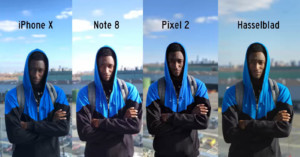
Dual cameras have become ubiquitous in the smartphone world, and with them has emerged a new technique for simulating a shallow depth of field -- the feature commonly called ‘Portrait Mode’. This 10-minute video from Marques Brownlee explains how it works, and it also pits Portrait Mode on an iPhone X, Note 8, and Pixel 2 against the $8,000 medium format camera Hasselblad X1D.
If you easily get motion sickness, you may want to stay away from this short film. Visual storyteller Tim Sessler recently spent 48 hours shooting in New York City with an iPhone 8 and the new Freefly Movi cinematic robotic gimbal. What resulted is Vortex, this 1.5-minute short film in which the world continually turns.
The rise of smartphone photography just hit another milestone: for the first time in Flickr's history, half of all photos being uploaded to the photo-sharing service were shot with a smartphone in 2017.
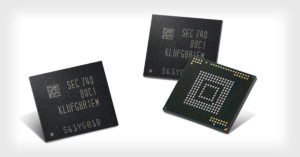
Samsung smartphone are about to get a lot more internal storage. Samsung has announced that it has begun mass production of a 512GB embedded Universal Flash Storage solution that will appear in the next generation of smartphones from the South Korean giant.
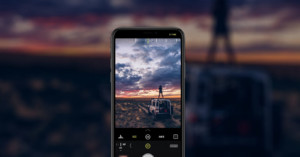
Freefly creates professional drone and gimbal solutions for the cinema industry, and today it released a specialized gimbal for smartphones: the Freefly Movi.
I take a lot of photos. Usually, I pack either a Sony a7R II or a Leica M -- two cameras with massive sensors and brilliant lenses. But lately, I’ve been shooting exclusively with the iPhone X, and have found it absolutely excellent.
SnapBridge is Nikon's official app that enables users to "easily and seamlessly" share images and control certain Nikon cameras from a smartphone or tablet. Nikon just released version 2.0 of the app, which brings a number of new features, including full manual control and a revamped user interface.
One of the world's prestigious international portrait photography competitions has sparked a conversation about the nature of portrait photography after it awarded a top prize to a photo that doesn't even show an actual human being: the portrait is of an android.
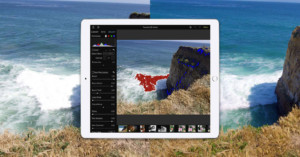
Gentlemen Coders, creators of Apple-compatible software for photographers, has introduced its new RAW Power app for iPhones and iPads. The program allows for the editing of RAW files on Apple smartphones and tablets.
"Shot on smartphone" ads and sample photos/videos are often created with the help of expensive accessories that help achieve more than you can with just the phone -- things like stabilizers and lenses. If you'd like to see what you can achieve without these add-ons, check out this 4K cinematic video by Matteo Bertoli.
Want to see the video capabilities of the iPhone X? Here's a beautiful 3-minute cinematic short film about a French pastry chef. Everything you see was shot entirely with the iPhone X.
VSCO has just introduced Recipes to its popular mobile photo editing app, enabling users to create and share presets that allow for quick applications of certain looks and styles to photos.
The new Apple iPhone X is the best smartphone on the market for shooting still photos. That's what DxOMark concluded in its new review, giving the phone a best-ever sub-score of 101 for photos. For video, however, the iPhone X scored a weaker 89, dragging its overall score down to 97.
Samsung just released this 1-minute commercial for the Galaxy Smartphone. Titled "Growing Up," it directly mocks the Apple iPhone and its history of competing with the Samsung Galaxy.
Want to take your iPhone 7 Plus or 8 Plus beyond Portrait mode? Focos is an app that takes bokeh to the next level while also giving you the ability to choose your focus point after your shoot your photos.
Want to turn your smartphone snapshots into DSLR-quality photos? A group of scientists in Switzerland is trying to help make that possible. They've created a neural network that aims to automatically enhance low-quality phone snapshots into "DSLR-quality photos."
Have you ever considered that your iPhone might be watching you? Felix Krause, a developer at Google, says he has found that iPhone apps could theoretically spy on you if given camera permissions.
Nude is a new app for iOS devices that will automatically identify and hide all of your sensitive photos, protecting them from prying eyes and making your Camera Roll safe to share with family and friends.
Huawei just unveiled two new smartphones, the Huawei Mate 10 and Mate 10 Pro. The phones include the world's first Kirin AI processor as well as dual Leica cameras.
DxOMark's camera ratings are becoming more and more influential in the camera and smartphone industries. But how exactly do the scores work? Here's an 11-minute video in which tech personality Marques Brownlee (AKA MKBHD) shares "the truth about DxOMark smartphone ratings."
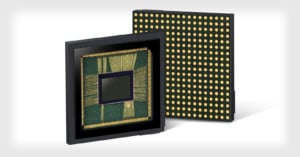
First launched in the iPhone 7 Plus, Apple's 'Portrait Mode' uses depth data from dual rear cameras to generate faux blur for a shallow depth-of-field effect. Google's new Pixel 2 has a similar mode that's done with a single "dual pixel" sensor. Now Samsung has unveiled a new "dual pixel" sensor that may bring this tech to an even wider audience.
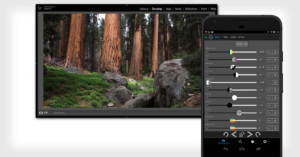
Control Room is a new app that turns your smartphone or tablet into an external control panel for Lightroom photo editing. This means you can control adjustments through the screen on your phone while watching those adjustments affect the large photo open in Lightroom on your computer.
Google's new Pixel 2 phones boast the best smartphone camera ever tested by DxOMark. In this 9-minute video by Nat and Friends, learn how Google created this bar-raising camera. The video includes a number of interesting interviews with the Pixel 2 team.
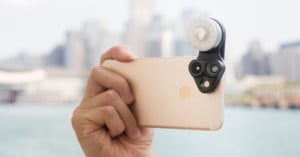
The RevolCam is a new unified smartphone attachment that adds wide angle, macro, and fisheye lenses to the camera along with an adjustable and detachable LED light and mirror.
Google has just announced the Google Pixel 2, a followup to the original smartphone that packed what Google called "the best smartphone camera ever" when it was announced in October 2016.
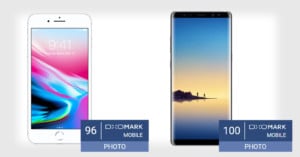
The iPhone 8 Plus' reign as the sole top tested camera at DxOMark didn't last long. The camera testing lab just published its review of the Samsung Galaxy Note 8, which now joins the iPhone 8 Plus with the same highest-ever overall score of 94. The Note 8 also has the highest-ever still photo score of 100, beating the 8 Plus' 96.
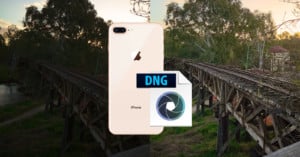
A few weeks back I ran some tests on the RAW files taken with the latest iPad Pro. Frankly, I was pretty impressed, the quality was indeed considerably better than what’s possible on my “soon to be replaced iPhone 6S Plus”. Those test results got me quite excited because I fully expected to find the DNGs produced by the new iPhone 8 Plus would be a small step further step up the quality ladder.
If you think the $799 iPhone 8 Plus' photo quality is impressive, get this: the camera modules are estimated to cost just $32.50 in materials.
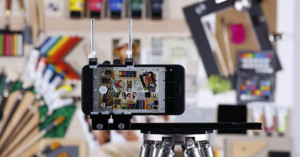
Cinematographer Matteo Bertoli got his hands on an iPhone 8 Plus and took it out and about in Los Angeles to test its video capabilities. The 4K cinematic footage in the 2.5-minute video above was shot entirely on the smartphone.
After updating your iPhone to iOS 11, you may have noticed that your photos are all .heic files instead of the ubiquitous .jpeg. If you're rather go back to shooting JPEG for now until you feel more ready to make the switch, it's actually extremely easy to do.
The new iPhone 8 Plus has the best smartphone camera ever. That's the conclusion DxOMark came to after the camera testing lab went hands-on with the new Apple smartphone. With a record score of 94, it's now the clear leader in the market.
The Google Pixel smartphone and its "best camera ever" will soon be even more "Made by Google." The search giant just announced that it would purchase the Pixel hardware division from Taiwan's HTC in a $1.1 billion deal.
Google today rolled out the latest version of its Snapseed photo-editing application. Version 2.18, available for Android and iOS users, features a fresh new user interface and new presets.
There's a feature tucked away in the new iPhones that doesn't seem to be getting a lot of traction, but it represents a massive sea change in photography. It's the "Portrait Lighting" mode, and it's the second shot across the bows of traditional photography from the world of computational photography.
With the upcoming release of iOS 11, Apple's new HEIF/HEVC photo formats will make it trickier to use and share iPhone photos in a world still dominated by JPEG images. Luckily, heictojpg.com is here to save the day with an easy-to-use conversion service for converting HEIC to JPG.
The new iPhone will shoot 4K at 60 fps and 1080p at 240 fps. But why is it that smartphones seem to be shooting "better" video resolution than most "serious" cameras? In this 8-minute video, Max Yuryev looks into the technical reasons behind this.
DxOMark, the popular benchmarking website for sensors and lenses, has updated the way it will rank and score smartphone cameras. It's introducing bokeh and zoom as categories in its scoring methodology, with added importance on low-light and motion performance as well.
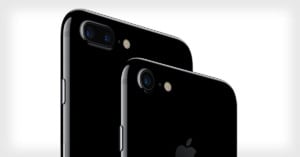
Apple has just officially announced the iPhone 8, iPhone 8 Plus, and iPhone X, a new generation of iPhones that boast, among other features, upgraded cameras for improving the photos captured by the masses. There's also a brand new Portrait Lighting technology.
TIME magazine's latest issue features a special project titled FIRSTS, which features profiles of 46 influential women who are changing the world. For the photography in the project, TIME recruited 28-year-old Brazilian photographer Luisa Dörr to shoot 46 portraits and 12 cover photos using an iPhone.
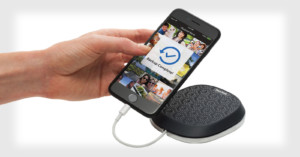
Sandisk has just launched the new iXpand Base, a charging station for the iPhone that also helps to keep your photos and data safely backed up.
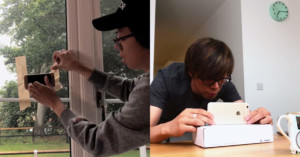
French photographer Philippe Echaroux recently decided to challenge himself in the area of shooting portraits of strangers. Instead of using high-end camera equipment, he decided to use an iPhone and light his subjects using a McDonald's Big Mac box.
Insta360, the company behind a number of 360 cameras, has announced its latest model: the Insta360 ONE. Dubbed a "shoot first, point later" camera, the device's "FreeCapture" technology allows you to retrieve stills and short 1080p clips from parts of the 360 compilation in hindsight.
Facebook has updated its mobile app for both iOS and Android with support for capturing and sharing 360° photos without any extra hardware required.
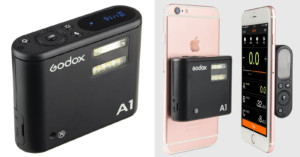
After teasing the product and sharing some sample portraits, the Chinese flash manufacturer Godox has now officially announced the A1. It's a flash, LED, and trigger 3-in-1 unit designed for smartphone cameras.
As the saying goes, sometimes the best camera is the one that you have with you. With some clever tools and techniques, Kai Wong shows how your smartphone can be used to create usable video in the 5-minute video above.
Qualcomm, which creates mobile processors, is pioneering a new active depth sensor that will probably make its way to Android phones next year via their upcoming 2nd generation Snapdragon processor.