Ideas

Time-Lapse Shows What San Francisco Looks Like Without Any Humans

Two years ago, director Ross Ching created a viral hit by showing Los Angeles in a time-lapse video in which every trace of cars and people was removed. That project was such a success that Ching tells us he's now planning to create an entire series based on the same idea, showing what iconic cities around America would look like if the humans within them suddenly vanished. The first stop in his "Empty America" tour was San Francisco, captured beautifully in the haunting video above.

Photographer Visits Every Dot on the Map of North Dakota and Snaps 9,000+ Photos

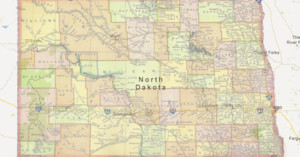
A decade ago, photographer Andrew Filer obtained the most detailed map of North Dakota he could find, and began a project of documenting the towns on it. Not just some of the towns, but every single named dot on the map. After years of dedicated work, Filer succeeded in photographing the entire state. He ended up visiting over 850 different locations and snapping 9,308 photographs.

Clever Video of a Man Turning the B&W Photo He’s In Into a Color Photo

About a year ago, we shared a creative stop-motion video by Eran Amir that involved 500 different volunteers holding 1,500 individual photographs in order to create an animation. That video has amassed over 1.5 million views since then. It appears that Amir has a magical touch when it comes to viral web videos, because now he's back with another video that's going viral -- one that's also related to photography in an unusual way.

Surreal Composites Created by Arranging Individual Instant Photos

Since 2006, Brooklyn-based artist Patrick Winfield has been creating incredible photo collages by photographing and recreating scenes using a large number of individual instant photo prints. Some of his pieces are composed by more than over one hundred instant photos! Although his work mostly featured Polaroid films early on, Winfield branched out into other types as well (e.g. The Impossible Project instant films) after Polaroid bowed out of the industry.

Turn Solid Glass Objects into Liquid by Splashing Some Water

Here's a fun weekend photo project for you to try: turn solid glass objects into liquid by splashing water onto them. That's what Mexico City-based photographer Jean Bérard did for his series titled Liquid Glass. He set various glass vessels onto a table, and photographed them multiple times while splashing the water contained within and tossing water on from the outside.

All the Unedited Photos from a Portrait Session in One Minute

Here's an interesting way to provide a behind-the-scenes look at how a portrait shoot was done. After photographing British comedian Frank Skinner, UK-based photographer Harry Borden took all the unedited photos from the shoot and turned them into a one-minute time-lapse movie. The resulting short film is a glimpse into how a session progressed from one pose to another, and the different ideas that were tried.

Famous Movie Scenes Revisited Using a Printer and Digital Camera

Living and working in New York City, Canadian writer and producer Christopher Moloney walks past many locations used as settings in movies. This past summer, he began documenting those spots with an awesome "photo in a photo" project. Using a simple black-and-white printer and a cheap digital camera, Moloney visits the exact locations where famous scenes were filmed at, and shoots a photograph of a printed movie still from just the right perspective so that it blends into the background. His …

Layers of Light and Time Captured on Single Frames Using a 4×5 Camera

London-based photographer Tony Ellwood has a project called In No Time that deals with our perception and awareness of our passage of time. All the photographs are of the same pier on a beach that Ellwood visited over a period of six months. His technique, which took him 18 months to develop and perfect, involves visiting the location multiple times for each photo -- sometimes up to three times a day for multiple days. Using a 4x5 large format camera, Ellwood creates each exposure across …

Bacteriograph: Photographs Printed with Bacterial Growth

Microbiologist-turned-photographer Zachary Copfer has developed an amazing photo-printing technique that's very different from any we've seen before. Rather than use photo-sensitive papers, chemicals, or ink, Copfer uses bacteria. The University of Cincinnati MFA photography student calls the technique "bacteriography", which involves controlling bacteria growth to form desired images.

Wearable Cameras May One Day Give Us Ultra-HDR Vision

When doing certain types of welding, special helmets with dark lens shades should be used to protect the eyes from the extremely bright welding arc and sparks. The masks help filter out light, protecting your eyes, but at the same time make it hard to see the details in what you're doing. In other words, the dynamic range is too high, and wearers are unable to see both the arc and the objects they're welding.

Create Beautiful Surreal Photographs by Stacking Your Film Negatives

We've shared a number of examples of surreal images created using multiple exposure techniques or by combining images using Photoshop, but did you know that you can also create beautiful images by stacking actual film negatives? Photographer Laina Briedis did some experiments with 35mm film stacking, and achieved some stunning results. She combined photos of stars and sky with pictures of people, creating images that look like they were plucked from someone's dreams.

Portraits of High School Football Players in the Style of Political Campaign Photos

Four years ago, Kai-Huei Yau had an idea. During a presidential election year, why not create a series of high school football preview photographs that tie into the political atmosphere? This year, the Tri-City Herald photographer finally put the idea into motion. His "Football Campaign 2012" series features portraits of local high school football players that make them look like they're running for office rather than preparing for a season of war on the gridiron.

Bizarre Portraits of People With the Back of Their Heads as Beards

Upside Down (Faces) is a bizarre portrait project by Milano, Italy-based photographer Davide Tremolada. The photos show the front and back sides of individuals digitally blended into a single head, with the backside of the head serving as a giant beard. The resulting look is quite surreal, especially if the subject already had a beard to begin with.

Shooting Studio-Lit Portraits of a Dancer in Motion at 14FPS Using a Canon 1D X

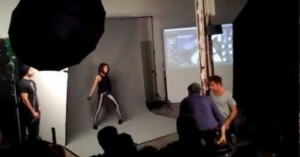
The 14 frame per second continuous shooting speed of the Canon 1D X DSLR probably isn't a feature you'd associate with studio-lit portraiture, but that's exactly what Australian fashion photographer Georges Antoni demonstrates in the short clip above. Using the Broncolor Scoro for stobe lighting, Antoni unleashes the full FPS potential of the camera in order to capture a model dancing in as many still frames as possible.

Pentax Si is a Concept Camera Based Around a Single Dial Button

Designer Andrew Kim thinks that point-and-shoot cameras aren't simple enough for many ordinary consumers. After all, if you're only looking to take snapshots of everyday life, having buttons and dials that can toggle undesired functions is more of an annoyance than a benefit. Taking a page from Japanese industrial designer Naoto Fukasawa's book, Kim created a concept camera that he calls the Pentax Si.

5K Footage Created by Shooting with the Canon 1D X at 14FPS

Canon's new flagship DSLR, the 1D X, can shoot 18.1-megapixel JPEG photographs at a staggering 14 frames per second in burst mode. This is nearly at the 16 frames per second needed to hide jerkiness from the human eye -- the flicker fusion threshold for moving images. Though the frame rate falls short of the 24fps used for Hollywood movies and by many video cameras, 18.1 megapixels per frame translates to 5K resolution in video lingo, while the video feature of the 1D X only shoots at 1080p (~2 …

Five Friends Take the Same Group Photo for 30 Years

Back in 1982, 19-year-old five buddies -- John Wardlaw, Mark Rumer, Dallas Burney, John Molony, and John Dickson -- went on vacation to Copco Lake in California and snapped a group photo (seen above). Since then, they've embarked on the same vacation every 5 years, staying at the same cabin, sitting on the same bench, and snapping the same photo (with identical poses and all). They're 48-years-old now, and the tradition is still going strong.

100cameras: Using the Power of Pictures to Help Kids Help Themselves

Photography, at its essence, tells a story. And even though the majority of the "photography" we see today tells the story of how we went to Pinkberry yesterday or what city we happen to be in at the moment, powerful photography is still very much alive because there are plenty of powerful stories. 100Cameras, like so many charities, relies on photography to tell the powerful stories of underprivileged children; only, unlike the rest, they don't put the children in front of the camera, they put …

How Much is a Like, Comment or Follower on Instagram Worth to You?

If the concept of spending real money on a like, comment or follower on Instagram seems downright strange to you, then join the club. But a couple of new websites seem to be capitalizing on people who are willing to do just that. Both Buy Instagram Followers and Buy Instagram Likes sell packages of tens, hundreds and even thousands of likes, comments, and followers that desperate seekers of Instagram popularity can purchase given they've got enough dough to spend.

Astro: A Time Lapse “Hockey Puck” That Mounts on Your Tripod

Time-lapse photography has become more and more popular in recent months, and even though you can find cheap intervalometer solutions to take care of the basic triggering of your camera, there really isn't anything outside of the DIY category that will allow you to add smooth motion to your time-lapse on the cheap. Fortunately, innovations happen every day, and a new intervalometer and motion control unit over on Kickstarter is just the innovation to solve this problem.

Dizzying Animations that Show What San Francisco Looks Like to Superman

Director Kevin Parry recently finished creating a music video for the song "Water Falls" by Kalle Mattson. Filmed by Andrea Nesbitt, the video features some crazy time-lapse shots over great distances in San Francisco. Parry has also turned the shots into these animated GIFs that show you what various locations would look like if you were Superman whizzing around.

Augmented Reality App Puts Virtual Images on Physical Walls

LZRTAG is a free Android app that lets you generate QR codes associated with uploaded images -- mostly animated .gif images. The codes can be printed out and placed on walls and other surfaces. When scanned with the Android app, the codes call up the associated image and display it in an augmented reality on your phone.

Why We Hate Seeing Photos of Ourselves

If you're human then you've probably looked at a portrait of yourself at some point and been dissatisfied for one specific reason or another. Most of the time, though, it just comes down to an unexplainable "I don't like it" or "I never look good in pictures" or, in extreme cases, a sound effect similar to gagging. But according to this short TED audition, the problem isn't with your expression or your looks, it's in your head.

17-20-23: A Lip-Sync Video That Spans Six Years

Alex Dainis of Boston first recorded herself lip-syncing the song "Aaron's Party" by Aaron Carter back when she was 17. Three years later she made another recording, and finally this year -- at the age of 23 -- she made a third. This resulting video, titled 17-20-23, shows her singing her heart out at all three ages. She writes, …

Portrait Project Seeks to Document Every Human Skin Tone

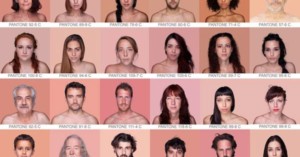
Any sort of portrait photographer is intimately familiar with the huge variety of skin tones represented by us homo sapiens, but until now nobody had thought to document them all. That's the mammoth task that Brazilian artist and photographer Angelica Dass has taken upon herself with her portrait project Humanae.

Iconify: The Modern Portfolio, Reimagined

One of the most important things a photographer must do is advertise and sell their services. All professionals have a good grasp on how to take great photos and edit them in post to make them look even better, but fewer have the time, expertise, or funds to put together a quality portfolio that will catch a client's eye and bring them business. That's where the Iconify platform comes in.

Outer Space in a Studio: Nebulae Photos Using Fiber Glass Lamps

At first glance, the images in Fabian Oefner's Nebulae might look like images of distant galaxies captured with a space telescope. They were actually shot in a studio using a number of fiber glass lamps. Oefner used exposures of different lengths to capture the ends of the lit fiber glass as points and streaks of light. He then combined multiple images into single photos to achieve the "star density" seen in the final images.

Foap App: Selling Your iPhoneography Sans Filters and Frames

Who says you can't make money selling photos taken on your iPhone? Certainly not the creators of a new app dubbed Foap, which allows you to do just that. The app is pretty easy to use: just download it for free off the iTunes store, upload your best pics, tag them so they're easier to find, and submit. After that every photo will have to be manually approved before it's put up on the Foap Marketplace for $10 a pop, $5 of which goes to the photographer.

Casio Camera App Uses Light To Send Secret Messages

The camera in your smartphone is good for a lot of things, and we're not just talking about Instagram and causing the sad yet inevitable demise of the point-and-shoot; now it can also be used to send and receive secret messages using light. A new Casio camera app called Picapicamera encodes messages or graphics using a sequence of red, green and yellow flashing lights, which another user of the app can then point their camera at to decode.

Iris: A Concept Camera That’s Controlled Using Your Eye

Using the human eye to control cameras isn't a new idea -- Canon used to offer eye-controlled focusing in its SLRs -- but designer Mimi Zou's Iris concept camera takes the concept one step further by having the camera be entirely controlled by the eye. Shaped like a lens, the photographer uses the camera by simply looking through it. Focusing, zooming, and snapping photos are done by looking, narrowing/widening the eyes, and blinking (respectively).

The Bastards Book of Photography: An Open Source Primer on Using Light

Typical photo books and resource books for photographers come printed and bound, which is not a bad thing. Digital as our photography has become, displaying it, or teaching people how to replicate it, are two areas in which ink on paper still rule. Dan Nguyen's The Bastards Book of Photography, however, breaks these rules, and in the process becomes both a great resource for beginners, and a re-think on book distribution and creation.

The Next Step In the Evolution of Light Painting

The video above was put together by the European art duo known as Sweatshoppe, and believe it or not, there was no post-production used in creating it what-so-ever. They call the technique -- which they pioneered -- video painting, and they make it happen by using custom-built electronic paint rollers and custom-designed software. As you can see, the final result is pretty awesome. For more info, check out the video's Vimeo page.