Who Is Responsible for a Camera’s Failure?
When news broke that French digital rangefinder maker Pixii had entered liquidation, the response across the photography community was swift and, for PetaPixel, surprisingly personal.
In the aftermath, emails, comments, and video responses began pointing fingers directly at Chris Niccolls, claiming his critical evaluation of the Pixii Max dealt a fatal blow to a struggling boutique manufacturer. Below is one email that PetaPixel received, with the identity of the sender kept anonymous to protect their privacy:
Thank you for helping to destroy prospects for Pixii SAS with your devastating review of the Pixii Max. Awww, you couldn’t get a free trip to Provence to try out the camera in a 5 star resort. What a shame!!!
You should have considered the implications of what a bad review would do to their future prospects. They were already on the brink when you did the review. Now we have one less new entrant in the imaging business. Who knows what they could have become in a couple of years. I would have bought one if they could have ironed out some of the major issues.
THANK YOU, CHRIS! You really did your job exposing this company. And now they are bankrupt and in liquidation.
This and all of the accusations PetaPixel has seen carry a familiar refrain: had Pixii done the song and dance of an international press trip, the coverage of the camera would have been warmer, buying the startup enough runway to survive.
But blaming critical journalism for a company’s commercial collapse misunderstands both the role of editorial oversight and the harsh realities of the camera market.
The Myth of the Purchased Review
Every reviewer carries personal bias. Preference in camera design, menu layout, tactile feedback, and image rendering naturally shapes how any photographer evaluates a tool. However, the idea that luxury press trips or manufacturer access dictates whether a review is positive or negative falls apart under scrutiny.
Reviewers — and PetaPixel uses this term specifically to separate them from influencers — regularly attend manufacturer launch events because they provide dedicated environments to test gear under demanding conditions — whether capturing sports, wildlife, or street photography. Yet, at least in PetaPixel‘s case, those experiences do not buy favorable coverage.
For example, consider the Panasonic Lumix S9. PetaPixel traveled to Osaka for the launch, yet offered sharp criticism regarding its lack of an electronic viewfinder and key shooting limitations. Chris has openly said he doesn’t like this camera.
Another example is the Leica SL series. Despite multiple trips to Germany, PetaPixel's reviews consistently questioned whether the performance justified the premium price point.
A third example, perhaps? Consider the Sigma BF. Long-standing professional relationships with Sigma did not prevent honest assessments of ergonomic and operational hurdles.
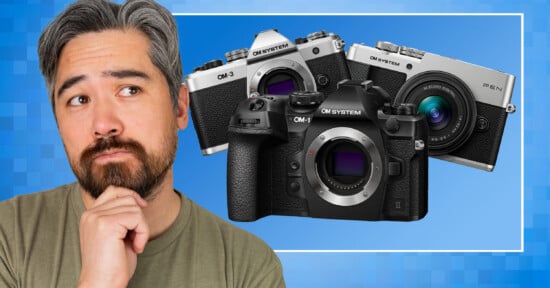
You need a fourth example? Very well, consider the OM System PEN. The company not only sponsors PetaPixel's Trail Camera series but also brought PetaPixel out to Japan for the review of that camera. Despite this, the final evaluation is among the lowest across the entire industry.
It's worth pointing out that one of the reasons PetaPixel created PixelMeter, a review aggregator designed to surface multiple opinions on a single page, was to further eliminate the perception of bias and to give photographers as much information as possible so they can make informed buying decisions. The goal has always been to encourage readers to compare perspectives rather than relying on a single voice.
The Responsibility of a Reviewer
A camera reviewer’s primary obligation is to the reader and prospective buyer, not to the manufacturer’s bottom line. When evaluating a product that costs thousands of dollars, ignoring flaws to protect a niche startup does a disservice to the photographers putting up their own money.
The Pixii Max offered genuine novelties, but it also suffered from significant operational and technical hurdles. It had a convoluted, difficult-to-use menu system and showed major issues with image quality (visible banding in shadows), among other problems.
Of note, even those who blame PetaPixel for Pixii's demise often concede that there are issues, noting they would have purchased a Pixii Max if the company had fixed its major flaws. That admission validates the exact points raised in critical reviews: the camera arrived on the market with unaddressed flaws that kept buyers away.
Communication, Execution, and Market Realities
A single review rarely decides the fate of a product, let alone an entire brand. Pixii operated for nearly eight years and released multiple iterations of its digital rangefinder. Yet throughout its lifecycle, the company maintained an unusually closed posture toward the tech press.
Pixii never responded to a single inquiry PetaPixel sent to the company dating back to 2018. It didn't communicate with the wider press pool much at all and, to PetaPixel's knowledge, never sent review units outside of France. In fact, PetaPixel's review of the Pixii Max only happened because a generous reader loaned his personal unit for testing — years after the product had already been on the market.
PetaPixel was not an outlier in its opinions either. No established photo publication or veteran gear reviewer issued an unqualified, glowing endorsement of the Pixii Max, and the broader media consensus ranged from mixed to highly critical.
When a camera brand fails, the root causes lie in product execution, pricing, manufacturing scale, and market demand. Reviewers document those realities — they do not create them. In a media landscape increasingly crowded with sponsored content and brand ambassadorships, transparent and unsparing editorial critique remains vital for keeping the industry honest.
Affiliate Disclosure PetaPixel articles may include affiliate links; we may earn a commission if you buy through one.