Photographer Exposes AI-Generated Images in Another Photographer’s Portfolio
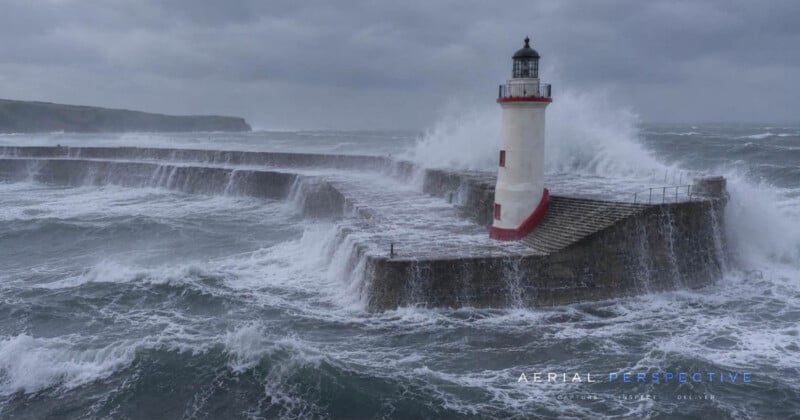
Whitehaven is a picturesque town on the Cumbrian coast of England, not too far from the breathtaking Lake District National Park. It’s a magnet for photographers who want to capture its harbor, which can be traced back to 1517 and was once raided by John Paul Jones during the American Revolutionary War.
One photographer who works in the area, Dave Wilson, was perusing the myWhitehaven Facebook page recently when he spotted a photo that didn’t look right. It showed the Whitehaven lighthouse during a storm that caused property damage, toppled trees, and blew roofs off.
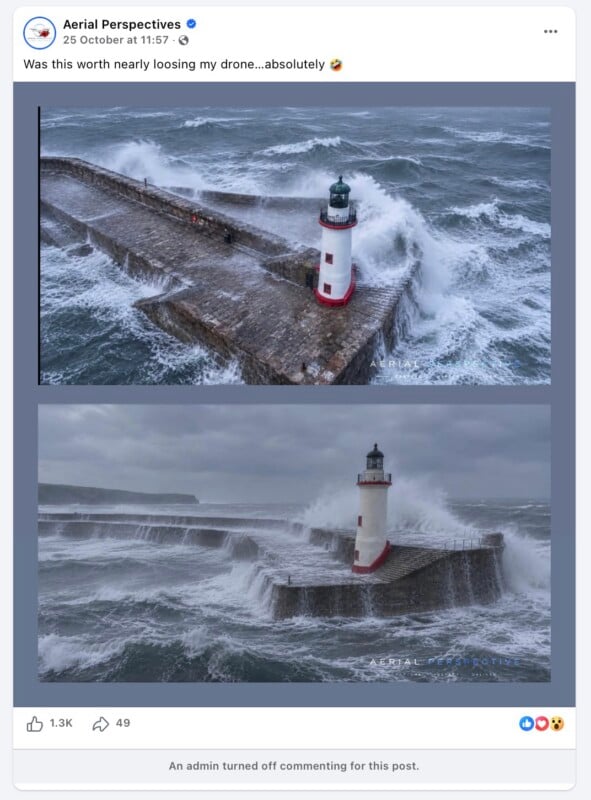
“There were reported gusts of 77 miles per hour,” Wilson tells PetaPixel over the phone. “To fly something in those conditions is reckless, and also it just wouldn’t happen because if it’s over the top speed of the drone you’re not going to get it back.”
Wilson, an experienced photographer and a certified commercial drone pilot, immediately called foul, leaving a comment beneath the myWhitehaven post to say that he believed it was AI-generated.
The post belonged to “Aerial Perspectives,” which replied to Wilson’s comment, insisting the photos were genuine and captured on a DJI Air 3S in treacherous conditions.
“I didn’t believe this,” Wilson says in a YouTube video that’s racked up hundreds of thousands of views. “And it matters to me because it’s simply misrepresentation.”
AI Watermarks
Unfortunately, the administrators who operate the myWhitehaven Facebook page didn’t agree with Wilson and decided to delete his comments.
Undeterred, Wilson then ran the photos through OpenAI’s Verify website, which checks whether the images contain either the C2PA metadata or a SynthID watermark — the two leading protocols in identifying AI images.
The results confirmed Wilson’s suspicions that AI had been used in the images.
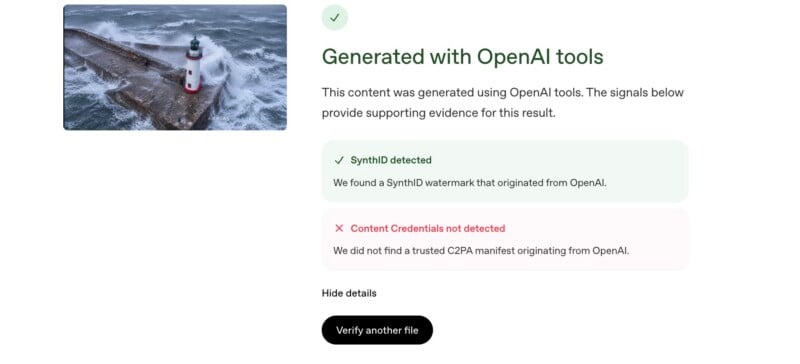
Furthermore, Wilson ran several other images from Aerial Perspectives’ website through the Verify tool and found that virtually all of the images in the portfolio also contain the SynthID watermark — an invisible watermark hidden in the images that signals generative AI has been used on the image.

Wilson adds that he doesn’t believe there is “malicious intent” behind the images, but says that whoever is behind the account “thinks that it’s acceptable to do this, and acceptable to use AI in this way to get the best out of the pictures, but in such a way that it changes the whole aspect of the pictures completely.”
Denials
Aerial Perspectives at first insisted that the stormy harbor images were genuine, adding that the team “consists of five people, three of whom are drone pilots, with the other two helping with administration when needed.”
However, in a lengthy statement to PetaPixel, Jake from Aerial Perspectives blamed an “individual who was previously part of our team” for the AI-generated stormy harbor image.
“We acknowledge that the image should not have been presented as genuine photography, and I understand why this has caused concern and damaged people’s confidence,” says Jake.
“I take responsibility for how this situation has affected the business, even though I was not the individual who created that image.”
However, Jake denies the accusation that the entire Aerial Perspectives’ portfolio is AI-generated.
“We have spent considerable time and effort carrying out genuine photography across Cumbria, capturing landscapes, local landmarks, businesses, harbors, and other locations,” says Jake.
“These are photographs taken using our own equipment, with original files and supporting metadata available to demonstrate their authenticity.”
Jake says that he adds the company’s watermark to photos using ChatGPT, which is why the SynthID watermark is flagged in his photos.
PetaPixel has requested to see the RAW files. This article will be updated if and when we see them.
Affiliate Disclosure PetaPixel articles may include affiliate links; we may earn a commission if you buy through one.