Educational

PetaPixel's editorials are in-depth stories, thought-pieces, and opinions on the photography industry led by the minds of our editorial team.

JPEG Voodoo: Or, Does JPEG File Size Matter?

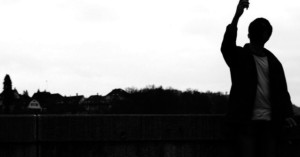
Would you say the above photograph has any compression artifacts? Compressed too much, not enough, or just right? What exactly is “just right” anyway. This post will explore the concept of compression, why and how do we do it, and how aggressive we should be in either reducing the file size or increasing the image quality.

A Primer on Insuring Your Camera Gear and Making It Recoverable

If you've invested any significant amount of money in your camera gear, it's a good idea to make sure it's insured against loss or damage. If you've never really explored this subject before, here's a helpful video that can bring you up to speed. It's a 13-minute overview by the folks over at DSLR Video Shooter on the best services and solutions out there for making sure your gear is insured and recoverable.

Video: The Technologies Inside Canon’s EF Lenses

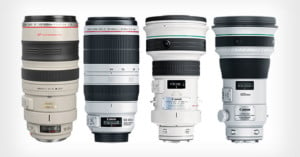
If you'd like a primer on the technologies found inside Canon's EF line of lenses, look no further than this 12-minute introduction created by Canon. We learn about things like aspherical lenses, fluorite lenses, diffractive optics, USM, lens coatings, and more.

The Most Popular Cameras on Flickr in 2014

What are the most popular cameras used in the Flickr community? Now that 2014 is in the past, the photo sharing service has done some serious crunching on EXIF data to figure out which cameras were the most popular among its users over the course of the year. Here's a look into the findings.

What 100 Million Stars Looks Like: NASA Releases a 1.5 Gigapixel Photo of the Andromeda Galaxy

NASA has released the largest and sharpest photograph ever made of the Andromeda Galaxy, the nearest spiral galaxy to ours that contains an estimated 1 trillion stars. The new image (above is a crop showing a portion of it) weighs in at 1.5 gigapixels (i.e. 1.5 billion pixels); it's so big that you would need 600HD televisions to display the entire digital photo.

Teardown of the Kodak DCS315 Offers an Inside Look at One of the World’s First DSLRs

Before Canon and Nikon became juggernauts in the world of DSLRs, Kodak actually created one of the first DSLRs by modifying the Nikon Pronea 6i film SLR. Called the Kodak DCS315, the camera was the world's first DSLR to feature an image preview LCD and JPEG processing in the camera itself. It was launched in 1998 and boasted an amazing (at the time) 1.5 megapixels.

Chart: The Daily Routines of Famous Creative People Throughout History

How does your daily schedule compare to the 24-hour routines of some of the most famous creative individuals throughout history? Podio created the chart above using info from the book "Daily Rituals: How Artists Work" by Mason Currey. Though there aren't any photographers on the list here, it's an interesting look at how creative minds of the past approached things like work, sleep, and play.
Lens Technologies: Fluorine vs. Fluorite

There are two lens terms that have similar sounding (and potentially confusing) names: fluorine and fluorite. Apparently quite a few people have trouble distinguishing between the two, so here's a quick look at what they each are.

A Brief Intro to Shooting with a Rangefinder Camera

If you've never picked up a rangefinder camera before and have always wondered how it differs from single-lens reflex cameras, here's a short video that may be of interest to you. In it, photographer Craig Semetko discusses the basics of rangefinder photography -- in this case he's using a Leica M -- and its advantages compared to SLRs.

Comparing the Image Quality of Film and Digital

There have been a few film versus digital articles here and there on the interwebs, but seems like very few have approached the subject in a scientific fashion or with the advice of both film and digital experts.

Focus Breathing: When Focusing Your Lens Changes Your Composition

Here's a term that most of you have probably experienced before, but some of you may never have heard before. It's called "focus breathing" (or simply "breathing"), and it refers to the shift in angle of view that often occurs when you focus a lens. If you've ever carefully composed a shot, refocused, and then discovered that your composition changed, you've been a victim of focus breathing.

The Photographer’s Introduction to Color, from Color Space to Monitor Calibration

If you're a photographer today, you're probably sharing your photos everywhere from Facebook to Flickr. Your photos are being seen on every device possible: iPhones, Samsung Galaxys, crappy Dell office monitors, and Mac Retina Displays. Each online service, each device, even each web browser handles color differently. If you're putting your photos up online, you really need to think about how you output files for the web. If you accidentally save to the wrong color space, you can really change …

Video Series Walks Through the Major Photographic Processes Used Throughout History

Back in 2012, the George Eastman House released a series of six videos showing six photo processes used in the history of photography. This month, the museum re-released those six videos alongside six new ones. It's a video series that now spans 12 videos showing major processes spanning from the Daguerreotype all the way up through digital photography.

Fear and Loathing in Bushnell, Nebraska

Pine (Bluffs), Wyoming lay at the extreme south-eastern corner of the state, a stone’s throw from Nebraska along the Old Lincoln Highway and I-80. My visit to Pine was late in the year with my dog Henry. Over the course of several months we’d seen Henry begin to slow and knew he’d begun his journey home. Not wanting to miss any opportunities with him I took the Jeep this trip, knowing he’s more comfortable than in the front seat of the Subaru.

How We Did It: The SNL Title Sequence

…And we’re back! After a much-needed summer hiatus, it’s that time of the year again when my comrades in the SNL Film Unit all reconvene on the 17th floor of 30 Rockefeller Plaza for another season of filmmaking speed-drills.

Meet The Man Who Documented the Entire History of ZEISS Cameras in a 1,300-Page 7.7-Pound Book

You would be hard-pressed to find anyone who knows as much about ZEISS as Bernd K. Otto. From the company's entry into the photography world in 1890, to its long-lived history and reputation throughout the 20th century, Otto’s knowledge and passion for the company led him to create Carl Zeiss Kamera-Register 1902–2012, the most comprehensive anthology of ZEISS cameras in existence.

Tutorial: How to Batch Process Your RAW Time-Lapse Photography

Time-lapse photography seems pretty straightforward, right? You just capture a stream of images over a designated time frame and put them together in post-production to create your video. But as simple as that may sound, there are a few basic elements to the post-processing of your images that can greatly alter what the final product will look like.

When Pricing Your Photography, Focus on the Value of Your Images

Lately, I have been seeing lots of memes and writings for photographers that try to justify the rates we charge to potential clients who seemingly do not understand what they are paying for or what the value of our work really is... from Cost of Doing Business (CODB) calculators to detailed lists of lenses to tediously explaining how long it takes to set up a shoot and pack all the gear.