Honor Robot Phone Hands-On: This Isn’t a Gimmick
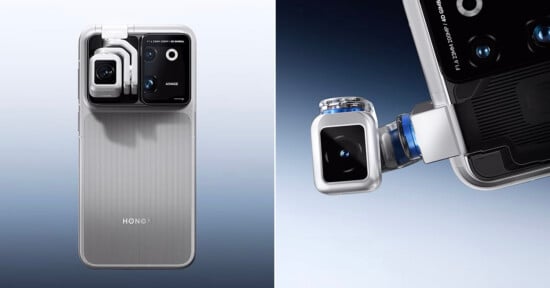
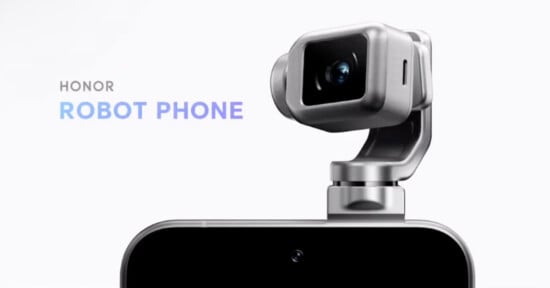
The Honor Robot Phone is no longer a concept — it’s a finished product now available in China. The first smartphone with a built-in motorized gimbal in its rear camera module is an engineering win for Honor, not least of which because it actually works. After spending hands-on time with the device, it’s clear enough this isn’t just another gimmicky half-baked experiment.
But there are also clear reasons why its availability will likely remain limited for some time; reasons that also directly tie into the durability and reliability such a product requires. Who is it for, you ask? Let’s dive in and find out.
A Functioning Gimbal
Honor sees content creators being into this combination, meaning those who like the idea that they don’t have to wield a phone in one hand and a gimbal camera, like a DJI or Insta360 model, in the other. Tech consolidation and convergence are hardly new, except that it doesn’t always work in practice.
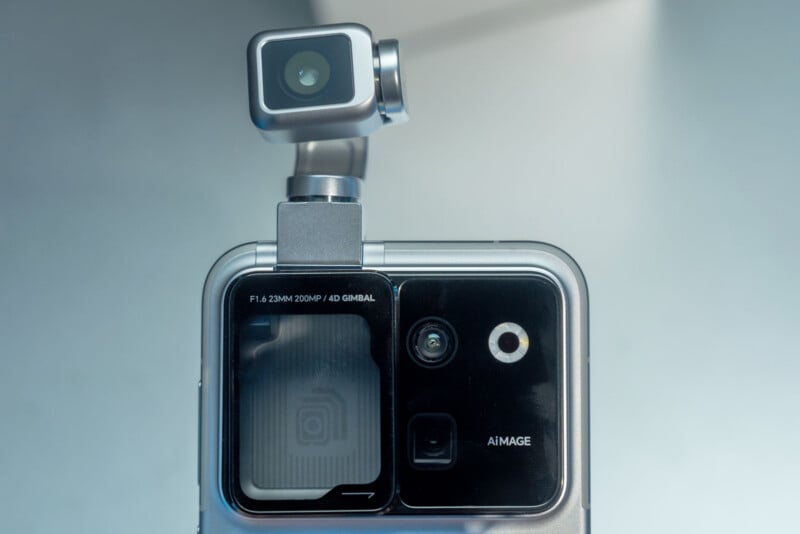
The Robot Phone is an interesting attempt to buck all that. Unlike my previous experience with it at Mobile World Congress, where highly controlled demos and a no-touch policy provided glimpses into the tech, this time I could hold it in my hands and better understand what’s going on here. I attended the launch event in Guangzhou and the subsequent hands-on time in Shenzhen, but it wasn’t a typical hands-on experience.
For one, attendees had to share devices, so my group of about a dozen had to work with a mere four units. Nor did I leave the event with one of my own.
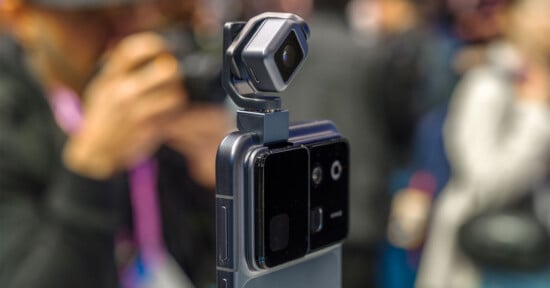
Despite that, I gleaned plenty about what the device could do. The gimbal rolls, turns, tracks subjects, and integrates with the phone’s software the way a gimbal camera otherwise should. That doesn’t mean it’s an apples-to-apples competitor to what DJI and Insta360 each do with their Osmo Pocket and Luna lines, but to me, it does present a new way of thinking about how to capture photos and video with a phone.
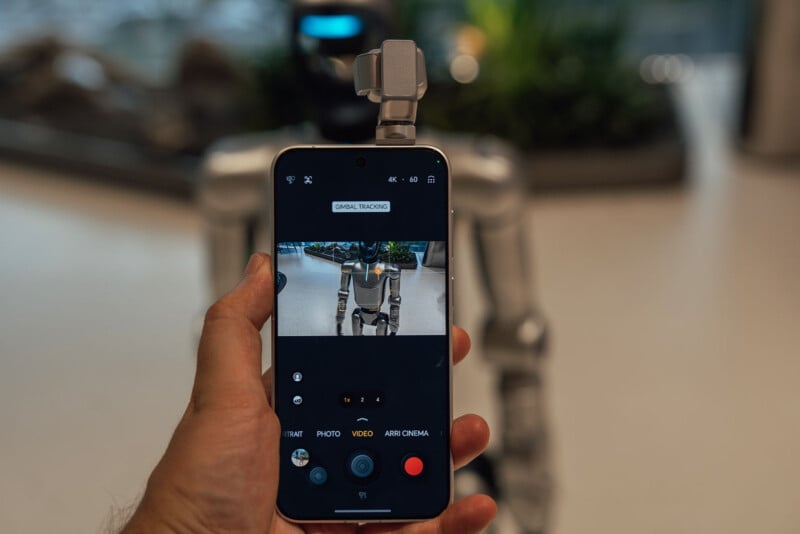
In an interview with PetaPixel, Yang Liu, Honor’s President of Hardware Engineering, admits the company doesn’t know what sort of creative use cases users might come up with, and frankly, neither do I. It’s hard to gauge because the whole thing feels like a novelty in hand. As comfort grows and people using it learn the parameters involved, I can see some interesting creative angles coming out of it.


To make that viable, however, there has to be some juice underneath. The gimbal is mounted to the 200-megapixel main camera (23mm equivalent), which uses a Type 1/1.28 image sensor with an f/1.6 aperture and OIS. Honor is always coy about who makes its image sensors, so I can’t be sure what it actually is. That also applies to the 200-megapixel telephoto camera (62mm equivalent), which uses a Type 1/1.4 sensor with f/2.6 and OIS. The 50-megapixel ultra-wide (122° field of view) sensor size is unclear, but it has an f/2 aperture and doubles as a macro shooter with a minimum distance of 2.5cm.
While the gimbal can’t rotate a full 360 degrees, it reaches about 270, which aligns with certain shooting options in the revamped camera app interface. That includes a short 180-degree video where you hold the phone flat at 180 degrees and either stay still while the gimbal fully rotates for the spatial effect or move slowly to create a zoom at the same time.
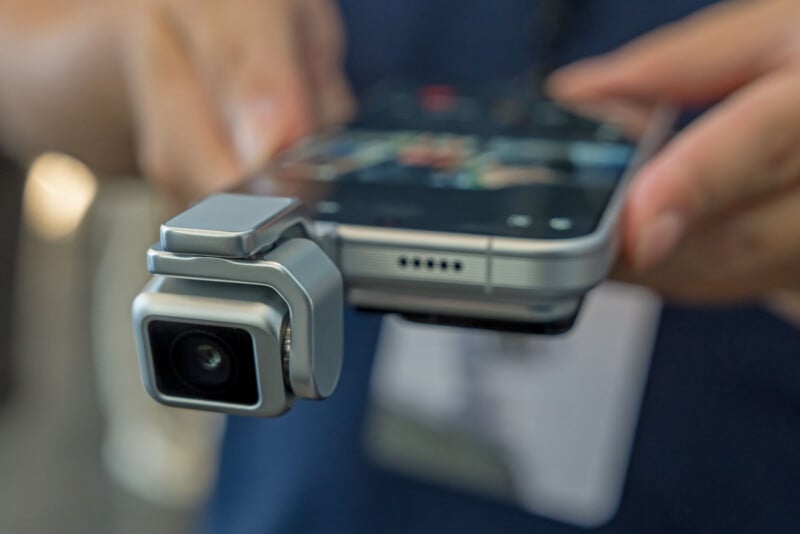
I realized after trying it that the gimbal is sensitive to hand speed. Go too fast, and it fails to fully rotate, ruining the shot. This effect also works at a 90-degree angle moving up or down, but again, how quickly you physically elevate or descend is critical to keeping things smooth. That also goes for trying to cheat it by tilting or twisting the phone to augment the effect. Granted, propping it up on a tripod or flat surface — or not moving at all — is the easiest way to go, but if you’re trying to be dynamic, there may be trial and error involved.
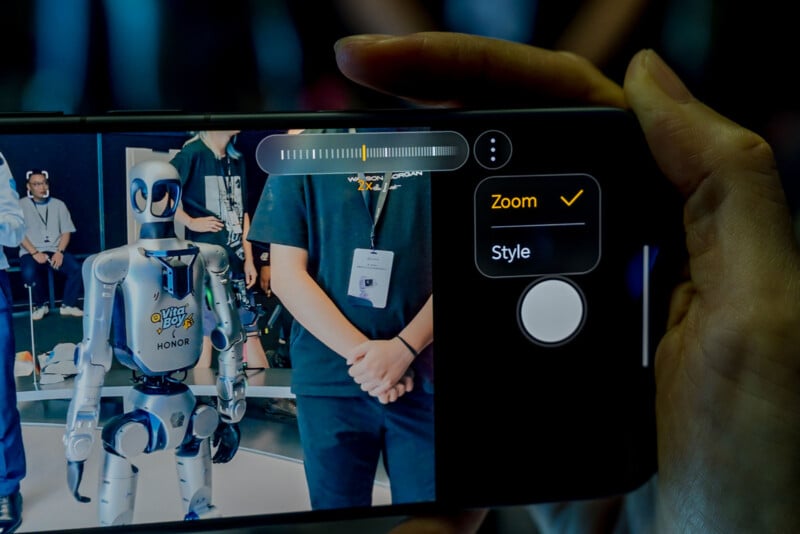
You can only launch or close the gimbal using a soft button onscreen in the Camera app, as there’s no physical button devoted to it on the phone. Even the additional iPhone-esque camera control button acts as a shutter and slider for zooming or cycling through Looks, but no way to map it (or any of the other actual buttons) to the gimbal. The touch joystick takes a little getting used to, especially for manual panning, but you can also adjust the gimbal’s speed to either move slower, faster, or stay at the medium default.
It’s possible to launch it with a forehand-to-backhand gesture so long as you’ve slid away the door protecting it in the module first. Honor hasn’t yet clarified if the gesture is of equal importance to Yoyo, Honor’s onboard AI bot that seems to come alive each time I’ve seen it done. Is there a setting that disables Yoyo yet leaves the gesture intact for the camera gimbal? I honestly don’t know, but if not, I believe Honor could easily make that happen with a software update.
Subject Tracking and Going Steady
The motors driving the gimbal are extremely small, which naturally limits how dramatic its movements can be compared to not just a dedicated gimbal device, but also a phone gimbal like one you’d clamp your phone onto.
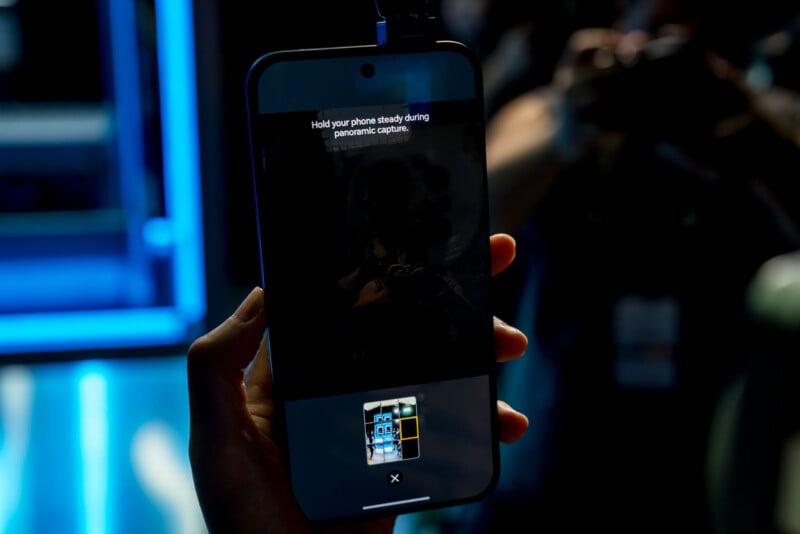
And yet, it still sports highly functional mechanics that are truly impressive for something this odd. It can track a subject with solid consistency, helping maintain focus throughout, with good stabilization to boot. Even so, framing is still in the user’s hands, so while the gimbal contributes smoother panning and corrects small, involuntary jitters, posture and positioning remain as paramount as you’d expect. I noted one exception with Panoramic mode: instead of moving the phone itself, the gimbal shifts on its own to capture each panel and build the final result. I’m not sure how timelapses would work here, as I didn’t get to try one, but there may be some interesting implementations.
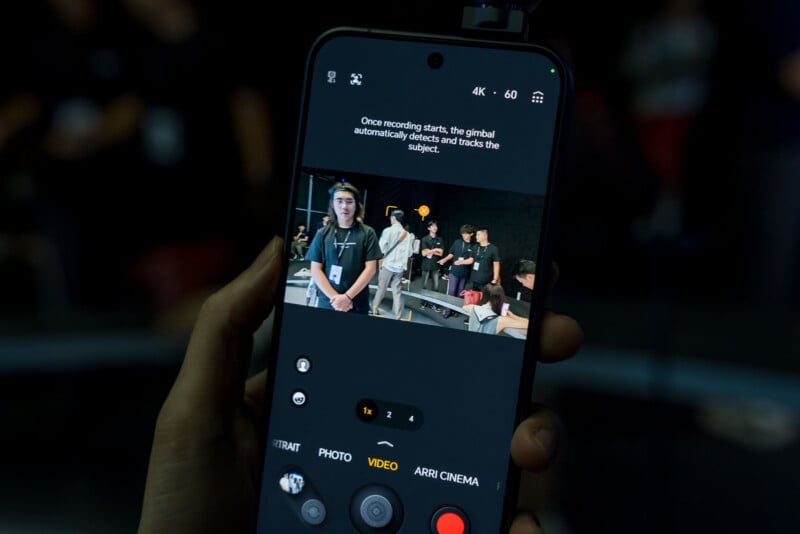
My time with it revealed some nuances that may come up over time. First, running with the phone to track a subject reveals micro-movements in the footage that are hard to ignore. I can’t tell if it’s because a certain setting contributed to it, like additional electronic stabilization, or if vibration transfers squeaked through. This was outdoors on concrete, so I also don’t know whether it would be the same or different on other surfaces, like grass, sand, carpet, wood, or tiles.
Another potential challenge could be subject reacquisition. The event space before the keynote was dimly lit, which may have contributed, and the software revealed some possible struggles. If someone walked in front of the tracked subject, I had to manually double-tap to re-engage. Maintaining tracking in a crowd also proved inconsistent. Without further testing, I can’t be entirely sure why, but Yang notes that the size of the optical component required a dedicated image signal processor to reduce noise in darker environments.
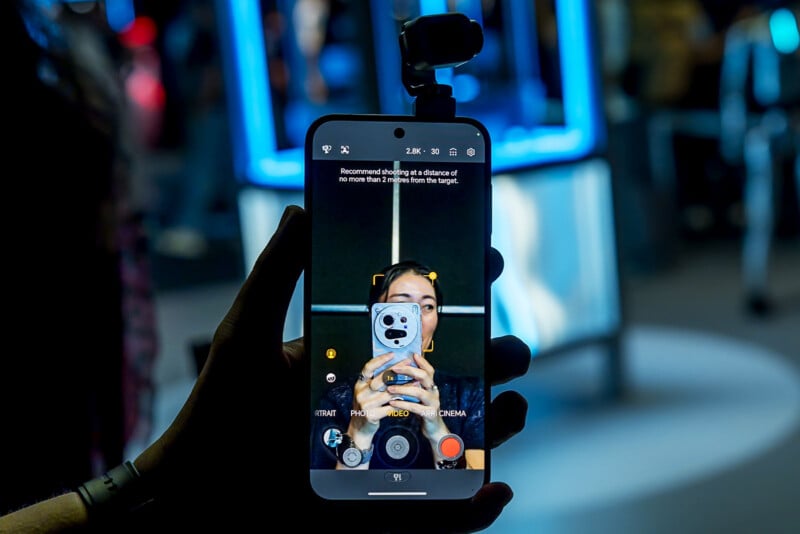
The other part is the phone itself — a subjective point because the Robot Phone is entering new territory — no one’s put a gimbal in a phone before. Honor wisely makes this one smaller, with a 6.3-inch OLED (2640 x 1216) display, to offset the 248-gram weight, which is hefty for a phone this size but totally understandable given the components needed to put it all together. It’s not so much the weight as the form factor that creates a learning curve of sorts. Gimbal cameras and phone gimbals are all about handles, whereas using the Robot Phone with the gimbal outstretched is both familiar because it’s, well, a phone, yet also somewhat awkward because it feels different with that gimbal sticking out.
That also extends to the way it captures photos and video in landscape orientation. Tilt the phone sideways and the gimbal doesn’t rotate to match because it’s not designed to. At first, I took it as a flaw, but now I’m not so sure anymore. We generally hold gimbal cameras by their handle in an upright position because the screen can adjust for landscape or portrait based on what we choose.
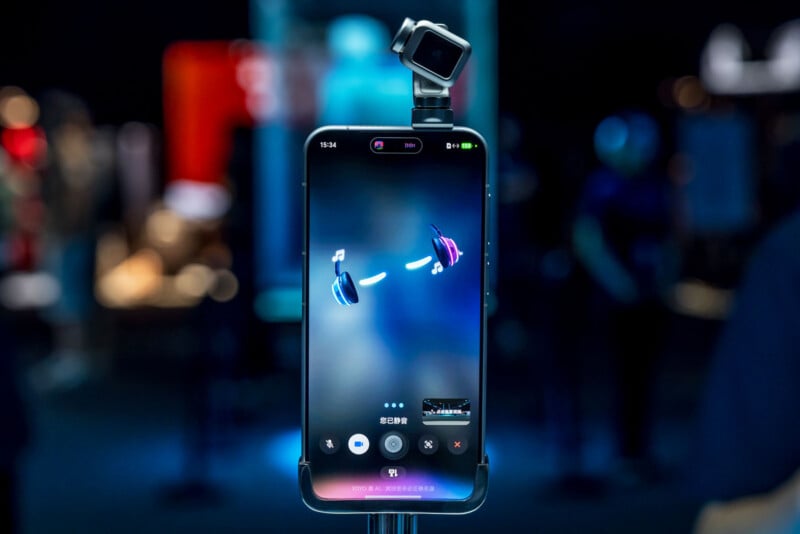
In this case, switching orientations is entirely software-based via quick settings in the app, so you shoot portrait and landscape the same way. That makes for a smaller live preview than usual when recording landscape, which kind of emulates a gimbal camera’s smaller display, but also feels like an adjustment given all the missing screen real estate. Users will accept the trade-off because holding it that way still helps keep everything stable. Then there are the countless relevant phone accessories that could apply. Case in point, the included case has MagSafe and a built-in kickstand.
Durability Means Accepting Trade-Offs
The sliding cover covers either half of the rear camera module, so when over the inactive gimbal, the telephoto and ultra-wide aren’t covered. While clear, the inevitable fingerprints and smudges it might catch simply because you always need to manually move it give me pause. Honor says the cover shouldn’t affect clarity when taking photos or video with any of the cameras, but I’m not convinced. My experience tells me that putting anything in front of a phone camera’s lenses can change what comes out the other end.
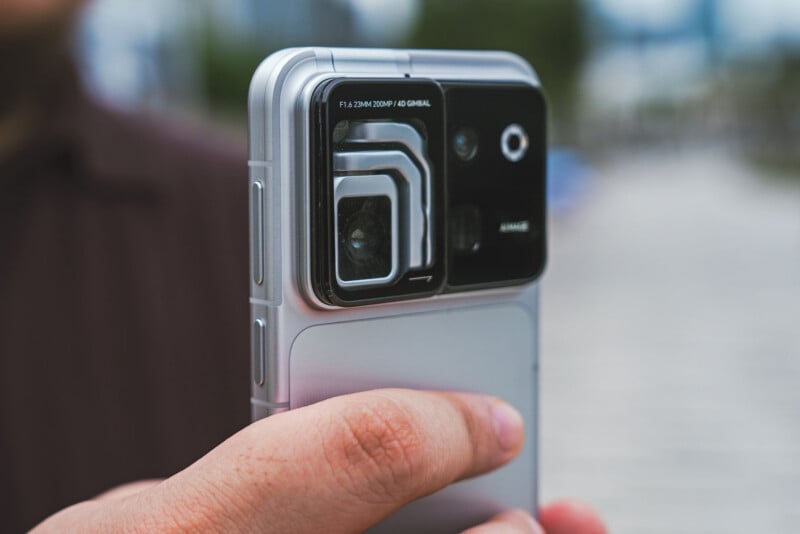
The cover’s primary purpose is to keep out dust, but I also worry about its durability. If it cracks or breaks, that becomes a larger problem. Fortunately, Yang says Honor designed it to be easy to repair or replace, and I can see what he means, since it just slides on a rail and snaps into place on either end with a slight magnet.

To me, the cover would be even more important if it could act as a filter system. Swapping the existing one with another that acts as, say, an ND filter, would add yet another unique element to the mix. It wouldn’t apply to the gimbal while motorized, but it would certainly make using the cameras without it more interesting. Yang says the company’s engineers are looking into that as a possibility.
The gimbal and cover are clearly why the phone carries an IP54 rating, meaning it can withstand splashes but isn’t built for submersion. Dust is probably the bigger long-term concern anyway.
The Arri Partnership and New Pro Video Mode
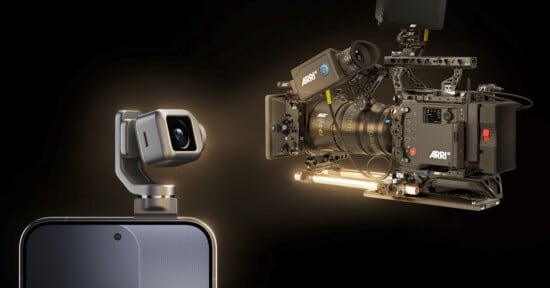
An equally fascinating part of the launch is Honor’s partnership with Arri. After watching its Chinese competitors build and maintain solid partnerships with European imaging brands, Honor is teaming up with a well-regarded one in professional cinema equipment. Though neither side revealed terms or details, they confirmed it as an ongoing relationship rather than a one-time collaboration. That’s exactly why Arri will probably have a role to play in Honor’s upcoming Magic 9 series.
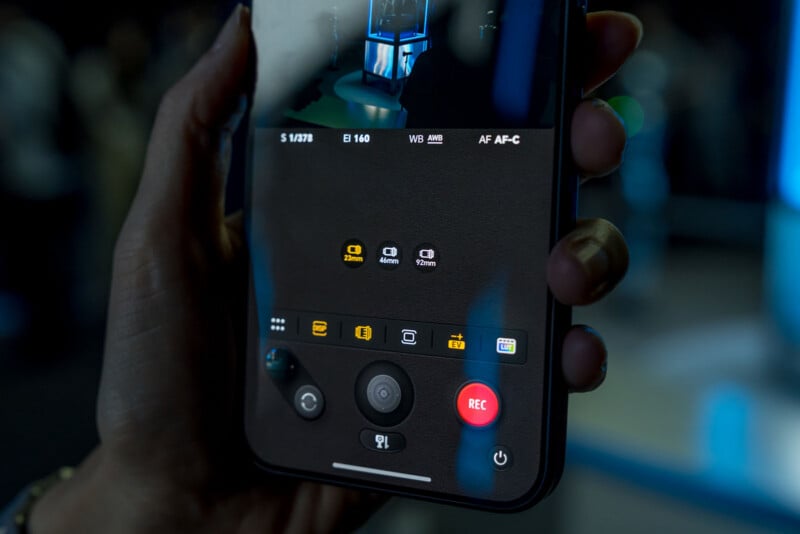
The first manifestation is an all-new pro video mode called Arri Cinema, which brings Log shooting, Arri-driven color science, LUTs, and a broader set of manual controls aimed at more serious videographers. The mode isn’t exclusive to the gimbal camera and works across all of the phone’s lenses, though pairing it with the gimbal and the main camera’s larger sensor is really where the cinematic part comes in.
A redesigned interface provides a high level of manual control over composition. A few technical caveats stand out, including the silly three-second animation that launches the mode once you select it. Every. Single. Time. And if you accidentally land on it while trying to get to another mode, you have to wait until it’s done before you can do anything else. In a pinch, that delay alone could cost someone a great shot. Another is that, by default, the mode records Log using Samsung’s APV lossless codec, which doesn’t play nice with Apple’s ecosystem. APV-coded footage can’t play on a Mac or iPhone without first being processed through DaVinci Resolve. That’s what I did to get the footage in my video.
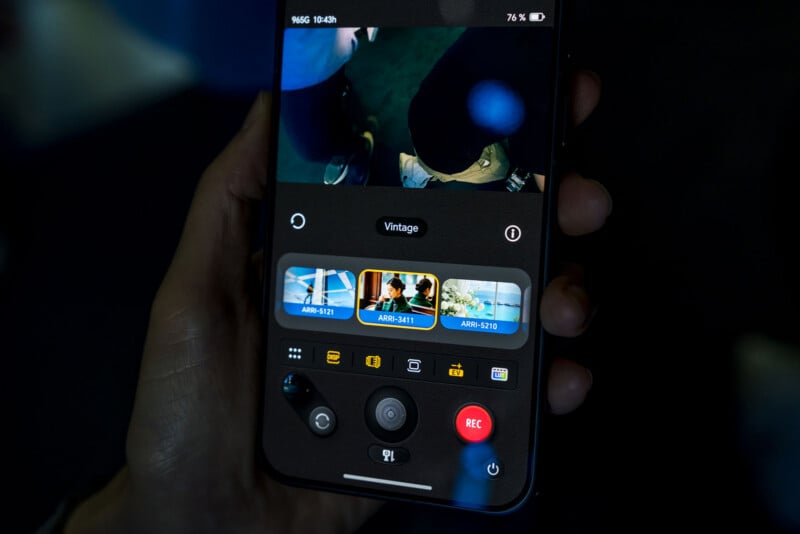
Switching to HEVC/H.265 in the settings avoids that compatibility issue but sacrifices some of the lossless quality. Frame rate options in this mode are also capped at 60fps, without support for 120fps. David Bermbach, Arri Chief Product Officer, cites processing power and thermal constraints as the main reason why, though standard cinematic frame rates for both North American and European workflows, including 24 and 25fps, are supported.
Subject tracking behaves the same in this mode as it does elsewhere in the camera app, so there are no specific tracking advantages tied to Arri Cinema itself.
Battery Life and Thermal Behavior
Honor manages to squeeze in a 7,060mAh silicon carbon battery into the Robot Phone. I’m not sure there was any other option given how power-hungry the gimbal motors can be. Within the limited testing window, battery life held up reasonably well, though I did notice the phone getting a little hot during extended gimbal use.

Honor says the heat isn’t a cause for concern, adding that future software and firmware updates will further improve thermal performance, along with the introduction of additional features. I didn’t see a performance drop, but I would’ve liked more time with the device to better test for that.
Why It’s Not Going Global Yet
The Robot Phone will stay a China-exclusive device for now with no plans for a global launch based on what I gathered at the event. The primary obstacle doesn’t appear to be the gimbal’s functionality or regulatory hurdles, but rather the support system it needs.

With the mechanics inside this moving camera, repair options need to be available and convenient. Who would be able to service it, and where? That support currently only exists in mainland China. It remains an open question whether Honor eventually builds out that infrastructure to support a global release for this specific device in select markets, or instead waits to introduce those capabilities with a second-gen Robot Phone.
Yang hinted at a follow-up device in development, suggesting Honor sees this gimbal-integrated design as an ongoing direction rather than a single experimental release.
Potential With a Dance Partner
The Honor Robot Phone is a roll of the dice, but at $1,480 equivalent to start, its aggressive price point should warrant more than a passing glance in stores. This could easily have sunk into a laughable gimmick, but none of my takeaways see it that way. It feels genuinely functional and creative, while the Arri partnership reinforces the desire for greater relevance in this space.
At the same time, real questions remain about long-term durability, thermal management, and how the device shapes out across a wider range of real-world shooting conditions. For now, it stands as an ambitious first step for Honor’s commitment to seeing this through no matter where it goes.