Nikon 24-105mm f/4-7.1 Review: Hey, This Kit Lens Is Good!
The Nikon Z system needed a new kit lens. The 24-120mm f/4 is one of the best lenses I’ve ever used, but it isn’t exactly affordable and is understandably beyond the budget of many beginner photographers. The 24-50mm is a decent optic, but it has a slow aperture range and a limited focal range for general-purpose photography. Even the Nikon 24-200mm and Tamron 25-200mm is a bit too expensive for a beginner.
It is a starter lens in the truest sense, but to its credit, it will deliver excellent photos that you can be proud of, and it may even stay in your camera bag longer than you think, even if the lens itself does not exactly shout prestige.
Pros
- Excellent center sharpness at 24mm
- Very sharp at 105mm
- Lightweight and portable design
- Versatile macro capability with 1:2 reproduction ratio
- Well-controlled flare and ghosting
Cons
- Slow f/7.1 aperture at the telephoto end
- Plastic construction including the lens mount
- Lack of weather-sealing
- No built-in optical stabilization
- Unexciting bokeh quality
I haven’t tested a kit lens in a long time, so when we got our hands on the Nikkor Z 24-105mm f/4-7.1, I entered this particular review with a sense of whimsical discovery. You can buy this lens on its own for about $500, but it is kitted with the Z5 II for an even better price. But being cheap is great only if the compromises are not too steep. So, is this lens any good?
Nikkor Z 24-105mm f/4-7.1 Review: How It Feels
We have to talk about the aperture range in this lens: f/4 at the wide-angle range is perfectly acceptable, but f/7.1 is pretty slow as 24-105mm lenses go. Many kit lenses in this range have historically had brighter f/5.6 ranges at the telephoto lenses, especially in the DSLR days. However, the latest crop of mirrorless 24-105mm lenses tend to have this slower f/7.1 aperture, or go immediately to an upgraded f/4 aperture throughout the focal range. So, on paper at least, it’s not a particularly encouraging start.
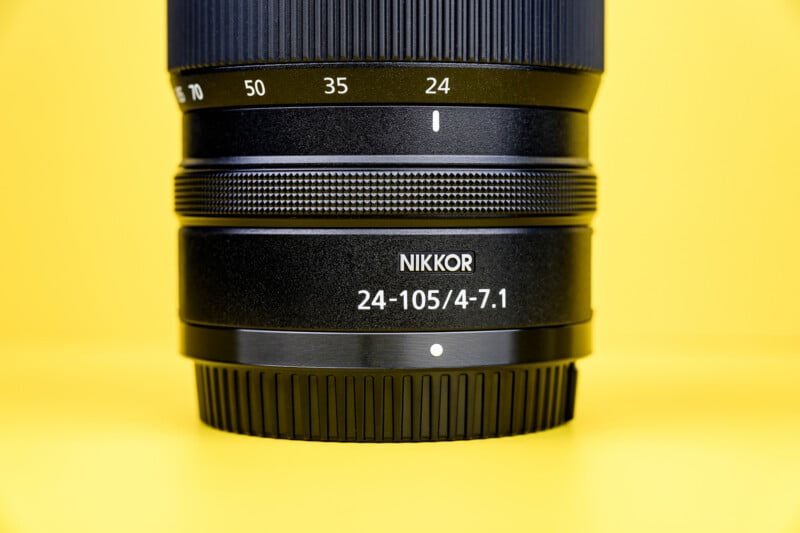
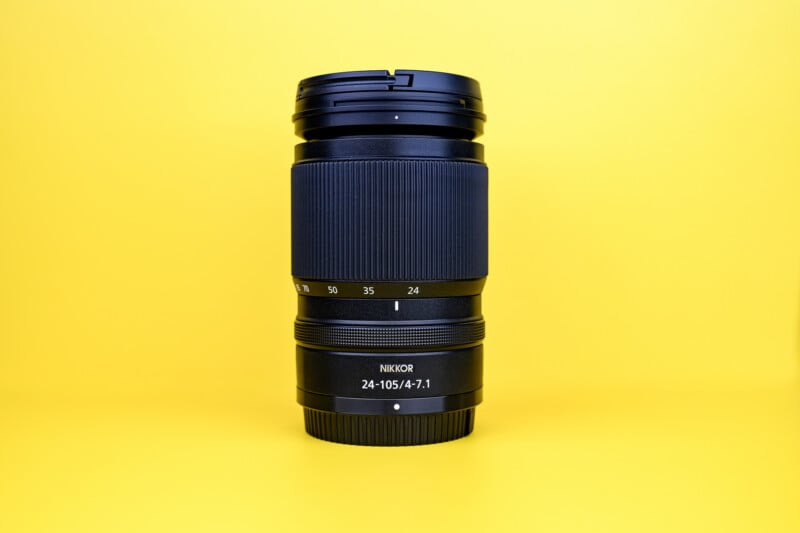
At just 12.4 ounces (340 grams), this kit lens is definitely easy to carry around for the day. The secret to the lightweight nature of this lens is to make it completely out of plastic. I get why the lens mount is plastic as well. I don’t like it, but I get it. To be fair, these rarely break or fail unless the whole camera is dropped.

The barrel extends a fair way out when you zoom the lens, but at least it has an internal focusing mechanism. The zoom feels pretty cheap, but it has a decent amount of resistance to smooth out the action. There is only one control on the lens, which is a customizable ring, probably best used for manual focusing. You can also throw 67mm filters on the front of the lens. Don’t expect any serious weather-sealing at this price, however.
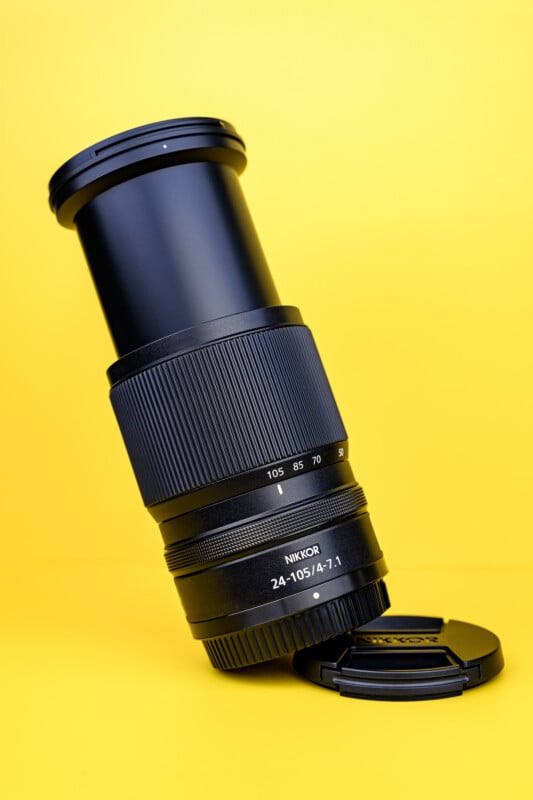
Focusing is driven by a simple STM (stepping) motor, but the focusing speed is smooth and fast. This lens also has an incredibly versatile macro capability for such a basic lens. At the 105mm range, you can focus to just under eight inches and still get a 1:2 life-size reproduction ratio. I have to mention, though, that the f/7.1 aperture at 105mm will be difficult to work with when doing macro shots. Expect higher ISO settings on a regular basis. It’s also important to note that the lens doesn’t offer any VR, but most Nikon bodies that you would find as a kit have IBIS.

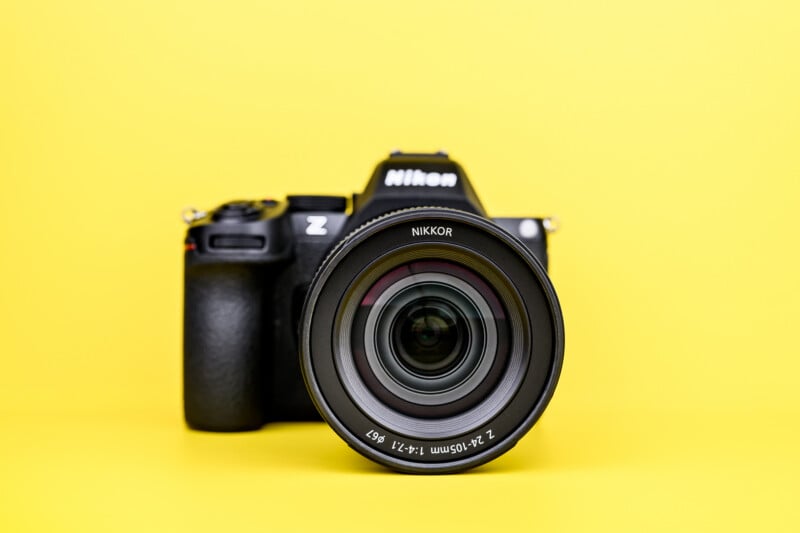
Nikkor Z 24-105mm f/4-7.1 Review: How It Shoots
The flare is incredibly well-controlled on this lens. I didn’t see any loss of contrast and the ghosting is incredibly minor. For such an affordable lens, the 24-105mm f/4-7.1 is ready for bright days and sunny conditions.
The bokeh is not terribly exciting on this lens. Of course, at the telephoto range, you aren’t going to get much of a choice in terms of depth of field anyway. The 24mm range, though, does offer some aperture choices, and I still wanted to see what the overall bokeh quality would be like. At f/4, the bokeh has a truncated look to the cat’s eye effect. There is some schmutz in the specular highlights and a slight soap bubble effect as well, but the bokeh looks quite smooth. I didn’t find the backgrounds to be overly harsh-looking despite the fact that most affordable lenses suffer from this.




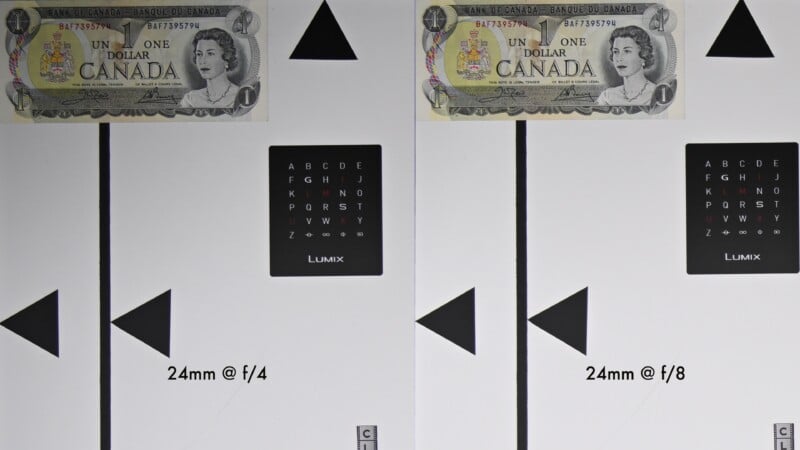
This is a sharp lens for sure, even if it is not a fast lens at all. At the wide angle, the 24-105mm is excellent in the center at f/4. Stopping the lens down does not require or deliver any improvement. The corners have a minor level of vignetting, but the detail is very well retained, and stopping down the lens just tightens everything up a bit. Very impressive sharpness at the 24mm end, overall.


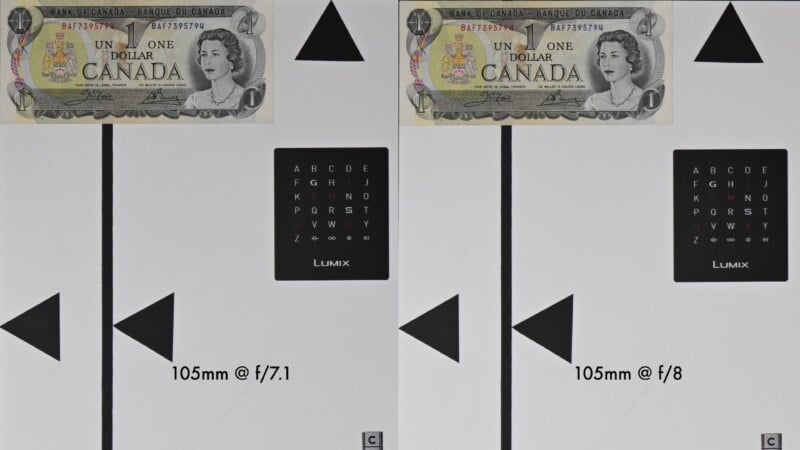
I was happy to see similar results at the 105mm range. However, this is to be expected because the aperture range is so slow. The lens is very sharp at f/7.1 in the center and will essentially be identical at f/8. There is minimal vignetting, and the corners are consistently sharp as well. This is a great result, but also an expected one because this lens isn’t pushing any envelopes or taking any optical risks.





Nikkor Z 24-105mm f/4-7.1 Review: You Never Forget Your First Lens
There is no denying that the Nikkor 24-105mm f/4-7.1 is a good value and delivers high optical performance for the price. I don’t see many people buying it on its own, but it makes a ton of fiscal sense when coupled with a new body purchase. But is it an exciting lens? No. Is it a lens that you will be eager to show off? No. Is it a lens that you will want to replace as soon as you are able? Perhaps.
It is a starter lens in the truest sense, but to its credit, it will deliver excellent photos that you can be proud of, and it may even stay in your camera bag longer than you think, even if the lens itself does not exactly shout prestige.





Are There Alternatives?
The other kit lens that Nikon offers, is the 24-50mm f/4-6.3. This is a fine lens but the zoom range is too limited for any family portraiture, and the slow aperture suffers for the same reason as the 24-105mm. I would absolutely get the 24-105mm if given the choice. You can go to a Tamron or Nikon 24-200mm or 25-200mm super-zoom lens which definitely adds versatility for a family vacation or travel photography. If the budget allows, the Nikon 24-120mm f/4 is a supreme all-around lens with a faster aperture all the way through.
Should You Buy It?
Yes. Given the excellent price when kitted with a camera body, this lens offers more versatility for the money. I would probably look to a more expensive alternative if I wasn’t getting the discount of the kit pricing.
Affiliate Disclosure PetaPixel articles may include affiliate links; we may earn a commission if you buy through one.