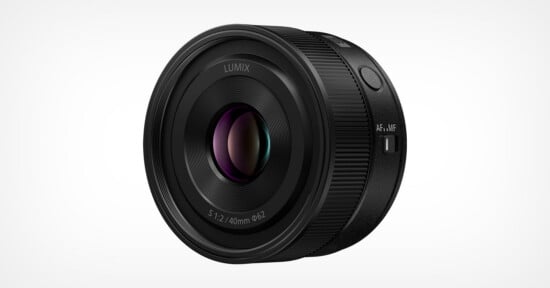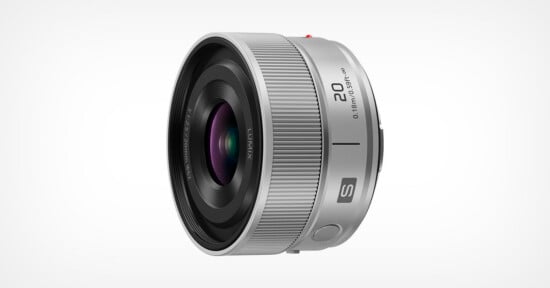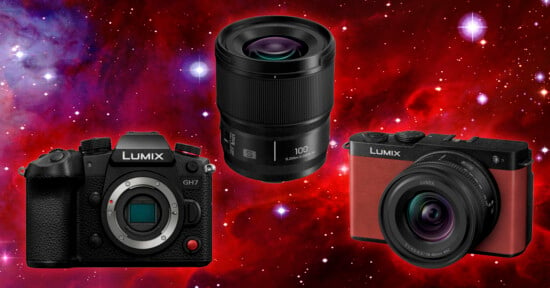

Panasonic Lumix S 40mm f/2 Review: The Lens the S9 Needed
I think most of us have a strange fascination with 40mm lenses. It seems like a relatively uncommon focal length, and of course, it is overshadowed by the ubiquitous 35mm lenses. In truth, both lenses can do pretty much the same thing, but that doesn’t take away from the fact that the 40mm focal length always feels a little exotic.
It turns out that the new 40mm f/2 is optically charming while also adding much-needed utility to the S9 platform. This lens is small, with plenty of useful controls, and it only costs $400.
Pros
- Compact and lightweight design
- Useful customizable function button and AF/MF switch
- Good flare resistance
- Sharp center performance at f/2
- Minimal focus breathing
Cons
- Significant longitudinal chromatic aberrations
- Polygonal bokeh shapes when stopped down
- Minor corner blurriness at wide apertures
Panasonic has not made a foray into the 40mm world until now. Maybe that is because of the popularity of the Panasonic Lumix S 35mm f/1.8. Why make a $400 Panasonic Lumix S 40mm f/2 when the similarities are so apparent? Well, Panasonic made it anyway, and I’m glad.

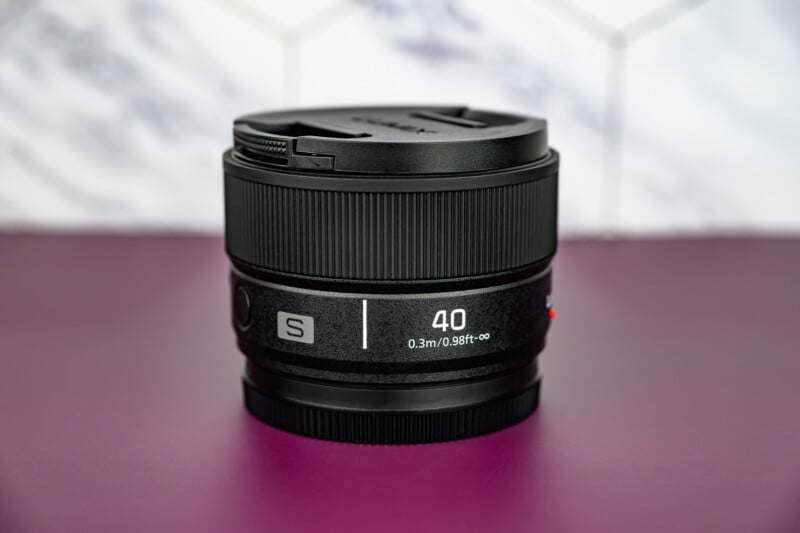
Panasonic Lumix S 40mm f/2 Review: How It Feels
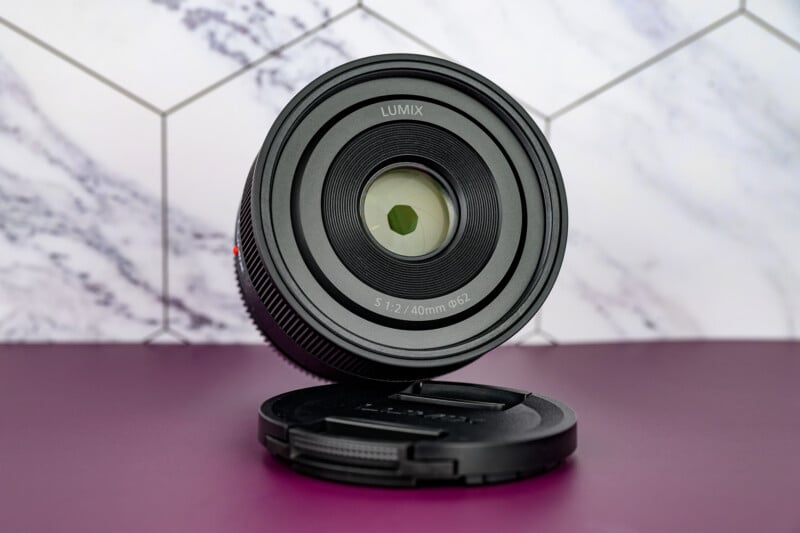
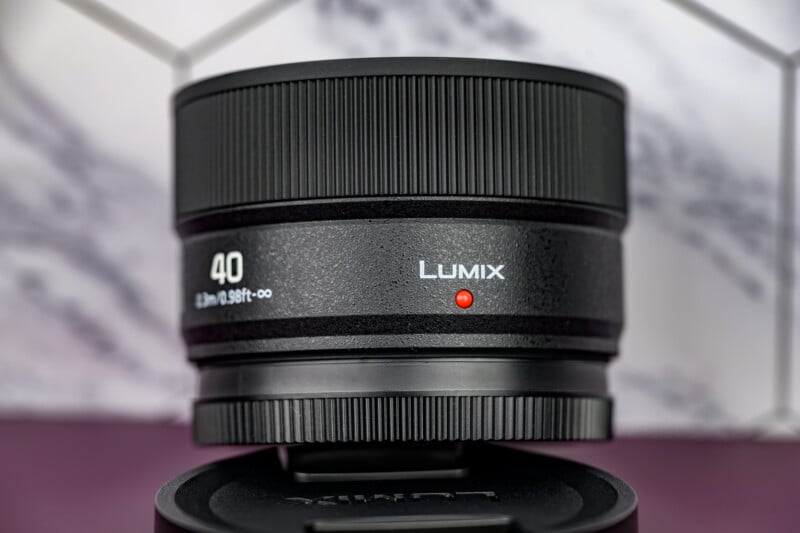
From a handling standpoint, the Panasonic 40mm is cute and compact. It only weighs five ounces (144 grams). This makes it a perfect companion for my Panasonic S9, and it was a really nice package to carry around. The front of the lens might seem bigger than it has to be with a 62mm filter diameter, but this is intended to match well with the 18-40mm kit lens that now comes with the S9.
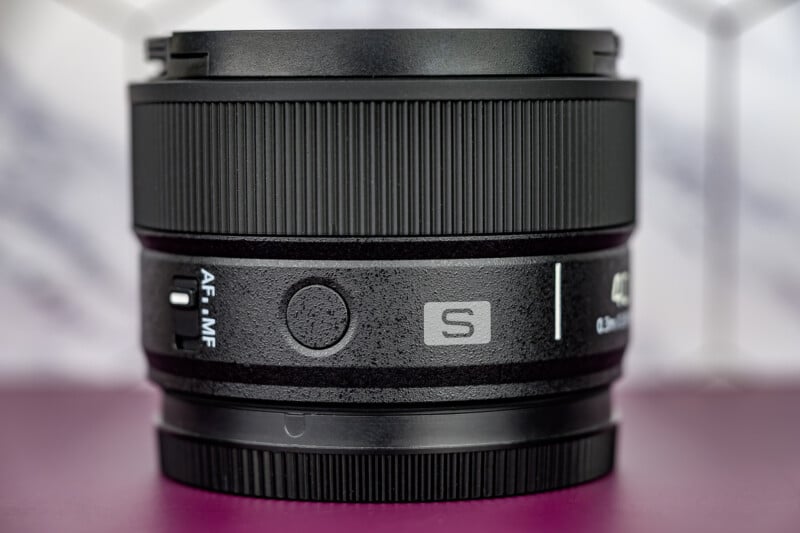
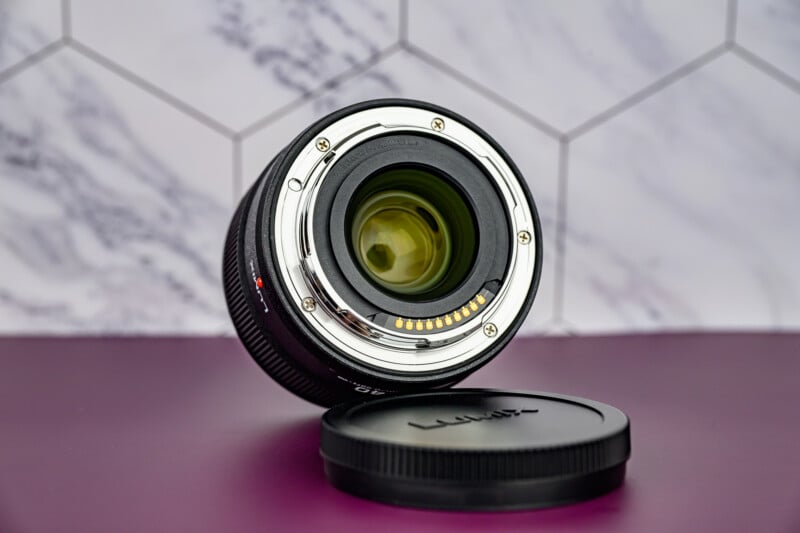
You also get a customizable function button and an AF/MF switch, which add immensely to the fairly sparse controls found on the S9. For example, the S9 can only change to manual focus mode by going into the menu and this laborious task is now unnecessary when using the new 40mm lens. Even the manual focus ring can be customized into a command dial, so I may never have to touch the S9’s annoying thumb dial ever again. The new 40mm lens even has some splash resistance and a dust seal around the lens mount.
Panasonic Lumix S 40mm f/2 Review: How It Shoots
The lens focuses swiftly enough for most situations, relying on a simple stepping motor with very little glass to move. I was immediately impressed by how well the lens handled bright sunlight as well. There is no way to attach a hood unless you want to go with a cheap filter ring rubber contraption, but you don’t need one anyway because the flare is well-controlled. I noticed almost no loss of contrast, and ghosting was minor at the tighter apertures.



Bokeh was a little concerning due to the low cost of the lens and the seven-bladed aperture, with specular highlights showing some onion rings and a slight halo around everything. There is a nice cat’s eye effect at f/2, and when the blades are closed down, a strong polygonal shape is present. I don’t personally love that kind of look, but plenty of people do.



Surprisingly, the softness of backgrounds and transitions of focus is not too bad. By no means are they sublime, but they have a fairly smooth look and without the lens being overly harsh-looking.



The LoCA, or longitudinal chromatic aberrations, are pretty bad, though. There is plenty of color fringing in the foreground and background out-of-focus areas of the image, and I even saw some color when shooting at f/4. This fringing is very hard to remove from your images, so consider stopping the lens down if you expect to have contrasty details falling out of focus.



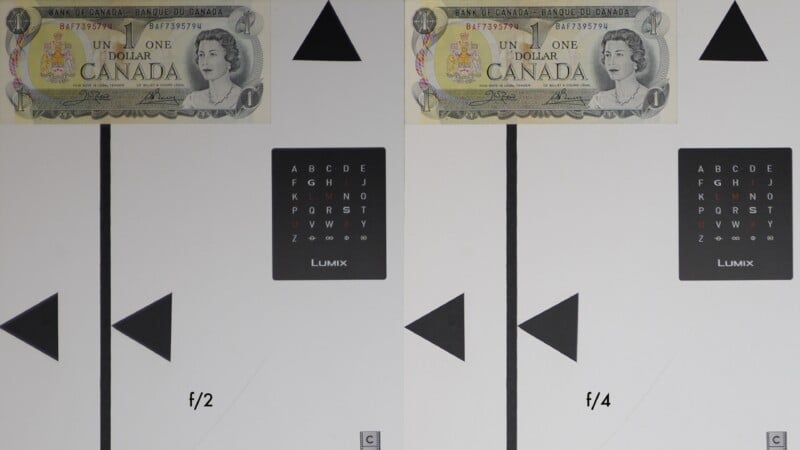
At least this lens has almost no breathing, which is to say that the field of view doesn’t change as you focus the lens. I noticed a small amount of pulsing at the edges of the frame while cranking the manual focus ring but the result is very minor. This lens would certainly make sense for videographers using it on a gimbal. It’s also quite sharp overall, with good contrast and detail at f/2 in the center of the image. The corners do tend to have a slight blurriness to them, but it’s very minor and by the time you stop the lens down to f/4, everything is clear across the frame.


The Panasonic Lumix S 40mm f/2 is a Pleasant Surprise
I’m happily surprised that Panasonic has decided to join the 40mm game. Most of the major companies have made a 40mm or similar style of lens to great success. Nikon has the affordable Nikkor 40mm f/2, Sony has a beautiful 40mm f/2.5 lens, and Canon is making huge waves with its tiny 40mm f/2.8 pancake and 45mm f/1.2 ultra-bright lens.
Now Panasonic joins the fray, and it turns out that the new 40mm f/2 is optically charming while also adding much-needed utility to the S9 platform. This lens is small, with plenty of useful controls, and it only costs $400. If you want an alternative to the saturated 35mm and 50mm options, this little companion might be your new best friend.



Are There Alternatives?
The Panasonic Lumix S 35mm f/1.8 is the closest lens with a similar functionality. It is also lightweight, although somewhat larger, and comes in at a significantly higher price.
I have not personally tried the TTArtisan 40mm f/2, but the word on the street is that the performance is only so-so. The somewhat lower price justifies the performance a little, but the new Panasonic 40mm f/2 might be better value for the dollar. It is also worth noting that TTArtisan is not a member of the L-mount alliance.



Should You Buy It?
Yes. If you want a natural companion for your S9, or just a simple and compact prime lens that makes sharp images, the little 40mm is worth a try.
Affiliate Disclosure PetaPixel articles may include affiliate links; we may earn a commission if you buy through one.