Thypoch Voyager 24-50mm f/2.8 Review: Autofocus Zoom for a Bargain
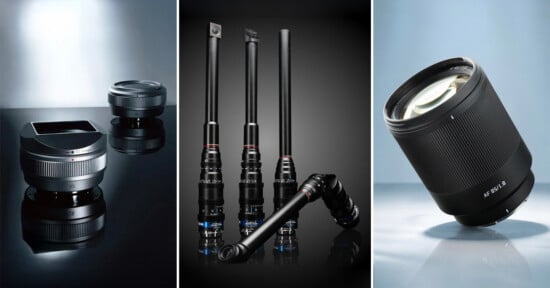
Even now in 2026, autofocusing lens design out of the Chinese manufacturers is still in its relative infancy. We have seen some excellent autofocus-equipped prime lenses from companies like Sirui and Viltrox, but who knew that a manufacturer known for making boutique manual-focusing M-mount lenses would be the first to market with a zoom?
Thypoch did a good job with this lens and it works well for both photo and video, as Sony E-mount users will expect. There are definitely some optical achievements to be celebrated here, too, even if it's not perfect.
Pros
- Excellent value for the price
- Compact and lightweight design
- Well-sealed against dust and splashes
- Minimal lens breathing
- Good center sharpness
Cons
- Corner sharpness at 50mm is lacking at wide apertures
- Autofocus speed is not ideal for action or sports
- Bokeh rendering can appear harsh
- Aperture ring cannot be declicked
- Mediocre macro capabilities
Thypoch has kicked things off with the Voyager 24-50mm f/2.8 zoom, and because it is the first, it will be evaluated with extra scrutiny.
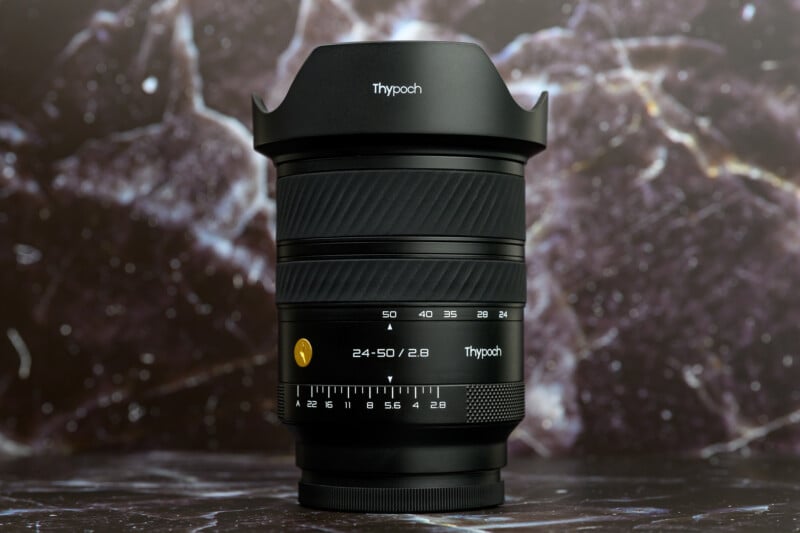
At $649, this lens, released for Sony E-mount, at least carries on the tradition of excellent value from Thypoch. However, I needed to find out if it is worthy of a place in your camera bag.
Thypoch Voyager 24-50mm f/2.8 Review: How It Feels
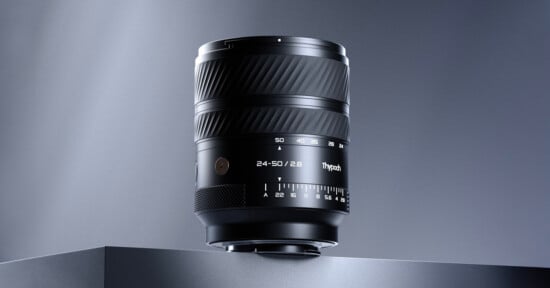
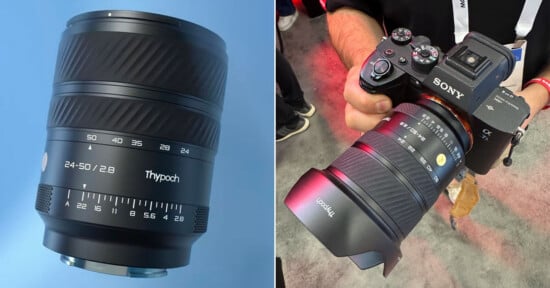
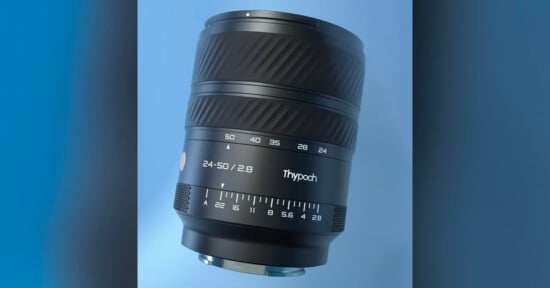
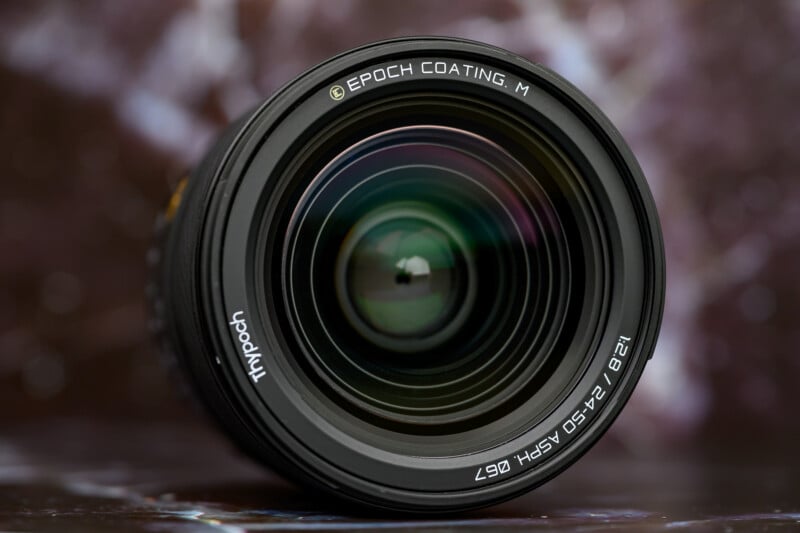
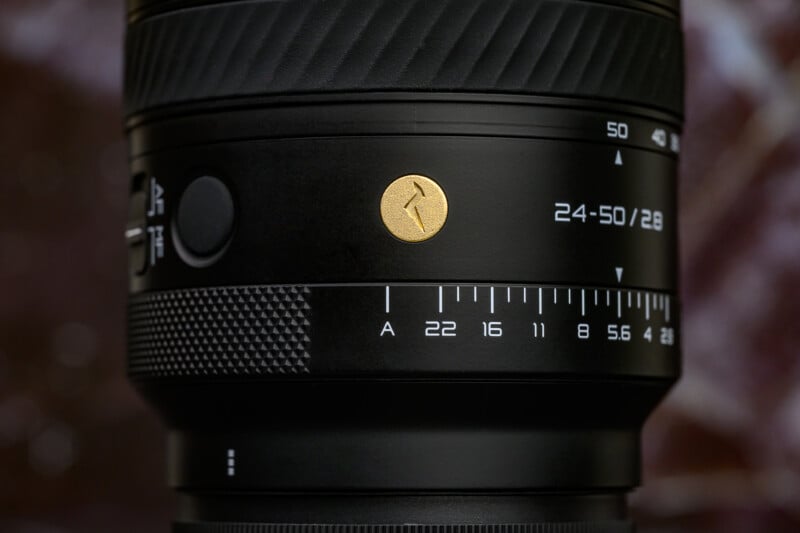
The Thypoch is very compact and tastefully machined, with an emphasis on interesting textures in its design. The gold badge is a nice touch, and the lens overall reminds me a bit of Laowa designs. The textures might look a little busy sometimes, but they do provide good tactile grip on the lens rings. The front of the lens features a 67mm filter thread, and at only 15.8 ounces (450 grams), the Voyager is what I would consider compact.
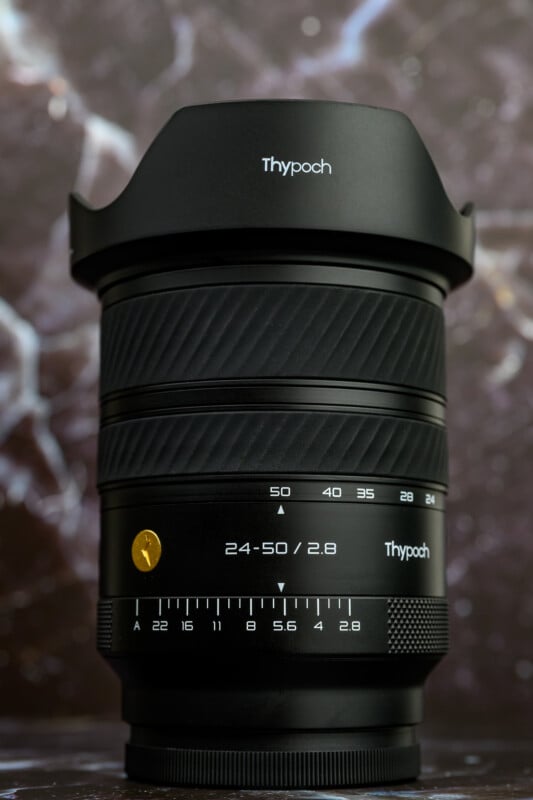
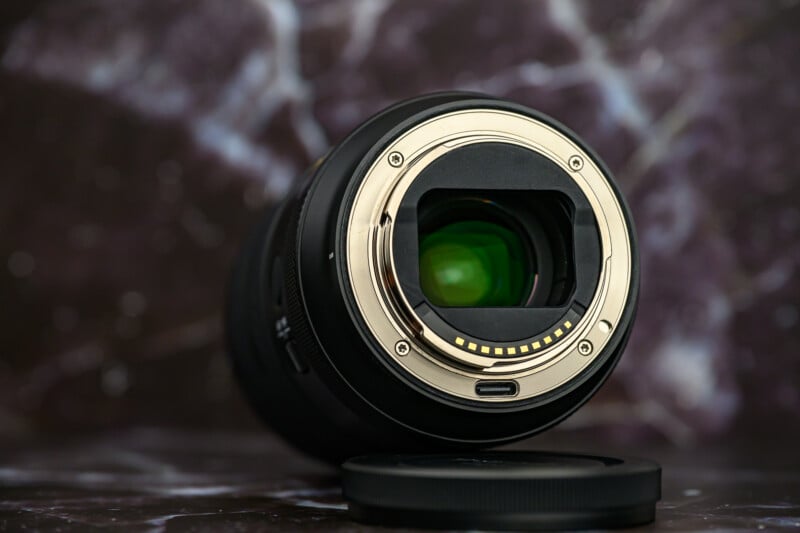
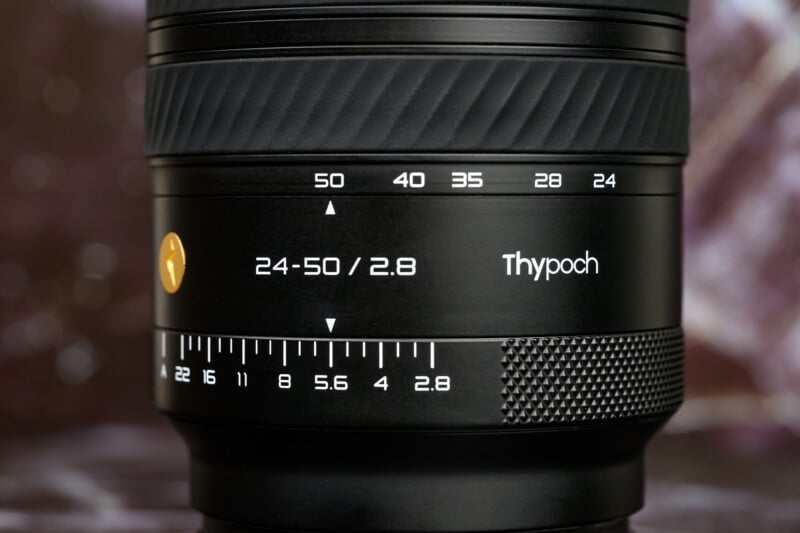
Thypoch has devoted obvious attention to getting the resistance on the manual focus ring and aperture ring just right, and that shows here as the aperture ring is indexed nicely. There is a customizable button and an AF/MF switch and a USB-C port embedded in the lens mount.
This is also a fairly well-sealed lens against dust and splashes, and the internal zoom mechanism will only help to keep dust and debris out of the lens.
Thypoch Voyager 24-50mm f/2.8 Review: How It Shoots
The macro capabilities are nothing to write home about. The Thypoch lens can only achieve about a 1:5 life-size ratio, which is substantially worse than the Sony 24-50mm, which I argue is its prime competition. The minimum focusing distance of 0.3 meters and 50mm focal length at least make close-up shooting a simple affair.



The autofocusing seems to be driven by a stepping motor and provides smooth and quiet focusing. What it doesn’t do is drive the lens at a blisteringly fast speed. For video work and casual landscape or travel photography, this is a non-issue. However, trying to shoot faster action and sports is not what this lens is about.



Thypoch lens coatings are consistently high-quality, and we are seeing good results on this latest zoom. There is a slight loss of contrast with bright light sources, but I’d consider the effect minor. Ghosting is also well controlled, with more showing up at a tighter aperture, but never in an excessive way.


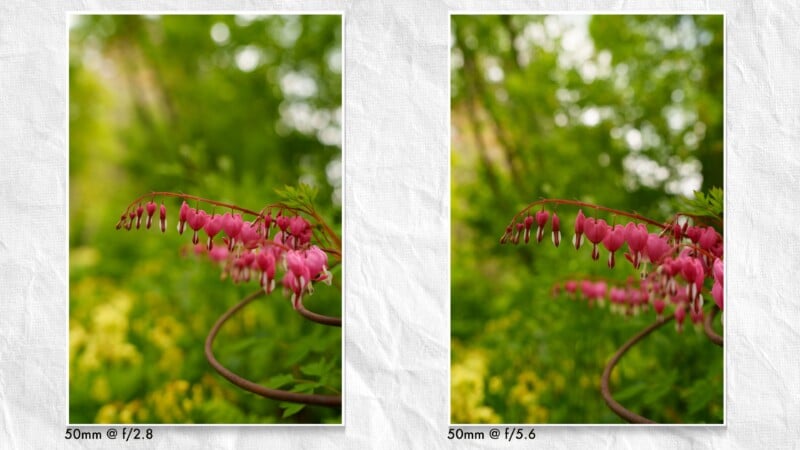
I struggled with the rendering of bokeh on this lens. Looking at the specular highlights, there are no major onion-ring patterns and no strong halos either. The lens is absolutely capable of rendering soft and shallow depth of field and yet, I sometimes find the look distracting or harsh. Bokeh is always subjective, and I can’t quite explain why, but something puts me just a little off about the way the out-of-focus areas look.



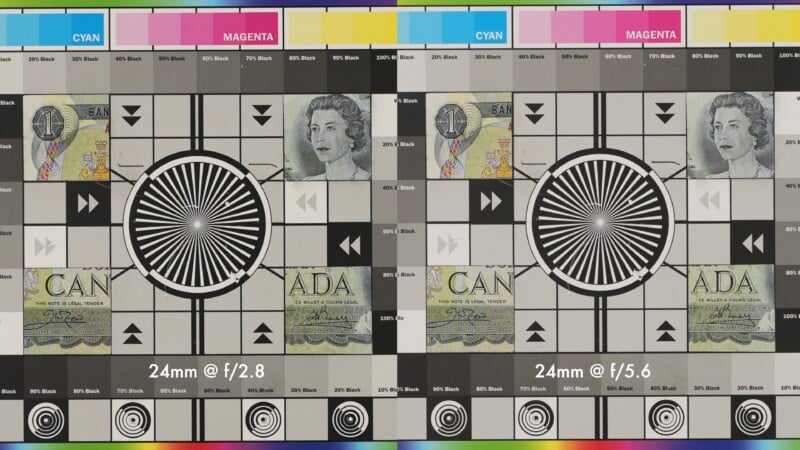
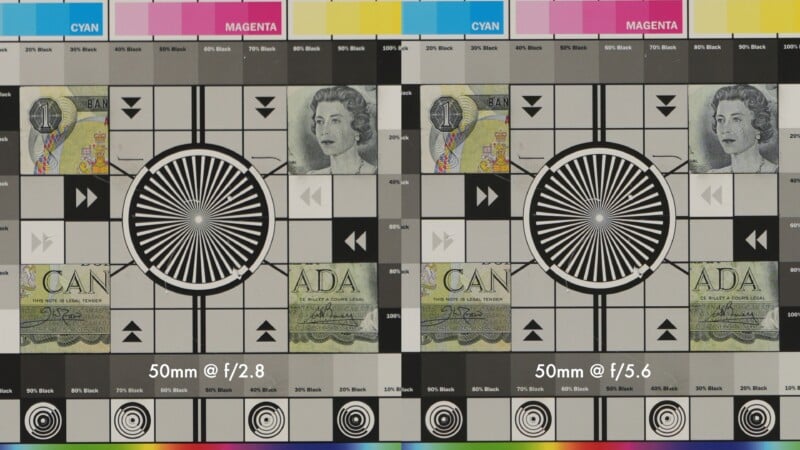
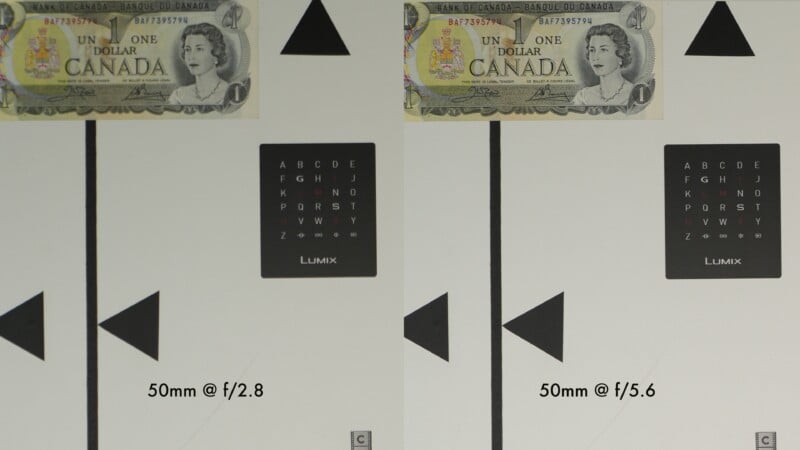
The sharpness at the 24mm range is quite impressive in the center of the image. At f/2.8, I was impressed by the detail, but the contrast could be better. However, stopping the lens down brings the contrast up to ideal levels. The corner of the frame at f/2.8 is good, but there is some minor smearing, which is probably due to distortion correction. Moving to f/5.6 makes the contrast go up in the corners, and the smearing is only in the extremes.
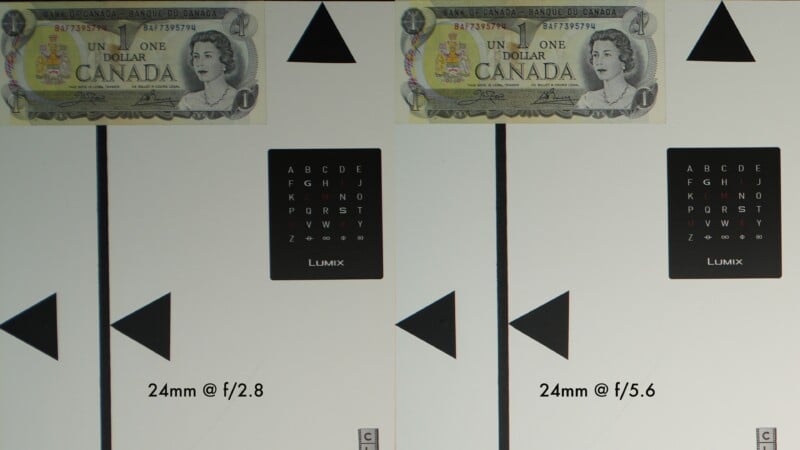
At the 50mm end, the sharpness is good at f/2.8, but there is room to improve. By f/5.6, the contrast and detail are ideal. Unfortunately, the corners at f/2.8 show lots of smearing and loss of detail. I was impressed by how much better the corners get at f/5.6, and this will be very important for those who want to shoot at 50mm and get maximum image quality.
Thypoch’s marketing doesn’t put a ton of emphasis on the video capabilities of this new lens, but maybe the company should have. It most certainly balances easily on a gimbal, and the internal zoom helps maintain that balance. There is also almost no lens breathing, so the field of view doesn’t change much as the lens is focused. It is important to note that the aperture cannot be declicked for video use, though.



Thypoch Voyager 24-50mm f/2.8 Review: A Good First Attempt
Thypoch did a good job with this lens and it works well for both photo and video, as Sony E-mount users will expect. There are definitely some optical achievements to be celebrated here, too, even if it’s not perfect.
Most importantly, this Voyager is a good value for the dollar: $649 is very tempting for anyone wanting a good travel lens or vlogging optic. Perhaps the 24-50mm focal length just doesn’t appeal to me as strongly as it might to someone else, but the Voyager would be a handy companion lens that lives up to its namesake.


Are There Alternatives?
Sony users will be able to get the 24-50mm f/2.8 G lens, but the cost is almost double what Thypoch is asking for the Voyager. It will be sharper, focus faster, and have nicer bokeh, but you’ll pay for it.

Should You Buy It?
Yes. You could do far worse for a lens that covers what the Voyager can do at this price. Kudos to Thypoch for a decent debut zoom lens.
Affiliate Disclosure PetaPixel articles may include affiliate links; we may earn a commission if you buy through one.