Kodak Ektapan 100 Is a Smooth, Sharp, and Beautifully Detailed Film
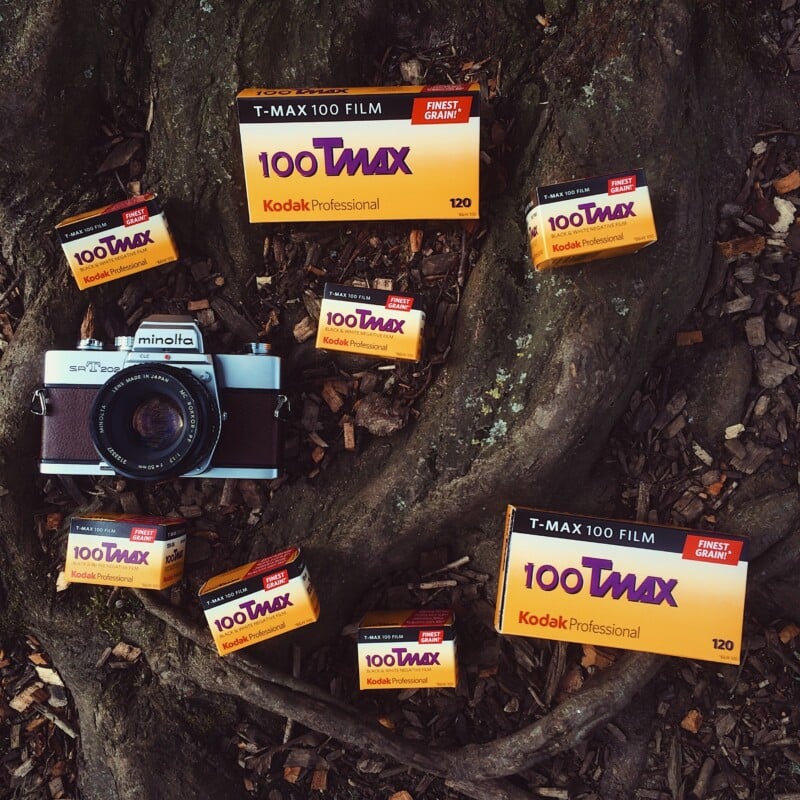
This week we are taking a look at Kodak TMax 100 black and white film (also now known as Kodak Ektapan 100). TMax 100 is part of a family of films that includes both TMax 400 and TMax P3200 films.
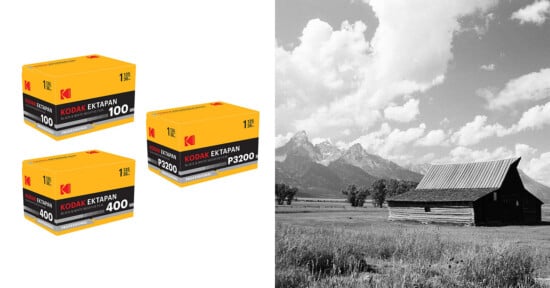
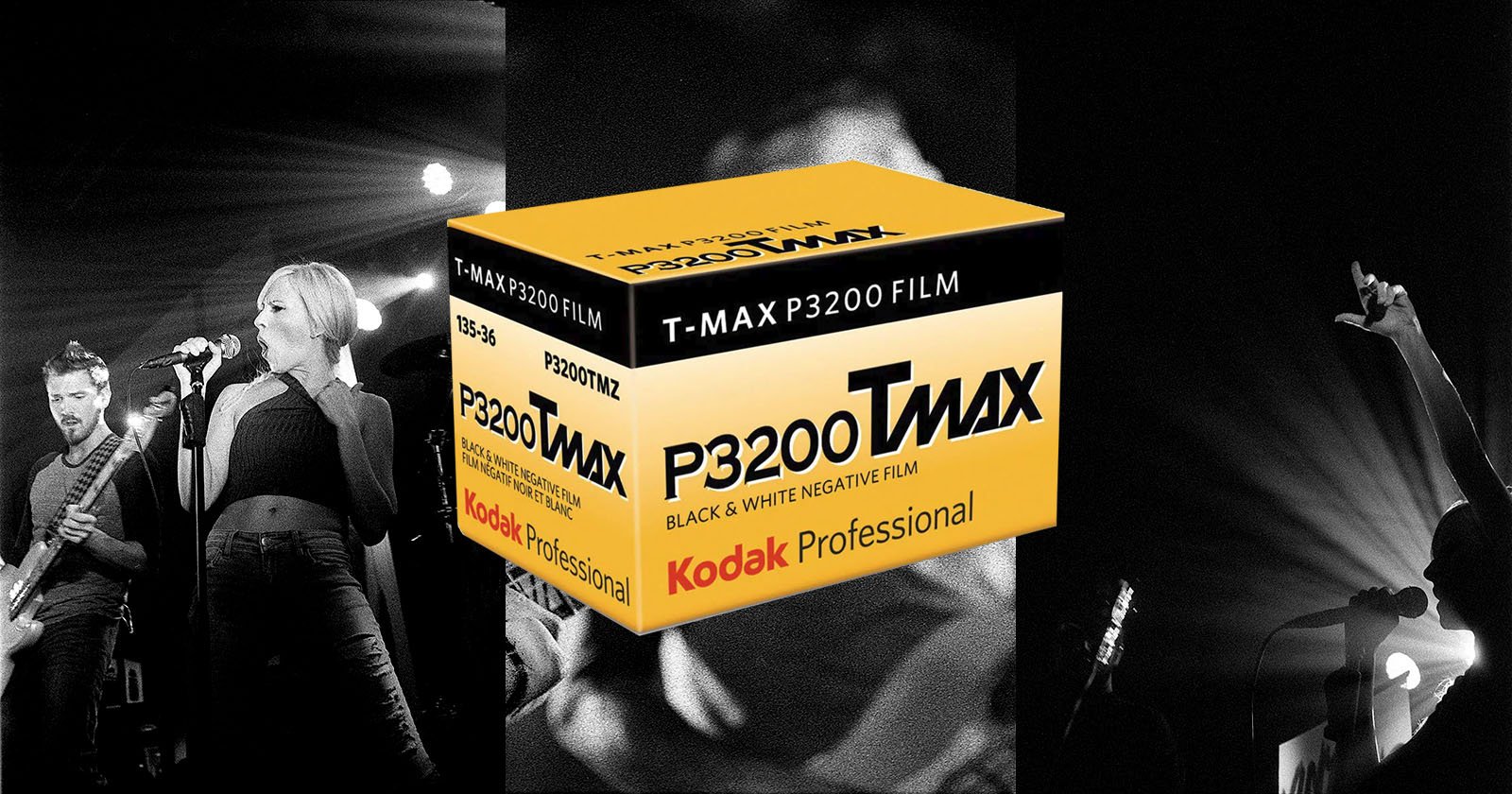
Both the 100 and 400 versions were released together in 1986 and have been updated a couple of times since then. Kodak TMax P3200 was added to the family a couple of years later in 1988, was discontinued in 2012, and then resurrected in 2018. To confound and confuse things just a bit more, Eastman Kodak started directly distributing this film under the Ektapan brand name (so Ektapan 100, Ektapan 400 and Ektapan P3200) in early 2026.


Same film, different name, only slightly different box. To keep things simpler we are just going to keep calling it TMax for the purpose of this review. The chief difference between the TMax family of films and other Kodak black and white emulsions is mainly due to its use of a tabular grain structure instead of a classic cubic grain emulsion, such as is found with Kodak Tri-X. But we get a bit ahead of ourselves…


We have noticed for years that photographers have had an interesting relationship with Kodak TMax. Most either tend to love it or hate it. Put another way, a lot of photographers tend to identify either with Team TMax or Team Tri-X. While it doesn’t seem to happen quite as much as it used to, we would often get students into the shop who were told specifically by their instructors to only buy Tri-X and avoid TMax, or only buy TMax and avoid Tri-X. We wanted to mention this because even we succumbed to this habit a bit early on. We loved our Kodak Tri-X and that had long made us a bit hesitant to try TMax. Why would we need to? We already had the Kodak black and white film we liked. Well, we are about to hopefully give you a compelling case as to why you should make some room in your camera bag for a couple rolls of TMax.


Over the past several years we have been mixing up our usually heavy Tri-X and Ilford HP5 rotation and sneaking in more and more TMax film. From the first rolls we developed of the film we were impressed. TMax is a beautiful film. It is incredibly smooth, fine grained and sharp — oh, is it sharp.



Most of these characteristics are due to its use of a tabular grain emulsion, otherwise known as a T-grain emulsion. Traditionally, film emulsions were composed of cubic grains, where the general rule “the larger the grain, the faster the film” applied. This meant that in order to make faster films, you had to make those films grainier. Tabular grain emulsions, on the other hand, increased the surface area of the crystals by changing their shape, not necessarily their size.



To understand the tabular shape, realize that its main characteristic is that it has two large parallel faces – think of a short stack of playing cards, or a relatively thick guitar pick. This larger surface area allows tabular grains to catch more light without necessarily being larger in size. Secondly, the tabular grains sit together in a much smoother dispersion, as opposed to cubic grains which can appear clumpy or rough in their distribution. The smoother pattern of T-grain emulsion allows it to appear finer grain as the human eye isn’t picking out the individual silver crystals but rather how they are spread across the film.



Tabular grain structure is not technically a new bit of technology. Photographic film emulsions have involved tabular grain crystals for a long time, it was just not until the 1980s that Kodak managed to incorporate them into film emulsion in a consistent and mass-producible fashion, and they won an Oscar award for their use of T-grain emulsions in motion picture films. These days, most color films incorporate tabular grain emulsions but only a few black and white films currently do with the most notable being Kodak TMax, Ilford Delta, and Fujifilm Neopan Acros.





So now that we have given you perhaps way too much info in explaining why TMax looks so good in the grain department, we will pile on just a bit more and add that due to its tabular grain, TMax is not only fine grained but incredibly sharp as well. If resolution is important to you, specifically if you are using high end lenses, there are few better films to make use of than TMax. It has a pretty remarkable 200 lines/mm resolving power (it is worth noting that TMax 400 has the same capability).
This film is sharp and it is detailed. Shooting a roll of 35mm is almost like using medium format, meanwhile using medium format is almost like shooting 4×5 in terms of the level of detail you get out of the images. We have read that because of this TMax 100 is a highly preferred film for doing lens sharpness tests, but then again we also read that the film often out-resolves most of the lenses it is testing. In terms of detail and sharpness, TMax 100 rocks.
So you have fine grain, great resolution and sharpness. What more could there be? How about versatility? TMax has great latitude and is pretty forgiving of mis-exposure. Kodak’s own data sheet states that you can underexpose the film by shooting it at ISO 200 and not need to compensate development. Likewise you can overexpose it by up to two stops and further not worry about image degradation. That means that TMax 100 has an effective range of ISO 25-200 that it can be shot within without worrying about changing your development. But speaking of changing development, TMax 100 can be pushed easily up to three stops. It will get grainy and more contrasty for sure, but it has the capability.

We also love how smooth TMax 100 is across its tonal range. Having used a lot of Tri-X we noticed the differences with TMax pretty quickly in the shadows especially. Tri-X tends to have crunchier, more dramatic shadows, while TMax shadows are remarkably smooth and even. The same can be said of TMax’s highlights. While all negative films do a surprisingly good job of retaining highlight detail, TMax seems to do it a bit better than most. We have made use of this film on clear, sunny days at the coast as well as bright, snowy days at the mountain and in both of those sometimes tricky conditions the film performed admirably and gave us shadow and highlight transitions that looked so, so nice.


When all is said and done, our summary of Kodak TMax 100 is essentially: this film is one of the smoothest, sharpest and most detailed B&W films you can get your hands on. Personal aesthetics will always factor into the equation and we completely understand if you like the more classic look of cubic grain emulsions. But even if you are inclined toward those older films you ought to give TMax a shot. We think it will pleasantly surprise you. It did us. We don’t plan to give up our HP5 or Tri-X anytime soon, those films just have a look we love, but we do plan on mixing in more TMax into our photographic lives. It has been an enjoyable inclusion thus far.
Care to try a roll for yourself? Hit up our website or stop by our shop today and we will have TMax 100 on sale per our usual Film Friday routine!
This story is brought to you by Blue Moon Camera and Machine in Portland, OR. Blue Moon offers film, development services, printing, and even an ever-rotating line of film cameras and lenses. PetaPixel Members receive 10% off all lab services with Blue Moon: Join today!
Image creditsAll photos are individually credited and provided courtesy of Blue Moon Camera and Machine.
Affiliate Disclosure PetaPixel articles may include affiliate links; we may earn a commission if you buy through one.