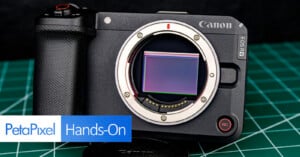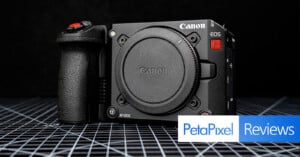
Canon EOS R6 V First Impressions: Why Is Canon Crowding the Field?
When Canon launched the C50 and R6 Mark III last year, the comparison was pretty simple. But now, a third camera is in the mix complicating that up a bit.
Jordan Drake has been shooting and editing and co-hosting his photography YouTube show for over a dozen years. Starting with The Camera Store TV, then DPReview TV and now PetaPixel he strives to make an entertaining, informative show that will inspire you to get out and shoot better photos. When he's not making a YouTube show, Jordan dabbles with music and cinematography. His collaborations with director Levi Holwell resulted in the award winning short films Metanoia and A Walk Down To Water.

When Canon launched the C50 and R6 Mark III last year, the comparison was pretty simple. But now, a third camera is in the mix complicating that up a bit.
While video professionals have grown used to seeing a major update of Blackmagic’s DaVinci Resolve editing software every April, this year’s update caught the attention of photographers everywhere with the debut of a new “Photo” tool. Headlines popped up instantly proclaiming that photo editing programs Lightroom and Capture One had new competition. But do they? I spent some time with the latest beta of Davinci Resolve 21, and I have some thoughts.
Tamron lenses have some very cool capabilities you may not be aware of -- like the ability to pull focus during a time lapse -- and it’s all thanks to its Lens Utility App. I want to talk about what of these abilities are, but I also want to take this opportunity to shame other lens manufacturers for not offering these same features.
For the last several years, if you were an L-Mount user looking for a super telephoto lens, Sigma was your only option (or a Leica version of a Sigma lens). Now Panasonic has introduced their longest full frame lens yet, with the Lumix S 100-500mm f/5-7.1 OIS. It’s compact and light, but also slow and expensive. Is there a place for this $2,100 lens in the L-Mount lineup? Let’s find out.
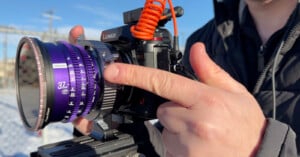
Earlier this year, 7Artisans announced the Floral Bloom Art Cine Lens series, with the first being a 37mm T2.9 for PL mount only. It sounded interesting, so we agreed to check it out. We appreciate the effort and applaud the company for trying something new, but unfortunately, this lens is terrible.
It’s felt like a long six months since Sigma first announced the Aizu Primes (which cost $8,300 each), the company's new series of full-frame compatible T1.3 cinema lenses. Currently available focal lengths include 25mm, 27mm, 32mm, 35mm, 40mm, 50mm, 65mm, and 75mm. Fortunately, after shooting several projects with them while traveling, I finally have a trio of them at home to do some controlled testing.
The original Camp Snap camera was released a while back and became an unexpected hit. This digital camera was extremely limited and lacked an LCD screen in an attempt to bring the fun back to photography. Now Camp Snap is bringing this philosophy into the world of video with the Camp Snap 8 (CS-8), a video camera with no LCD, no playback, and only an EVF for framing.
Since the Canon Cinema series was started over a decade ago, the cameras have targeted professional users in film and television, leading to large, expensive bodies that appealed to a small group of users. That changed with the release of the new $3,899 Canon C50, which is the smallest, most affordable and possibly most exciting camera yet related in this line. Or does it?
Laowa has made a name for itself by releasing wonderfully weird optics that the major lens manufacturers would never think to produce. Probe lenses, ultra-wides, incredibly bright manual focus lenses, these are the kind of oddities Laowa is best known for. I was, therefore, surprised when they started teasing a 200mm f/2 C-Dreamer professional autofocus lens.
35mm has long been one of my favorite focal lengths, so it’s odd that I never had the chance to use the original Sigma 35mm f/1.2 DG Art as it would be right in my wheelhouse. Fortunately, when Sigma launched the second version of this optic in both E-Mount and L-Mount, I had a chance to make up for this omission.
I absolutely love the 135mm focal length, and feel like it’s quite underrepresented on modern mirrorless mounts. It’s a great choice for portraits, candids, indoor sports, and street photography. So when I heard Chris Niccolls would be unavailable to review the new Sigma 135mm f/1.4 DG Art lens, I jumped at the chance!
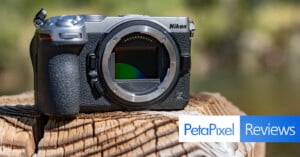
In the year and a half since Nikon acquired RED, both have been extremely busy with video-focused products. RED released Z-Mount versions of its cinema cameras and Nikon dropped the Nikkor Z 28-135mm PZ video lens as well as a library of RED LUTs for the N-Log profile. However, I’ve been wondering when we’d see a camera that truly fused Nikon and RED technology, and that day has arrived with the release of the Nikon ZR.
It’s been more than four years since the launch of Sony’s very popular FX3 compact cinema camera, so I was expecting an update to that model to come any time. Imagine my surprise when Sony instead launched a high-resolution cinema camera with a strong emphasis on photographic functionality and a brand-new design.
Years after the success of the first Sony ZV cameras, manufacturers keep introducing "vlogging cameras" to the market despite the release of the near-perfect vlogging platform, the DJI Pocket 3. However, I do feel that there is some need for more of a “Creator Camera” that can be used for web calls, podcasts, and product videos.
It was on The PetaPixel Podcast a few months ago that Becca Farsace was talking about her impressive collection of old Kodak digital cameras. That reminded me of a now ubiquitous camera innovation first seen in a Kodak point and shoot from a long time ago and that started my quest to shoot with one again.
If you had told me only a few years ago that Nikon would release a video-focused power zoom lens, I’d have called you all kinds of names. But since the release of the Z9, it has become abundantly clear that Nikon intends to capture the hearts of videographers and cinematographers, a strategy which has become even more clear since it acquired RED about a year ago. Now we have the first Z-Mount video-first product from Nikon, the Nikkor Z 28-135mm f/4 PZ.
More than ten years ago, I decided to dip my toe into the world of aerial video when Chris Niccolls and I reviewed the DJI Phantom 2 for The Camera Store TV. Two crashed drones in less than a week later, I decided to leave aerial footage to the professionals. But now DJI has introduced the $439 Flip, with incredibly low weight, just enough video quality mojo, and some cool automated tricks. It might be the perfect compliment to my YouTube camera kit, but I wanted to see how it performed in the field before committing to having it in my bag.
Today Apple launched several updates to its professional video applications including the most significant update in years to its flagship Final Cut Pro video editing software, as well as several convenient updates to Final Cut Pro for iPad, Final Cut Camera, and Compressor.
With the recent addition of the Apple Log profile in the Apple iPhone 15/16 Pro/Pro Max models, you can capture truly professional video with the phone in your pocket. We use iPhone footage interwoven with large sensor mirrorless cameras constantly when shooting PetaPixel’s YouTube videos, and few viewers have commented on a difference. However, to make iPhone video truly compare to dedicated cameras, it takes a bit of technique, and a few additional accessories.
If I told you that Kodak just released a new camera that shoots Super 8 film but has a digital LCD, an SD card slot, and it costs $5,500, you’d probably be as confused as I was. But the Kodak Super 8 Camera has arrived and I’m going to try and make sense of it.
If we recommended the Sony ZV-E10 II for many beginner creators last week, why wouldn't we do the same for the Panasonic S9? At first glance, it looks like an incongruous set of opinions.
Sony's new ZV-E10 II corrects all of the issues I had with its predecessor and delivers an affordable and performant hybrid creators' camera. It isn't without compromises, but it is far and away the best attempt in this space we've seen yet.
The Panasonic GH series has always been some of the best hybrid cameras ever made, and the new Lumix GH7 brings the best features of the GH6 and last year's G9 II together in a single body. It's basically a perfect camera for me as the sensor size is the only thing I consider a compromise.
Microphones are an absolutely critical part of my video kit, and I’m very hard on them. So when I find something that works, I tend to stick with it for a long time.
I’ve been in the camera review game for a decade and a half and while the pleasure of checking out new gear hasn’t diminished, it’s very rare for me to be truly excited about a new camera. Well, that happened two years ago with the DJI Ronin 4D release, and now we have an impressive new 8K version to check out.
When making PetaPixel’s documentary about Blair Bunting’s U2 photo shoot at the edge of space (which you should really watch now if you haven’t), one thing we decided not to focus on was the camera gear. But we love talking about cameras and lenses, so Chris sat down with Blair the evening before his epic shoot to discuss the equipment he was bringing up in a U2 spy plane.
In the last decade, 4K video recording has gone from a format only used in high-end productions to a feature found on even the most entry-level cameras and smartphones. It was inevitable that there would be another resolution bump as sensors and computing power improved, and now we have a number of compelling full-frame mirrorless cameras that can record 8K video internally (right to the memory card). We decided to compare the most compelling 8K-capable, full-frame mirrorless cameras to see which was your best option today: the Sony Alpha 1, Canon R5 C, and Nikon Z8.
The iFootage Cobra 3 monopod has enormous shoes to fill, as the Cobra 2 was one of my favourite video accessories ever made. Has iFootage managed to improve on near perfection?
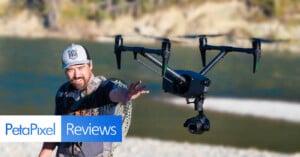
The DJI Inspire 3 is a drone that I had actually given up hope on ever seeing. The Inspire 2 was released way back in 2016 (the hot camera that year was the Nikon D500, to give you some perspective), and progress with UAVs has been incredibly rapid since then.
Arriving in stores only weeks apart and at the same price, the Panasonic S5 IIX and Sony ZV-E1 are full frame, video optimized cameras designed for creators. Obviously, I had no choice but to compare them!