Educational

PetaPixel's editorials are in-depth stories, thought-pieces, and opinions on the photography industry led by the minds of our editorial team.

Why Dedicated Cameras Will Always Be (Optically) Better than Smartphones

It’s September, which means another generation of Apple iPhones. This year, the iPhone XS (pronounced “ten ess”) adds a slightly larger sensor plus significantly more computing power via the A12 Bionic Chip to enhance the phone’s image signal processing.

PSA: It’s ‘Bokeh’ not ‘Bokuh’

There are many sounds that native American English speakers have trouble reproducing. The French “r” (aka the “voiceless uvular fricative”), the rolled double “rr” in Spanish, tonal sounds in various Chinese languages like Mandarin and Cantonese.

A Key to Powerful Portraits: The Eyes

Want to shoot powerful portraits? One of the keys to doing so is focusing on your subject's eyes. This 2.5-minute video by Light Club is an inspiring look into this critical facet of portraiture.

The Official Way to Pronounce ‘Nikon’

You may have heard the camera brand "Nikon" be pronounced in different ways by different people in different countries. But what's the official and "correct" way of pronouncing the company's name?

How Still Life Came to the World of Photography

A while back, I had another roundtable discussion at the Film Photographers Association. This time the subject was Still Life Photography. It is a genre we all take for granted and include in it a great variety of photographs. I would like to explore the origins of still life in painting, how it came to photography, and eventually expanded in coverage and scope.

When and How to Use a Polarizing Filter

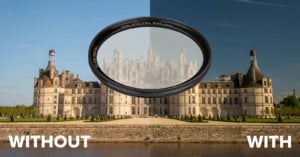
Reflections are often unwanted, and glare will wash out an image. Polarizing filters counter the reflective measures and will deepen blues and add contrast to skies, reduce or remove reflections from water and windows, and increase contrast and saturation.

Histogram or Artistic Expression: What Matters Most?

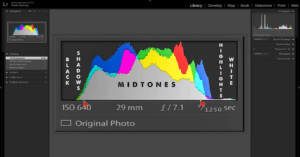
How literally should you interpret a histogram? Where do the lines intersect between artistic expression and photographic technicalities? It’s important to first recognize that a histogram is nothing more than a mathematical representation.

Impostor Syndrome Might Be Where Your Self Doubt Comes From

I don’t deserve to be writing this because there are more capable people who can speak more eloquently than I can that can deliver this message to you. This is exact thought that went through my head as I was writing this blog post because I’m not the best writer.

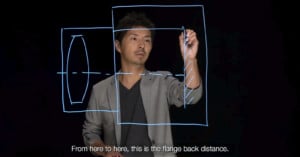
Flange Distance and Mount Diameter Explained by a Lens Engineer

Nikon has understandably made a big deal about launching their new Z-mount alongside the announcement of their new mirrorless cameras, the Z6 and Z7. The Nikon F-mount was originally released 59 years ago and the company has made backward compatibility of the system a brand pillar.

How to Look After Your Eyes as a Photographer

Sight is very important to me. It’s one of my senses that I don’t think I could ever do without. A musician might fear going deaf, but I could live with that. I’d rather not have to but if it came down to losing my hearing or losing my vision, I’d take being deaf. That’s just me.

How Much Depth-of-Field Do You Get with Nikon’s 58mm f/0.95 Lens?

Along with the announcement of Nikon’s new mirrorless Z-system was the development announcement of a 58mm f/0.95 Noct lens. The Z-mount’s huge inner diameter of 55mm (the F-mount has a 44mm diameter) means more light collection capability, which enables ridiculously fast lens design. Nikon’s F-mount 58mm offering tops out at f/1.4.

Is the Sensor or the Lens to Blame for Poor Image Quality?

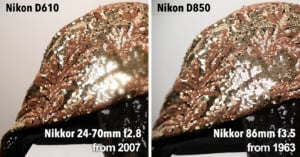
A few years ago, I was embarrassingly very vocal about how disappointed I was about some of the Nikon lenses. I've been using Nikon cameras and lenses for decades and although I was very pleased with the image quality and color rendition their cameras produced, I strongly considered jumping the Nikon ship in search of crisper, cleaner looking lenses.

This is How Canon Supports its Pros

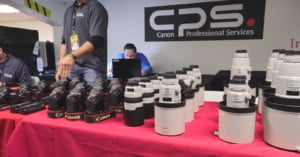
As the camera wars are heating up over the new battleground that is mirrorless cameras, the heavyweights in the industry are taking turns tooting their own horns. Canon just released this 2.5-minute video on the benefits of Canon Professional Services (CPS).

How Camera Film Gets Processed in a Lab

I was recently fortunate enough to get an inside and ‘behind-the-scenes’ look into how film processing works at Richard Photo Lab in Valencia, CA. As the step by step process is very complex, if you’ve ever wondered what the stages of film developing are and look like, come and take this video tour with us!

How to Find the ‘Sweet Spot’ of Your Lens for Sharper Photos

When it comes to purchasing a new lens there are two questions that immediately come to mind for me, how much is it and how sharp is it? Now, I know there’s more to the lens buying process than overall sharpness, but as a landscape photographer, sharpness is king!

Behind the Curtains of a Best Buy Camera Shop

I was hesitant when I first found out that Best Buy had a camera shop in their stores. My experience in the past had been a disappointment, walking through their small camera section was underwhelming and most of the associates avoided that area. I didn’t think too much of it, as cameras were not generally accepted knowledge like it is with computers or TVs. Your average employee would have issues talking about ISO, shutter speed, aperture, and the practical application of these terms.

Portraits of the Konyak ‘Headhunter’ Tribe in India

When we think of tribes, the first thing that comes to our mind is, “what did those tribesmen and women believe in?” “What were their customs and beliefs?” That’s what I asked about the Konyak tribe that was nestled in Nagaland, India, in regard to the famous headhunters.

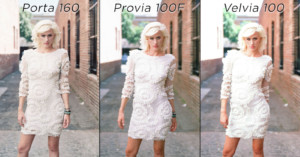
Slide vs Color Negative Film: How They Compare and When to Use Each

Film is on the resurgence as of late. Transparency film is another option from your regular negative film, but what is it exactly? When would you use transparency instead? How does it compare to C-41 or print film? And what is the dynamic range of transparency film? In this article, we'll answer those questions and more.

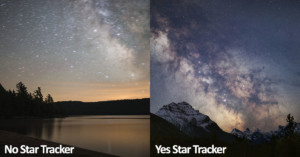
Why and How to Use a Star Tracker for Photos of the Night Sky

Astrophotography is generally a race against time to capture as much subtle starlight we can before the stars create trails in our images. The movement of the Earth puts a natural limit on how much sharp, subtle detail we can reveal. We have to use super fast, wide angle lenses and high ISO values to see all the awesome detail. Fortunately, a tool exists to circumvent this barrier to reveal more of the hidden magic we have in our night sky.

Yes, Nikon Designs Its Own Sensors

Sony has been receiving attention and praise in recent years for the quality of its sensors and the fact that it produces sensors for other heavyweight camera companies, including Nikon. But even though some of Nikon's CMOS sensors may be manufactured in Sony factories, Nikon actually spends a considerable amount of resources designing those high-end sensors.

Is Lens Compression Fact or Fiction?

Photography can be confusing. I get it. I am not the sharpest knife in the drawer. Because of this, at times it helps us to actually put some of these theories and myths to the test. One of these myths is the concept of compression and, with it, parallax.

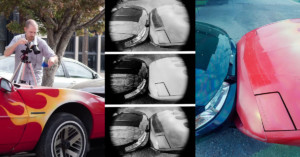
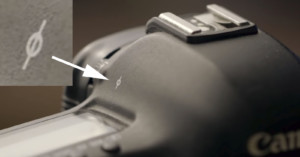
How Canon DSLRs Communicate with Speedlites Using Light

Canon DSLRs can trigger Canon Speedlites using the pop-up flash. If you try triggering those same Speedlites with a different camera's flash, it doesn't work, which means that there's actual light-based communication going on between the DSLR and Speedlite. In this 9-minute video, Roger Nieh of Science'n'me explores the technology behind this communication.

The Advantages of Medium Format Over 35mm

In digital photography, larger sensors generally equate to better image quality across a variety of measurables. If you're curious about the advantages medium format cameras have over 35mm ones, Hasselblad has a new set of videos just for you.

Godox Demystified: A Complete Guide to X Series Flash Gear

Since I purchased my first Godox product in late 2015, I’ve been extremely vocal about their product line because of their massive price to performance ratio. It’s a weird occurrence for one of the most capable products to also be one of the cheapest.

A Sketch History of Early Color Photography

I ran across yet another case of Holy Cow Look At These Russian Photos, in which the photographs of Sergey Prokudin-Gorsky were showcased. In 1902, Prokudin-Gorsky learned the method of shooting three negatives (color separations) and then projecting them in registration through filters to produce projected color images.

Chatting with Kodak About its Past, Present, and Future

Recently, we (Steven, John, and Bill of the podcast Studio C-41) traveled to Rochester, New York, to interview Josh Coon with The Kodakery (Kodak's podcast) and "EKTACHROME Super Fan" Matt Stoffel. We learned about George Eastman, how film is made in the Kodak factory, and Kodak’s response to the film resurgence.

25 Photography Terms Every Beginner Needs to Know

If you're just starting out in photography, seeing all the technical terms being thrown around can be confusing and daunting. Apalapse created this 12-minute video with quick explanations of 25 of the most common terms you'll run into.

Why You Don’t Put a Cheap Filter on an Expensive Lens

I recently took my Sony A7 III and a rented $2,500 Sony FE 100-400mm f/4.5-5.6 GM OSS lens to the 2018 Montreal GP. A friend of mine had recommended that I use a polarizer. I remembered that I had a pack of 77mm Vivitar Series 1 filters that came with my 24-105mm, so I threw that onto the 100-400mm and started shooting, completely zoomed at 400mm.

A Tour of the Cartoni Tripod Factory

Johnnie Behiri of cinema5D recently visited the Cartoni tripod factory in Rome, Italy. The 11.5-minute video above is a behind-the-scenes look at how the famous tripods are made by a small team at the family company.

The Best Aperture for Landscape Photography

The question “What aperture is best for landscape photography?” is often asked in various online forums. While there isn’t one “correct” aperture, certain scenes benefit from using a specific one. For standard landscape photography (excluding night photography, macro photography and other niches), the optimal aperture for front-to-back sharpness lies within f/7.1 to f/13.