Educational

PetaPixel's editorials are in-depth stories, thought-pieces, and opinions on the photography industry led by the minds of our editorial team.

How is Photography Affecting Us?

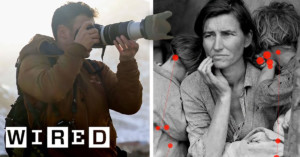
In the past two decades, most people went from not carrying a camera to always having a smartphone camera with them at all times. With millions upon millions of photos shot (and shared) every single day, how is this explosion in photography affecting us? Here's a 10-minute video by WIRED that explores that question.


What You Need to Know About Flickr Pro’s Adobe Discount

My name is Mattias Hedberg, and I'm a photographer based in Norrköping, Sweden. I was recently about to get the Flickr Pro upgrade and was hovering above the buy button when I decided to take a deeper look at the Adobe offer since it sounded a little too good. I was interested in other features of the plan also, but the Adobe one was very tempting.

Dropping Photojournalists Also Drops Photo Quality, Study Finds

A number of prominent newspapers and magazines have laid off some or all of their photojournalists in recent years, but these moves are not without their consequences. A new study has found that switching from a photojournalist staff to non-professional photos causes, to no one's surprise, a significant drop in photo quality.

The Story of How Top Photographers Posed for Baseball Cards in 1974

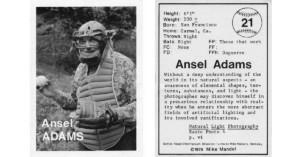
In the mid-1970s, 134 of the top photographers and curators in the world of photography posed for an unusual set of baseball cards that now sell for thousands of dollars as a complete set. The SF Museum of Modern Art just released this 4-minute video in which photographer Mike Mandel shares the story of how these cards came to be.

The Basics of Equivalent Exposure in Photography

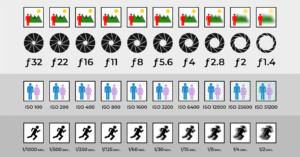
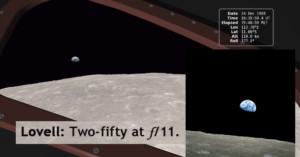
The concept of equivalent exposure can be a tricky one to wrap your mind around when you're just getting started in photography. Photography enthusiast and animator Vincent Ledvina of Apalapse made this helpful 5.5-minute video that explains it in a simple and visual way.

Shooting Portraits with Colored Shadows

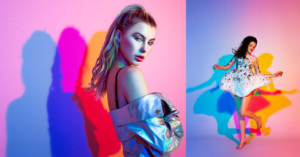
Finding new ways to create isn't always easy, so you have to keep your eyes open for inspiration. One day while making my way down the rabbit hole of YouTube, I stumbled across a video. These guys had created 3 colored shadows off this pencil while keeping a perfectly white background. What in the world was this sorcery? Turns out it wasn't sorcery, it was science.

Pushed to the Limit: Kodak Portra 3 Stops Over

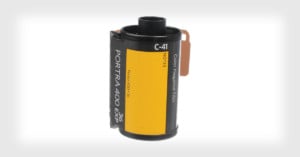
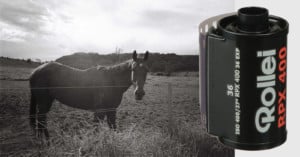
At night, it can be especially difficult getting enough light to shoot film. There are no color emulsions with speeds higher than ISO 800, and most stocks don’t even exceed 400. Pushing enables you to add sensitivity past the recommended ‘box speed’ of your film.

The Red and Green Specialists: Why Human Color Vision is So Odd

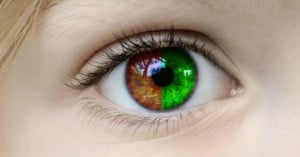
Most mammals rely on scent rather than sight. Look at a dog’s eyes, for example: they’re usually on the sides of its face, not close together and forward-facing like ours. Having eyes on the side is good for creating a broad field of vision, but bad for depth perception and accurately judging distances in front.

Learning Photography From a $90.3 Million Painting

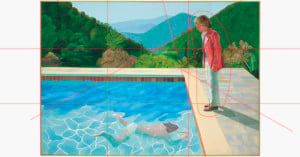
Last month, legendary British painter David Hockney's 1972 painting titled “Portrait of an Artist (Pool with Two Figures)” (shown above) sold for a jaw-dropping $90.3 million, the highest auction price ever for a living artist!

Tricks Food Photographers Use to Make Food Look Delicious

Food photographers have an arsenal of tricks up their sleeves to make food look delicious on camera. And more often than not, these hacks make use of non-edible products that aren't appetizing. Blossom has created an eye-opening video that reveals the dirty (sometimes literally) little tricks of food photographers.

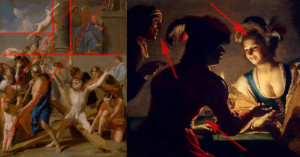
5 Things Photographers Can Learn From the Old Masters of Painting

Art has arguably been around almost as long as humans have. The moment we learned to mark something for others to see and interpret, the moment art was born. Thankfully for us photographers, we needn’t go quite that far back to begin learning from the history of art. In fact, we only need to go as far as the "Old Masters."

Nikon’s Z-Mount Can Accept f/0.65 Lenses

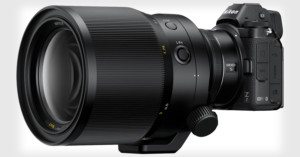
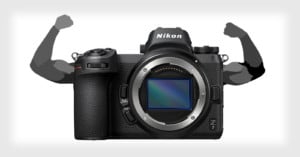
Nikon's new full-frame mirrorless Z lens mount is designed to be futureproof over the next 100 years and "redefine possibilities." How crazy are the possibilities? Get this: the Z-mount could theoretically accept lenses with apertures as large as f/0.65.

The Story Behind That IKEA Photo of Amsterdam

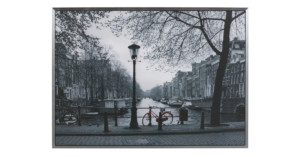
VILSHULT is an IKEA ready-to-hang photo of Amsterdam that has been sold over 427,000 times. After many of my friends asked me why I bought such a "mediocre" photo for my living room, I decided to find out how this photo was made and how it ended up on IKEA's shelves and in almost half a million households. What I learned was fascinating.

How to Use the World’s Largest Polaroid Camera

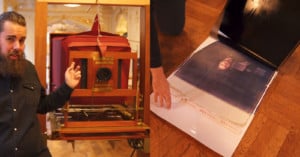
Back in its heyday, Polaroid made seven 20x24-inch instant cameras, and only six of them are known to exist today. Marco Christian Krenn of Analog Things recently paid a visit to the camera found at Supersense in Vienna. In this 10-minute video, Krenn shows how this ultra-rare camera is used.

How Geotagged Photos are Harming Natural Landmarks

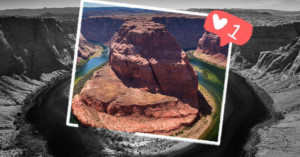
With the rise of digital photography, social media, and geotagging, picturesque natural landmarks that were once relatively undisturbed are now swarming with more and more visitors every year. Vox made this 5-minute video on how geotagged viral photos are having a huge impact on nature.

An Exclusive Tour of Adobe’s Offices

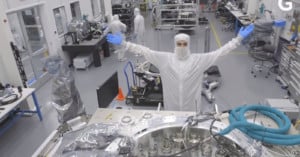
I'm Johnnie Behiri, the co-owner of cinema5D. Adobe is a well-known company in the filmmaking and photography industries (and beyond). But for me personally, it was time to ask what lies behind just the name, so I reached out with the request to visit some of their facilities in the United States, intending to “create a face”, asking who this huge company actually is.

How to Use Your Camera to Calculate the Speed of Earth’s Spin

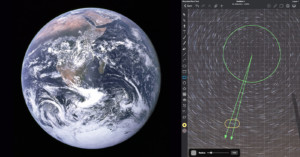
Earth is spinning... and fast! It was during my first nights in astrophotography that it became very concrete for me. By taking pictures of the stars, one quickly obtains a change of star physiognomy that confirms the rotation of the earth. In this article, I describe how to use this phenomenon to measure the rotational speed of the earth with a simple camera.

Bokeh is Overrated: Blurry Isn’t Best

When I read or watch reviews of lenses by folks in the photographic community, it often seems like one of the most important qualities to them is how the lens renders bokeh. It’s often made me wonder, do we sometimes forget that bokeh is just background? And is this fixation healthy? Or most importantly, how much does it matter to an average person who has never heard the term “bokeh”?

Rare Photos Inside the United Nations Buffer Zone in Cyprus

In September 2018, I was asked to travel to Cyprus and photograph the Buffer Zone (or Green Line) in Nicosia. It was an exclusive opportunity since this area is not accessible for civilians -- it's a demilitarised zone (DMZ), patrolled by the United Nations.

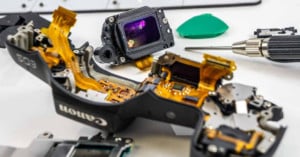
Canon EOS R Teardown: A Look Inside Canon’s First Full-Frame Mirrorless

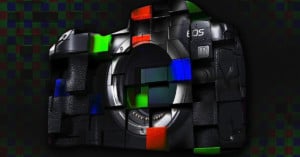
The Canon EOS R is cause for controversy. After all, we’re in the middle of The Great Mirrorless Camera War. Tensions are bound to rise, turning sibling against sibling, camera tech against camera tech, and photographer against photographer. Despite this, I will do my best to describe the form factor and internal construction of the EOS R in a fair and unbiased manner.

A Teardown of the Canon EOS R

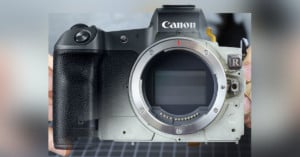
Want to see the internals of Canon's first full-frame mirrorless camera? Roger Cicala over at LensRentals disassembled the new Canon EOS R to look at the design and engineering going on inside.

Why Kodak Died and Fujifilm Thrived: A Tale of Two Film Companies

The Kodak moment is gone, but today Fujifilm thrives after a massive reorganization. Here is a detailed analysis based on firsthand accounts from top executives and factual financial data to understand how and why the destinies of two similar companies went in opposite directions.
Neuroaesthetics: Where Science Meets the Art of Photography

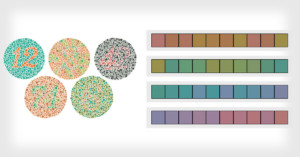
Art is something we all enjoy in one way or another. We assume it is a subjective subject, but there may be an objective angle that we can observe art from. Perhaps art isn’t subjective at all? Neuroaesthetics is a scientific approach to art in the way it is both produced and consumed, and this gives us a basis for figuring out what makes art… art!

How a Fun Guy Goes to the Woods and Photographs Glowing Mushrooms

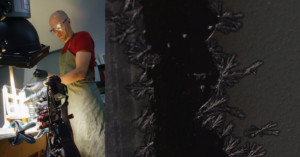
I often hear my students lament about how if only they could travel to the rainforest they would find something really interesting to photograph. I tell students “look around where you live – there are wonderful things to photograph everywhere”. The photographers that work with local species often obtain shots that are unobtainable from casual travels.